Use jumper cables to transfer power from a running car, then let the weak battery recharge safely.
Knowing how to charge a car battery with another car can save you from a long wait for roadside help. The process is usually called a jump-start, but it needs care because a wrong cable connection can damage electronics or cause sparks. This guide explains the correct order, safety checks, timing, common mistakes, and when a jump-start is not the right solution.
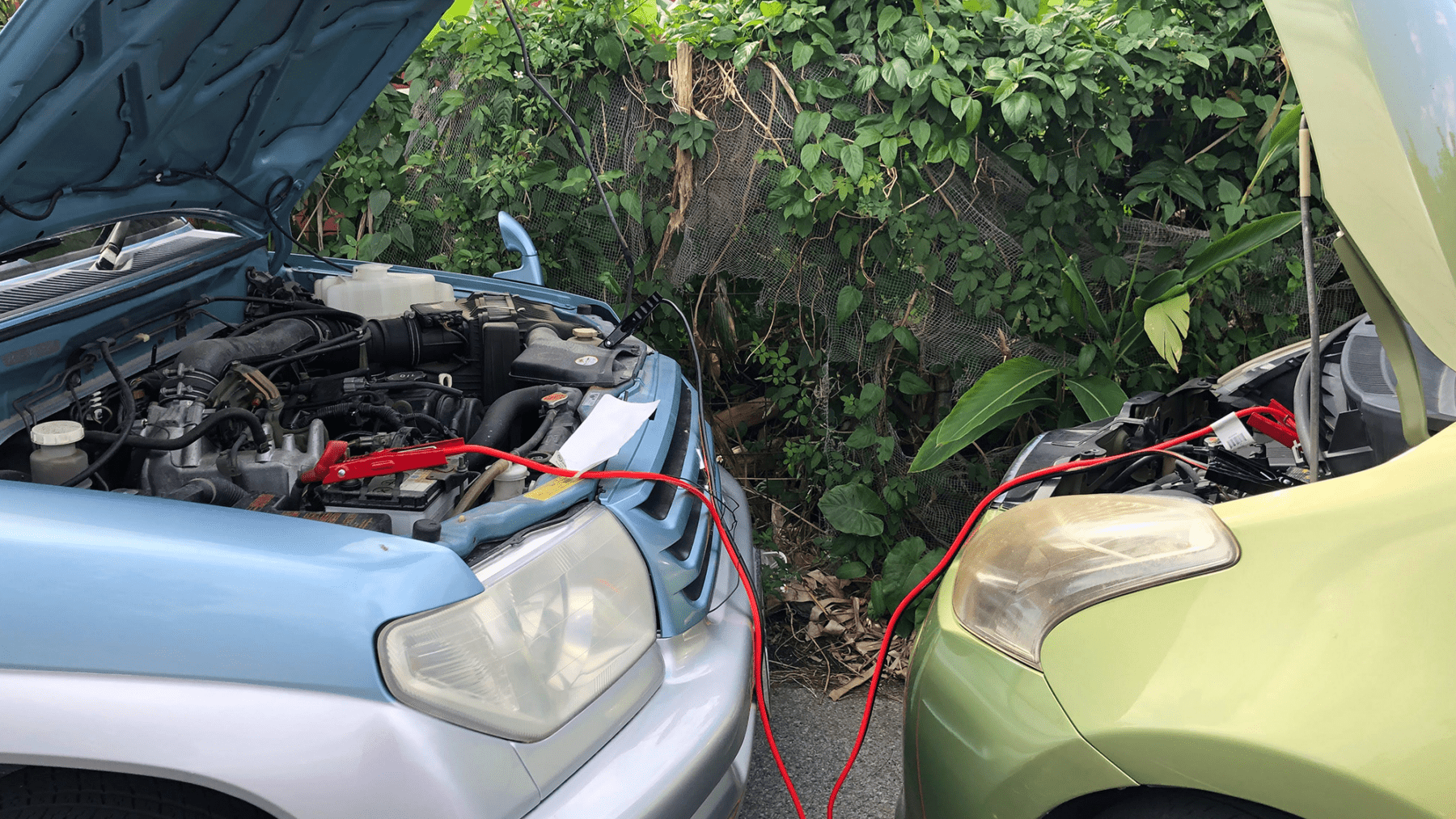
What “charging a car battery with another car” really means
When people ask how to charge a car battery with another car, they often mean jump-starting it. A jump-start uses the good battery to provide enough power for the dead car’s starter motor.
It does not quickly fill the weak battery like a battery charger does. After the engine starts, the alternator may restore some charge while the car runs. However, a deeply discharged or damaged battery may need a proper charger or replacement.
Think of the process like giving a car a push. The other car gives the first burst of energy, but the weak battery still needs time to recover.
A jump-start may work when:
• The lights were left on
• A door was not fully closed
• The car sat unused for several weeks
• Cold weather reduced battery power
• A phone charger or accessory drained the battery
A jump-start may not work when:
• The battery case is cracked or leaking
• The battery is frozen
• The battery terminals are badly damaged
• The starter motor has failed
• The alternator is not charging
• The car has a major electrical fault
What you need before you begin
Before learning how to charge a car battery with another car, gather the right tools. Good equipment makes the job safer and reduces the chance of a poor connection.
You will need:
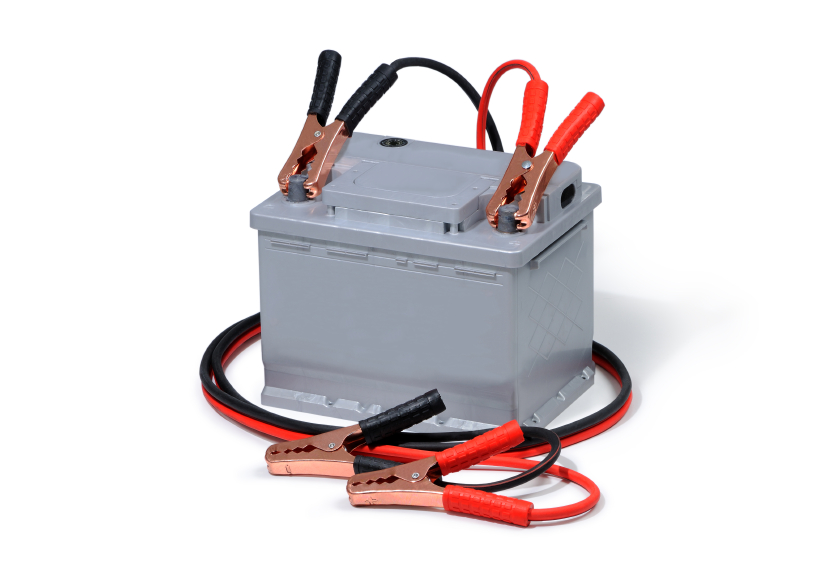
• A set of heavy-duty jumper cables
• A working vehicle with a similar voltage system
• Safety glasses, if available
• Gloves, if available
• A clean, safe parking area
Most gasoline and diesel cars use a 12-volt electrical system. The donor car and the disabled car should use the same voltage. Never connect a 12-volt car to a vehicle with a different electrical system.
Check both owner’s manuals before connecting the cables. Some vehicles have special jump points under the hood. Hybrid vehicles, electric vehicles, luxury cars, and cars with sensitive electronics may have special rules.
Keep the jumper cables away from:
• Fan blades
• Drive belts
• Pulleys
• Hot exhaust parts
• Moving engine parts
Use cables with thick wires and strong clamps. Very thin cables may not carry enough current. Damaged cables with exposed wire, loose clamps, or melted insulation should not be used.
Prepare both vehicles safely
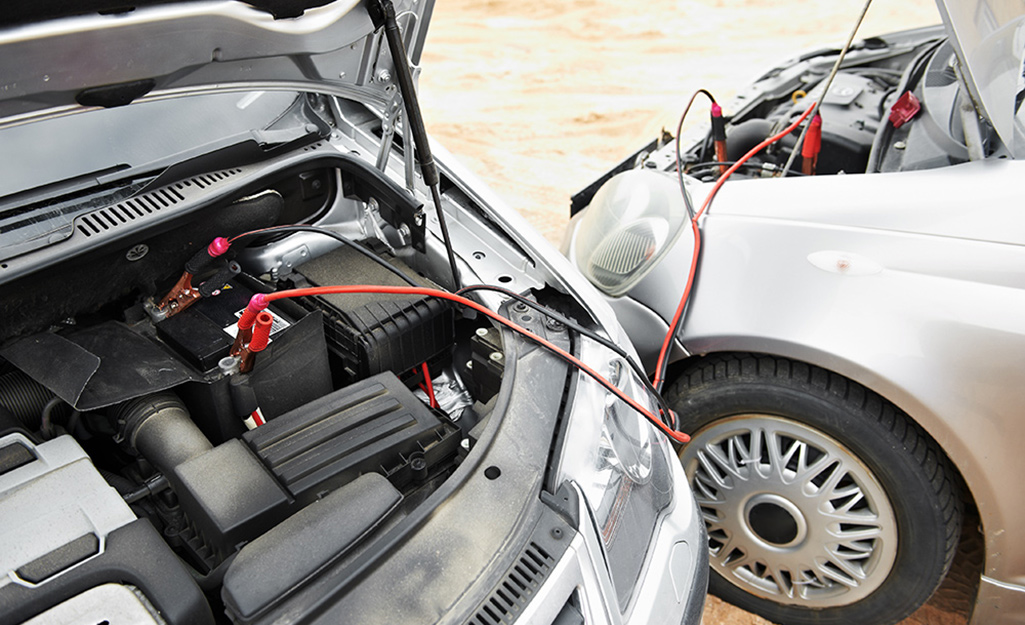
Safe positioning is an important part of how to charge a car battery with another car. Park the donor vehicle close enough for the cables to reach, but do not let the two vehicles touch.
Follow these steps:
-
Put both vehicles in Park if they have automatic transmissions. Use Neutral for a manual transmission only when appropriate.
-
Apply both parking brakes.
-
Turn off both engines.
-
Switch off headlights, radios, climate control, chargers, and other accessories.
-
Open both hoods and locate the batteries or approved jump points.
-
Check the battery condition.
Do not continue if you see a swollen battery, cracks, wet areas, a strong rotten-egg smell, or leaking fluid. Battery acid can burn skin and damage clothing. A battery that may be frozen should not be jump-started because it can crack or explode as it warms.
Keep cigarettes, flames, and sparks away from the battery. Lead-acid batteries can release hydrogen gas, which can ignite.
A useful lesson from roadside battery work is simple: slow down before connecting anything. Most mistakes happen when someone rushes to attach the cables without checking the positive and negative terminals.
How to connect jumper cables in the correct order
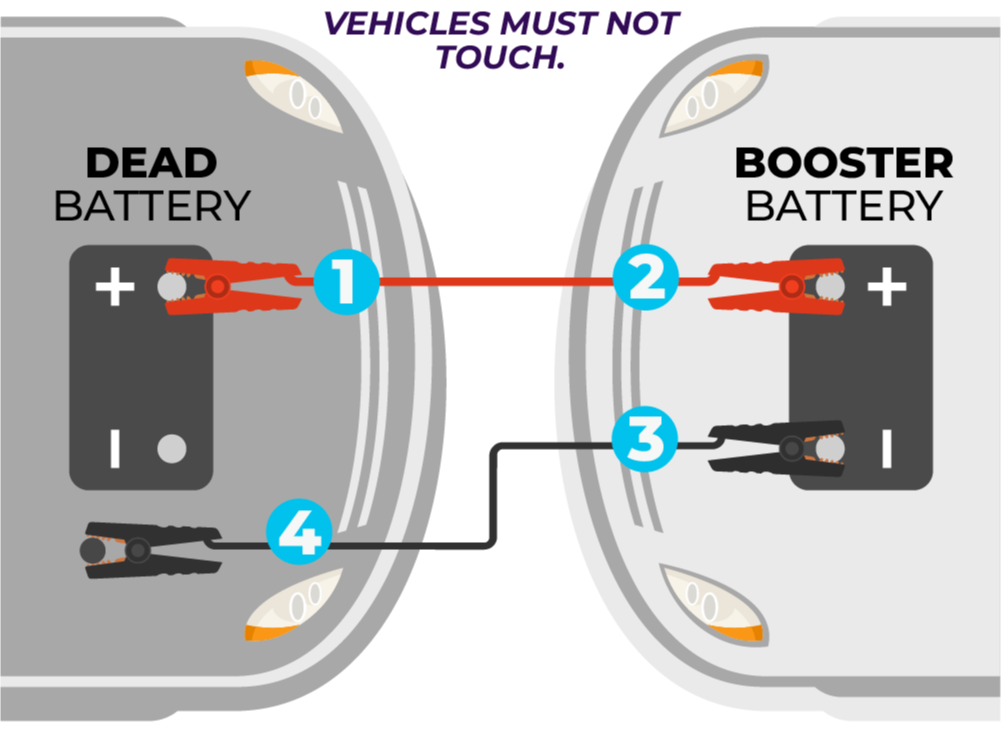
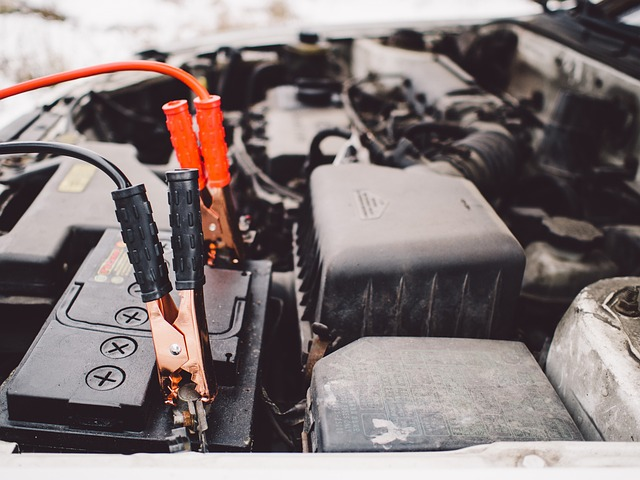
The correct cable order is the most important part of how to charge a car battery with another car. The red cable connects to positive terminals. The black cable connects to the donor negative terminal and a safe metal ground on the disabled vehicle.
Follow this order:
-
Find the positive terminal on the dead battery. It usually has a plus sign and a red cover.
-
Connect one red clamp to the positive terminal of the dead battery.
-
Connect the other red clamp to the positive terminal of the good battery.
-
Connect one black clamp to the negative terminal of the good battery.
-
Connect the final black clamp to an unpainted metal part of the dead car’s engine block or chassis.
-
Make sure the clamps are secure and cannot touch each other or moving parts.
The final black clamp should normally go to solid, unpainted metal on the disabled vehicle rather than directly to its negative battery terminal. This places the final spark away from the battery and may reduce the risk of igniting hydrogen gas.
Some vehicles require a specific grounding point. Always use the point listed in the owner’s manual when one is provided.
Never reverse the order of the positive and negative clamps. Reversed polarity can damage fuses, computers, alternators, and other electrical parts. It can also create sparks or cause a battery to rupture.
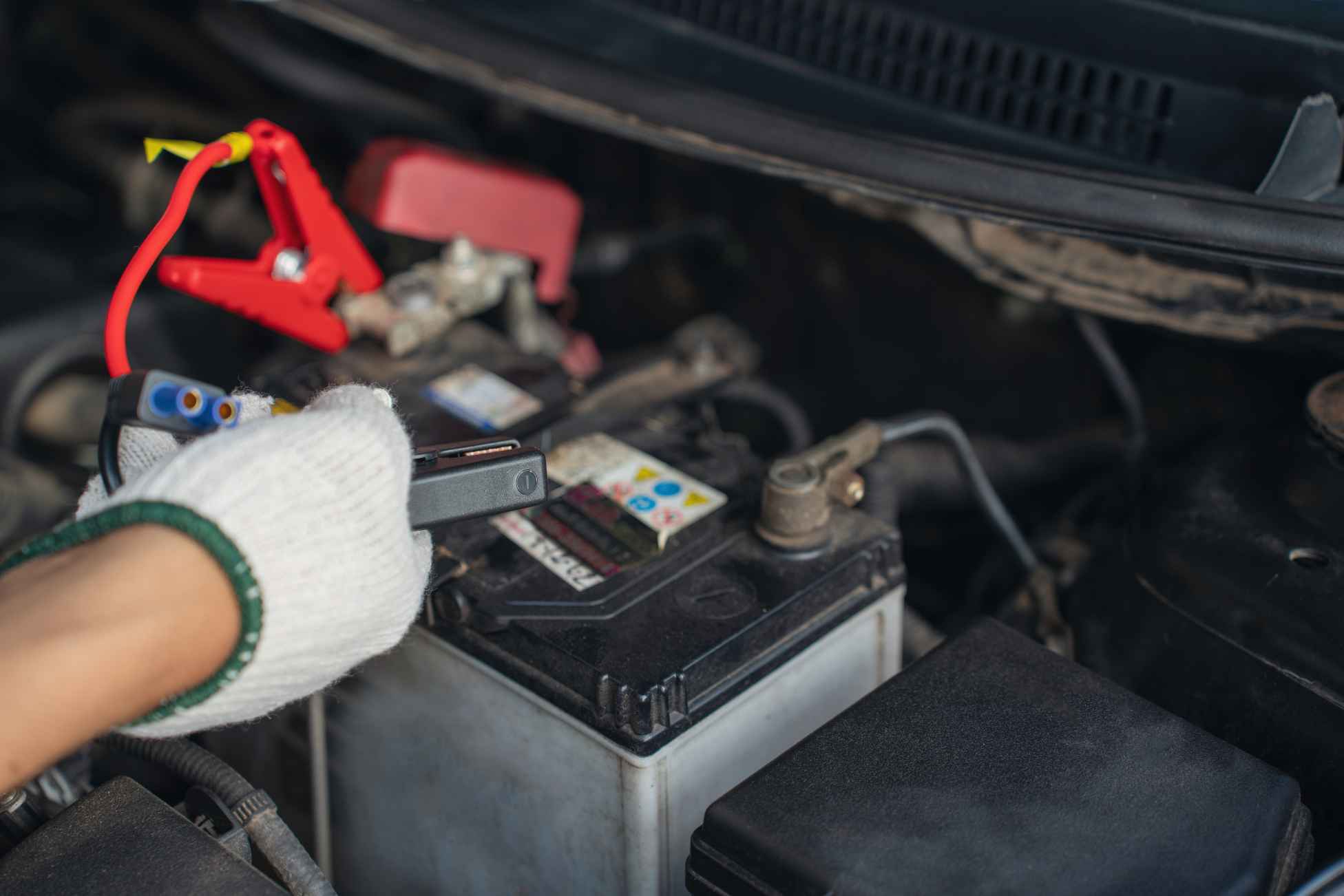
How to start the vehicles
After connecting the cables, check every clamp one more time. Confirm that red is on positive and black is on ground or negative as instructed.
Use this starting process:
-
Start the donor vehicle.
-
Let it run for about two to five minutes.
-
Try to start the disabled vehicle.
-
Crank for no more than about five to ten seconds at a time.
-
Wait about 30 seconds before trying again.
If the dead car starts, do not immediately remove the cables. Let both vehicles run for several minutes. This gives the alternator time to stabilize the electrical system.
If the disabled car does not start after a few attempts, stop and inspect the connections. The problem may be a weak cable connection, a failed starter, a fully damaged battery, or another mechanical fault.
Do not keep cranking again and again. Long cranking can overheat the starter motor and drain the donor battery.
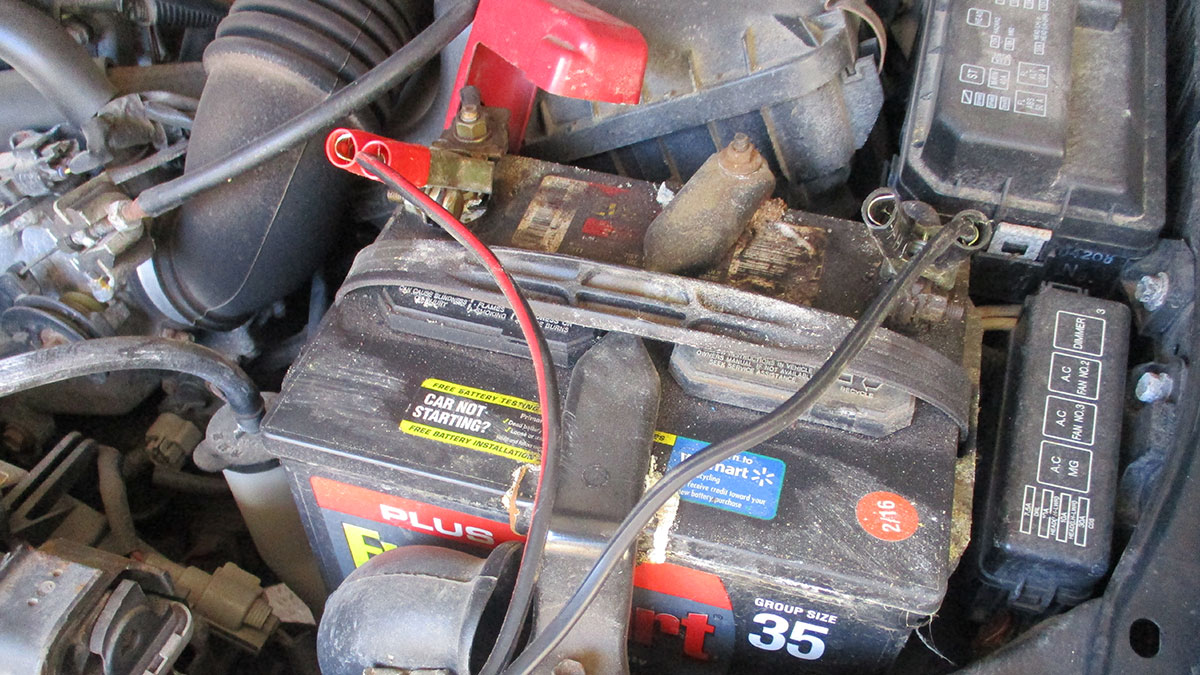
How to remove the jumper cables
Removing the cables in the correct order is another key part of how to charge a car battery with another car. The order helps prevent accidental sparks and short circuits.
Remove the clamps in this order:
-
Remove the black clamp from the metal ground on the disabled vehicle.
-
Remove the black clamp from the negative terminal of the donor battery.
-
Remove the red clamp from the positive terminal of the donor battery.
-
Remove the red clamp from the positive terminal of the previously dead battery.
Keep the clamps separated while removing them. Do not allow a metal clamp to touch another clamp, the car body, or an incorrect terminal.
After removing the cables, close the hoods carefully. Keep the newly started car running or drive it in a safe area. If the engine stops soon after the jump, the battery may be too weak, or the alternator may not be charging.
How long should you drive after a jump-start?
Many drivers wonder how to charge a car battery with another car and how long to drive afterward. A short drive may restore some energy, but it may not fully recharge a deeply drained battery.
Drive for about 20 to 30 minutes if traffic and road conditions allow. Use normal driving rather than extended idling because the alternator may produce more useful output while the engine is under some load.
Still, driving is not the same as using a battery charger. Modern vehicles use many electrical systems, and the alternator must power those systems while also charging the battery. A battery that was completely flat may need several hours with a smart charger.
After the drive, turn the engine off and restart the car. If it struggles again, have the battery and charging system tested.
A healthy battery often measures around 12.6 volts after resting with the engine off. A running vehicle may show roughly 13.7 to 14.7 volts, although exact readings vary by vehicle and charging system. Smart charging systems may change voltage during operation.
A voltage test alone does not prove that a battery is healthy. A professional load test can show whether the battery can deliver enough current to start the engine.
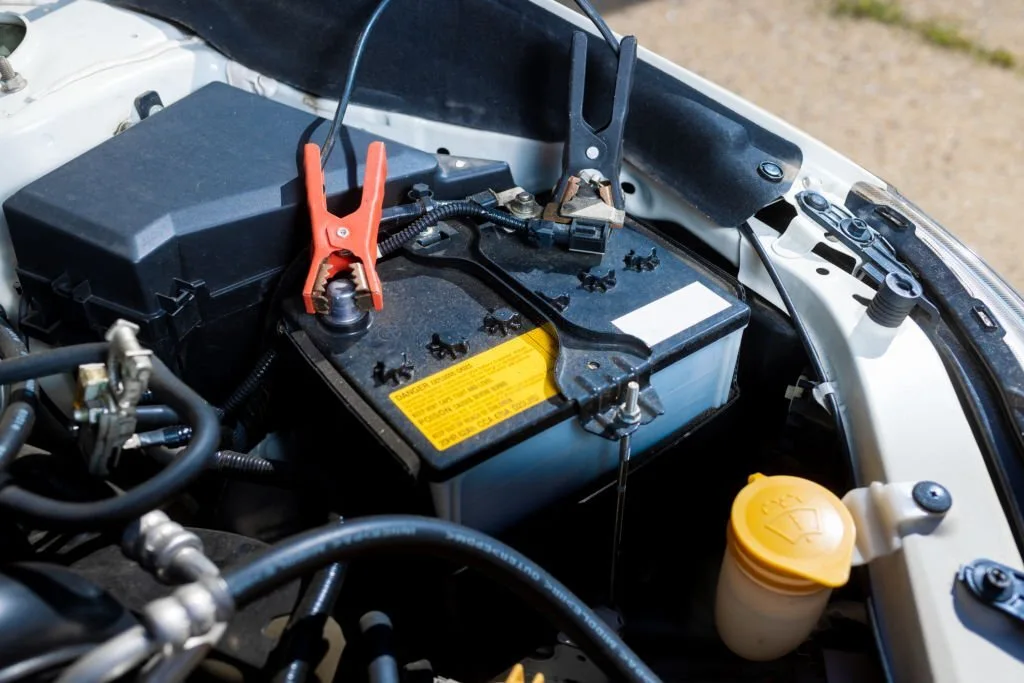
Common mistakes to avoid
Learning how to charge a car battery with another car also means learning what not to do. These mistakes are common, but most are easy to prevent.
• Connecting positive to negative: This creates reversed polarity and can cause serious damage.
• Letting the vehicles touch: The vehicles should remain separate during the process.
• Using a damaged cable: Exposed wires and loose clamps can create sparks.
• Placing the final black clamp on the wrong spot: Use approved ground metal when the manual recommends it.
• Starting the donor car too soon: Connect every clamp first, then start the donor vehicle.
• Revving the donor engine hard: High engine speed is usually unnecessary and may stress the electrical system.
• Cranking for too long: Short attempts protect the starter and cables.
• Jump-starting a frozen battery: A frozen battery may crack or explode.
• Ignoring warning lights: A battery warning light after the jump may point to an alternator problem.
• Assuming a jump-start fixed the problem: It only starts the car. It does not repair a bad battery or electrical fault.
One mistake I often see in practical battery advice is treating jumper cables like ordinary wires. They carry high current, so placement and order matter. The extra minute spent checking each clamp is worth far more than the risk of damaged electronics.
Can you jump-start a hybrid or electric vehicle?
The rules for how to charge a car battery with another car can change with hybrid and electric vehicles. A hybrid may have a small 12-volt battery that powers computers and contactors. It may be possible to jump-start that battery, but the owner’s manual must guide the process.
Do not try to jump-start the high-voltage battery in a hybrid or electric vehicle. High-voltage systems can be dangerous and require trained service technicians.
An electric vehicle may provide power for another vehicle only if the manufacturer specifically permits it. Many EV manuals warn against using the vehicle as a donor because its low-voltage system may not be designed for that task.
Follow these rules:
• Use only the designated 12-volt jump points.
• Never touch orange high-voltage cables.
• Do not open high-voltage battery covers.
• Do not use an EV as a donor unless the manual approves it.
• Call roadside assistance when the instructions are unclear.
The same caution applies to modern cars with advanced driver assistance systems, start-stop systems, and complex battery sensors. The safe connection point may not be obvious.
When a jump-start is not enough
Sometimes knowing how to charge a car battery with another car helps identify a larger problem. If the car starts but repeatedly needs a jump, the battery or charging system needs attention.
Possible causes include:
• An old battery
• A failing alternator
• Corroded battery terminals
• A loose ground cable
• A parasitic electrical drain
• A faulty starter motor
• A damaged fuse or wiring connection
Most car batteries last about three to five years, though climate, driving habits, and maintenance can change that range. Very hot weather can speed up battery wear, while extreme cold can reveal a battery that was already weak.
Have the vehicle inspected if:
• The battery warning light stays on
• The headlights become dim while driving
• The car stalls after a jump
• The starter clicks but does not turn the engine
• The battery repeatedly goes dead
• You smell burning plastic or sulfur
A professional can test the battery, alternator output, starter current, and electrical drain. Replacing the battery without testing the charging system may solve the problem only for a short time.
How to prevent a dead car battery
The best way to avoid learning how to charge a car battery with another car is to reduce battery strain.
Try these simple habits:
• Turn off lights and accessories before leaving the vehicle.
• Drive the car regularly if it normally sits for long periods.
• Clean corrosion from the battery terminals.
• Check that the battery hold-down is secure.
• Test an older battery before winter or a long trip.
• Use a smart battery maintainer for a vehicle stored for weeks.
• Check for interior lights that remain on.
• Avoid repeated short trips when possible.
Short trips may not give the alternator enough time to replace the power used during starting. A longer drive once in a while can help, but it will not repair a failing battery.
If a car sits for months, a battery maintainer is usually better than starting the engine for a few minutes. Brief idling may not restore the energy used during startup and can add unnecessary engine wear.
Frequently asked questions about how to charge a car battery with another car
Can I charge a car battery fully with another car?
A donor car can provide enough power to start the disabled car, but it may not fully recharge the battery. For a full recharge, use a compatible smart battery charger and test the battery afterward.
Should the donor car be running when I connect the cables?
No. Connect all jumper cables while both engines are off. Start the donor vehicle only after checking that every clamp is attached to the correct terminal or ground point.
How long should I leave jumper cables connected?
After the dead car starts, leave the cables connected for several minutes before removing them. Then drive for about 20 to 30 minutes, or use a battery charger for a more complete recharge.
Why does my car not start after a jump?
The battery may be severely damaged, the cable connection may be poor, or the problem may involve the starter, alternator, fuse, or wiring. Stop after a few attempts and arrange a battery and charging-system test.
Can I jump-start a car in the rain?
A light rain does not automatically make a jump-start unsafe, but avoid standing water and take extra care with the connections. Never work with damaged cables, exposed wiring, or a leaking battery.
Can I use a smaller car to jump-start a larger car?
Sometimes, but the donor vehicle must have the correct voltage and a healthy battery. If the larger engine needs more current than the smaller car can provide, the cables may heat up and the jump may fail.
Is it safe to jump-start a car with a battery that is leaking?
No. Do not jump-start a leaking, cracked, swollen, or badly damaged battery. Move away from the vehicle if there is a strong sulfur smell and contact a qualified technician or roadside service.
Conclusion
Knowing how to charge a car battery with another car can get you moving when the battery is simply drained. Park safely, use the correct cable order, ground the final black clamp properly, avoid long cranking, and remove the cables in reverse order.
Remember that a jump-start is usually a temporary solution, not a complete battery repair. If the car needs another jump soon, have the battery, alternator, starter, and electrical system tested. Keep a quality set of jumper cables in your vehicle, review the owner’s manual, and share your experience or questions in the comments.