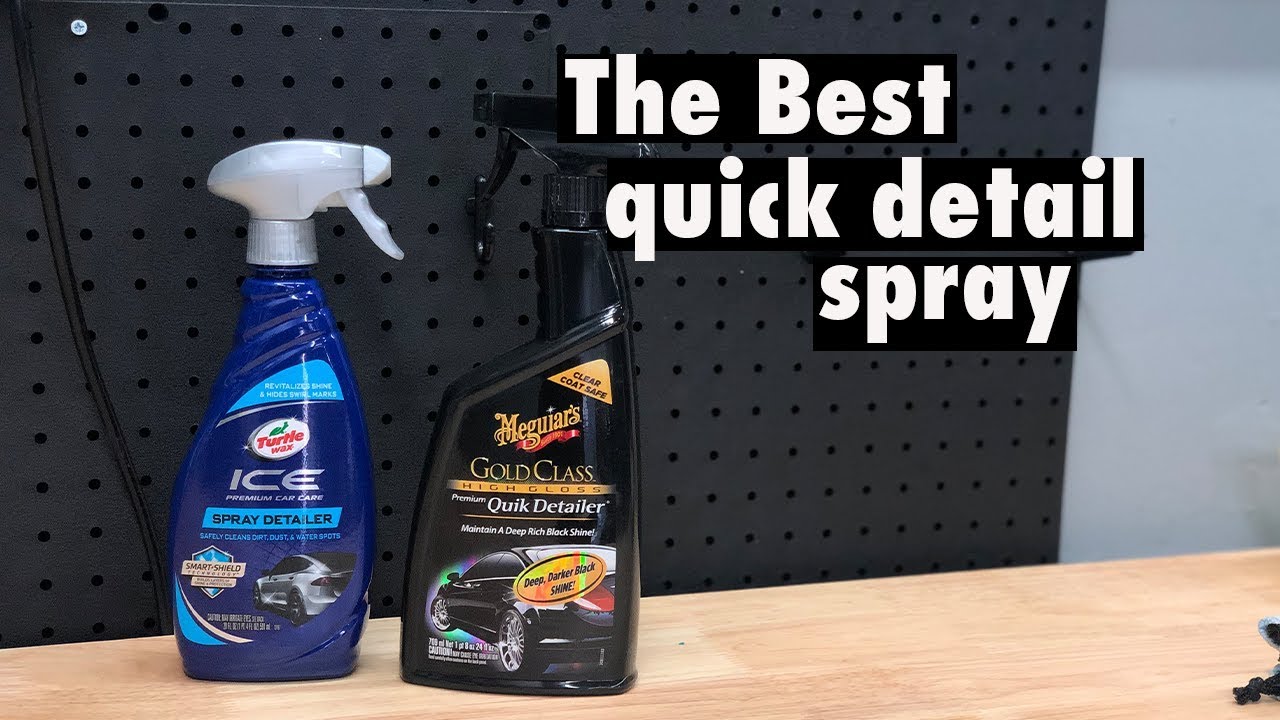
No. Meguiar’s spray detailer and spray wax are different car-care products. A spray detailer is mainly for quick cleaning and gloss after washing. A spray wax is mainly for adding a protective layer and water beading.
Some Meguiar’s detailers may leave a small amount of shine or short-term slickness. That does not make them the same as a true spray wax. The bottle name and directions matter.
For drivers in the United States, this difference is useful whether you maintain a daily driver, a truck, an SUV, or a weekend car. Use the right product for the job, and you can avoid dull paint, streaks, and unnecessary rework.

The short answer: detailer cleans, while wax protects
Meguiar’s Quik Detailer Mist & Wipe is designed to remove light dust, fingerprints, smudges, and fresh surface marks between full washes. It uses lubrication to help the towel glide across the paint.
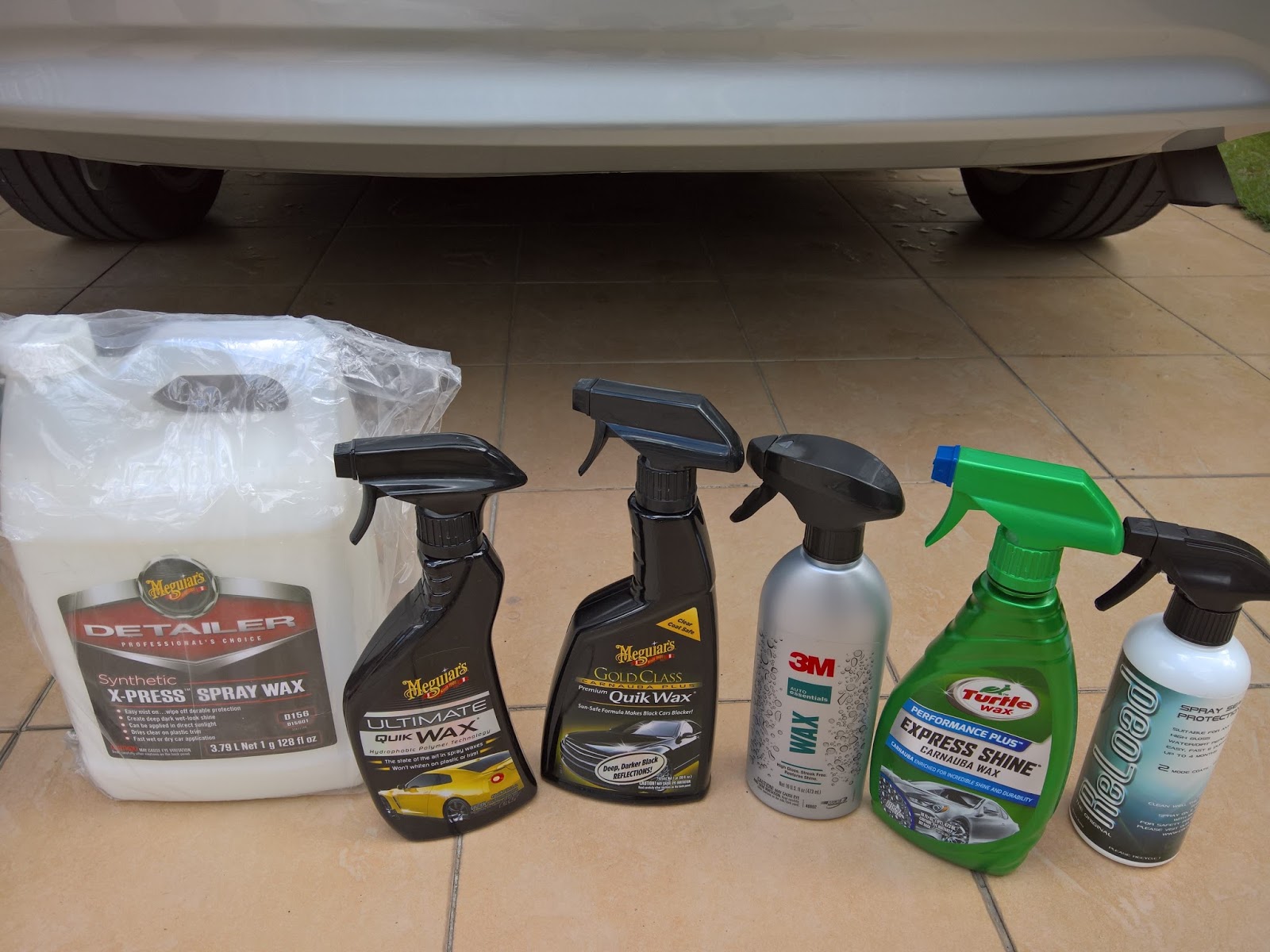
Meguiar’s spray wax products, such as Ultimate Quik Wax, are designed to spread wax or polymer protection over clean paint. They can improve gloss, slickness, and water behavior.
The two products can look similar because both come in spray bottles. Both may also make paint look brighter. Their main jobs are still different.
| Product | Main job | Best use | Adds protection? | Replaces a wash? |
|---|---|---|---|---|
| Spray detailer | Remove light surface dust and fingerprints | Between washes | May add light gloss or slickness, depending on formula | No |
| Spray wax | Add a thin protective layer | After washing or during drying | Yes, within the limits of the product | No |
| Waterless wash | Clean more dirt with more lubrication | When a normal wash is not practical | Sometimes | Not always |
| Ceramic spray product | Add a longer-lasting synthetic coating layer | Clean, prepared paint | Yes | No |
The key point is simple: a detailer is primarily a light-cleaning product, while a spray wax is primarily a protection product.

What Meguiar’s spray detailer does
A spray detailer helps remove very light contamination from a painted surface. Typical examples include dust from a garage, fingerprints near a door handle, and light water spots that have not bonded strongly to the paint.
You spray the product onto a small area, then wipe with a clean microfiber towel. The liquid provides lubrication. That lubrication helps reduce friction between the towel and the paint.
Meguiar’s Quik Detailer is not meant to remove heavy mud, road film, sand, or dried bird waste by force. Wiping a dirty panel can drag grit across the clear coat. That may create fine scratches or swirl marks.
A detail spray can also improve the look of paint. It may leave the surface smooth and glossy. However, gloss does not prove that the product has placed a durable wax layer on the vehicle.
What a detailer can usually remove
A spray detailer may work for:
- Light dust
- Fingerprints
- Fresh smudges
- Light pollen
- Small amounts of loose dirt
- Fresh bird droppings, after soaking and softening them
- Light water marks, if the label allows it
results depend on the product, the towel, the paint temperature, and the type of dirt.
What it should not remove
Do not expect a normal detail spray to safely remove:
- Thick road grime
- Mud
- Sand
- Grease
- Tar
- Tree sap
- Heavy brake dust
- Dried mineral deposits
- Large amounts of salt or winter film
For those problems, wash the vehicle with water and car shampoo first. Use a dedicated cleaner when the contaminant requires one.

What Meguiar’s spray wax does
A spray wax is made to leave a thin protective film on clean automotive paint. Depending on its formula, that film may contain natural wax, synthetic polymers, or other protective ingredients.
Meguiar’s Ultimate Quik Wax, for example, is sold as a spray wax for use on a clean vehicle. Its purpose is not to act as a main cleaner. It is intended to boost gloss and add protection with a quick application.
Spray wax can help water form beads and run off more readily. Water beading is useful as a visual sign of surface tension, but it is not a complete measure of protection. A product may protect paint even when water behavior changes over time.
Spray wax does not repair scratches. It may temporarily hide very fine marks by changing the way light reflects from the surface. It also does not replace paint correction, polishing, or a true ceramic coating.
What spray wax is best for
Use spray wax when you want to:
- Add protection after washing
- Refresh an existing wax layer
- Increase gloss
- Improve surface slickness
- Make future washing easier
- Add short-term water repellency
The exact durability depends on weather, washing habits, sun exposure, paint condition, and the product formula. Do not treat a quick spray wax as a permanent coating.

Why the two products are often confused
The confusion comes from overlapping results. Both products may make paint look glossy. Both may make the surface feel smoother. Both may be applied with a microfiber towel.
Product names also vary. One brand may call a product a “quick detailer,” while another may call a similar-looking product a “wax detailer” or “quick wax.” The word “detailer” alone does not tell you the full formula.
Meguiar’s product range includes several types of spray products. A Quik Detailer product and an Ultimate Quik Wax product should not be treated as interchangeable simply because both are quick to use.
Read the front label and directions. Look for the product’s stated role:
- “Mist & Wipe” or “Detailer” usually points to light cleaning and gloss enhancement.
- “Wax,” “protect,” or “water beading” points to paint protection.
- “Ceramic” usually refers to a synthetic protective formula, not a traditional carnauba wax.
- “Waterless wash” indicates a product designed for more cleaning power than a basic detail spray, but it still requires careful technique.
The word “quick” describes application time. It does not mean the products perform the same task.
Can you use Meguiar’s spray detailer after waxing?
Yes. A spray detailer can be used between wax applications, as long as the car only has light surface dirt and the product is compatible with the existing finish.
A detailer may remove dust and fingerprints without stripping all of the protection from a wax. However, repeated wiping can slowly reduce protection through normal cleaning, towel contact, weather, and washing.
For best results:
- Confirm that the surface has only light dust or smudges.
- Work in the shade on cool paint.
- Shake the bottle if the label directs you to do so.
- Spray a small section.
- Use a clean, soft microfiber towel.
- Wipe gently in straight or overlapping passes.
- Turn the towel to a dry side for the final wipe.
- Stop if the towel picks up gritty dirt.
Do not use a detailer as a substitute for a proper wash when the vehicle has visible grime. The more dirt on the paint, the greater the risk of moving abrasive particles across the surface.
Can you use spray wax as a detail spray?
Usually, no. Spray wax may help remove a very small amount of light residue, but it is not automatically a safe cleaner for dusty paint.
A wax product is meant to protect a reasonably clean surface. Applying it over dirt can trap contamination or spread grit. This can cause streaks and increase the chance of fine scratches.
Some products combine cleaning and protection. If the label specifically says the product is a cleaner wax, waterless wash, or detail spray with protection, follow those directions. Otherwise, assume that a spray wax should go on clean paint.
A practical rule is:
- Light dust between washes: use a detail spray.
- Clean paint that needs protection: use spray wax.
- Visible dirt or road film: wash the vehicle first.
- Heavy contamination: wash, decontaminate, or use a dedicated cleaner.

Which product should you use?
Choose based on the condition of the vehicle and your goal.
| Your situation | Better choice | Reason |
|---|---|---|
| Fingerprints on a clean car | Spray detailer | Fast, light cleaning |
| Dust on a recently washed car | Spray detailer | Adds lubrication for a gentle wipe |
| Clean paint after a wash | Spray wax | Adds a protective layer |
| Paint that looks dull but is clean | Spray wax, then assess the paint | Protection may improve gloss, but oxidation may need polishing |
| Mud or road salt | Car wash | A detailer is not enough |
| Bird dropping on the paint | Detailer or water-soaked towel | Soften before wiping |
| Want the longest coating life | Follow the coating maker’s care guide | Product compatibility matters |
If you are unsure, clean the vehicle first. Protection products work best when applied to clean, dry, cool paint.

How to apply each product safely
Applying a spray detailer
Use a detail spray only when the dirt is light and loose.
- Park in shade and let the paint cool.
- Check for heavy dirt or grit.
- Spray the product onto a small area or onto the towel, according to the label.
- Use a clean microfiber towel to lift the residue.
- Flip to a dry towel side and buff lightly.
- Inspect the paint under good light.
- Replace the towel when it becomes dirty.
Use several towels rather than one dirty towel. A clean towel gives the lifted dirt somewhere to go.
Applying a spray wax
Apply spray wax after washing unless the label gives different instructions.
- Wash and dry the vehicle.
- Check that the paint is cool and out of direct sun.
- Shake the bottle if required.
- Apply a small amount to one panel or section.
- Spread it with a clean microfiber towel.
- Use a second dry towel to remove residue.
- Check for haze, streaks, or missed areas.
- Allow the product to cure only if the label requires a wait time.
Using too much product often causes streaking. A thin, even layer is usually easier to remove and may perform better than a heavy layer.
Test the product first on an inconspicuous area. Avoid glass, matte trim, textured plastic, wraps, and painted surfaces unless the label says they are suitable.

Common mistakes to avoid
Using a detailer on a heavily dirty vehicle
This is the most serious technique mistake. A detailer adds lubrication, but lubrication cannot make heavy grit harmless. Wash the vehicle when the surface has road film, mud, sand, or salt.
Assuming gloss means wax protection
A shiny finish may come from cleaning, gloss agents, oils, polymers, or the paint’s condition. Look at the product’s stated function rather than judging by shine alone.
Applying too much spray wax
More product does not always mean more protection. Excess product can leave a greasy film or make removal harder. Start with a small amount.
Working in hot sun
Heat can cause quick drying and uneven coverage. It can also make residue difficult to remove. Shade and cool paint give you more working time.
Using a dirty towel
A towel that has picked up grit can scratch paint. Use clean microfiber towels and separate towels used on wheels, tires, and paint.
Treating water beading as a complete test
Beading can decline because of dirt, soap residue, weather, or surface wear. It is a useful clue, not a laboratory measurement of protection.

Key takeaways
- Meguiar’s spray detailer is not the same as Meguiar’s spray wax.
- A detailer is mainly for light cleaning between washes.
- A spray wax is mainly for adding gloss and protection to clean paint.
- Do not use either product to wipe heavy dirt from paint.
- Use a clean microfiber towel and work on cool paint in the shade.
- Check the exact product label because formulas and approved surfaces can differ.
- For maximum protection, apply spray wax after a proper wash.
Frequently asked questions
Does Meguiar’s Quik Detailer contain wax?
A basic Quik Detailer is primarily a detail spray for light cleaning and gloss. It should not be treated as a replacement for a dedicated spray wax. Exact ingredients can vary by product and market, so check the current bottle label and product documentation.
Does Meguiar’s Ultimate Quik Wax clean the car?
Ultimate Quik Wax is intended mainly to protect and add gloss to clean paint. It is not a substitute for washing a vehicle covered in road dirt, mud, sand, or salt.
Can spray detailer remove bird droppings?
It may help with a fresh dropping if you soak it and use plenty of lubrication. Do not rub a dried dropping hard. Let it soften first, then lift it with a clean towel. Bird waste can contain abrasive material and may etch paint if left in place.
Is spray wax better than a detail spray?
Neither is universally better. A detail spray is better for light dust and fingerprints between washes. Spray wax is better when clean paint needs added protection and gloss.
How often should you use a spray wax?
Use it according to the product label and your vehicle’s condition. Many owners apply it after a wash when water behavior or slickness declines. Frequent washing, harsh weather, and strong sun can shorten the useful life of any spray protection.
Conclusion
Meguiar’s spray detailer and spray wax serve different purposes. Use the detailer for light, between-wash cleaning. Use the spray wax on clean paint when you want a protective layer, more gloss, and improved water behavior.
The safest choice is to match the product to the surface condition. If the car is dusty, use a lubricated detail spray. If it is dirty, wash it. If it is clean and needs protection, apply a spray wax according to the label.