
To fully charge a car battery, connect the correct charger, select the right mode, and wait until charging is complete.
Learning how to fully charge a car battery is simple when you follow the right order. The battery type, charger size, temperature, and battery condition all matter. This guide explains the safe method, common mistakes, charging times, voltage checks, and signs that a battery may need replacement instead of another charge.

What You Need to Fully Charge a Car Battery
Before you begin, gather the right tools. A little preparation helps prevent sparks, wrong connections, and damage to the battery or charger.
You will usually need:
• A compatible battery charger or smart charger
• Safety glasses and chemical-resistant gloves
• A clean, dry, well-ventilated work area
• A wrench, if you need to remove the battery cables
• A digital multimeter for testing voltage
• The vehicle owner’s manual
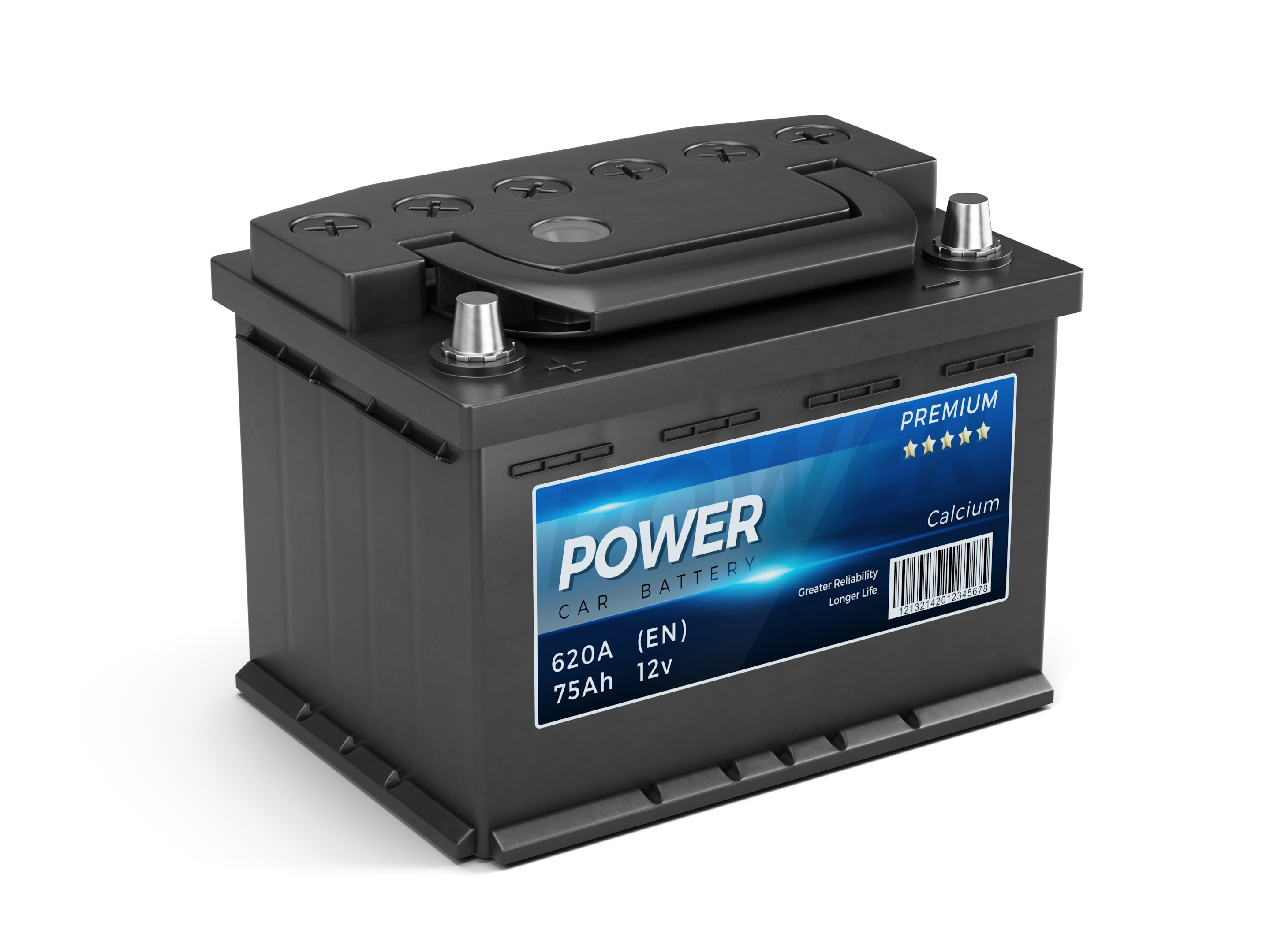
Most modern cars use a 12-volt lead-acid battery. This may be a flooded battery, an absorbed glass mat (AGM) battery, or an enhanced flooded battery (EFB). Some newer vehicles use lithium batteries, which require a charger made for lithium chemistry.
Check the label before connecting anything. The charger must match both the battery voltage and battery type. A standard charger can harm an AGM or lithium battery if the settings are wrong.
Check the Battery Before Charging
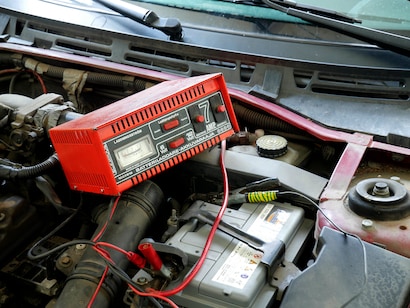
Inspect the battery before you try to fully charge a car battery. Do not charge a battery that is cracked, leaking, badly swollen, or frozen. These problems can cause fire, chemical exposure, or an explosion.
Look for:
• Cracks in the case
• Acid leaks or wet areas
• A strong rotten-egg smell
• Bulging sides or a raised top
• Loose, damaged, or heavily corroded terminals
If the battery is frozen, let it warm naturally in a safe place. Do not use a heat gun, hair dryer, or open flame. A frozen battery can rupture when charging begins.
Turn off the vehicle and remove the key. Switch off the headlights, radio, climate controls, and other electrical equipment. If the battery is inside the cabin or trunk, follow the vehicle manual because charging may require special ventilation or connection points.
A battery that reads less than about 10.5 volts may have a shorted cell or severe damage. Some smart chargers will not detect it. Do not force a charge unless the battery maker gives clear instructions.
Choose the Right Battery Charger
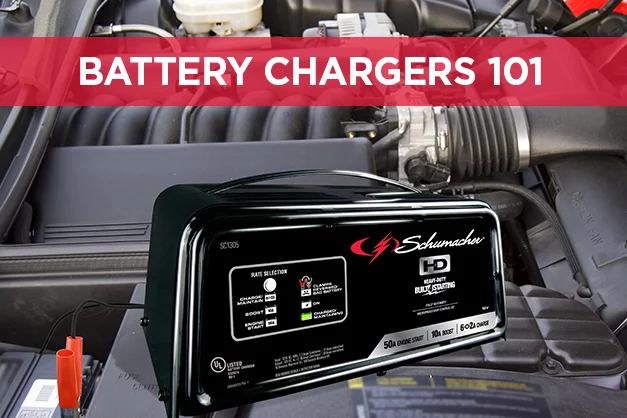
The best charger for most drivers is a smart battery charger. It checks the battery as it charges and reduces or stops current when the battery reaches full charge. This helps prevent overcharging.
Common charger types include:
Smart chargers
Smart chargers are the safest choice for routine use. They often provide several stages:
• Diagnosis
• Bulk charging
• Absorption charging
• Float or maintenance charging
This staged process is important because a battery may reach a high voltage before it has stored all the energy it can accept. The charger must slow down and finish the process carefully.
Trickle chargers
A trickle charger sends a small, steady current. It can maintain a charged battery, but it may not be the best choice for charging a deeply discharged battery. Some older trickle chargers can overcharge a battery if left connected too long.
Battery maintainers
A maintainer is designed for long-term storage. It keeps a healthy battery near full without continuously forcing a high current into it. This works well for a seasonal car, classic car, or vehicle that sits for weeks.
Manual chargers
Manual chargers can work, but they need close attention. They may continue charging after the battery is full. Leaving one connected too long can cause overheating, water loss, and battery damage.
For most drivers, a 4-amp to 10-amp smart charger is a useful range. A low amp setting is gentler, while a higher setting may charge faster. Always follow the battery and charger instructions first.
How to Fully Charge a Car Battery Step by Step
Follow these steps to fully charge a car battery safely.
1. Park in a safe place
Park on a level surface in a dry, well-ventilated area. Keep the charger away from rain, gasoline, sparks, cigarettes, and open flames. Charging lead-acid batteries can produce hydrogen gas, which can ignite.
Open the garage door if you are charging inside a garage. Do not charge a battery in a sealed room or enclosed vehicle cabin.
2. Turn off the charger
Make sure the charger is unplugged or switched off before connecting the clamps. This reduces the chance of sparks at the battery terminals.
3. Connect the positive clamp
Attach the red clamp to the positive terminal, marked with a plus sign. Make sure the clamp grips clean metal and cannot slip off.
4. Connect the negative clamp
Attach the black clamp to the negative terminal, marked with a minus sign. On many vehicles, the manufacturer recommends connecting the negative clamp to a solid, unpainted metal ground point on the engine or chassis instead.
Using a ground point may reduce the risk of sparks near the battery. Always follow the vehicle manual, especially in cars with battery monitoring systems.
5. Select the correct settings
Set the charger for:
• 12 volts
• The correct battery chemistry
• AGM mode, if the battery is AGM
• The recommended charging rate
Never use a 24-volt setting on a normal 12-volt car battery. Double-check the selection before turning the charger on.
6. Start the charging process
Plug in the charger or switch it on. A smart charger may spend a short time testing the battery before it begins charging.
If the charger displays an error, stop and check the connections. The battery may be too weak, damaged, connected backward, or incompatible with the charger.
7. Let the battery complete every stage
Do not stop charging just because the charger shows a high voltage or because the engine starts. To fully charge a car battery, let the charger reach its full or maintenance indication.
A battery can start the engine and still be only partly charged. Starting uses a short burst of power, while a full charge requires more time.
8. Switch off and disconnect the charger
When charging is complete, switch off the charger and unplug it. Disconnect the black clamp first, then the red clamp. Keep the clamps from touching each other.
9. Test the battery after resting
Let the battery rest for at least 30 minutes, if possible. Measure voltage with a multimeter.
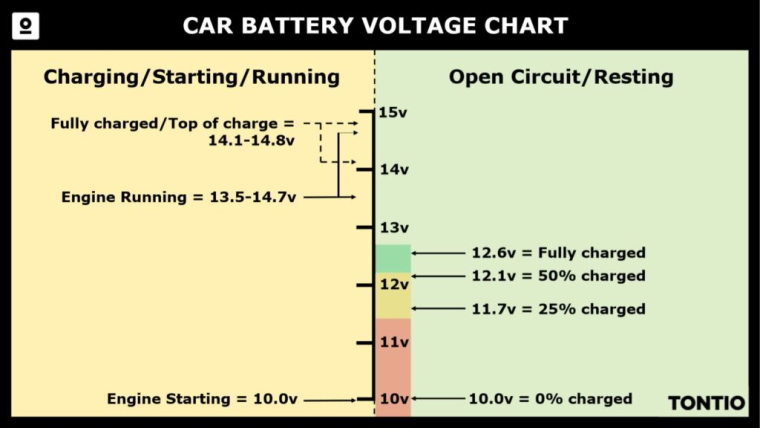
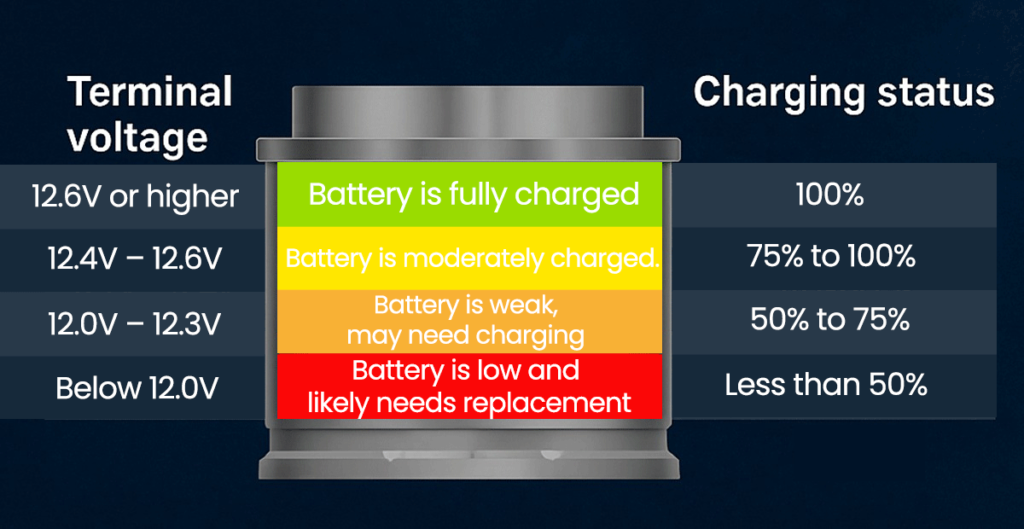
A healthy, fully charged 12-volt lead-acid battery often reads about 12.6 to 12.8 volts at rest. A reading near 12.4 volts suggests partial charge, while 12.2 volts is roughly half charged. These values can vary with temperature, battery age, and design.
How Long Does It Take to Fully Charge a Car Battery?
Charging time depends on the battery’s capacity, its starting charge, and the charger’s output. A simple estimate is:
Charging time in hours = battery capacity in amp-hours ÷ charger output in amps
For example, a 60 amp-hour battery charged at 6 amps may need about 10 hours in ideal conditions. Real charging often takes longer because the charger slows down near the end and some energy becomes heat.
Typical charging times may look like this:
• A slightly low battery with a 10-amp charger: about 2 to 4 hours
• A half-discharged battery with a 6-amp charger: about 6 to 10 hours
• A deeply discharged battery with a 4-amp charger: about 12 to 24 hours
• A maintenance charger: several hours to days, depending on battery condition
These are estimates, not guarantees. A weak battery may never reach full charge. Cold weather also slows chemical activity, while very hot conditions can increase the risk of overheating.
Do not choose a very high charging rate simply to save time. Fast charging can create excess heat and stress, especially in an old or damaged battery. Slow and controlled charging is usually better for battery life.
How to Know When the Battery Is Fully Charged
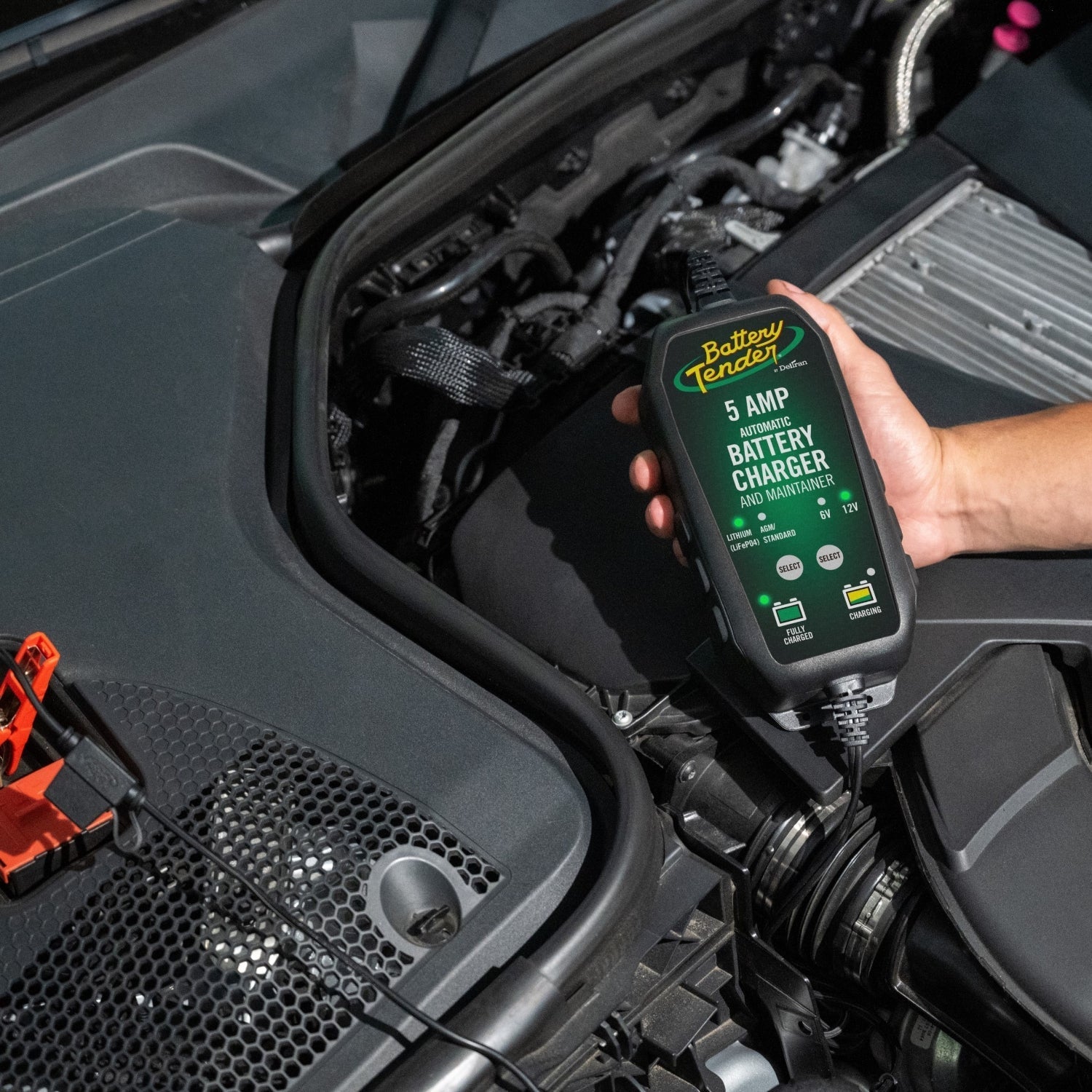
The charger’s display is the first thing to check. A smart charger may show “full,” “charged,” “complete,” or “float.” Some chargers change from a charging light to a green light.
You can also use a multimeter after the battery rests. Place the red probe on the positive terminal and the black probe on the negative terminal.
General resting voltage readings include:
• 12.6 to 12.8 volts: usually fully charged
• 12.4 volts: partly charged
• 12.2 volts: about half charged
• 12.0 volts or lower: heavily discharged
Voltage alone does not prove that the battery is healthy. A failing battery can show a normal voltage soon after charging but lose that voltage quickly. A professional load test can reveal whether the battery can deliver enough power to start the engine.
In my practical experience with charging systems, one common mistake is checking the voltage immediately after disconnecting the charger. This can show a temporary “surface charge.” Waiting before testing gives a more useful result.
Should You Remove the Battery Before Charging?
You do not always need to remove the battery. Many vehicles allow charging while the battery remains installed, as long as you connect the charger at the correct points and follow the owner’s manual.
Removing the battery may be helpful when:
• The battery is in a tight or poorly ventilated space
• The battery needs cleaning or inspection
• The manufacturer requires removal
• You are using a charger with special instructions
• The vehicle has a complex electrical system
Some modern vehicles use battery management sensors, computer memory, and start-stop technology. Disconnecting the battery can reset settings or require a battery registration procedure. For these vehicles, charging through the approved under-hood terminals may be better.
Never lift a large battery carelessly. Car batteries are heavy, and their acid can damage clothing, skin, and painted surfaces.
How to Charge a Car Battery Without Removing It
To fully charge a car battery while it is installed, first read the vehicle manual. Locate the recommended positive charging post and ground point.
Then:
-
Turn off the vehicle and all electrical accessories.
-
Confirm that the charger is unplugged.
-
Connect the red clamp to the positive charging post.
-
Connect the black clamp to the approved ground point.
-
Select the correct voltage, chemistry, and charge rate.
-
Start the charger.
-
Wait until the charger indicates a complete charge.
-
Turn off and unplug the charger.
-
Remove the black clamp, then the red clamp.
If the vehicle manual says to connect directly to the battery terminals, follow that instruction instead. Manufacturers use different charging layouts, so one method does not fit every car.
Can You Fully Charge a Car Battery by Driving?
Driving can recharge a battery, but it may not fully charge a deeply discharged battery. The alternator is mainly designed to maintain battery charge and power the vehicle’s electrical systems while the engine runs.
A short trip may replace only some of the energy used during starting. Idling in the driveway is also not an efficient way to charge the battery. The alternator may produce less useful output at idle, while the car’s lights, fans, computers, and other systems consume power.
If the battery needed a jump-start, drive only if the vehicle is safe and the battery is not damaged. Then use a proper charger as soon as possible. Learning how to fully charge a car battery with a charger is more reliable than depending on a long drive.
Repeatedly needing a jump-start may point to another issue, such as:
• A failing battery
• A weak alternator
• Corroded battery cables
• A parasitic electrical drain
• Lights or accessories left on
Safety Rules for Charging a Car Battery
Battery charging is usually safe when done correctly, but lead-acid batteries contain corrosive acid and can release flammable gas. Treat the process with care.
Follow these rules:
• Wear eye protection and gloves.
• Keep flames, sparks, and cigarettes away.
• Do not place metal tools across the battery terminals.
• Do not charge a swollen, cracked, leaking, or frozen battery.
• Do not reverse the positive and negative connections.
• Do not cover the battery or charger while charging.
• Stop if the battery becomes very hot, swells, leaks, or makes unusual sounds.
• Keep children and pets away from the work area.
If acid touches your skin, rinse with plenty of clean water. If it enters your eyes, flush them with water and seek urgent medical care. Do not use baking soda in your eyes or delay professional help.
Lithium batteries need extra care. Use only a charger approved for the specific lithium battery chemistry and vehicle system. Never assume a charger made for a lead-acid battery is safe for lithium use.
Common Mistakes to Avoid
Small errors can reduce battery life or create safety problems. Avoid these common mistakes when you fully charge a car battery.
Using the wrong charger mode
AGM batteries often need a different charging profile than flooded batteries. Selecting the wrong mode can lead to undercharging or overheating.
Charging too fast
A high amp setting may seem convenient, but it can produce heat and stress. Use the lowest practical setting that matches the battery maker’s guidance.
Stopping too early
A charger may show a high voltage before the battery is completely charged. Allow the absorption and finishing stages to end.
Leaving a manual charger connected
A manual charger may continue pushing current after the battery is full. Monitor it closely and disconnect it according to the instructions.
Ignoring corrosion
Corrosion adds resistance and can prevent the battery from receiving or delivering power properly. Clean terminals only with the correct method, and avoid letting debris enter the battery vents.
Assuming a full charge fixes a bad battery
Charging restores energy, but it cannot repair damaged plates, a shorted cell, or severe aging. If the battery quickly loses charge, test it or replace it.
I have seen many drivers replace a battery when the real problem was a loose ground cable. I have also seen people keep charging an old battery that could no longer hold energy. Check both the battery and the vehicle’s charging system before spending money.
How to Keep a Car Battery Fully Charged
Good maintenance can reduce battery problems and extend service life. A battery that stays near full charge usually handles starting demands better than one that remains partly discharged.
Helpful habits include:
• Drive long enough to replace the energy used during starting.
• Turn off lights and accessories before leaving the car.
• Clean corrosion from the terminals.
• Check that the battery hold-down is tight.
• Use a battery maintainer during long storage.
• Test the battery before extreme winter or summer weather.
• Inspect the charging system if the battery keeps going flat.
Many starting batteries last about three to five years, but climate, driving habits, vibration, and maintenance affect this range. Extreme heat can speed internal wear, while cold weather exposes a weak battery by making the engine harder to crank.
A smart maintainer is useful for vehicles that sit for long periods. It should be compatible with the battery type and designed for continuous connection.
When to Replace the Battery Instead of Charging It
Charging is not the answer when the battery has physical damage or cannot hold energy. Consider replacement if:
• The battery case is swollen or cracked.
• The battery leaks.
• The battery repeatedly goes flat after charging.
• The engine cranks slowly even after a full charge.
• A load test shows poor capacity.
• The battery is beyond its normal service life.
• The charger reports a permanent fault.
A battery test at an auto parts store or repair shop can often show starting power and overall condition. Ask for a charging-system test too. A new battery may also fail quickly if the alternator is not charging correctly.
If the battery goes dead overnight, a parasitic drain may be pulling power while the car is parked. Common causes include a trunk light, aftermarket alarm, dash camera, or faulty electronic module.
Frequently Asked Questions About How to Fully Charge a Car Battery
How do I know if my car battery is fully charged?
A smart charger usually displays a full or maintenance status. After the battery rests, a healthy 12-volt lead-acid battery often measures about 12.6 to 12.8 volts.
Can I leave a car battery charger connected overnight?
You can usually leave a compatible smart charger connected overnight when the manufacturer allows it. Do not leave a basic manual charger connected unattended because it may overcharge the battery.
How long does it take to fully charge a dead car battery?
It may take about 12 to 24 hours with a low-current charger, but the time depends on battery size and condition. A damaged battery may never reach a full charge.
Can I charge my car battery while it is still connected?
Many vehicles allow this, but you must follow the owner’s manual. Use the approved charging posts or ground point, especially on vehicles with battery monitoring systems.
Is it better to charge a car battery slowly?
Slow charging is often safer and gentler, especially for a deeply discharged or older battery. A smart charger can automatically lower the current as the battery nears full charge.
Can a completely dead car battery be recharged?
Sometimes it can, if the battery is discharged but still healthy. If it has a shorted cell, severe sulfation, physical damage, or very low voltage, replacement may be necessary.
Will driving fully charge a car battery?
Driving may restore some charge, but it may not fully recharge a deeply discharged battery. A suitable battery charger provides a more complete and controlled charge.
Conclusion
To fully charge a car battery, inspect it first, use a charger that matches its type, connect the clamps correctly, and allow every charging stage to finish. A smart charger is usually the easiest and safest choice for home use.
Remember that a full voltage reading does not always mean the battery is healthy. If the battery repeatedly loses power, have the battery, alternator, cables, and possible electrical drains tested. Follow these steps carefully, and you can charge with more confidence while protecting both your vehicle and your battery. Share your charging experience or explore more vehicle maintenance guides to keep your car ready for the road.