To jump a car with a portable battery, connect the clamps correctly, start the booster, and crank the engine briefly.
A portable jump starter can bring a dead 12-volt car battery back to life in minutes. The key is not speed, but safe order, clean connections, and the right type of booster. This guide explains how to jump a car with a portable battery, what to check first, common mistakes, and what to do after the engine starts.
What Is a Portable Car Battery Jump Starter?
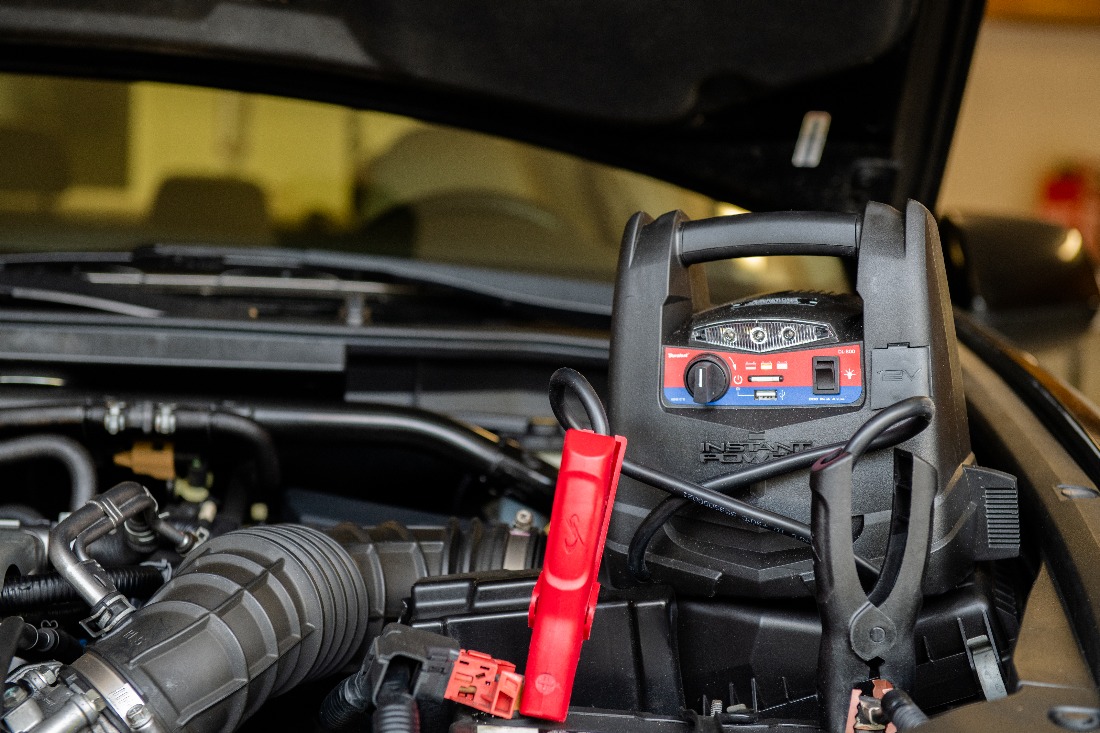
A portable battery jump starter is a compact power pack made to send a strong burst of current to a vehicle’s starter motor. It is also called a jump box, battery booster, or portable jump starter.
Unlike a phone power bank, a proper car jump starter has heavy-duty cables and clamps. It is designed for a 12-volt vehicle system, which is used by most cars, SUVs, and light trucks.
A jump starter does not always recharge a weak battery fully. Think of it as a helping hand that gives the starter enough power to turn the engine. The alternator may recharge the battery after the car runs, but a damaged battery may still need replacement.
Before learning how to jump a car with a portable battery, check these points:
• The jump starter is charged.
• The vehicle uses a 12-volt electrical system.
• The booster can handle the engine size.
• The battery is not cracked, leaking, swollen, or frozen.
• The vehicle is in park or neutral, with the parking brake set.
Many jump starters list a peak amp rating. This number can look impressive, but it is not the only factor that matters. Cold weather, engine size, battery condition, and cable quality also affect performance.
What You Need Before You Start
Good preparation makes how to jump a car with a portable battery much easier and safer. Park the car on a firm, level surface away from traffic. If you are on the roadside, turn on the hazard lights and stay clear of moving vehicles.
Read the instructions that came with the jump starter. Some models require the power pack to be turned on before starting. Others activate automatically when the clamps detect a battery.
Gather these items:
• A charged portable jump starter
• Safety glasses, if available
• Work gloves, if available
• The vehicle owner’s manual
• A flashlight for night use
Turn off the car’s lights, radio, climate control, seat heaters, and other accessories. Open the hood and locate the battery or the manufacturer’s approved jump points.
Some vehicles place the battery in the trunk, under a seat, or behind a cover. Modern cars may also have special positive and ground terminals under the hood. Always use the points shown in the owner’s manual.
Do not attempt a jump if the battery smells strongly of sulfur, leaks fluid, has a damaged case, or appears frozen. A frozen battery can crack or explode when electrical power is applied.

How to Jump a Car With a Portable Battery
Follow these steps in order. The exact process can vary by brand, so the jump starter manual takes priority if it gives different instructions.
1. Turn off the vehicle
Place the transmission in park for an automatic vehicle or neutral for a manual vehicle. Set the parking brake and remove the key or turn off the ignition.
Keep all people away from the engine bay while you connect the clamps. Do not allow the metal clamps to touch each other.
2. Identify the battery terminals
Find the positive and negative terminals. The positive terminal usually has a plus sign and may have a red cover. The negative terminal has a minus sign and is often connected to a black cable.
Clean away heavy dirt or corrosion if needed. A poor connection can prevent the jump starter from working.
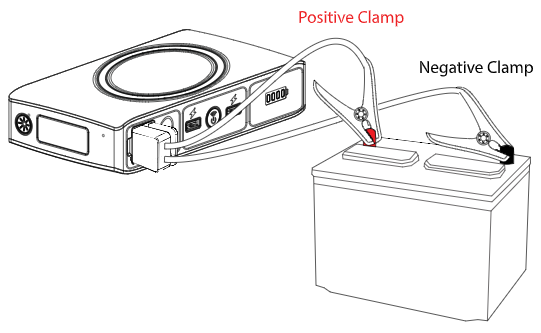
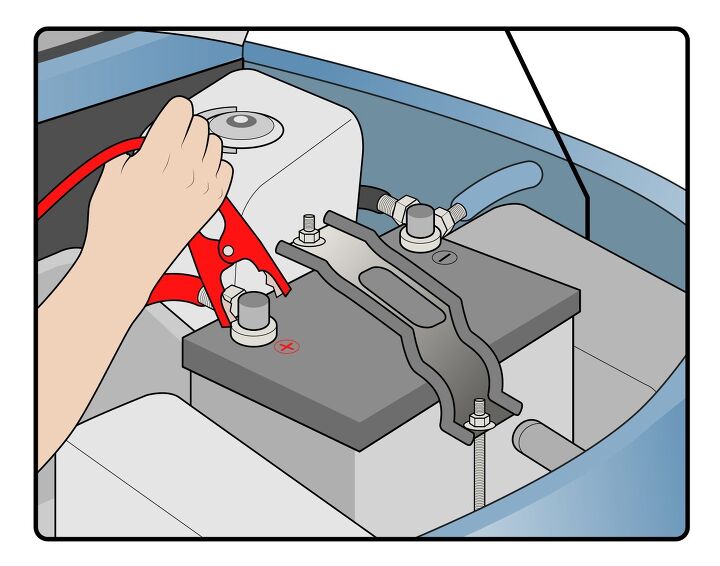
3. Connect the red positive clamp
Attach the red clamp to the positive terminal marked with a plus sign. Make sure the clamp grips clean metal and cannot slip off.
Do not connect the red clamp to a random metal part of the engine. It belongs on the positive terminal or the approved positive jump point.
4. Connect the black negative clamp
Attach the black clamp to a solid, unpainted metal ground point on the engine or vehicle frame. Choose a point away from the battery, fuel lines, belts, and moving parts.
Some jump starter brands allow the black clamp to connect directly to the negative battery terminal. If the manufacturer recommends a vehicle ground point, follow that instruction.
5. Turn on the jump starter
Switch on the portable battery if your model has a power button. Check the indicator lights or display.
Many devices have reverse-polarity protection. Even so, never rely on that feature as a substitute for correct connections. If the warning light sounds or flashes, turn the unit off and check both clamps.
6. Start the engine
Sit in the driver’s seat and try to start the car. Crank the engine for no more than about three to five seconds at a time.
If the engine does not start, wait for around 30 seconds before trying again. Repeated long cranks can overheat the starter motor and drain the portable battery.
Try no more than two or three attempts unless the jump starter manual says otherwise. If the engine still will not turn over, the problem may not be the battery.
7. Turn off and remove the jump starter
Once the engine runs, turn off the portable jump starter if the instructions require it. Remove the clamps in reverse order:
-
Remove the black clamp from the vehicle ground.
-
Remove the red clamp from the positive terminal.
-
Keep the clamps apart while storing them.
Do not let the clamps touch the engine, each other, or other metal parts while the jump starter is active.
This step-by-step process is the safest general method for how to jump a car with a portable battery. Some newer vehicles use special charging posts, so check the manual when in doubt.
What to Do After the Car Starts
Leave the engine running for at least 15 to 30 minutes if it is safe to do so. Driving is usually more useful than idling because the alternator produces power as the engine runs, but it may not fully recharge a deeply discharged battery.
Avoid turning the car off right away. If the battery is weak, the vehicle may not start again without another boost.
Watch for warning signs:
• The battery warning light stays on.
• The headlights pulse or become dim.
• The engine stalls after starting.
• The car needs another jump soon.
• Electrical features act strangely.
These signs can point to a failing battery, loose battery cable, poor ground, or charging system problem. A repair shop can test the battery and alternator with the correct equipment.
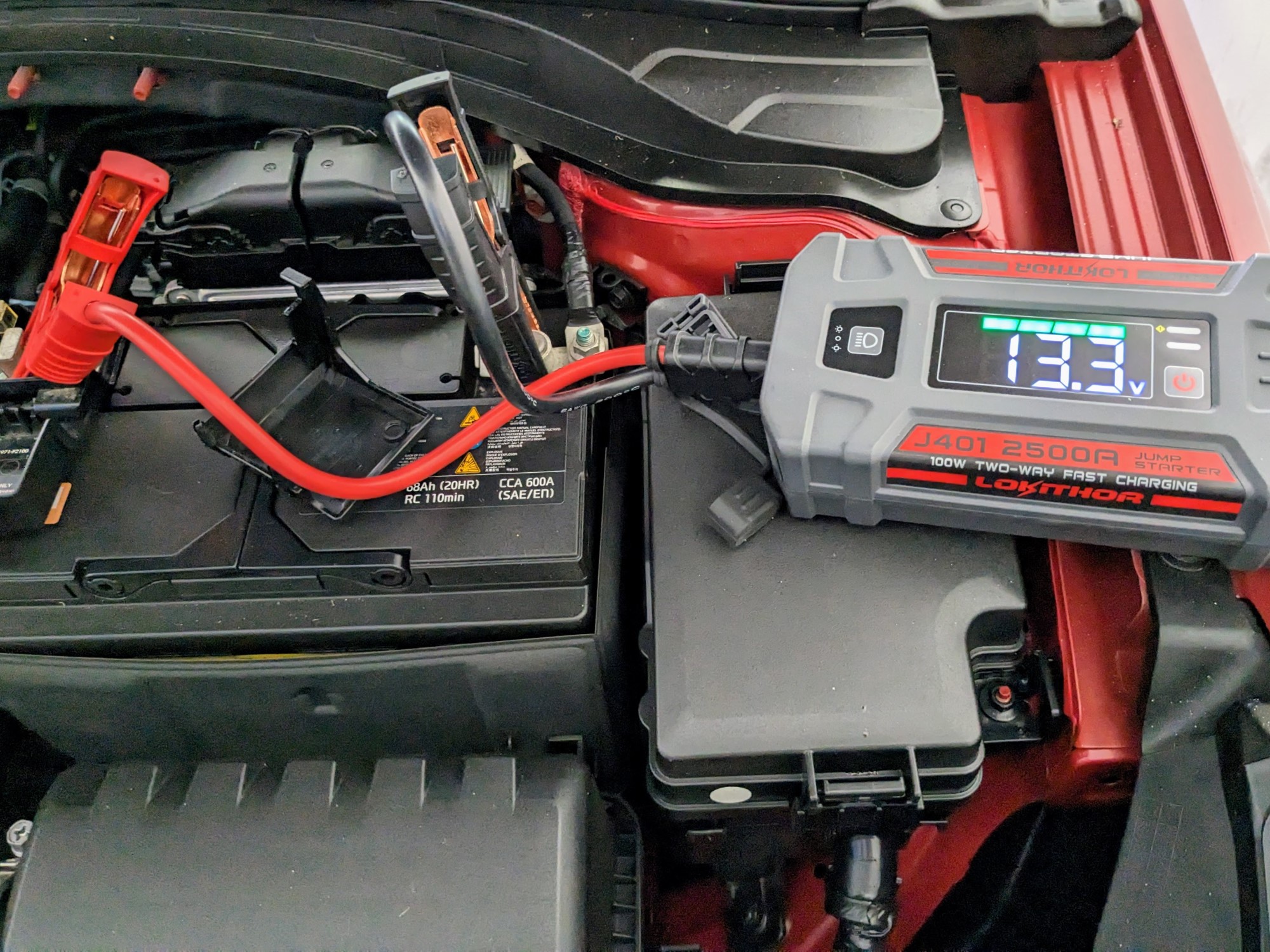
A healthy charging system often produces roughly 13.5 to 14.8 volts while the engine runs, though the correct range varies by vehicle. Do not diagnose the system by voltage alone, especially on vehicles with smart charging systems.
Recharge the portable jump starter as soon as possible. A unit left empty in the trunk may not help during the next emergency.

Common Mistakes to Avoid
Learning how to jump a car with a portable battery also means knowing what not to do. Most problems come from rushed connections or using the wrong equipment.
Connecting the clamps backward
Reversed polarity can damage fuses, electronics, or the jump starter. Always match red with positive and black with a suitable ground point.
Using a small power bank
A phone charger cannot provide the heavy current needed by a starter motor. Use a jump starter made for cars and rated for your engine.
Cranking for too long
Long cranking creates heat and can damage the starter. Use short attempts, then pause.
Clamping onto dirty metal
Rust and corrosion can block current. Attach the clamps to clean, solid metal.
Ignoring the vehicle manual
Some hybrid and luxury vehicles have special jump points. They may also have sensitive electrical systems that require a specific procedure.
Jumping a damaged battery
A cracked or leaking battery is not safe to boost. Call roadside assistance or a trained technician.
Leaving the jump starter connected
Once the engine starts, remove the booster as soon as it is safe. Leaving it connected can create a short circuit or damage equipment.
A simple habit helps: pause before connecting and say “positive, ground” to yourself. That small check can prevent a costly mistake.
Portable Jump Starter Safety Tips
Safety should come before getting back on the road. A car battery stores a large amount of energy, even when the engine is off.
Keep sparks and flames away from the battery. Do not smoke near the engine bay. Battery charging can produce flammable hydrogen gas, especially in poorly ventilated areas.
Follow these safety rules:
• Wear eye protection when possible.
• Keep jewelry, tools, and loose clothing away from moving belts and fans.
• Do not place the jump starter on a hot engine.
• Do not use damaged cables or cracked clamps.
• Never connect a 12-volt booster to a high-voltage hybrid battery.
• Keep children away from the vehicle during the jump.
• Stop if the cables become hot, smoke appears, or you smell burning plastic.
Cold weather also matters. Batteries lose starting power in low temperatures, while engine oil becomes thicker. A jump starter may need a full charge and a strong connection to start a cold engine.
If the car has been exposed to deep water, flooding, or major collision damage, do not attempt a jump. Water and damaged wiring can create a serious shock or fire risk.

How to Choose the Right Portable Battery
The best portable jump starter depends on your vehicle and climate. A small unit may work well for a compact four-cylinder car, while a larger SUV, truck, or diesel engine may need more power.
Consider these features:
• Engine compatibility: Check whether the unit supports gasoline, diesel, or both.
• Starting current: Look at the recommended engine size and starting amps, not only peak amps.
• Cable length: Longer cables make it easier to reach awkward battery locations.
• Reverse-polarity protection: This feature can warn you about incorrect connections.
• Overload protection: It helps protect the unit during a difficult start.
• Battery capacity: A higher capacity may provide more jump attempts.
• Weather rating: A sturdy, temperature-resistant case is useful for trunk storage.
• Built-in light: A flashlight or emergency strobe can help at night.
• USB ports: These are useful for phones but should not replace the unit’s jump-start function.
For regular roadside use, choose a reputable model with clear instructions and a warranty. Do not buy based only on the largest advertised amp number. Independent testing, clamp quality, and safety features are often more important.
Why a Car Battery Dies
Understanding the cause can help prevent another dead battery. A battery may lose power because a light was left on, the vehicle sat unused, or the weather became very cold.
Other common causes include:
• An old battery near the end of its service life
• A failing alternator
• Loose or corroded battery terminals
• A parasitic electrical drain
• Short trips that do not restore starting power
• Extreme heat or cold
Car batteries often last several years, but climate, driving habits, and vehicle design affect their life. Hot weather can speed up internal battery wear, while cold weather makes weak batteries show their problems.
If the car needs a jump more than once, do not treat the portable booster as a permanent fix. Have the battery and charging system tested. Repeated jumps may hide a fault that could leave you stranded again.

Portable Battery vs. Traditional Jumper Cables
A portable jump starter and jumper cables serve the same basic purpose, but they work in different ways.
Jumper cables need another vehicle with a healthy battery. They can provide strong power, but the second vehicle must be parked safely and connected correctly.
A portable battery works alone. It is convenient, especially when you are traveling, parked in a garage, or stranded without another driver. It also reduces the risk of moving two vehicles close together.
Portable units have limits. They must be charged, stored properly, and replaced when their internal battery loses capacity. Jumper cables are simpler, but they depend on another vehicle.
Many drivers keep both in the trunk. A charged portable jump starter is the faster emergency tool, while quality jumper cables provide a useful backup.
A Practical Example
Imagine your car clicks once but the engine does not turn over after sitting overnight. The interior lights are weak, and the battery is several years old.
First, switch off every accessory and inspect the battery. If the case is intact and there is no leak or strong odor, connect the red clamp to positive and the black clamp to a solid engine ground.
Turn on the booster and try a short crank. If the engine starts, remove the clamps in reverse order, drive to a safe location, and have the battery tested rather than assuming the problem is solved.
One lesson worth remembering is that a jump start treats the symptom, not always the cause. A portable battery can get you moving, but a battery test can tell you why the car stopped in the first place.
Frequently Asked Questions About How to Jump a Car With a Portable Battery
Can I jump any car with a portable battery?
Most portable jump starters are made for 12-volt cars, SUVs, and light trucks. Check the device rating before use, especially for diesel engines, large engines, hybrids, and commercial vehicles.
How long should I let a car run after a jump?
Let it run or drive for about 15 to 30 minutes if conditions are safe. This may restore some charge, but a deeply discharged or damaged battery still needs testing or replacement.
Why will my car not start with a portable jump starter?
The clamps may have a poor connection, the booster may be low on charge, or the vehicle may have a failed starter, alternator, fuse, or fuel system. A damaged battery can also prevent a successful jump.
Can I connect the black clamp directly to the negative battery terminal?
Some manufacturers allow it, while others recommend a clean, unpainted engine ground. Follow the jump starter and vehicle instructions, and keep the negative connection away from a damaged or leaking battery.
Is it safe to jump a car in the rain?
A light rain does not always prevent a jump, but avoid standing water and never use damaged equipment. Keep the jump starter and electrical connections as dry as possible, and stop if conditions become unsafe.
Can a portable jump starter recharge my car battery?
It can provide enough power to start the engine, but it is not normally a battery charger. The alternator may restore some charge while driving, but a proper charger is better for a full recharge.
Conclusion
Knowing how to jump a car with a portable battery can turn a stressful breakdown into a short roadside repair. Use a charged 12-volt jump starter, connect red to positive, connect black to a safe ground, crank for only a few seconds, and remove the clamps in reverse order.
Never jump a leaking, cracked, frozen, or badly damaged battery. If the car needs repeated boosts, have the battery and charging system checked instead of relying on another jump.
Charge your portable booster today, store it where you can reach it, and keep the vehicle manual nearby. Share your own roadside tips or explore more car-care guides to stay ready for the next emergency.