Your car needs a battery with the correct group size, CCA rating, terminal layout, and technology.
Knowing what battery does my car need is more than matching a battery to your vehicle’s make and model. The right choice must fit the battery tray, deliver enough starting power, and work with your car’s charging system. This guide explains how to find the correct battery with confidence, avoid costly mistakes, and know when a standard, AGM, or EFB battery is best.
What battery does my car need?
The safest answer comes from your owner’s manual, the label on your current battery, or a trusted vehicle fitment guide. These sources usually list the battery group size, minimum cold cranking amps, battery type, and sometimes the required reserve capacity.
Your car may need a battery such as Group 35, Group 24F, Group 48, or Group 94R. The group number describes the battery’s outside size, terminal position, and general fit. It does not simply mean the battery is stronger or weaker.
When asking, “what battery does my car need,” check these five details:
- Battery group size
- Cold cranking amps, or CCA
- Reserve capacity, or RC
- Battery type, such as flooded, AGM, or EFB
- Terminal location and post design
A battery can look close to the correct one and still cause trouble. It may not sit securely, the cables may not reach, or the positive terminal may be on the wrong side. In the worst case, the wrong layout can create a short circuit.
The key battery specifications explained
Battery group size
Battery group size is a standard code used to describe a battery’s physical dimensions and terminal arrangement. Examples include Group 24, 24F, 35, 48, 49, 51R, and 94R.
The letter matters. A Group 24F battery and a Group 24 battery may have different terminal positions. The “R” in a group such as 51R or 94R usually indicates a reversed terminal layout.
Always compare the group size with your vehicle guide. Do not assume that a battery with the same voltage will fit.
Cold cranking amps
Cold cranking amps measure how much current a battery can provide at 0°F for 30 seconds while maintaining a safe voltage. A higher CCA rating can help in cold weather, but more is not always better.
Your vehicle maker sets a recommended minimum. Matching or slightly exceeding that number is usually fine if the battery also fits and works with the charging system. Installing a battery with a much higher rating may offer little benefit if the alternator and vehicle electronics were not designed around it.
Reserve capacity
Reserve capacity shows how long a fully charged battery can power selected electrical loads if the alternator stops working. It is measured in minutes.
Reserve capacity matters if you drive in heavy traffic, use many accessories, or own a vehicle with high electrical demand. However, it should not replace the correct group size and CCA rating.
Voltage
Nearly every modern passenger car uses a 12-volt battery. The actual voltage of a healthy, fully charged battery is often around 12.6 volts when the engine is off.
Voltage alone does not tell you what battery does my car need. Two 12-volt batteries may have very different sizes, terminal layouts, CCA ratings, and internal designs.
Amp hours
Amp hours are more common in deep-cycle and electric vehicle battery discussions than in ordinary starter battery shopping. A standard car battery is designed to deliver a strong burst of power, not to run accessories for hours with the engine off.
For a normal gas-powered car, focus first on group size, CCA, battery type, and terminal position.

How to find the correct battery for your car
You can usually identify what battery does my car need in a few minutes. Start with the easiest source, then confirm the details before buying.
1. Check the owner’s manual
The owner’s manual is often the most reliable starting point. Look under sections such as “battery,” “specifications,” “maintenance,” or “replacement parts.”
Some manuals list one battery for normal models and another for vehicles with start-stop technology. Read the notes carefully.
2. Read the current battery label
The battery label may show the group number, CCA, RC, and technology. You might see a label such as:
- Group 48
- 760 CCA
- 120-minute reserve capacity
- AGM
Take a photo before removing the old battery. This simple step can prevent confusion later.
Still, do not copy the old battery without checking the manual. A previous owner may have installed an incorrect battery.
3. Use a vehicle fitment tool
Most major battery retailers provide a year, make, model, engine, and trim search. Enter all details accurately.
Engine size can change the required battery. So can a luxury package, diesel engine, hybrid system, or factory start-stop feature.
4. Ask a parts professional to confirm the fit
A trusted parts store or repair shop can compare the vehicle data with a battery catalog. Ask the person to confirm:
- Group size
- Minimum CCA
- Battery technology
- Terminal layout
- Physical dimensions
- Whether battery registration is required
This extra check is useful when your current battery label is missing or unreadable.

Choosing between flooded, AGM, and EFB batteries
Battery technology is a major part of what battery does my car need. Installing the wrong type may shorten battery life or cause charging problems.
Flooded lead-acid batteries
A flooded lead-acid battery is the traditional type found in many cars. It uses liquid electrolyte and is often the least expensive option.
It works well in vehicles with basic electrical systems and no demanding start-stop function. Many modern flooded batteries are maintenance-free, so you do not need to add water.
AGM batteries
AGM means absorbent glass mat. The electrolyte is held in fiberglass mats inside the battery. AGM batteries are sealed, spill-resistant, and built to handle higher electrical demand and more vibration.
AGM batteries are common in vehicles with:
- Start-stop systems
- Heated seats and steering wheels
- Advanced safety systems
- High-powered audio systems
- Many electronic control modules
- Regenerative braking
If your car came with an AGM battery, replace it with another AGM battery unless the manufacturer specifically allows a different type. A standard flooded battery may not handle the same cycling load.
EFB batteries
EFB means enhanced flooded battery. It is an improved flooded design made for vehicles with moderate start-stop use.
An EFB battery is often found in entry-level start-stop cars. Some vehicles can accept an AGM upgrade, but the vehicle maker’s specifications should guide that choice.
Hybrid and electric vehicles
Hybrid vehicles often use two different battery systems. A high-voltage battery powers the electric drive system, while a smaller 12-volt battery runs computers, lights, locks, and other accessories.
Fully electric vehicles also use a 12-volt system for many low-voltage functions, even though the main traction battery is much larger. Do not attempt to replace or service a high-voltage battery yourself. That work requires trained technicians and special safety procedures.
Does climate affect what battery does my car need?
Climate does not usually change the official group size, but it can affect the battery’s performance and useful life.
Cold weather slows the chemical reaction inside a battery. At the same time, an engine becomes harder to crank because the oil gets thicker. That is why CCA matters in northern states.
Hot weather can be just as harmful. High temperatures speed up corrosion and water loss inside a battery. In many regions, heat is a bigger cause of battery failure than cold.
If you live in a cold area, choose a battery that meets or slightly exceeds the recommended CCA. If you live in a hot area, look for strong warranty coverage, good construction, and regular inspection of the battery case and terminals.
A high CCA number cannot fix a poor fit. Climate should help you compare suitable batteries, not lead you to ignore the manufacturer’s requirements.

How to replace a car battery safely
Once you know what battery does my car need, replacement is usually simple. However, batteries contain corrosive acid and can produce explosive gas, so work carefully.
Before removing the old battery
Park on a level surface and turn off the engine. Remove the key or keep the key fob away from the vehicle so the car does not wake up during the repair.
Wear eye protection and gloves. Keep sparks, cigarettes, and open flames away from the battery.
Basic replacement steps
- Photograph the battery and cable positions.
- Identify the negative cable, marked with a minus sign.
- Disconnect the negative cable first.
- Disconnect the positive cable second.
- Remove the hold-down bracket.
- Lift the old battery out with both hands.
- Clean corrosion from the tray and cable ends.
- Place the new battery in the same position.
- Secure the hold-down bracket.
- Connect the positive cable first.
- Connect the negative cable last.
- Start the vehicle and check for warning lights.
Car batteries are heavy. A typical battery can weigh 30 to 50 pounds, so lift with care and keep it level.
Some cars need battery registration after installation. This process tells the vehicle computer that a new battery is present. Without it, the charging system may use the wrong charging pattern, especially in vehicles with AGM batteries or advanced energy management.

Common mistakes when buying a car battery
I have seen many battery problems begin with a rushed purchase. The most common mistake is choosing a battery because it is cheaper or has the highest CCA on the shelf.
Avoid these errors:
- Buying only by vehicle make and not checking the engine
- Confusing Group 24 with Group 24F
- Ignoring the “R” in a group number
- Replacing an AGM battery with a basic flooded battery
- Choosing a battery that barely fits the tray
- Forgetting to install the hold-down bracket
- Connecting the cables in the wrong order
- Ignoring a battery registration requirement
- Leaving corrosion on the cable terminals
- Assuming a new battery will fix every starting problem
One lesson that stands out is the importance of terminal position. A battery can have the right length and width but still place the positive post too close to metal parts. Always compare the cable reach and post layout before installation.
Another common mistake is blaming the battery when the true issue is the alternator. If the charging system is weak, a new battery may go flat within days or weeks.
How to test your battery and charging system
A battery test can help you decide whether replacement is needed. Many auto parts stores offer basic battery and alternator tests at little or no cost.
A fully charged battery often measures close to 12.6 volts with the engine off. A reading near 12.2 volts suggests a partial charge, but voltage alone does not prove that the battery is healthy.
A professional load or conductance test checks whether the battery can deliver current under demand. This is more useful than an open-circuit voltage reading.
With the engine running, many conventional charging systems measure roughly 13.7 to 14.7 volts. The exact value can vary by vehicle, temperature, and smart charging strategy. Some modern cars intentionally use lower or changing voltage, so test results must be compared with vehicle specifications.
Watch for these warning signs:
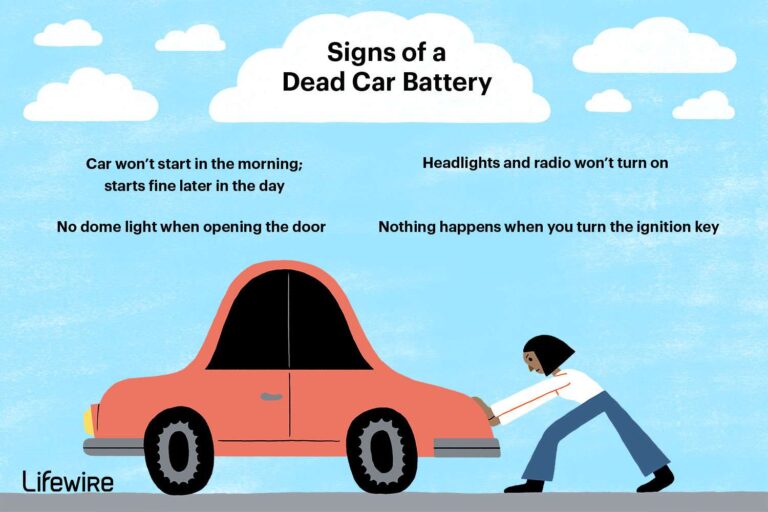
- Slow engine cranking
- Clicking when you turn the key
- Dim lights before the engine starts
- Battery warning light
- Electrical accessories that reset
- Corrosion around the terminals
- A swollen or cracked battery case
- Needing frequent jump-starts
A swollen, cracked, or leaking battery should be replaced promptly. Do not continue using it.
How long should a car battery last?
Many car batteries last about three to five years, but there is no guaranteed service life. Climate, driving habits, vehicle design, and maintenance all affect the result.
Short trips can reduce battery life because the alternator may not have enough time to replace the energy used during starting. Long periods of parking can also drain the battery, especially when security systems and computers remain active.
To extend battery life:
- Keep the terminals clean and tight.
- Check that the battery is firmly secured.
- Avoid leaving lights or accessories on.
- Drive long enough to restore the starting charge.
- Test the battery before extreme summer or winter weather.
- Repair alternator or electrical drains quickly.
If a battery dies more than once, find the cause instead of repeatedly replacing it. A parasitic drain, weak alternator, loose cable, or poor ground connection may be responsible.
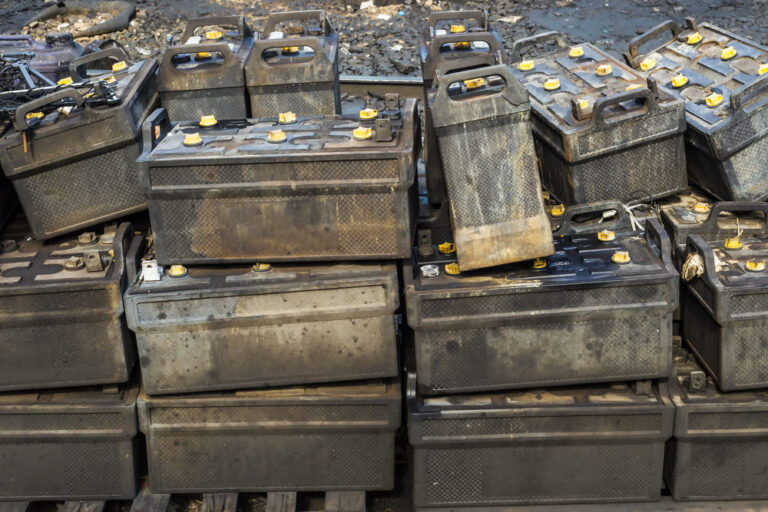
Recycle the old battery through a parts store, repair shop, or approved recycling center. Lead-acid batteries contain valuable materials and hazardous substances, so they should not go in household trash.
Frequently asked questions about what battery does my car need
How do I know what battery does my car need?
Check the owner’s manual, the current battery label, and a trusted vehicle fitment guide. Confirm the group size, CCA, battery type, terminal layout, and physical dimensions before buying.
Can I use a battery with higher CCA?
Usually, a slightly higher CCA rating is acceptable if the battery has the correct group size, technology, and terminal layout. Do not use a different battery simply because its CCA number is higher.
Can I replace an AGM battery with a regular battery?
In most cases, you should replace an AGM battery with another AGM battery. AGM batteries support demanding electrical systems and frequent start-stop cycles that a standard flooded battery may not handle well.
What happens if I install the wrong size battery?
The battery may not fit securely, the cables may not reach, or the terminals may sit in an unsafe position. The wrong capacity or technology can also cause poor starting, charging faults, or shortened battery life.
Does a new car battery need to be programmed?
Some modern vehicles require battery registration or programming after replacement. Check the owner’s manual or ask a qualified technician, especially if the vehicle has start-stop technology or a battery management system.
Is a car battery the same as a deep-cycle battery?
No. A starter battery delivers a strong burst of power to start the engine, while a deep-cycle battery is designed to provide steady power over a longer period. Use the type specified for your vehicle.
How can I tell if the battery or alternator is bad?
A slow crank can point to a weak battery, but it can also result from poor cables or a weak starter. A battery and charging-system test can separate these problems more accurately than guessing.
Conclusion
Finding what battery does my car need starts with the correct group size, then moves to CCA, reserve capacity, battery technology, and terminal layout. Your owner’s manual and a reliable fitment guide are better tools than appearance or price alone.
Before buying, compare the old battery with the vehicle specifications and check whether your car needs AGM, EFB, or battery registration. Install the battery safely, test the charging system, and recycle the old unit properly.
Take a few minutes to confirm the details before you purchase. That small step can prevent poor starting, electrical faults, and an expensive repeat repair. Explore your vehicle’s manual today, and share your battery questions or experience in the comments.