
Introduction
For most people in the United States, car shampoo is low risk when used as directed. It is not meant to be eaten, inhaled as a mist, or left on skin and eyes. The main hazards are usually irritation, eye injury, stomach upset, slippery surfaces, and harm from concentrated product.
Risk depends on the formula, the amount, and the type of contact. A diluted bucket of car shampoo is very different from a splash of undiluted concentrate. Always read the product label and its Safety Data Sheet (SDS), especially if a child, pet, or person with asthma has been exposed.

Is car shampoo toxic to humans?
Car shampoo can be harmful if swallowed, splashed into the eyes, inhaled as a spray, or left on the skin for a long time. However, common consumer car shampoos are generally designed for routine vehicle washing and are not usually considered highly poisonous when used correctly.
“Non-toxic” does not mean “safe to consume.” A product may cause irritation without causing systemic poisoning. The formula may contain surfactants, builders, fragrances, dyes, solvents, preservatives, or water-conditioning agents.
The main exposure risks
| Exposure | Possible effect | Risk level in normal use |
|---|---|---|
| Skin contact | Dryness, redness, or irritation | Usually low |
| Eye contact | Burning, watering, redness, or injury | More serious |
| Inhalation | Throat or airway irritation | Usually low unless sprayed |
| Swallowing | Nausea, vomiting, diarrhea, or choking risk | Depends on amount and formula |
| Repeated exposure | Dry, cracked, or irritated skin | Increases with poor protection |
Most accidental exposures are minor, but symptoms can vary. A person with asthma, eczema, chemical sensitivity, or another health condition may react more strongly.
The U.S. National Capital Poison Center advises people to contact Poison Control for possible poison exposures rather than guessing about risk. In the United States, call 1-800-222-1222 or use PoisonControl.org.

What is in car shampoo?
Car shampoo is a water-based cleaning product. Its most important ingredients are usually surfactants, which loosen oil, dirt, and road film so water can carry them away.
A typical formula may also include:
- Surfactants: Lift dirt and grease from the paint.
- Water conditioners: Help the product work in hard water.
- pH adjusters: Make the cleaner acidic, neutral, or alkaline.
- Preservatives: Limit bacterial or fungal growth in the bottle.
- Fragrance and dye: Improve smell and appearance but do not improve cleaning.
- Lubricants or gloss agents: Help the wash mitt glide or leave a visual shine.
- Foam boosters: Create more foam, although foam does not always mean better cleaning.
pH matters
A neutral car shampoo is often close to the pH of water. An acidic or alkaline product can clean certain types of buildup more strongly, but it may also irritate skin and eyes more easily.
A high-foaming soap is not automatically more toxic. Foam depends on the surfactant system and how the product is mixed. Likewise, a low-foam product is not automatically safer.
The label and SDS provide the best product-specific information. Look for sections covering:
- Hazard identification
- First-aid measures
- Handling and storage
– Exposure controls and personal protection - Ecological information
- Disposal guidance
The U.S. Occupational Safety and Health Administration explains the standard format for SDS documents under its Hazard Communication Standard.
Concentrate versus diluted wash water
Concentrated car shampoo presents the greater exposure risk. The ingredients are less diluted, so a splash may cause more irritation than the same amount mixed into a bucket.
Use the dilution ratio printed on the label. Adding extra product usually does not improve cleaning. It can leave residue, increase rinsing time, and put more chemicals into wastewater.

Is car shampoo toxic to skin and eyes?
Car shampoo can irritate skin, especially after repeated contact or when the product is used in concentrated form. Eye contact is more concerning because surfactants can cause strong burning and redness.
If car shampoo gets on your skin
- Remove wet clothing, shoes, gloves, or jewelry.
- Rinse the area with plenty of running water.
- Wash gently with mild soap if residue remains.
- Stop use and seek medical advice if burning, swelling, rash, or pain continues.
People who wash cars often should consider chemical-resistant gloves. Nitrile gloves are commonly used for many cleaning tasks, but glove material and resistance vary. Check the product SDS or glove manufacturer guidance for stronger cleaners.
Do not use solvent, gasoline, or another harsh chemical to remove car shampoo from skin. That can create a second exposure.
If car shampoo gets in the eyes
- Start rinsing immediately with clean, lukewarm running water.
- Hold the eyelids open and remove contact lenses if they come out easily.
- Continue rinsing for at least 15 minutes unless the product label gives different instructions.
- Contact Poison Control or a medical professional if pain, blurred vision, redness, or light sensitivity continues.
Do not rub the eyes. Do not put household chemicals, vinegar, or other substances in the eyes to “cancel out” the shampoo.
Eye symptoms that do not improve after thorough rinsing need prompt medical assessment. Serious eye injury is uncommon with ordinary diluted car shampoo, but the risk is higher with concentrated, acidic, alkaline, or specialty products.

Is car shampoo toxic if swallowed?
Swallowing a small amount of diluted car shampoo may cause an unpleasant taste, nausea, stomach pain, vomiting, or diarrhea. Concentrated product can cause more irritation and may create a choking hazard if it foams.
The correct response depends on the exact product and amount. In the United States:
- Remove the product from the person’s mouth.
- Do not make the person vomit.
- Do not give food, drink, or home remedies unless Poison Control tells you to do so.
- Call Poison Control at 1-800-222-1222.
- Have the bottle or product label available.
Call 911 for trouble breathing, collapse, a seizure, severe drowsiness, or an inability to wake the person.
Do not assume that a child who seems fine has no risk. Children may swallow more than an adult relative to their body size, and product names can be misleading. A poison specialist can assess the ingredient, dose, age, weight, and symptoms.
If a person vomits after swallowing the product, keep them on their side if they are drowsy. Do not give anything by mouth to someone who is not fully awake.

Is car shampoo toxic to dogs and cats?
Car shampoo can be harmful to pets if they drink it, walk through concentrated product, get it in their eyes, or lick residue from their coat or paws. Dogs and cats may also be exposed when they drink from a wash bucket or lick a wet driveway.
Keep pets away from:
- Open bottles
- Buckets of wash water
- Wet vehicles before rinsing
- Puddles near the wash area
- Towels, sponges, and brushes with product on them
If product gets on a pet’s coat or paws, rinse with plenty of clean water. Prevent licking during rinsing. Contact a veterinarian or the ASPCA Animal Poison Control Center if the pet swallowed product, has symptoms, or was exposed to concentrate.
Possible warning signs include:
- Drooling
- Pawing at the mouth
- Vomiting
- Diarrhea
- Coughing
- Trouble breathing
- Weakness
- Eye redness
- Skin irritation
Do not give a pet milk, oil, salt, or another home remedy unless a veterinarian directs you to do so. Use the product container when calling for help because the ingredient list and concentration matter.
Car shampoo is not a substitute for pet shampoo. Vehicle products are made for automotive surfaces, not animal skin or fur. Use a veterinary-formulated pet shampoo for bathing an animal.

Can car shampoo harm the environment?
Car shampoo can enter soil, storm drains, streams, or lakes through runoff. Surfactants and other ingredients may harm aquatic organisms or reduce water quality, depending on the formula and concentration.
A label that says “biodegradable” does not mean the product is harmless in every situation. Biodegradation depends on the ingredients, temperature, microbes, time, and dilution. It also does not mean that a large amount can safely enter a storm drain.
Safer car-washing practices in the U.S.
- Wash on a surface where wastewater can enter a sanitary sewer, when local rules allow it.
- Use a commercial car wash when practical. Many facilities manage wash water through drains, treatment systems, or recycling processes.
- Avoid washing directly over a storm drain.
- Use only the amount of product required by the label.
- Keep concentrated shampoo away from soil, waterways, and drains.
- Follow local water-use and wastewater rules.
- Never pour leftover concentrate into a storm drain, creek, or roadside ditch.
Rules differ by city, county, and state. In dry regions of the United States, local water restrictions may also limit when and how vehicles can be washed. Check your local public works or water utility website for current guidance.
The U.S. Environmental Protection Agency provides information about stormwater pollution and the role of runoff in carrying pollutants into waterways.
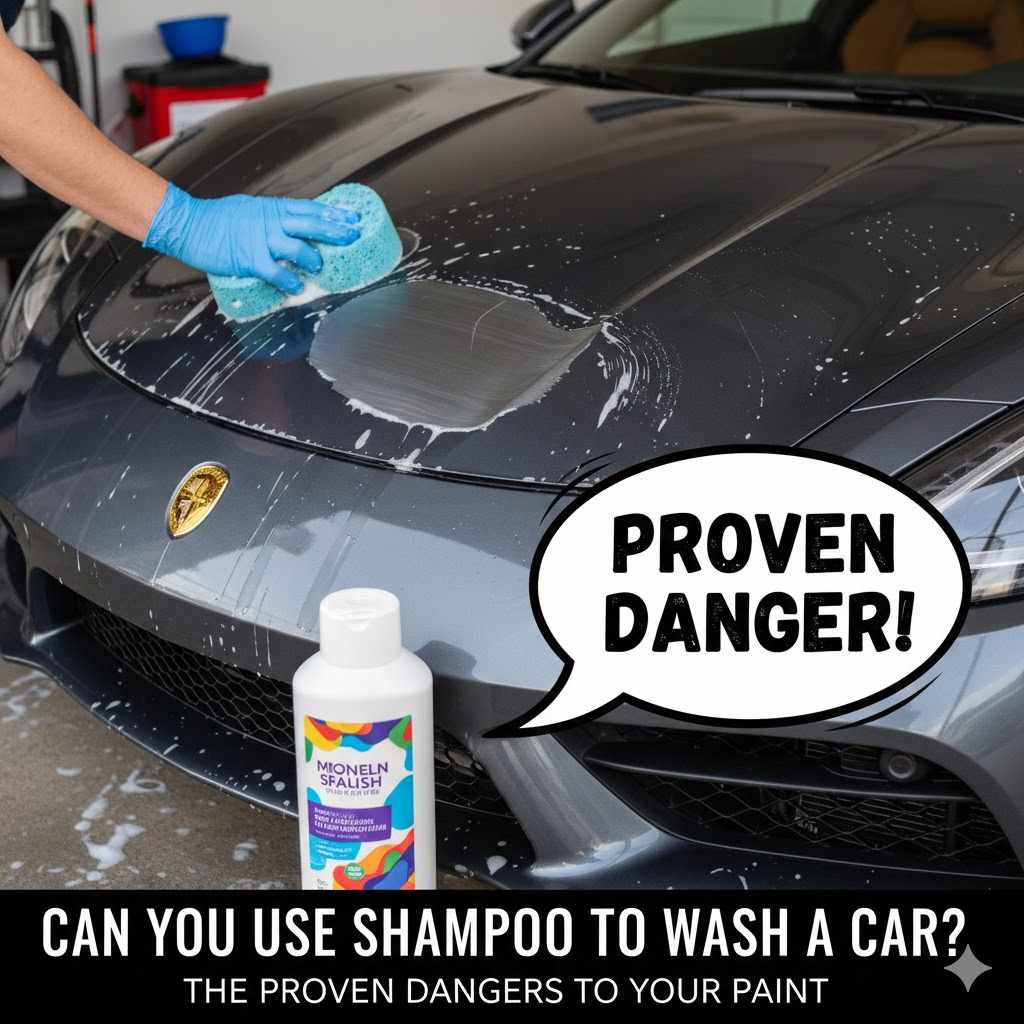
How to use car shampoo safely
Car shampoo is safest when you control the concentration, avoid spray mist, and reduce direct contact.
Before washing
- Read the label and dilution instructions.
- Check the SDS if the product is a strong cleaner, degreaser, wheel soap, or specialty wash.
- Wear gloves if you have sensitive skin or expect repeated contact.
- Keep children and pets away from the work area.
- Wash in a well-ventilated outdoor area.
- Make sure the vehicle surface is cool and out of direct sun when the label requires it.
While washing
- Measure the product instead of pouring by guesswork.
- Add it to water according to the label.
- Avoid creating a fine mist or spraying it toward your face.
- Keep the wash mitt and bucket away from food, drinks, and pet bowls.
- Rinse the vehicle and equipment well.
- Do not mix car shampoo with bleach, ammonia, acids, drain cleaner, or other cleaners.
Mixing products can create unexpected reactions or irritating vapors. More soap is not always better. Excess product may increase residue and exposure without adding useful cleaning power.
After washing
- Close the container tightly.
- Store it in the original bottle.
- Keep it away from heat and direct sun.
- Do not transfer it to a food or drink container.
- Wash your hands after use.
- Clean spills according to the SDS.
- Keep the bottle available if medical advice is needed.
A locked or high shelf is best when children or pets live in the home.

How do you choose a safer car shampoo?
Choose a product with clear directions, a complete ingredient or hazard statement, and an available SDS. The safest choice depends on the task, not on foam, color, or marketing language.
Consider these points:
| What to check | Why it matters |
|---|---|
| Intended use | A maintenance shampoo may be milder than a wheel or degreasing cleaner |
| Dilution instructions | Clear ratios reduce the chance of using too much product |
| Hazard warnings | They show known risks for skin, eyes, breathing, and swallowing |
| SDS availability | It gives more detailed handling and first-aid information |
| Fragrance and dyes | They may bother people with sensitivities |
| Spray format | Aerosols and misters can increase inhalation risk |
| Local disposal guidance | It helps limit runoff and drain pollution |
“Plant-based,” “green,” and “natural” are not reliable safety guarantees. A naturally derived ingredient can still irritate skin or harm aquatic life at high concentrations.
Do not select a product only because it produces thick foam. Foam is a cleaning feature, not a toxicity rating.
For routine exterior washing, use a product made for automotive paint and follow its label. Avoid using household dish soap as a regular substitute unless the vehicle or product manufacturer specifically permits it. Dish soap can remove protective waxes and may be more drying to skin, although the exact effect depends on the formula.

When should you call for medical help?
Call Poison Control for a swallowed product, eye exposure, a large skin exposure, or uncertainty about the product. Have the brand name, product name, ingredient list, amount, time of exposure, and symptoms ready.
Call 911 for:
- Trouble breathing
- Blue lips or severe wheezing
- Collapse or loss of consciousness
- Seizures
- Severe confusion
- Inability to wake the person
- Serious eye pain or sudden vision changes
For non-emergency symptoms, contact a doctor if irritation continues after rinsing or if symptoms worsen. Do not rely on an online safety label alone. The SDS and a poison specialist can give product-specific advice.
If the product is a commercial or workplace chemical, report the exposure through the workplace safety process as well. Keep the container for identification, but do not delay emergency care while looking for paperwork.
Key takeaways
- Car shampoo is usually low risk when diluted and used as directed.
- Concentrated product can irritate the skin, eyes, mouth, and airways.
- Do not swallow it, breathe spray mist, or use it on pets.
- Rinse skin and eyes with plenty of clean water after contact.
- Do not induce vomiting after swallowing car shampoo.
- Call U.S. Poison Control at 1-800-222-1222 for exposure advice.
- Keep car shampoo away from children, pets, food, and storm drains.
- Read the product label and SDS because formulas differ.
Frequently asked questions
Is car shampoo safer than dish soap?
Not necessarily in every exposure situation, but car shampoo is formulated for vehicle surfaces and is usually used at a specified dilution. Dish soap may remove wax or other protective coatings. Neither product should be swallowed or used as pet shampoo.
Can I wash my car without gloves?
Many people can use diluted car shampoo briefly without gloves. Gloves are a sensible choice for sensitive skin, frequent washing, concentrated products, or long contact. Rinse skin after exposure and stop using the product if a rash develops.
Is dried car shampoo residue toxic?
A small amount of dried residue on a fully rinsed vehicle is unlikely to cause poisoning during normal contact. However, residue can irritate the eyes, skin, or mouth if it is still concentrated or if a child or pet licks it. Rinse the vehicle thoroughly.
Can car shampoo cause breathing problems?
The liquid may irritate the nose, throat, or airways, especially when sprayed as a mist or used in a poorly ventilated area. Move to fresh air and seek medical help for wheezing, chest tightness, or trouble breathing.
Does biodegradable car shampoo make it safe to dump outside?
No. Biodegradable describes how a substance may break down under certain conditions. It does not authorize dumping, and the product may still harm aquatic life or violate local wastewater rules. Keep wash water away from storm drains and waterways.
Conclusion
Car shampoo is not harmless, but ordinary diluted use is generally low risk for healthy adults. The main concerns are concentrated splashes, eye contact, swallowing, spray mist, repeated skin exposure, and runoff.
Use the label’s dilution rate, wear gloves when needed, keep children and pets away, and wash where wastewater can be managed. If an exposure occurs, rinse first when appropriate and contact U.S. Poison Control for product-specific guidance.


