Connect the cables in the correct order, start the donor car, and let the battery recover before driving.
Learning how to charge a car battery with jumper cables can save you from a stressful roadside call. In practice, jumper cables do not fully recharge a dead battery. They transfer enough power to start the engine, while the alternator then restores some energy. This guide explains the safe method, common mistakes, and when a jump start is not enough.
What jumper cables actually do
Jumper cables connect a weak battery to a charged battery in another vehicle. The charged battery supplies power to the starter motor and ignition system. Once the disabled car starts, its alternator begins charging the battery.
So, how to charge a car battery with jumper cables? The accurate answer is that jumper cables provide a temporary boost, not a complete battery charge. A battery charger is the better tool for a full recharge.
A jump start may work when you left the lights on or the car sat unused for a short time. It may not work if the battery is damaged, frozen, badly corroded, or fully worn out.
<figcaption style=”font-size: 14px; color: #555; margin-top: 8px;”>
Source: heartautocare.com
What you need before you begin
Gather the right tools and check both vehicles before connecting anything. A few minutes of preparation can prevent sparks, short circuits, and damage to sensitive electronics.
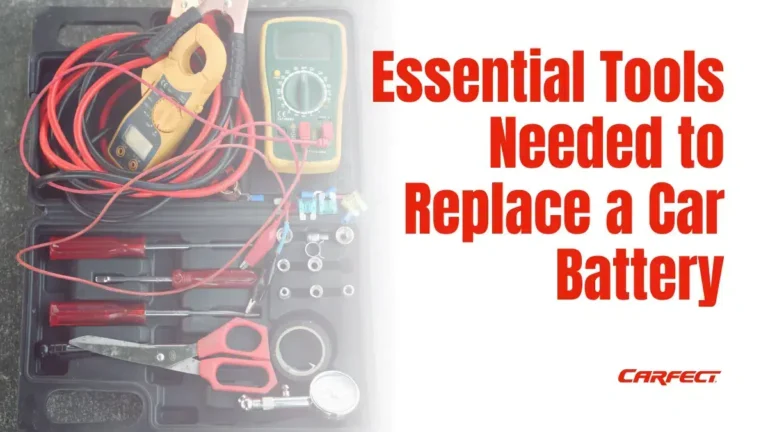
You will need:
• A set of heavy-duty jumper cables with clean clamps
• A vehicle with a charged battery of the same voltage, usually 12 volts
• Safety glasses and gloves, if available
• A dry, safe area away from traffic
• Your vehicle owner’s manual
Park the donor vehicle close enough for the cables to reach, but do not let the vehicles touch. Both cars should be in Park or Neutral with the parking brakes set. Turn off the ignition, lights, radio, climate controls, and other electrical accessories.
Check the battery labels. Do not use a 12-volt car battery to jump a vehicle that requires a different voltage. Hybrid and electric vehicles may have special procedures, so follow the manufacturer’s instructions.
Inspect the battery for danger
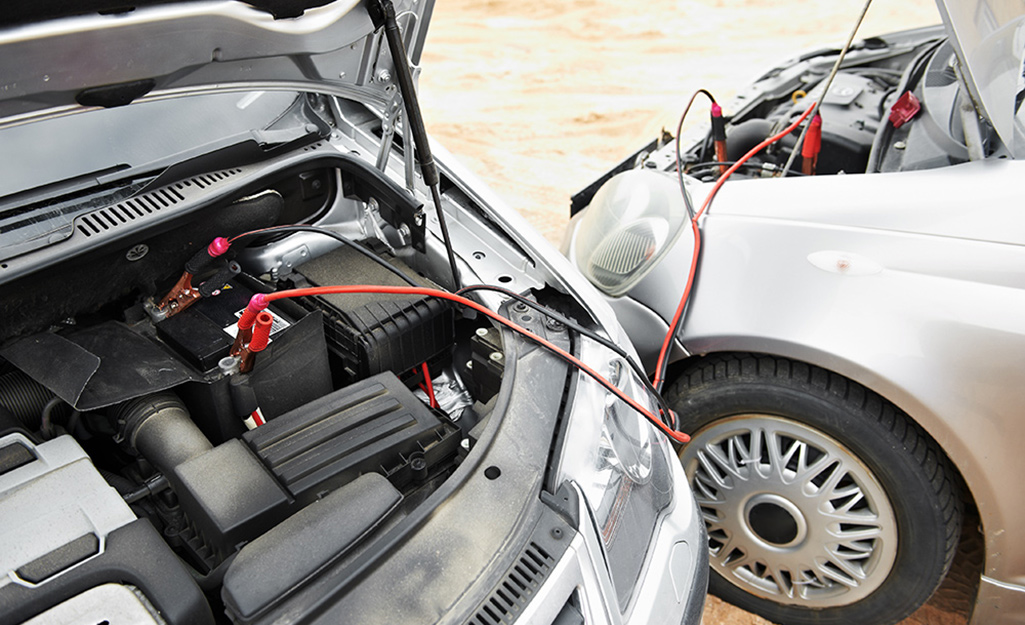
Do not try to jump a battery that looks unsafe. A cracked case, leaking fluid, heavy swelling, or a strong rotten-egg smell can signal a serious battery fault.
Stop and get professional help if you see:
• A cracked or leaking battery case
• A battery that is swollen or badly deformed
• Ice inside or around the battery
• Loose, burned, or melted cables
• Severe corrosion that prevents a firm clamp connection
• Smoke, sparks, or a strong sulfur smell
A frozen battery can explode when exposed to a sudden electrical load. Let it thaw in a safe place, but do not use heat from a torch, heater, or open flame.
This inspection is one of the most important parts of learning how to charge a car battery with jumper cables. A jump start is useful only when the battery and cables are safe to use.
How to connect jumper cables safely
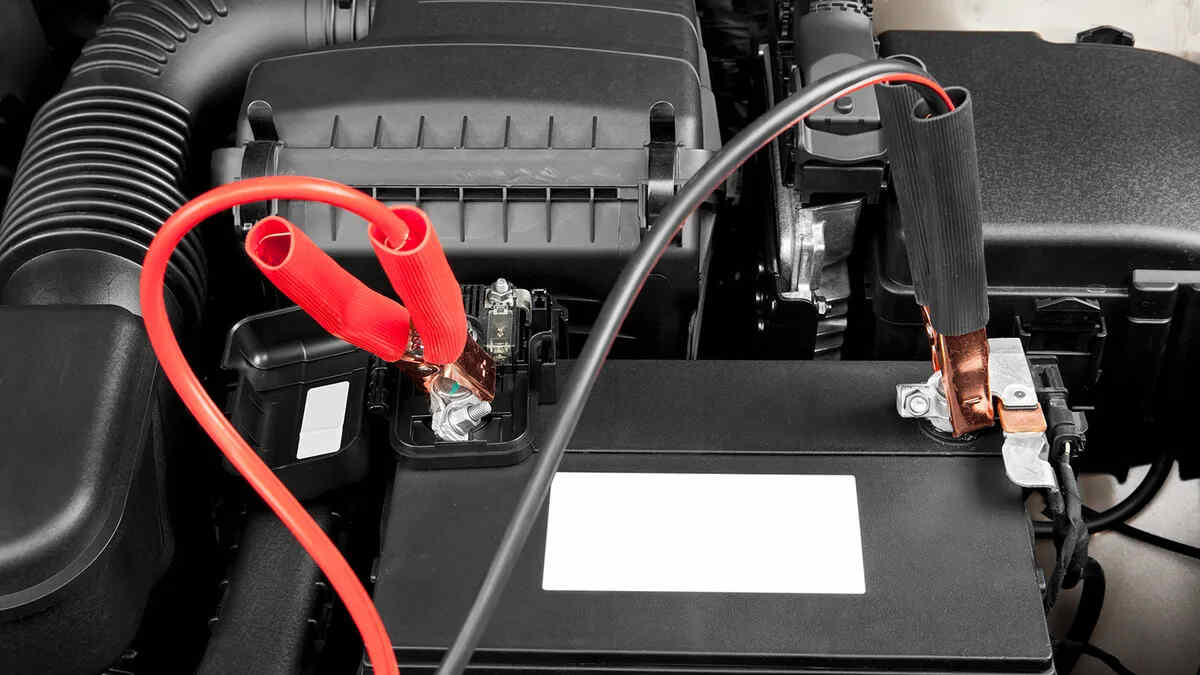
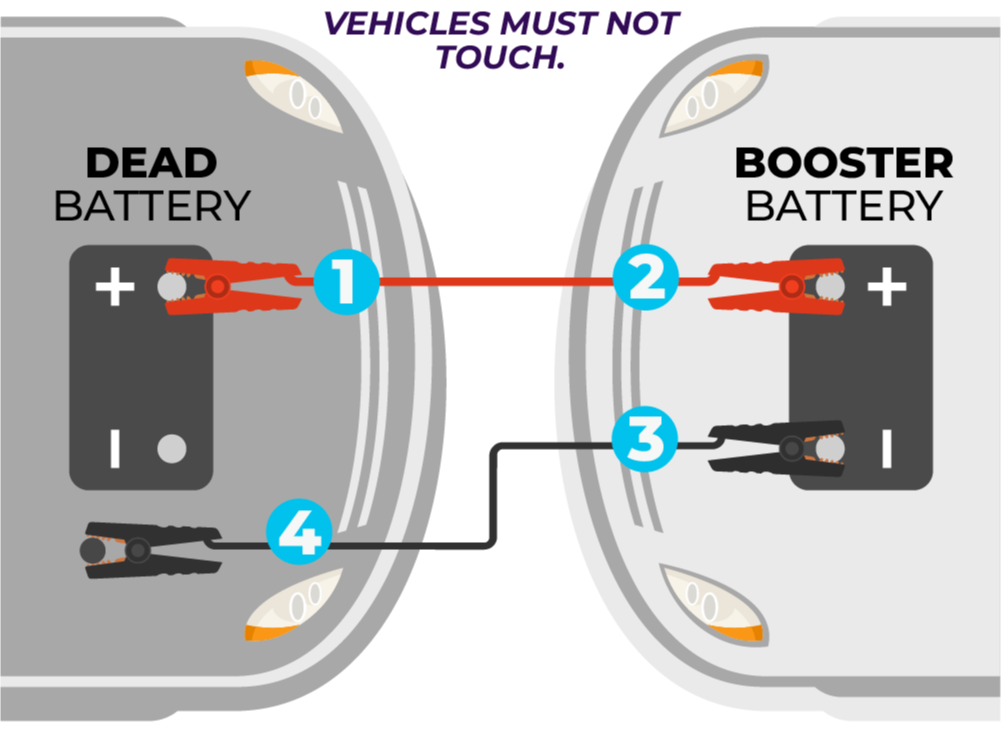
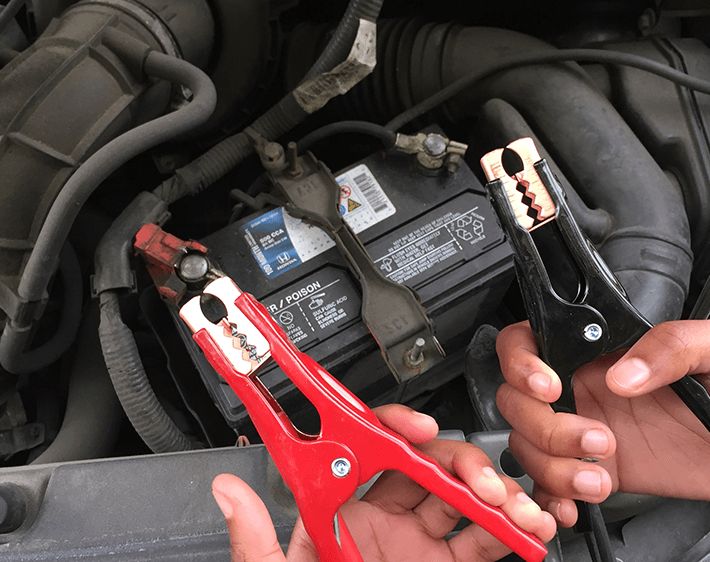
Correct cable order matters. Most jumper cables use red clamps for positive terminals and black clamps for negative terminals.
Follow these steps:
-
Park the donor vehicle near the disabled vehicle without allowing the cars to touch.
-
Turn off both vehicles. Set both parking brakes and place automatic transmissions in Park. Place manual transmissions in Neutral.
-
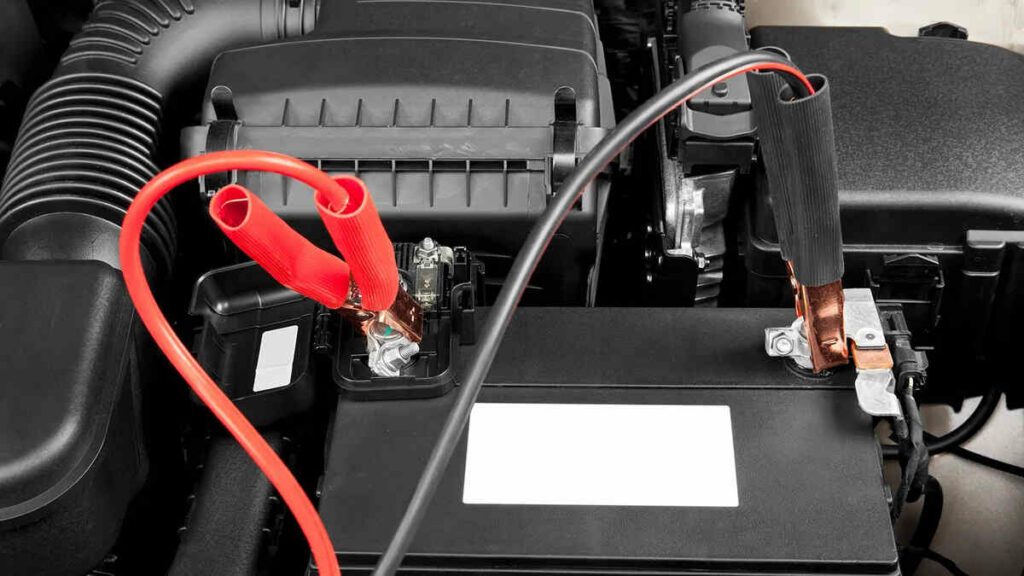
Open both hoods and locate the battery terminals. Look for the plus sign, or “+,” on the positive terminal and the minus sign, or “−,” on the negative terminal.
-
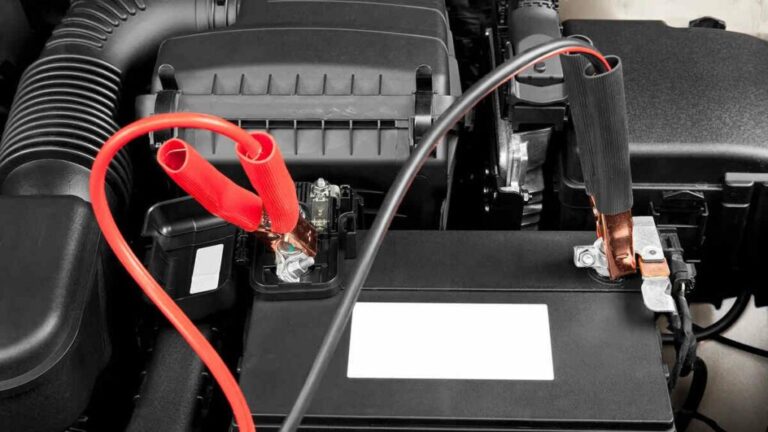
Connect one red clamp to the positive terminal of the dead battery.
-
Connect the other red clamp to the positive terminal of the donor battery.
-
Connect one black clamp to the negative terminal of the donor battery.
-
Connect the final black clamp to an unpainted metal ground on the disabled vehicle. Choose a solid engine block or metal bracket away from the battery and moving parts.
-
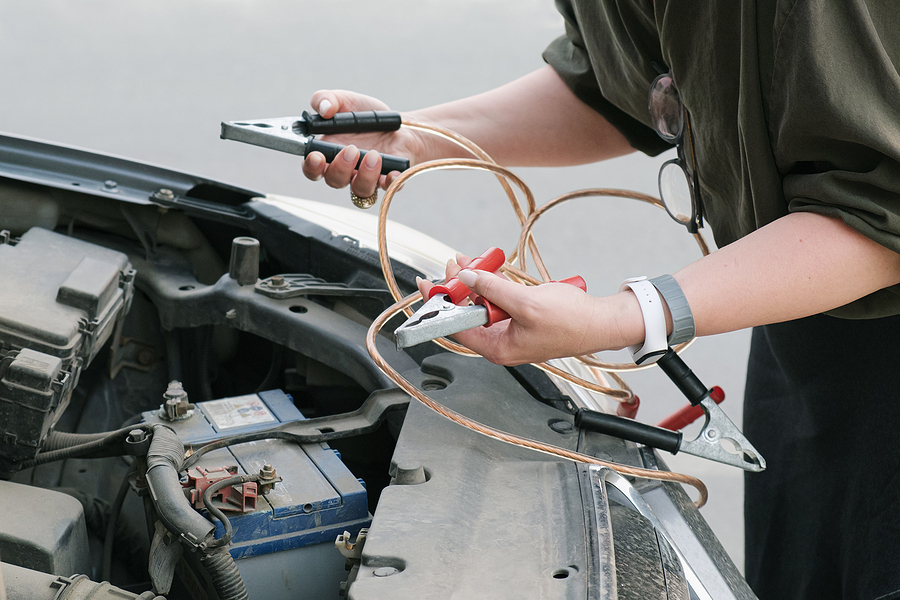
Keep the clamps away from belts, fans, pulleys, and other moving parts.
-
Start the donor vehicle and let it run for about two to five minutes.
-
Try to start the disabled vehicle. Crank for no more than about five seconds at a time, then wait before trying again.
Using a metal engine ground for the final black clamp helps keep any spark away from the battery. Some vehicles have a marked jump-start point, so use it when the manufacturer provides one.

Why the cable order matters
The correct order helps reduce the chance of sparks near the battery. Batteries can release hydrogen gas, which is highly flammable. A spark near the battery can cause an explosion in rare but serious cases.
The usual connection order is:
• Red to the dead battery’s positive terminal
• Red to the donor battery’s positive terminal
• Black to the donor battery’s negative terminal
• Black to a metal ground on the disabled vehicle
To remove the cables, use the reverse order:
-
Remove the black clamp from the disabled vehicle’s metal ground.
-
Remove the black clamp from the donor battery’s negative terminal.
-
Remove the red clamp from the donor battery’s positive terminal.
-
Remove the red clamp from the disabled battery’s positive terminal.
Never let the red and black clamps touch each other while connected. Do not allow a clamp to touch a nearby metal part when it is attached to a positive terminal.
Starting the disabled car
After the cables are connected, start the donor vehicle first. Let it run for a few minutes at normal idle speed. You do not need to race the engine.
Next, try to start the disabled vehicle. If the engine turns slowly, wait another few minutes and try again. A weak battery may need more time to receive enough power for the starter.
If the car starts, keep both vehicles running for a short period. Then remove the cables in reverse order. Avoid switching off the revived car right away, because it may not restart.
This is the basic process for how to charge a car battery with jumper cables, but remember that the jump itself is only the first step. The alternator needs time to replace some of the power used during starting.

What to do after the car starts
Once the engine is running, drive the vehicle for at least 20 to 30 minutes when traffic and road conditions allow. A steady drive is usually more useful than letting the car idle in a driveway, because the alternator may produce more charging power while driving.
Turn off unnecessary electrical loads during the first part of the drive. You can switch off heated seats, high-power audio, and other accessories if conditions allow.
Driving does not guarantee a full recharge. Modern vehicles use many electrical systems, and a deeply discharged battery may need a battery charger. If the battery warning light stays on, stop driving when safe and arrange an inspection.
A healthy charging system often produces roughly 13.5 to 14.8 volts while the engine runs, but the correct range depends on the vehicle. A technician can test the battery, alternator, and starting system with proper equipment.
Common mistakes to avoid
Many jump-start problems come from rushed connections rather than a lack of battery power. Slow down and check each clamp before starting either engine.
Avoid these mistakes:
• Connecting positive to negative
• Connecting the final negative clamp directly to the dead battery when a ground point is available
• Letting the cars touch
• Using damaged or very thin jumper cables
• Trying to start the car repeatedly for long periods
• Reversing the cable removal order
• Placing cables near fans or belts
• Jumping a vehicle with a swollen or leaking battery
• Assuming a successful start means the battery is fixed
• Leaving the revived car parked immediately after starting
One common lesson from roadside jump starts is that cable clamps can look attached while making poor contact. If the engine only clicks, turn off both vehicles, check the terminal surfaces, and make sure the clamps grip clean metal.
How long should you charge a car battery with jumper cables?
The donor vehicle usually needs to run for two to five minutes before you try starting the disabled vehicle. If the battery is only mildly weak, this may be enough to start the engine.
After the engine starts, drive for about 20 to 30 minutes. This may restore some charge, but it may not fully recharge a deeply drained battery.
How long to charge a car battery with jumper cables depends on the battery condition, temperature, alternator output, cable quality, and electrical demand. For a proper full charge, use an automatic battery charger and follow its instructions.
Can jumper cables damage a car?
Jumper cables can damage vehicle electronics if they are connected backward or if the clamps touch the wrong points. Reverse polarity may blow fuses or harm control modules, alternators, and other electrical parts.
Most modern vehicles include protective systems, but they are not designed to make incorrect connections safe. Always verify the positive and negative terminals before attaching a clamp.
Some vehicles also have specific jump points under the hood instead of using the battery terminals directly. The owner’s manual takes priority over general instructions.
When a jump start does not work
If the engine does not start after two or three careful attempts, stop and look for another cause. Repeated cranking can overheat the starter and drain both batteries.
Possible causes include:
• A failed or deeply discharged battery
• A bad alternator
• A faulty starter motor
• Poor cable contact
• Corroded battery terminals
• An empty fuel tank
• A damaged ignition or fuel system
• A blown main fuse
• A problem with the vehicle’s security system
If the lights turn on but the engine makes one heavy click, the starter or battery connection may be at fault. If the engine cranks at normal speed but does not start, the problem may not involve the battery at all.
Call roadside assistance when the vehicle is in an unsafe location, the battery looks damaged, or you are unsure about the correct connection points.
How to clean battery terminals
Corrosion can block the electrical flow between the battery and the vehicle. It often appears as white, blue, or green buildup around the terminals.
For light corrosion:
-
Turn off the vehicle and remove jewelry from your hands and wrists.
-
Wear gloves and eye protection.
-
Disconnect the cables only when the vehicle is off and no jumper cables are attached.
-
Clean the terminals with a battery brush.
-
Wipe away loose residue with a suitable cloth.
-
Reconnect the terminals firmly.
Do not scrape aggressively or allow tools to bridge the positive terminal and nearby metal. If the terminal is badly damaged, ask a technician to inspect it.
Clean terminals improve the chances that how to charge a car battery with jumper cables will work as expected. They also help the alternator maintain a stable connection after the engine starts.
Jumper cables versus a portable jump starter
Jumper cables need another vehicle with a charged battery. A portable jump starter stores power in its own internal battery and can start your car without a second vehicle.
Jumper cables are often cheaper and simple to store. A jump starter is more convenient when you travel alone, but it must remain charged and should be used according to its instructions.
Both methods provide starting power. Neither method guarantees a full battery recharge. After using either one, test the battery and charging system if the car has repeated starting trouble.
How to prevent a dead car battery
A few simple habits can reduce the chance of needing jumper cables.
• Turn off lights and accessories before leaving the vehicle.
• Drive the car regularly if it normally sits for long periods.
• Check the battery terminals during routine service.
• Keep the battery secure so vibration does not damage it.
• Test an older battery before cold weather arrives.
• Use a maintenance charger for a vehicle stored for weeks.
• Investigate slow cranking instead of waiting for a complete failure.
Most automotive batteries last about three to five years, but climate, driving habits, and vehicle design affect battery life. Extreme heat can speed battery wear, while cold weather makes a weak battery harder to start.
Practical example: a battery drained by headlights
Imagine you return to your car after shopping and hear only a click when you turn the key. The headlights were left on, but the battery case looks normal and there is no leaking or swelling.
This is a situation where how to charge a car battery with jumper cables may help. Connect the cables in the correct order, let the donor car run for a few minutes, and try starting your car. After it starts, remove the cables in reverse order and drive for at least 20 to 30 minutes.
If the car is dead again the next morning, the battery may be old, or the charging system may have a fault. A jump start solved the immediate problem, but it did not identify the cause.
Frequently Asked Questions
Can jumper cables fully charge a dead car battery?
Usually, no. Jumper cables transfer enough power to help start the engine, but the alternator may not fully recharge a deeply discharged battery. Use an automatic battery charger for a complete and controlled recharge.
How long should I leave jumper cables connected?
Let the donor vehicle run for about two to five minutes before trying to start the disabled vehicle. Once the disabled car starts, remove the cables in reverse order and drive for about 20 to 30 minutes.
Which car do I start first when using jumper cables?
Start the donor vehicle first. Let it run for a few minutes, then try to start the vehicle with the weak battery.
Where should I connect the black cable?
Connect the black cable to the donor battery’s negative terminal. Attach the other black clamp to a clean, unpainted metal ground on the disabled vehicle, unless the owner’s manual gives different instructions.
Can I jump-start a car in the rain?
A light rain does not usually prevent a jump start, but use care and keep the clamps from touching puddles or each other. Do not attempt the process during flooding, standing water, or severe weather.
What if the car starts but dies after removing the cables?
The battery may be unable to hold a charge, or the alternator may not be charging correctly. Have the battery and charging system tested before driving far.
Can I use jumper cables on a hybrid vehicle?
Some hybrids have a 12-volt battery and special jump points, while others require specific procedures. Check the owner’s manual before connecting cables, and never treat the high-voltage battery like a normal car battery.
Conclusion
Knowing how to charge a car battery with jumper cables starts with the right expectations: jumper cables provide a temporary boost, while the alternator restores some power after the engine runs. Inspect the battery, connect red to positive, place the final black clamp on a safe metal ground, and remove the cables in reverse order.
Do not force a jump start when the battery is cracked, swollen, frozen, or leaking. If the car needs repeated boosts, have the battery, alternator, starter, and cable connections tested. Keep a quality set of jumper cables or a charged portable jump starter in your vehicle, and explore your owner’s manual for model-specific guidance.