Expect to pay roughly $10 to $30 to plug a car tire locally.
I’ve worked with tires and repair shops long enough to know that the simple question “how much does it cost to plug a car tire” hides a few facts. This guide explains typical price ranges, what affects the bill, when a plug is safe, DIY steps, and tips to save money. Read on for clear, practical advice backed by experience so you can decide quickly and confidently.

Types of tire repairs and why a plug is common
Tire damage is not all the same. A small puncture in the tread often gets solved with a plug or a patch. A plug fills the hole from outside. A patch seals the inner liner from inside. Some shops use a plug-and-patch combo for more reliability.
A plug is fast and cheap. A patch or plug-and-patch costs more but lasts longer. Sidewall cuts, shoulder damage, and large gashes usually mean replacement. Knowing the type of repair helps answer how much does it cost to plug a car tire and whether you should plug it at all.
Average cost: how much does it cost to plug a car tire
Most shops charge between $10 and $30 for a simple plug. Independent tire shops often charge between $15 and $25. Some quick lube or big-box stores may be lower or may do a patch instead.
If a shop uses a plug-and-patch, expect $20 to $60 total. Mobile services that come to you usually add a trip fee, so expect $30 to $80. Roadside assistance or towing packages can hike that to $75 to $150 if they replace the tire or charge labor. If you ask how much does it cost to plug a car tire at home, DIY kits cost $5 to $20.

What affects how much does it cost to plug a car tire
Location
- Urban areas tend to have higher labor and service fees.
- Rural shops may be cheaper but offer fewer options.
Service type
- Walk-in plug is cheapest.
- Plug-and-patch and professional inspection cost more.
Tire type and size
- Low-profile, run-flat, or high-performance tires can cost more to repair.
- Large truck tires may be pricier than standard passenger tires.
Additional services
- Balancing, inspection, and valve stem replacement add to the bill.
- Disposal or environmental fees can appear on the invoice.
Condition of the tire
- Old, worn, or previously repaired tires may need replacement instead of a plug. This changes the total cost.

DIY tire plug: cost, tools, and step-by-step
Tools and kit cost
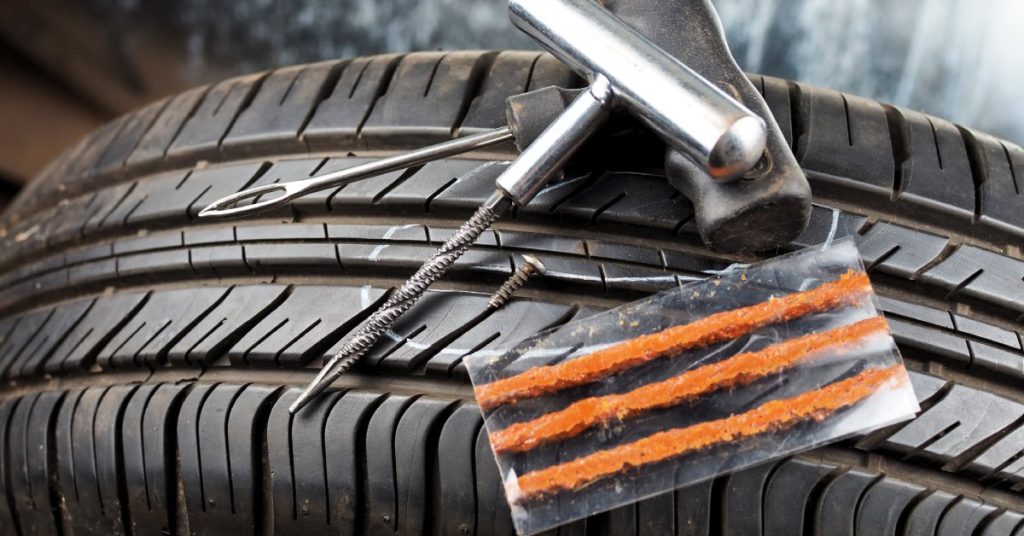
- Tire plug kit: $5 to $20.
- Tire pressure gauge and soap for leaks: $5 to $15.
- Optional: cordless impact or tire de-beading tools if you remove the tire, which most DIYers should avoid.
Simple DIY plug steps
- Find and mark the puncture and remove the object carefully. Keep the object for inspection.
- Ream the hole using the tool in the kit to clean and shape it.
- Thread the plug through the insertion tool and push it into the hole until only a small tail remains.
- Trim the excess plug flush with the tread and inflate to the proper pressure.
- Check for leaks with soapy water and monitor pressure over several days.
Safety and limits
- Do not attempt to plug a puncture in the sidewall or shoulder.
- If the puncture is larger than 1/4 inch or the tire has multiple repairs, skip DIY and consult a pro.
When you should not plug a tire
Do not plug if the damage is on the sidewall. Do not plug if the hole is larger than roughly 1/4 inch. Do not plug if the tire shows internal cord exposure or major tread separation.
If you’re unsure, a professional inspection is worth the cost. Erring on the safe side prevents a dangerous blowout and can save money in the long run. Asking “how much does it cost to plug a car tire” is useful, but safety should lead the decision.

Tips to save money and mistakes to avoid
Save money
- Compare local shops and ask for plug-only prices.
- Use a DIY kit for a safe tread puncture if you’re comfortable.
- Keep roadside assistance; it can be cheaper if you need multiple services.
Avoid these mistakes
- Don’t plug a sidewall or large hole.
- Don’t accept a plug-only fix if the tire should be replaced.
- Don’t delay a repair; a slow leak can ruin the tire and lead to replacement.
Personal note from experience
- I once plugged a nail in my commute and checked pressure daily for a week. The plug held and saved me a tire replacement. Later, I learned to get a patch when I had the tire off. That combo gave the best long-term reliability.

Common questions people have about repair life and reliability
Plug reliability
- A properly installed plug or plug-and-patch is reliable for tread punctures. Regular checks on pressure are a good habit.
When to replace instead of plug
- Replace if the sidewall is damaged, if the puncture is too large, or if the tire has severe wear or past repairs.
Insurance and warranties
- Some tire warranties cover repairs. Roadside plans may cover service costs. Ask before you commit.
Frequently Asked Questions of how much does it cost to plug a car tire
How long does a plugged tire last?
A professionally done plug or plug-and-patch can last for years if the tire is otherwise healthy. Regular checks help catch slow leaks early.
Can I drive on a plugged tire immediately?
Yes, you can drive right after a proper plug and inflation. Keep speed moderate the first hundred miles and re-check pressure.
Will a tire shop refuse to plug my tire?
Some shops will refuse if the puncture is in the sidewall or the tire shows internal damage. They may recommend replacement instead.
Does plugging a tire affect tire warranty?
Many warranties allow professional repairs in the tread area but not sidewall fixes. Check your tire warranty terms for specifics.
Is plugging cheaper than replacing a tire?
Plugging is almost always cheaper than replacement for small tread punctures. Replacement costs rise if the tire is specialized or nearly worn out.
Conclusion
Plugs save money and time for small tread punctures. Typical costs range from $10 to $30 for a simple plug and $20 to $60 for a plug-and-patch. Mobile service and roadside help cost more. Know when a plug is safe and when to replace the tire.
Takeaway: weigh cost, safety, and tire condition before deciding. If you want a quick fix, a plug is affordable. If you want long-term confidence, invest in a patch or professional inspection. Try a DIY kit only on small tread punctures and always monitor pressure after any repair.
Consider sharing your repair story or asking a local shop for an estimate to compare prices and make a smart choice.