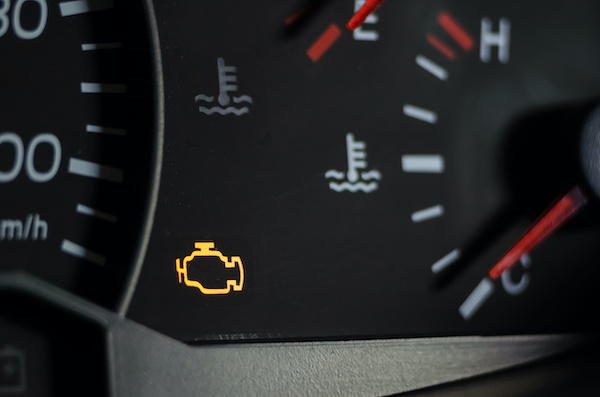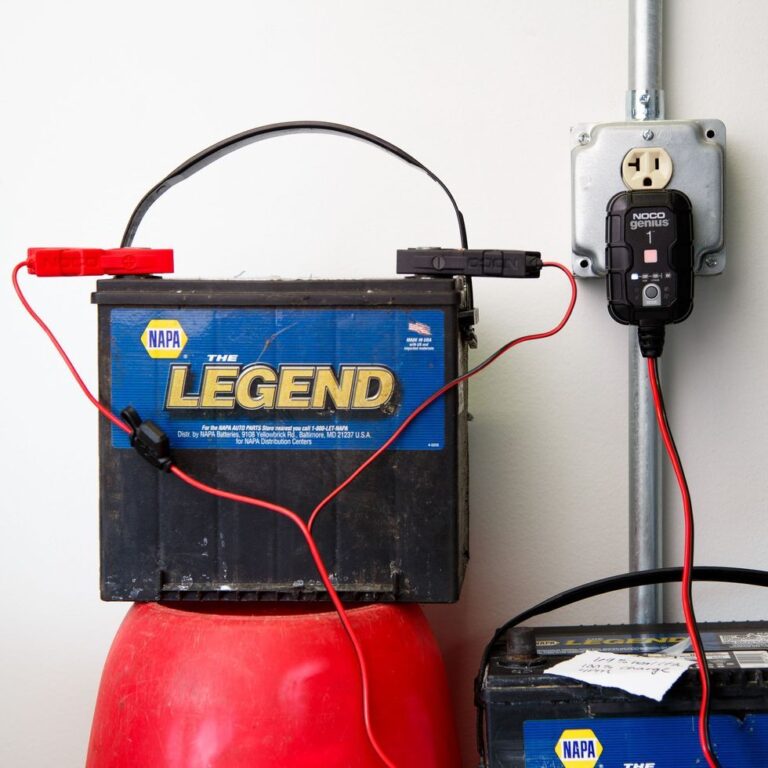
A car battery group size chart matches your vehicle with the correct battery dimensions, terminals, capacity, and starting power.
Choosing a replacement battery is not just about finding one that fits inside the tray. The car battery group size chart uses standardized codes to show battery length, width, height, terminal layout, and basic performance needs. I have seen many drivers buy a battery with strong starting power, only to find that the terminals face the wrong way or the case does not fit. This guide explains how to read the chart, compare common sizes, and avoid costly mistakes.

What Is a Car Battery Group Size?
A car battery group size is a standard code that identifies a battery’s physical size and terminal arrangement. Common examples include 24F, 35, 48, 49, 51R, and 65. The code helps stores, technicians, and vehicle owners find a battery that fits a specific battery tray.
The group size does not tell you everything about a battery. It mainly describes the battery case and terminal position. You must also check cold cranking amps, reserve capacity, battery type, and manufacturer requirements.
Think of the group size as a shoe size for your car. A powerful battery is not useful if it cannot fit properly or connect safely.
The car battery group size chart is useful because battery sizes are not always named by simple length and width. A group 35 battery, for example, may look close to another battery but still have a different height or terminal layout.
The Battery Council International system is widely used in North America. However, some vehicles use European, Asian, or manufacturer-specific battery standards. Always compare the chart with your owner’s manual and the label on your current battery.
Car Battery Group Size Chart
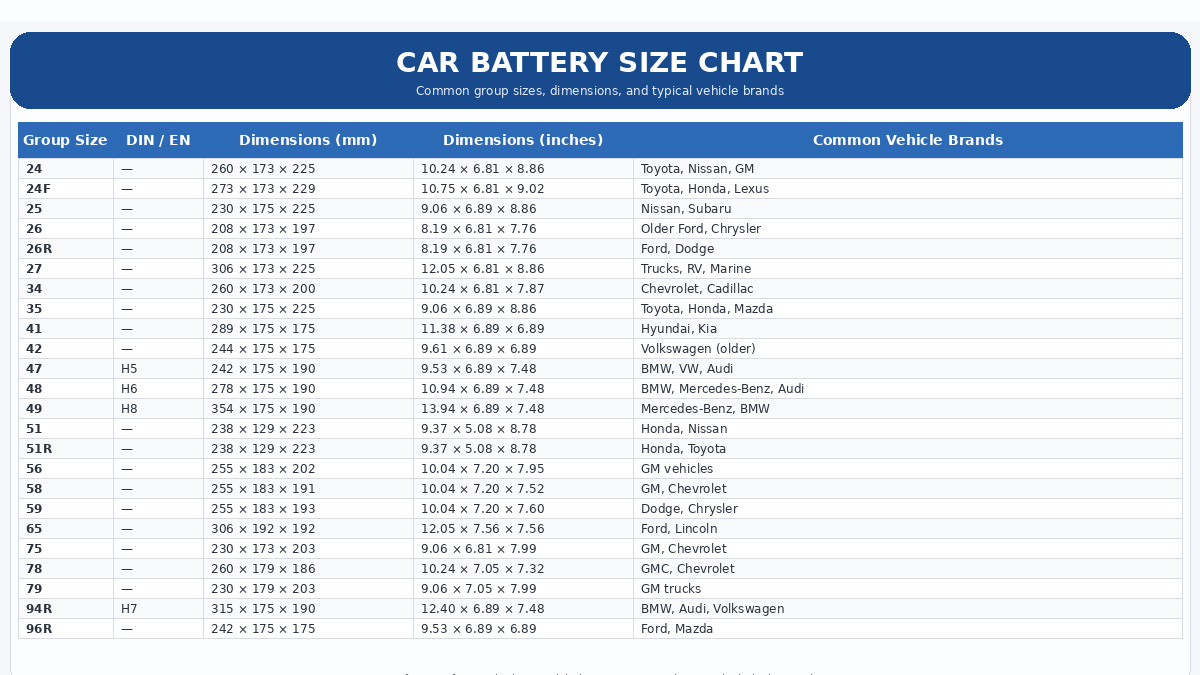
The following car battery group size chart lists common sizes used in cars, trucks, vans, and SUVs in the United States. Measurements can vary slightly by brand, so treat the figures as a useful guide rather than a guarantee.
| Group size | Approximate length | Approximate width | Approximate height | Common applications |
|---|---|---|---|---|
| 24F | 10.9 inches | 6.9 inches | 8.9 inches | Some Honda, Toyota, Nissan, and older domestic vehicles |
| 26R | 8.2 inches | 6.9 inches | 7.8 inches | Some compact cars and older Japanese vehicles |
| 35 | 9.1 inches | 6.9 inches | 8.9 inches | Many Honda, Toyota, Nissan, Subaru, and Mazda models |
| 47 or H5 | 9.5 inches | 6.9 inches | 7.5 inches | Many European and compact vehicles |
| 48 or H6 | 12.1 inches | 6.9 inches | 7.5 inches | Many Volkswagen, Audi, BMW, Ford, and General Motors vehicles |
| 49 or H8 | 13.9 inches | 6.9 inches | 7.5 inches | Large European vehicles, SUVs, and luxury cars |
| 51 | 9.4 inches | 5.0 inches | 8.8 inches | Some compact Asian vehicles |
| 51R | 9.4 inches | 5.0 inches | 8.8 inches | Vehicles that need reversed terminal placement |
| 58 | 9.0 inches | 5.1 inches | 8.9 inches | Some compact cars and imported vehicles |
| 58R | 9.0 inches | 5.1 inches | 8.9 inches | Vehicles with reversed terminal placement |
| 59 | 9.1 inches | 6.9 inches | 8.9 inches | Some older domestic and imported vehicles |
| 65 | 12.1 inches | 7.5 inches | 7.6 inches | Many trucks, SUVs, and large cars |
| 78 | 10.9 inches | 7.3 inches | 7.7 inches | Some General Motors vehicles with side terminals |
The letters and numbers matter. In sizes such as 51R or 58R, the “R” usually means the positive and negative terminals are reversed compared with the standard version. Installing the wrong layout can make the cables too short or place the positive terminal near metal parts.
Some batteries also show labels such as H5, H6, or H8. These are European-style size names that often match group sizes 47, 48, and 49. Always check the exact dimensions and terminal design before buying.

How to Read a Battery Group Size Chart
Reading a car battery group size chart becomes easy when you check the details in the correct order. Start with the group number listed in your owner’s manual or printed on the old battery.
Then compare these points:
• Group size: This identifies the general case size and terminal layout.
• Length, width, and height: These measurements show whether the battery will fit the tray.
• Terminal position: Confirm whether the positive terminal is on the left or right when viewed from the correct side.
• Terminal style: Some batteries use top posts, while others use side terminals or special recessed terminals.
• Hold-down design: The battery must accept your vehicle’s clamp or retaining bracket.
• Battery type: Check whether the vehicle needs a flooded lead-acid, AGM, or enhanced flooded battery.
The group size should be your starting point, not your only test. Two batteries with similar dimensions may have different mounting lips, terminal shapes, or electrical ratings.
A useful habit is to photograph the old battery before removing it. Take one picture from above and one from the front. These images can help you confirm terminal placement when comparing replacement options.

Why Battery Group Size Matters
The correct group size keeps the battery secure during driving. A loose battery can vibrate, damage its case, loosen the terminals, and shorten its service life. In severe cases, movement can cause an electrical short or battery acid leakage.
Correct sizing also protects the battery cables. If the terminals are in the wrong place, the cables may stretch or press against sharp edges. That can create poor connections and extra heat during engine starting.
The group size also affects the battery’s available capacity. A larger case may hold more plates and provide higher reserve capacity, but a larger battery is not automatically a safe upgrade. The vehicle’s charging system and computer controls are designed around specific battery types and ratings.
Modern vehicles often have battery monitoring systems. These systems track battery condition and charging behavior. Some cars require battery registration or programming after installation, especially when changing an AGM battery or installing a new battery in a vehicle with start-stop technology.

Group Size, CCA, and Reserve Capacity
Group size and performance ratings are different things. The most important ratings are cold cranking amps, reserve capacity, and amp-hour capacity.
Cold cranking amps, or CCA, measure how much current a battery can deliver at a low temperature. A higher CCA rating can help an engine start in cold weather, but the battery must still fit the vehicle.
Reserve capacity shows how long a fully charged battery can provide a set amount of current before its voltage falls too low. This rating matters if the alternator stops working or the engine is off while electrical accessories are running.
Amp-hour ratings are more common in deep-cycle and specialty batteries than in standard starting batteries. They describe how much electrical energy a battery can provide over time.
When choosing a replacement, use the vehicle maker’s rating as your baseline:
• Do not choose a battery with lower CCA than recommended.
• A moderately higher CCA rating is often acceptable if the size and battery type match.
• Choose equal or higher reserve capacity when the vehicle maker allows it.
• Do not replace an AGM battery with a basic flooded battery unless the manufacturer specifically permits it.
In cold climates, CCA becomes especially important. In hot climates, battery heat can speed up internal wear, so quality, warranty coverage, and correct charging are also important.
Flooded, AGM, and EFB Battery Types
Battery chemistry is a major part of a correct replacement. A car battery group size chart tells you the case size, but it does not always tell you which internal design your vehicle needs.
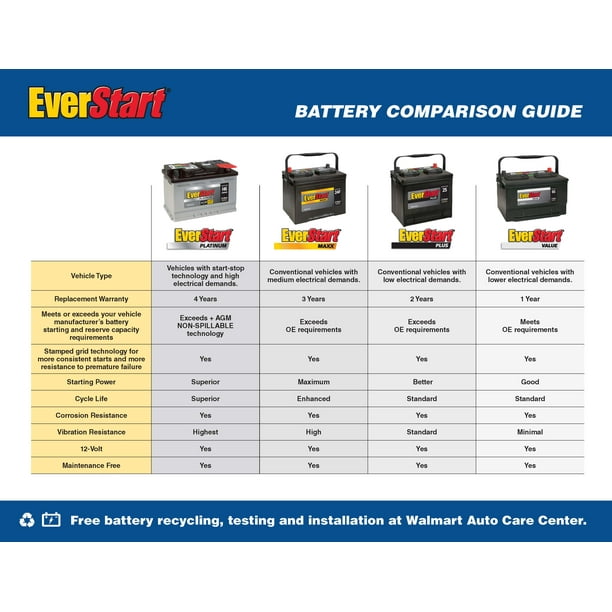
Flooded lead-acid batteries are the traditional choice for many cars. They are often affordable and work well in vehicles with simple electrical systems.
Absorbent glass mat, or AGM, batteries use a sealed design that can handle higher electrical demand and vibration. They are common in luxury vehicles, cars with start-stop systems, and vehicles with heated seats, advanced driver assistance systems, and many electronic controls.
Enhanced flooded batteries, or EFB batteries, are designed for vehicles with moderate start-stop demands. They offer more cycling ability than standard flooded batteries but are not the same as AGM batteries.
Use the battery type listed in the owner’s manual or on the original battery. A battery can have the correct group size and still be the wrong choice if its chemistry does not match the vehicle.
In my experience, replacing an AGM battery with a cheaper standard battery is one of the most common mistakes. The car may start at first, but the replacement can wear out quickly or cause charging system warnings.
How to Choose the Right Battery for Your Vehicle
Use this simple process before buying a replacement:
-
Check the owner’s manual for the recommended group size.
-
Read the group number on the old battery.
-
Measure the old battery if the label is damaged or missing.
-
Confirm the positive and negative terminal positions.
-
Check CCA and reserve capacity requirements.
-
Match the battery type, such as flooded, AGM, or EFB.
-
Confirm the hold-down bracket and terminal style.
-
Check the manufacture date and warranty.
Battery age matters because batteries slowly lose performance while sitting in storage. Look for a recent production date when possible. A battery that has been stored for many months may need a full charge before installation.
You can also use a vehicle fitment guide from a trusted parts retailer. Still, fitment tools are not perfect. Special packages, engine swaps, imported models, and midyear design changes can create exceptions.
For the most reliable result, compare three things: the owner’s manual, the old battery, and the retailer’s fitment information.
How to Replace a Car Battery Safely
Battery replacement is often simple, but safety comes first. A fully charged automotive battery can deliver very high current, even when the engine is off.
Follow these general steps:
-
Park on a level surface, turn off the engine, and remove the key.
-
Wear eye protection and keep metal tools away from both terminals.
-
Identify the negative cable, which is usually marked with a minus sign.
-
Disconnect the negative cable first.
-
Disconnect the positive cable.
-
Remove the battery hold-down clamp.
-
Lift the battery straight out. It may be heavy.
-
Clean corrosion from the tray and cable ends.
-
Place the new battery in the same direction as the old one.
-
Secure the hold-down clamp firmly.
-
Connect the positive cable first.
-
Connect the negative cable last.
-
Start the vehicle and check for warning lights.
Never place a wrench across the positive terminal and a metal body part. The tool can become extremely hot within seconds. Also, do not smoke or create sparks near a battery because charging batteries can release flammable gas.
Some vehicles lose radio settings, window functions, or computer memory when the battery is disconnected. A memory saver may help, but use one only if the vehicle manufacturer allows it. If your vehicle needs battery registration, complete that step with a compatible scan tool or qualified repair shop.
Common Battery Sizing Mistakes to Avoid
A car battery group size chart can prevent many errors, but only if you use it carefully. These are the mistakes I see most often:
• Choosing by price alone: The cheapest battery may have lower CCA, a shorter warranty, or the wrong internal design.
• Ignoring terminal placement: A battery can fit the tray but leave the cables unable to reach.
• Measuring only length: Width and height are just as important, especially near the hood.
• Forgetting the hold-down: The battery must be secured from movement.
• Installing a lower-rated battery: Less CCA or reserve capacity can cause starting trouble.
• Mixing battery types: A vehicle designed for AGM may not work properly with a standard flooded battery.
• Trusting an online listing without checking: Fitment databases can contain errors or may not show special vehicle options.
• Disposing of the old battery incorrectly: Automotive batteries should be returned to a retailer or approved recycling center.
One mistake I learned to avoid is assuming that a “bigger” battery is an upgrade. I once helped inspect a vehicle where a taller battery nearly touched the hood. The engine started, but the clearance was unsafe. Physical fit and terminal safety must come before extra power.
Battery Group Sizes for Start-Stop, Hybrid, and Electric Vehicles
Vehicles with automatic start-stop systems place more demands on the battery. They may need AGM or EFB technology because the engine starts many times during normal driving.
Hybrid vehicles can use a small 12-volt battery to power computers, locks, lights, and control systems. This battery may have a unique size or location. The high-voltage hybrid battery is a separate system and must not be handled without proper training.
Fully electric vehicles still use a low-voltage battery in many designs. It powers control modules and accessories, even though the vehicle does not use a gasoline engine. The correct replacement may not appear in a standard car battery group size chart.
Always follow the manufacturer’s service information for hybrid and electric vehicles. Disconnecting the wrong component can create serious injury risks or damage expensive electronic systems.
How Climate and Driving Habits Affect Battery Choice
Temperature has a strong effect on battery performance. Cold weather reduces the chemical reaction inside a battery, making the engine harder to start. Hot weather can increase corrosion and accelerate the loss of water from some battery designs.
Short trips can also drain a battery. Starting the engine uses a burst of energy, while a short drive may not give the alternator enough time to restore it. Vehicles with dash cameras, remote starters, alarms, and other accessories may need more reserve capacity.
If you drive mostly short distances, consider having the charging system tested. A smart battery charger can help maintain charge during long periods of storage, but it cannot repair a failing battery.
A good battery cannot fix a bad alternator, corroded cable, or parasitic drain. If a new battery goes flat within days, test the full starting and charging system instead of replacing the battery again.
When to Replace a Car Battery
Many automotive batteries last about three to five years, but climate, driving style, maintenance, and battery quality can change that range. A battery may fail sooner in very hot regions or last longer in mild conditions.
Warning signs include:
• Slow engine cranking
• Clicking when turning the key
• Dim headlights before starting
• A swollen or cracked battery case
• Corroded terminals
• Battery or charging warning lights
• Repeated need for jump-starts
Do not rely only on a visual inspection. A battery can look clean and still have a weak cell. A professional load test or conductance test gives a better picture of its condition.
If the case is swollen, leaking, or cracked, avoid touching it without proper protection. Arrange safe removal and recycling through a battery retailer or repair shop.
Frequently Asked Questions About Car Battery Group Size Chart
Is battery group size the same as battery size?
No. Group size describes the battery case dimensions and terminal layout, while battery size may refer more generally to physical dimensions or electrical capacity. You must also compare CCA, reserve capacity, battery type, and mounting design.
Can I use a different group size if it fits?
Only if the vehicle manufacturer or a qualified battery specialist confirms that the replacement is compatible. The battery must have safe dimensions, correct terminal placement, suitable ratings, and the right charging requirements.
What does the “R” mean in a battery group size?
The “R” usually indicates reversed terminal placement. For example, a 51R has a similar case size to a group 51 battery but positions the terminals differently.
Is a higher CCA battery better?
A higher CCA rating can help in cold weather, but it does not make every battery a safe upgrade. The battery must still match the vehicle’s group size, battery type, terminal layout, and charging system.
How do I find my car’s battery group size?
Check the owner’s manual, the label on the existing battery, or a trusted vehicle fitment guide. If these sources disagree, confirm the dimensions and terminal layout with the vehicle manufacturer or a qualified technician.
Does a car battery group size chart work for every vehicle?
No. The chart covers common North American battery sizes, but some vehicles use European, Asian, specialty, hybrid, or electric vehicle batteries. Always verify the exact model, engine, trim, and equipment package.
Do I need to reset my car after replacing the battery?
Some modern vehicles need battery registration, window reset procedures, or electronic system checks after replacement. Ask the vehicle manufacturer or repair professional whether your model requires these steps.
Conclusion
A car battery group size chart is a helpful starting point for finding the right replacement, but it is not the whole answer. Confirm the group size, dimensions, terminal position, hold-down system, CCA, reserve capacity, and battery chemistry before purchasing.
Use your owner’s manual, compare the old battery, and check reliable fitment information. If the vehicle has start-stop technology, hybrid systems, or battery monitoring, follow the manufacturer’s replacement procedure. Take a few extra minutes to verify the details, and you can avoid poor fit, weak starting power, and unnecessary repair costs.