You can test a car battery at home with a digital multimeter, battery tester, or load tester.
If your car is slow to start, needs jump-starts often, or you are not sure if the battery is still good, learning how to test car battery can help you find the problem before you get stuck.
The easiest test is a voltage check with a digital multimeter. You can also use a load tester or electronic battery tester for a deeper check. Testing the voltage with the engine running can also help you check whether the charging system is working.
In this guide, I’ll show you how to test a car battery step by step, including how to test battery voltage, use a multimeter, read battery test results, check the alternator, and tell when a battery may need replacement.
Why Should You Test a Car Battery?
A weak battery can cause more than a no-start problem. You may notice slow cranking, clicking sounds, dim lights, or repeated jump-starts.
If your car won’t start after sitting, the battery is one of the first things worth checking. Other problems can also cause a no-start condition, so testing the battery helps narrow down the cause.
A battery can show a normal voltage and still be weak under load. That is why a voltage test is a useful first step, but it is not a complete battery health test.

What You Need to Test a Car Battery
For a basic car battery test, you only need a few things:
- Digital multimeter
- Safety glasses
- Work gloves
- Clean battery terminals
- Battery load tester, if available
- Battery charger, if the battery has a low charge
A digital multimeter is the easiest tool for most drivers. You can use it to check the battery voltage with the engine off and the charging voltage with the engine running.
For a more complete test, an electronic conductance tester or load tester can provide more information about the battery’s starting ability.
How to Test Car Battery With a Multimeter
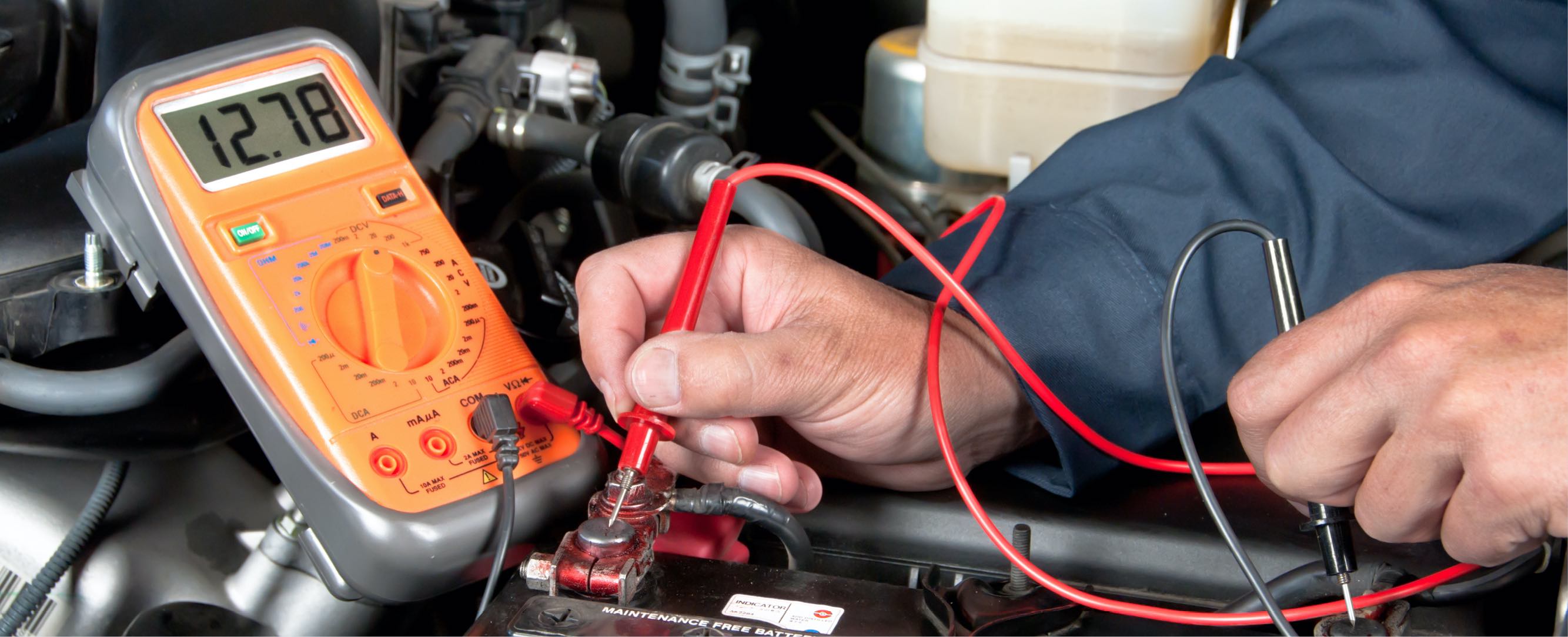
Testing a car battery with a multimeter is simple. You do not normally need to remove the battery from the car.
Step 1: Turn Off the Car
Park the car on a flat surface and turn the ignition off.
Switch off the headlights, radio, interior lights, and other electrical accessories. Make sure the car is safely parked before you start the test.
If you have just driven the car or charged the battery, the battery may have a temporary surface charge. Follow your tester or battery manufacturer’s instructions before taking a resting-voltage reading.
Step 2: Set the Multimeter
Set your digital multimeter to DC voltage.
If your meter has manual ranges, choose a range that can measure at least 15 volts. On many basic meters, this will be the 20-volt DC setting.
Step 3: Connect the Multimeter
Find the positive (+) and negative (-) battery terminals.
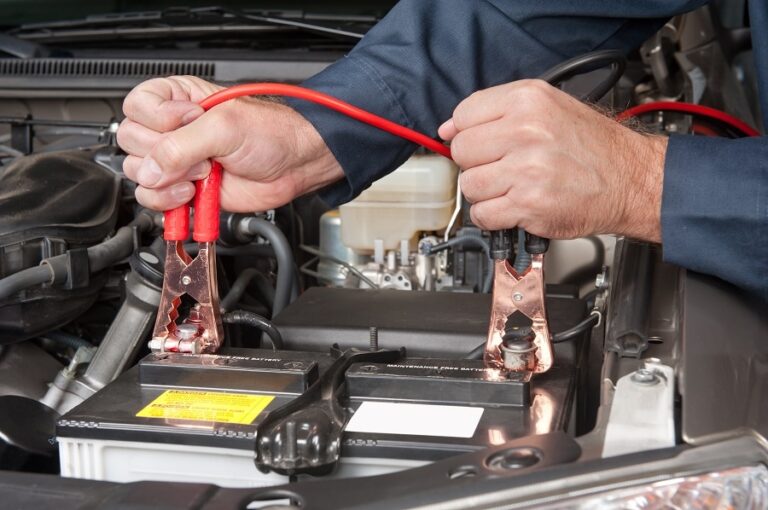
Touch the red probe to the positive terminal and the black probe to the negative terminal.
Keep the probes steady and read the number on the display.
Step 4: Check the Battery Voltage
A fully charged conventional 12-volt automotive battery will often measure around 12.6 volts at rest. However, the exact reading can vary with battery type, temperature, and state of charge.
As a basic guide:
| Battery voltage | Approximate charge |
|---|---|
| 12.6–12.9V | High/full charge |
| Around 12.4V | Partly charged |
| Around 12.2V | Low charge |
| Around 12.0V or lower | Very low charge |
These numbers are best used as a guide, not as proof that a battery is good or bad.
A low voltage reading can mean the battery needs charging. It does not automatically mean the battery needs replacement.
Car Battery Voltage Chart
Here is a simple reference for a conventional 12-volt battery:
| Voltage | Approximate state of charge |
|---|---|
| 12.88V | 100% |
| 12.64V | 75% |
| 12.39V | 50% |
| 12.09V | 25% |
| 11.80V | 0% |
The exact reading can vary based on battery type and test conditions.
Important: battery voltage mainly tells you the battery’s state of charge. It does not tell you how much starting power the battery can deliver.
For example, an old battery may show a normal voltage after charging but still fail when the starter puts a heavy load on it.
How to Test Car Battery With a Load Tester
A load test checks how the battery performs when a large electrical load is placed on it.
This gives you more useful information about starting performance than a simple resting-voltage test.
A typical professional load test uses a load based on the battery’s rated cold cranking amps (CCA). The exact pass or fail voltage can also depend on battery temperature, so do not use one number as a universal test result.
If you are not familiar with load testers, an auto parts store or repair shop can perform this test for you.
How to Test Car Battery With a Conductance Tester
A conductance tester is another way to test a battery.
Instead of only measuring resting voltage, the tester checks the battery’s electrical response and can estimate its available starting power. Some professional testers also check the charging and starting systems.
This type of test can be useful when you want to know whether a battery is simply low on charge or has lost starting capacity.
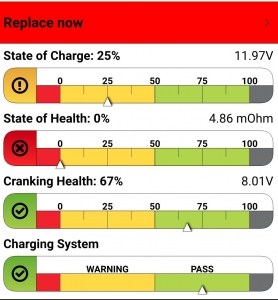
If your tester gives you a result such as Good, Good-Recharge, Charge and Retest, or Replace Battery, follow the tester’s instructions and the battery manufacturer’s specifications.
How to Test a Car Battery Without a Multimeter
You can perform a few basic checks without a multimeter, but you cannot get an accurate voltage reading without a testing tool.
Start with a visual inspection. Look for:
- Heavy corrosion on the terminals
- Loose battery connections
- Cracks in the battery case
- A swollen or bulging battery
- Damaged cables
- Signs of leaking
Next, pay attention to how the car starts.
A slow engine crank, repeated clicking, dim lights, or frequent jump-starts can point to a weak battery. However, these symptoms can also be caused by poor cable connections, a starter problem, or a charging-system problem.
If you do not have a multimeter, many auto parts stores and repair shops can test the battery for you.

How to Test Car Battery and Alternator
If you want to know whether the problem is the battery or alternator, test the battery with the engine off first.
Then start the engine and measure the voltage again at the battery terminals.
A conventional charging system will often show a voltage higher than the resting battery voltage. Modern vehicles can use smart charging systems that vary the voltage, so compare the result with your vehicle’s specifications when available.
If the voltage does not rise as expected, the battery may not be the only problem. The alternator, wiring, connections, or charging system may need further testing.
How to Tell If a Car Battery Is Bad
A bad or weak battery may show one or more of these signs:
- Engine cranks slowly
- Car needs frequent jump-starts
- Battery fails a load or conductance test
- Battery cannot hold a charge
- Battery case is swollen or damaged
- Heavy corrosion keeps returning
- Battery is several years old and starting performance is getting worse
- Tester reports “Replace Battery” or a similar failure
Remember that a normal voltage reading does not prove that the battery is healthy.
A battery can be fully charged and still have poor starting capacity because of age or internal damage.
What Does a Good Car Battery Test Result Look Like?
A good battery should show a suitable resting voltage when properly charged and should meet the required starting specifications during a professional battery test.
For example, a battery tester may show Good Battery when the measured performance is within the manufacturer’s required CCA range.
A Good-Recharge result can mean the battery itself is still in good condition but its charge is low. A Charge and Retest result means the battery needs to be fully charged before the tester can give a reliable health result.
This is why looking at one voltage number is not enough to judge the entire battery.

What If Your Car Battery Has Low Voltage?
If your battery voltage is low, recharge it with the correct battery charger before deciding that it needs replacement.
After charging, let the battery settle according to the battery or charger manufacturer’s instructions and test it again.
If the battery repeatedly loses its charge or fails a proper load or conductance test after charging, it may be time to replace it.
Also check for an electrical problem that could be draining the battery while the vehicle is parked.
If the battery keeps going flat after the car sits, our guide on why a car won’t start after sitting can help you check other possible causes.
When Should You Replace a Car Battery?
There is no single age that guarantees a battery needs replacement.
Many automotive batteries last around three to five years, but climate, driving habits, short trips, vehicle electronics, and maintenance can affect battery life.
Consider having the battery tested if it is several years old, the engine is becoming harder to start, or you have needed multiple jump-starts.
If the battery case is swollen, cracked, leaking, or otherwise damaged, do not keep using it. Have it handled by a qualified professional.
How to Maintain Your Car Battery
A few simple habits can help you avoid battery problems.
Keep the Terminals Clean
Check the battery terminals for corrosion and make sure the connections are secure.
Corroded or loose connections can create electrical resistance and may cause starting problems.
Avoid Leaving Electronics On
Turn off lights, chargers, and other accessories when the engine is off.
A battery can become deeply discharged if electrical loads are left running for a long time.
Check the Battery From Time to Time
If your battery is several years old, test it before extreme weather or a long trip.
This gives you a chance to find a weak battery before it leaves you with a no-start problem.
Pay Attention to Short Trips
Frequent short trips may not give the charging system enough time to replace the energy used during starting.
If your vehicle sits for long periods, a suitable battery maintainer may also help keep the battery charged.
For more DIY car care tips, you can also explore our car maintenance guides.
Car Battery Testing Safety Tips
Always take basic safety precautions when testing a car battery.
- Wear safety glasses when working near the battery.
- Keep cigarettes, flames, and sparks away from the battery.
- Do not touch the positive and negative terminals with a metal tool at the same time.
- Make sure your multimeter is set correctly before testing.
- Do not test a battery that is cracked, badly swollen, or leaking.
- Keep jewelry and loose metal objects away from the battery.
- If you are removing the battery, disconnect the negative terminal first.
- If you are unsure about the test, have a professional check it.
Car batteries contain corrosive material and can produce dangerous gases, so proper safety matters.
Frequently Asked Questions
How do I test a car battery at home?
The easiest way is with a digital multimeter. Turn the vehicle off, set the meter to DC voltage, and place the red probe on the positive terminal and black probe on the negative terminal. A fully charged 12-volt battery will often be around 12.6 volts, but voltage alone does not prove that the battery is healthy.
How do I test a car battery with a multimeter?
Set the multimeter to DC volts, connect the red probe to the positive terminal and the black probe to the negative terminal, and read the voltage. Test the battery with the engine off for a resting-voltage reading.
What voltage should a car battery have?
A fully charged conventional 12-volt car battery will often measure around 12.6 volts at rest. The exact reading depends on factors such as battery type, temperature, and state of charge.
Is 12.2 volts enough to start a car?
A reading around 12.2 volts indicates a low state of charge rather than proving that the battery is bad. Recharge the battery and test it again before deciding to replace it.
Is 12.6 volts a good battery?
Around 12.6 volts is a good resting-voltage reading for a fully charged conventional 12-volt battery. However, the battery can still be weak under load, so a voltage reading alone cannot confirm overall battery health.
How do I know if my battery or alternator is bad?
Test the battery with the engine off and then check the charging voltage with the engine running. If the charging voltage does not rise as expected, the charging system may need further testing. A professional battery and charging-system test can separate these problems more accurately.
Can I test a car battery without removing it?
Yes. A basic voltage test can usually be done while the battery is still installed in the vehicle. Connect the multimeter directly to the battery terminals and take the reading with the engine off.
How often should I test my car battery?
There is no single schedule for every vehicle. It is a good idea to test an older battery before a long trip or when you notice slow starting, repeated jump-starts, or other warning signs.
Final Thoughts
Learning how to test car battery is one of the easier car maintenance skills you can do at home.
Start with a digital multimeter and check the battery’s resting voltage. If the voltage is low, charge the battery and test it again. If you want a more complete answer about battery health, use a load tester or conductance tester.
Most importantly, do not judge a battery only by one voltage reading. A battery can show a normal charge level and still fail under load, so use the right test for the problem you are trying to diagnose.
If your battery keeps losing charge, fails a proper battery test, or the car still has starting problems after the battery is charged, check the cables, starter, and charging system as well.