Introduction
Yes—regular human shampoo is usually a poor choice for washing a car, although a small amount used once in an emergency is unlikely to ruin the paint. Human shampoo is made for hair and skin, not automotive paint, glass, rubber, plastic, or protective coatings.
For routine car washing in the United States, use a pH-balanced car wash soap. It is designed to remove road dirt while reducing the risk of residue, streaks, wax loss, and trim damage. If shampoo is the only option available, dilute a small amount, rinse the vehicle well, and dry it with a clean microfiber towel.

Why Human Shampoo Is Not Ideal for Car Paint
Human shampoo can clean a car, but cleaning power alone does not make a product suitable for automotive surfaces. A vehicle has several different materials, including clear coat, painted plastic, chrome, glass, rubber seals, vinyl, and unpainted trim.
Human shampoo is formulated for hair and the scalp. It may contain:
- Fragrance
- Conditioning agents
- Oils or silicones
- Salts
- Botanical extracts
- Preservatives
- Colorants
- Foaming agents
These ingredients can leave a thin film on a vehicle. The film may not be obvious on paint, but it can cause streaks on glass or make dust stick to trim.
It may leave residue
Conditioning ingredients help hair feel smooth. On a car, those same ingredients may leave a slick or cloudy layer. This is most noticeable on windows, mirrors, black plastic, and glossy trim.
A residue can also make later detailing harder. Wax, sealants, and ceramic coatings need a clean surface to bond well. Shampoo residue may interfere with that process.
It can affect wax or sealant
A single wash with mild shampoo will not normally strip a modern clear coat. However, repeated use may reduce the life of some waxes or spray sealants, especially if the shampoo contains stronger cleaners or solvents.
The effect depends on the product. “Shampoo” is not one standard formula. A gentle baby shampoo, a clarifying shampoo, and a medicated shampoo may behave very differently.
It is not tested for automotive surfaces
Car wash soaps are made for the materials and conditions found on vehicles. Human shampoos are not generally tested for long-term use on automotive paint, rubber seals, exterior plastics, or protective coatings.
That does not prove that every human shampoo will damage paint. It means the product lacks a clear automotive-use purpose and may create avoidable problems.

What Happens If You Wash a Car With Shampoo?
Using shampoo once will most often cause a surface problem rather than permanent paint damage. The main risks are residue, streaks, reduced protection, and poor rinsing.
The result depends on five factors:
| Factor | Why it matters |
|---|---|
| Shampoo formula | Conditioners and oils can leave a film |
| Amount used | Too much product is harder to rinse |
| Water hardness | Minerals can combine with residue and leave spots |
| Sun and heat | Product can dry before you rinse it |
| Drying method | Air drying can leave water marks |
Paint
Most factory automotive paint is protected by a clear coat. A mild shampoo used briefly on a wet surface is unlikely to harm that clear coat.
The larger concern is not immediate paint failure. It is the gradual loss of surface protection or the buildup of residue. Harsh scrubbing, dirty towels, and trapped grit usually pose a greater risk of swirl marks than the shampoo itself.
Glass
Glass needs special care. A shampoo with conditioners, oils, or silicones can leave a greasy film on the windshield. That film may create glare or streaks when the wipers move across the glass, especially at night or in rain.
If shampoo gets on the windshield, rinse it thoroughly. If streaks remain, clean the glass with a product intended for automotive glass and use a clean, lint-free towel.
Plastic and rubber
Exterior plastics and rubber seals may not show damage after one wash. Still, repeated exposure to unsuitable cleaners can leave trim dull, greasy, or uneven in color.
Avoid letting shampoo dry on black plastic, rubber weather stripping, or textured trim. These areas can hold residue even after a quick rinse.
Ceramic coatings and paint protection film
A coated vehicle does not automatically make shampoo safe. Ceramic coatings and paint protection film still need products that match the maker’s care instructions.
Many coated-car care guides recommend a pH-neutral or coating-safe wash soap. Always follow the instructions for the specific coating or film. Do not assume that “gentle on hair” means “safe for a coating.”

Is Baby Shampoo Safe for Washing a Car?
Baby shampoo is usually milder than many adult shampoos, but it is still not the best car wash soap. It may contain conditioners, fragrance, oils, or other ingredients that can leave a film.
If you use baby shampoo once during an emergency, the likely result is a vehicle that needs extra rinsing. It is not likely to damage factory paint from one brief wash. Still, routine use is hard to justify when automotive wash soap is made for this exact job.
Baby shampoo is also not a reliable way to remove road film, brake dust, tree sap, or greasy traffic residue. A product that is mild may not clean well. You may then scrub harder, which can increase the chance of fine scratches.
Is Dish Soap Worse Than Shampoo for a Car?
Dish soap is often a worse routine choice because it is designed to break down cooking grease and food oils. Some formulas can remove wax and other protective products more quickly than a mild car wash soap.
That does not mean one dish-soap wash will destroy a car’s paint. Modern automotive clear coats are more durable than many people think. The concern is repeated use, strong concentration, drying in the sun, and the loss of wax or sealant.
Use dish soap only when a vehicle-care instruction specifically calls for it, such as certain preparation steps before applying a new coating. For ordinary washing, car wash soap is the safer and more predictable choice.
The Best Soap for Washing a Car
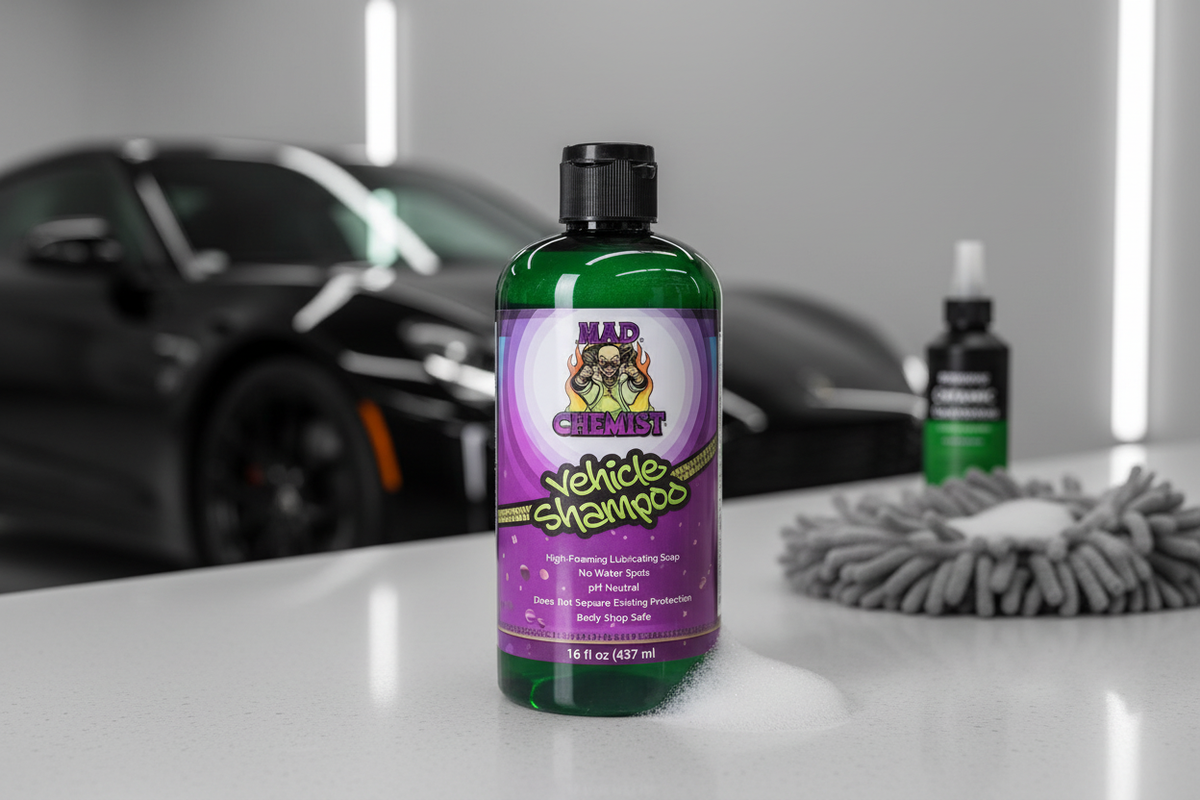
The best routine choice is a car wash soap labeled for exterior automotive surfaces. Look for a product that states it is:
- Safe for clear coat
- Safe for automotive paint
- pH-balanced or pH-neutral
- Suitable for wax or sealant, if protection is present
- Safe for the vehicle’s coating, if applicable
A car wash soap is made to provide lubrication. Lubrication helps the wash mitt glide over the surface and reduces the chance that dirt will drag across the paint.
Do not choose a soap only because it produces a lot of foam. Foam can make a wash feel effective, but lubrication, rinsing, and the product’s intended use matter more.
Car soap versus human shampoo
| Feature | Car wash soap | Human shampoo |
|---|---|---|
| Main purpose | Vehicle surfaces | Hair and scalp |
| Surface design | Paint, glass, trim, and rubber | Hair and skin |
| Lubrication for wash mitts | Usually included | Not the main goal |
| Conditioning residue | Usually limited | May be present |
| Coating guidance | Often provided | Usually absent |
| Routine car use | Recommended | Not recommended |
The table does not mean that every car soap is mild or every shampoo is harsh. Read the label. Some automotive cleaners are made for heavy dirt and may be too strong for frequent maintenance washing.

How to Wash Your Car Safely
A safe wash depends as much on the method as the soap. Even the best car shampoo can cause scratches if the wash mitt holds grit or if the vehicle is scrubbed while dry.
What you need
Gather:
- Car wash soap
- Two clean buckets, if possible
- A hose or low-pressure rinse
- A microfiber wash mitt
- A separate wheel brush or mitt
- Several clean microfiber drying towels
- A shaded work area
Keep wheel tools separate from paint tools. Brake dust can contain abrasive particles that may scratch clear coat.
Step-by-step method
-
Park in the shade.
Let hot panels cool before washing. Do not wash when the surface is hot enough to dry soap or water quickly. -
Rinse the vehicle first.
Remove loose dust, sand, and grit with water. Pay attention to the lower doors, wheel arches, and rear bumper. -
Mix the soap as directed.
More soap is not always better. Excess product can be harder to rinse and may leave residue. -
Wash from top to bottom.
Start with the roof and upper glass. Move toward the lower panels, where the heaviest dirt collects. -
Use light pressure.
Let the wash solution and mitt do the work. Do not grind visible grit into the paint. -
Rinse the mitt often.
With two buckets, use one for soapy water and one for rinsing the mitt. Replace dirty water when it becomes heavily contaminated. -
Clean the wheels last.
Use different tools for wheels and painted panels. -
Rinse the entire vehicle.
Do not let soap dry on the surface. -
Dry with clean microfiber towels.
Blot or glide gently. Avoid old bath towels, rough cloths, and automatic brushes. -
Check the glass.
Look for streaks or a greasy film before driving, especially on the windshield and mirrors.
If you used human shampoo by mistake, repeat the rinse step. If the surface still feels slick or looks cloudy, wash it again with car wash soap. Do not use an abrasive compound just because a shampoo film remains.
When Shampoo Can Be Used in an Emergency
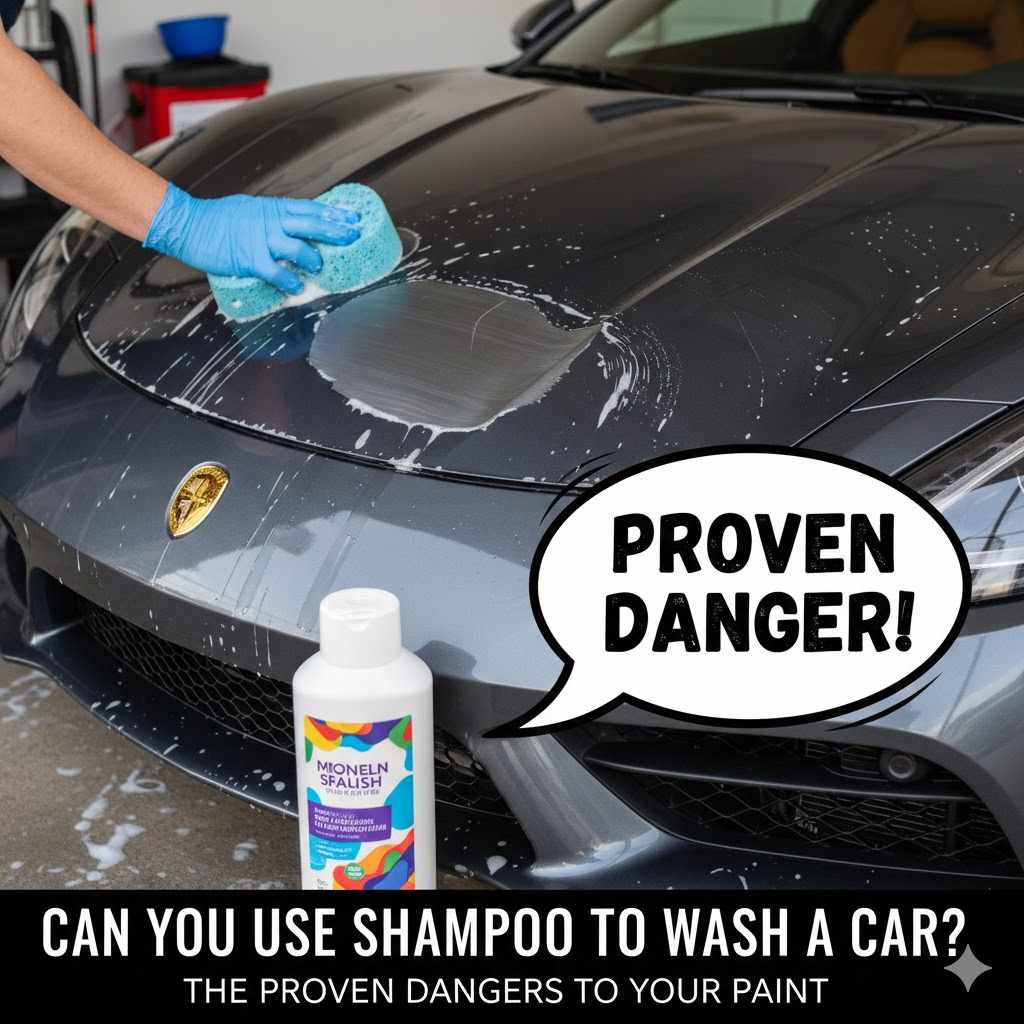
If you are away from home and have no car soap, a small amount of mild shampoo can be a temporary option. Use it only when the vehicle needs a basic wash and the paint is not heavily coated with sand, mud, or grit.
Follow these limits:
- Use a very small amount.
- Dilute it in plenty of water.
- Work in the shade on a cool surface.
- Wash one section at a time.
- Rinse before the solution dries.
- Rinse the glass especially well.
- Dry the vehicle with a clean microfiber towel.
- Do not use it as a regular replacement for car soap.
Do not use shampoo for a heavily dirty vehicle if you cannot rinse it well. Water and friction can turn loose grit into scratches. In that case, waiting for the right supplies may be safer than washing with the wrong method.
Do not use shampoo in these situations
Avoid shampoo when:
- The car has heavy mud or sand on it.
- The paint is hot.
- The product contains visible oils or strong conditioners.
- You cannot rinse the vehicle fully.
- The vehicle has a coating with strict care instructions.
- The windshield is already hard to see through.
- You plan to use an automatic wash soon after and need a clean surface for treatment.
The key issue is control. A one-time emergency wash with careful rinsing is different from using shampoo every week.

Common Car-Washing Mistakes
Using too much soap
A thick bucket of suds does not guarantee a cleaner car. Excess soap can cling to trim, seams, badges, and glass.
Washing in direct sun
Sunlight heats the panel and speeds evaporation. Dried soap can leave spots and make you scrub harder.
Using one towel for everything
A towel used on wheels should not return to the paint. Keep separate tools for wheels, paint, glass, and interior surfaces.
Scrubbing bird droppings or tree sap
These contaminants may need soaking before removal. Rubbing them dry can scratch the clear coat. Place a wet microfiber towel over the spot for several minutes, then lift the softened material away.
Letting shampoo enter the cabin
Human shampoo is not intended for dashboards, leather, fabric, or touch screens. It can leave a shiny film, stain porous materials, or make controls slippery.
For interiors, use a cleaner made for the specific material. Follow the vehicle owner’s manual for leather, vinyl, screens, and upholstery.
Ignoring the owner’s manual
Some vehicles have matte paint, satin trim, vinyl wraps, paint protection film, or ceramic coatings. These finishes may have special care rules. The owner’s manual and coating instructions should take priority over general advice.

Key Takeaways
- Human shampoo is not recommended for routine car washing.
- One careful emergency wash is unlikely to damage factory paint.
- Shampoo may leave residue on paint, glass, plastic, or rubber.
- Car wash soap is made for automotive surfaces and usually provides better lubrication.
- Dish soap can remove wax and sealants more aggressively.
- Always rinse before the product dries.
- Use separate tools for wheels and painted panels.
- If the windshield looks cloudy or streaked, clean it again before driving.
Frequently Asked Questions
Can shampoo remove car wax?
It can reduce the life of some waxes or sealants, especially with repeated use or a strong formula. A single wash may have little visible effect, but shampoo is not a reliable wax-safe wash product.
Will shampoo damage clear coat?
A small amount used once and rinsed well is unlikely to damage a healthy factory clear coat. Repeated use, harsh formulas, dried residue, and aggressive scrubbing create more risk.
Can I wash my car with conditioner?
No. Hair conditioner is more likely than shampoo to leave oils, silicones, or other residue. It can make paint and glass streaky and may attract dust.
Can I use hand soap on my car?
Hand soap is not a good routine choice. It may contain moisturizers, fragrance, oils, or antibacterial ingredients that are not intended for vehicle surfaces.
What should I do if shampoo dries on my car?
Rinse the panel with clean water and wash it again with automotive soap. For stubborn marks, soak the area rather than scrubbing hard. If water spots or residue remain after washing, a professional detailer can assess the finish.
Conclusion
Shampoo is not usually “bad” for a car in the sense that one wash will ruin the paint. It is simply the wrong tool for regular vehicle care. Human shampoo may leave residue, streak glass, reduce protection, and clean less effectively than automotive soap.
For the best result, use a car wash soap, a clean microfiber mitt, separate wheel tools, and plenty of rinse water. If shampoo is your only option, use very little, dilute it, keep the surface cool, and rinse it away before it dries.