A car battery contains lead plates, an electrolyte solution, separators, a plastic case, and terminals that store and deliver electrical energy.
When you turn the key or press the start button, these parts work together in seconds. The battery changes chemical energy into electrical power for the starter, lights, computer systems, and other vehicle features. This guide explains what is inside a car battery, how each part works, and what you should know before handling or replacing one.
What Is Inside a Car Battery?
Most cars use a 12-volt lead-acid battery. Inside its sealed or vented case are several smaller sections called cells. A standard battery has six cells, and each cell produces about 2.1 volts when fully charged.
The main parts inside a car battery include:
- A plastic case
- Six internal cells
- Positive and negative lead plates
- Plate separators
- An electrolyte mixture
- Cell connectors
- Battery terminals
- Vents or pressure-release features
- A hold-down strap or mounting base on some designs
Together, these parts form a rechargeable chemical system. The battery sends a strong burst of current to the starter motor, then the alternator restores much of the energy while the engine runs.
The Battery Case
The outer case protects the internal parts from heat, vibration, moisture, and physical damage. It is usually made from polypropylene, a strong plastic that resists the sulfuric acid inside the battery.
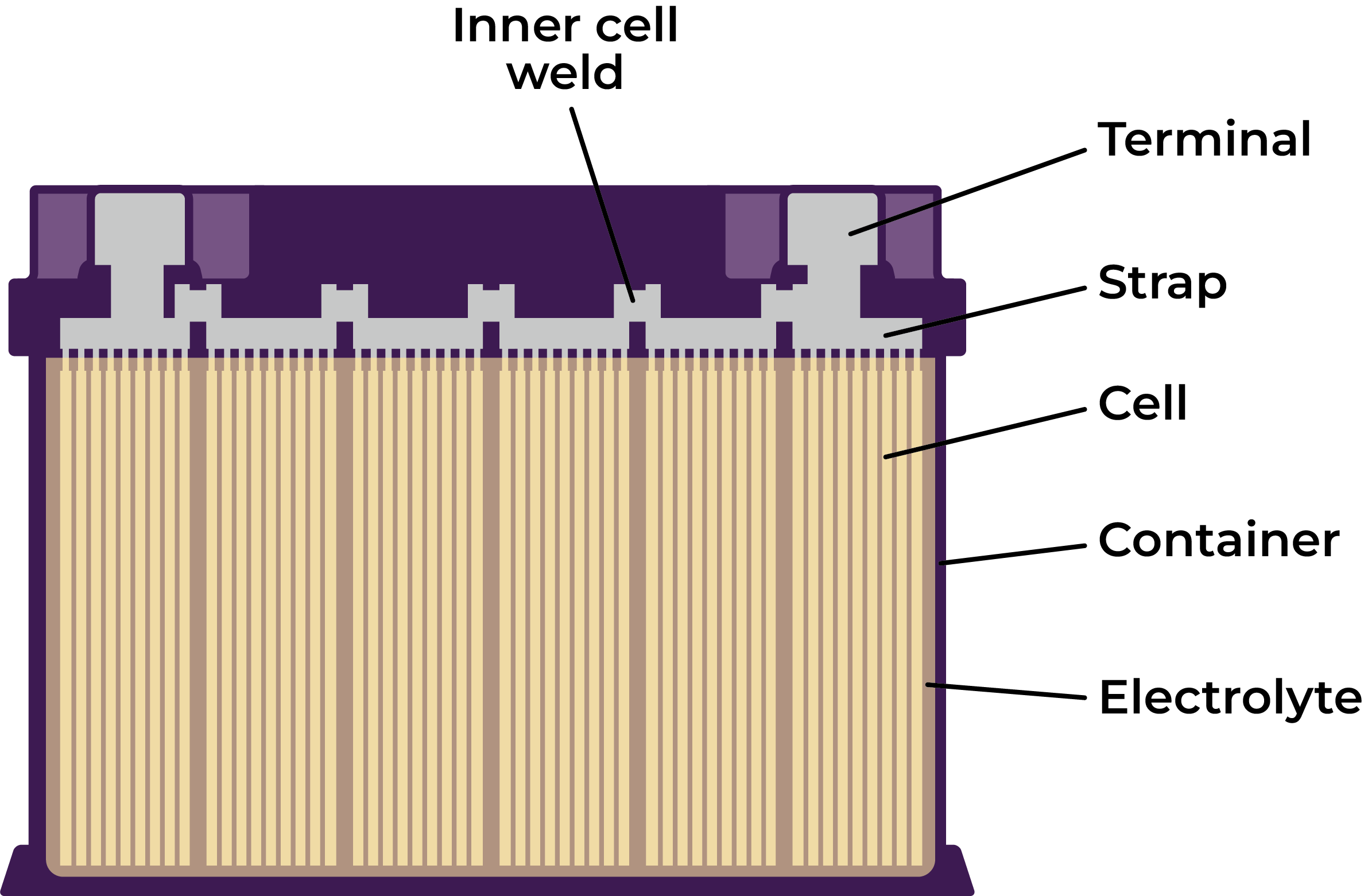
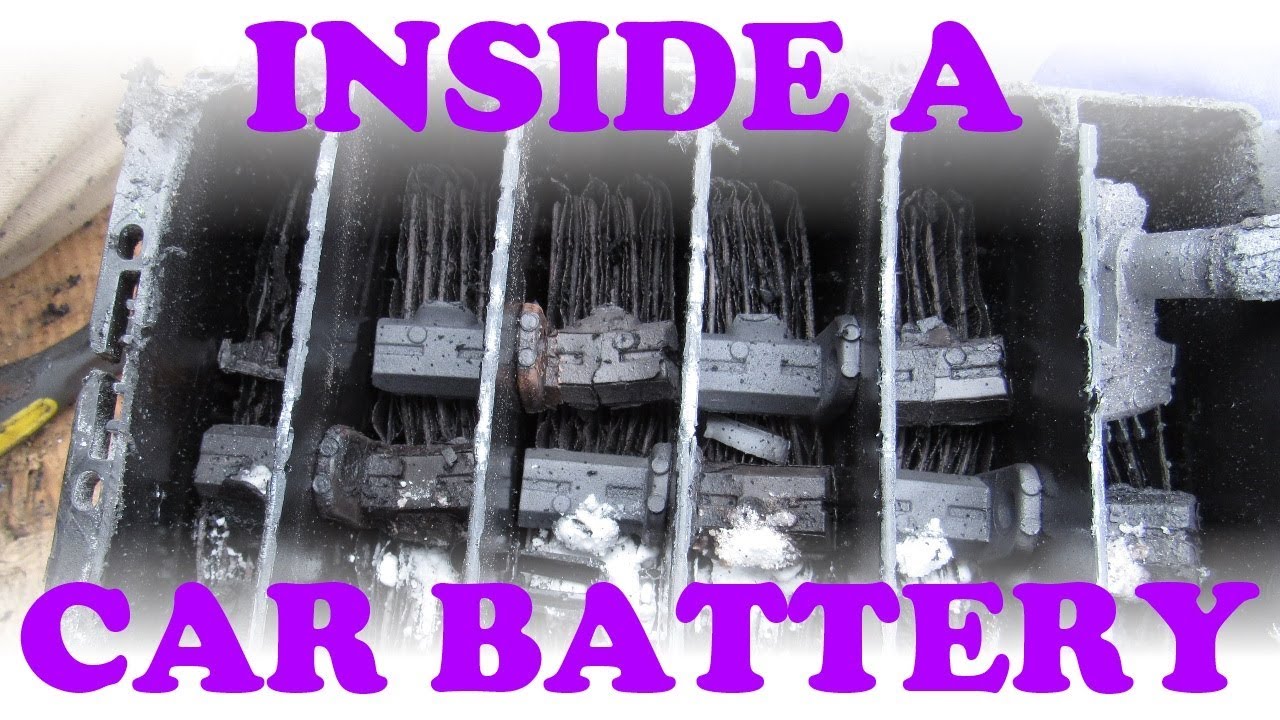
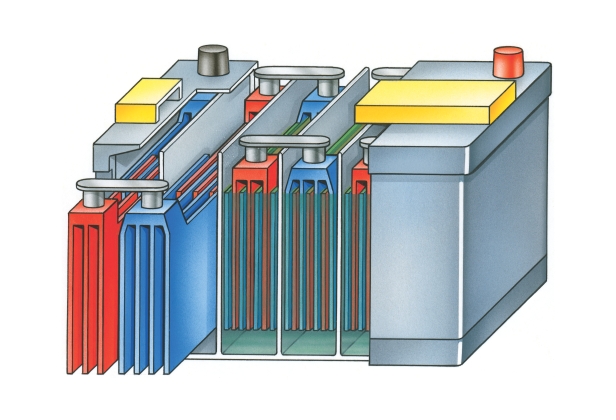
The case is divided into six chambers. Each chamber contains one electrochemical cell. Small openings or channels connect the cells in series so their voltage adds up.
A typical case must handle demanding conditions. Engine compartments can become very hot, while winter temperatures can fall below freezing. Road vibration also shakes the battery for years. A cracked or swollen case is a serious warning sign because it may allow acid to leak or indicate that the battery has frozen or overheated.
Why the Case Matters
The battery case does more than hold the parts in place. It also helps prevent electrical shorts between the plates and keeps the electrolyte contained.
Look for these warning signs:
- Bulging sides
- Cracks near the terminals
- Acid stains
- A strong sulfur smell
- Loose or damaged mounting points
- A battery that rocks in its tray
Never use a damaged battery. Battery acid can burn skin, damage paint, and corrode metal parts.
The Six Cells
A conventional 12-volt car battery has six cells. Each cell produces roughly 2.1 volts when fully charged, which gives the battery a resting voltage of about 12.6 volts.
Inside each cell are groups of positive and negative plates. The cells connect in series, meaning the voltage from one cell adds to the voltage from the next.
The cell layout works like six small water cups lined up to increase the total pressure. Each cup contributes a little energy, but all six are needed for the full battery output.
If one cell fails, the battery may show about 10.5 volts instead of 12.6 volts. In that condition, the battery usually cannot start a vehicle reliably, even if a charger is connected.

Lead Plates
Lead plates are the main working surfaces inside a car battery. They are arranged as positive and negative plates in alternating groups.
The negative plates are made mainly from lead. The positive plates use lead dioxide as the active material. These plates sit in the electrolyte, where chemical reactions create an electrical flow.
More plate surface allows the battery to deliver more current. This is why starting batteries contain many thin plates. A battery designed for deep cycling may use thicker plates because it must provide energy for a longer period.
Positive and Negative Plates
The two plate types have different roles:
- Negative plates release electrons during discharge.
- Positive plates accept the chemical reaction at the other side of the cell.
- The movement of electrons through the vehicle circuit creates usable electricity.
- Recharging reverses much of this chemical process.
The plates are not solid blocks of plain metal. They contain a paste or active material that increases the surface area available for chemical reactions.
That design gives the battery high starting power. However, thin plates are more vulnerable to damage from deep discharge, heat, vibration, and corrosion.
The Electrolyte Solution
The electrolyte is the liquid inside a traditional flooded lead-acid battery. It is a mixture of sulfuric acid and distilled water.
This solution allows ions to move between the positive and negative plates. Without the electrolyte, the chemical reaction could not produce electrical current.
When the battery discharges, the sulfuric acid becomes weaker and more water-like. When the battery charges, the acid concentration rises again. This change is one reason technicians can test electrolyte strength with a hydrometer on serviceable batteries.
Why Battery Acid Is Dangerous
Sulfuric acid can cause serious skin and eye injuries. It can also damage clothing, tools, vehicle paint, and metal parts.
Use these safety steps when working near the electrolyte:
- Wear safety glasses and chemical-resistant gloves.
- Keep sparks, cigarettes, and open flames away.
- Do not lean over a battery while charging.
- Wash splashes with plenty of clean water.
- Seek medical care after eye exposure.
- Follow the battery label and vehicle service instructions.
Never add tap water to a battery. Minerals in tap water can reduce performance. Only some serviceable flooded batteries allow distilled water to be added, and many modern batteries are sealed.

Separators Between the Plates
The positive and negative plates must stay close together, but they cannot touch. A separator is placed between them to prevent a short circuit.
Separators are thin, porous sheets. They allow ions to pass through while keeping the plates apart. Modern separators often use polyethylene, fiberglass, or similar acid-resistant materials.
A damaged separator can create an internal short. The battery may then lose charge quickly, become warm, or fail to reach normal voltage.
In an AGM battery, the glass mat separator also holds the electrolyte in place. This makes the battery more resistant to leaks and vibration than a traditional flooded design.
Cell Connectors and Internal Straps
Metal connectors join the cells together. These connectors are usually made from lead-based materials and are designed to carry very high current.
The connections must be strong because a starter motor may draw hundreds of amps. A weak internal connection can cause intermittent starting problems, sudden voltage loss, or complete battery failure.
External terminals connect the battery to the vehicle. The positive terminal usually has a plus sign, while the negative terminal has a minus sign and often connects to the vehicle body through a ground cable.
A reversed connection can damage fuses, electronic modules, alternators, and other electrical parts. Always check the positive and negative markings before connecting jumper cables or a charger.

Battery Terminals
The terminals are the points where the vehicle connects to the battery. Most cars use top-post terminals, but some European vehicles use side-post designs.
The positive terminal carries power from the battery to the starter and electrical system. The negative terminal completes the circuit and usually connects to the vehicle chassis.
Terminal corrosion often appears as a white, blue, or green crust. This material increases electrical resistance. The starter may then turn slowly even when the battery itself still has some charge.
To clean light corrosion:
- Turn off the vehicle and remove jewelry.
- Disconnect the negative cable first.
- Disconnect the positive cable.
- Clean the terminals with a battery brush.
- Reconnect the positive cable first.
- Reconnect the negative cable.
- Make sure both connections are tight.
Do not force a cable onto a damaged post. A loose terminal can create heat and sparks.
What Is Inside an AGM Car Battery?
An AGM battery, or absorbed glass mat battery, still uses lead plates and sulfuric acid. The main difference is how the electrolyte is held.
The acid is absorbed into fiberglass mats between the plates. It does not freely slosh around like the liquid in a traditional flooded battery. AGM batteries are often marked as VRLA, which means valve-regulated lead-acid.
AGM batteries offer several benefits:
- Better resistance to vibration
- Lower risk of acid leakage
- Strong starting performance
- Good support for vehicles with start-stop systems
- More flexibility in mounting position
They also have limits. AGM batteries cost more and need the correct charging voltage. Using the wrong charger setting can shorten battery life.
What Is Inside a Lithium Car Battery?
Some modern vehicles use lithium-ion batteries, especially hybrid and electric vehicles. These batteries are very different from the 12-volt lead-acid battery used in many gasoline cars.
A lithium battery pack may contain:
- Lithium-ion cells
- Positive and negative electrodes
- A separator
- Electrolyte
- Cooling channels
- Busbars
- A battery management system
- Safety sensors and contactors
The battery management system monitors temperature, voltage, and charge level. It helps prevent overcharging, overheating, and excessive discharge.
Hybrid and electric vehicle battery packs can contain hundreds or thousands of individual cells. They operate at much higher voltages than a normal 12-volt car battery. Do not open, test, or repair one unless you have proper high-voltage training and equipment.
How a Car Battery Produces Electricity
The battery produces electricity through a chemical reaction between the lead plates and sulfuric acid solution.
During discharge, the negative plate releases electrons. These electrons travel through the vehicle’s electrical circuit to power the starter, lights, or electronics. They then return to the battery through the negative side.
The battery does not create energy from nothing. It stores energy in chemical form and releases it as electrical energy. The alternator later sends electrical current back into the battery and reverses much of the reaction.
This process is not perfectly efficient. Heat, plate wear, corrosion, and sulfation slowly reduce the battery’s ability to store and deliver power.
What Happens During Starting?
Starting the engine is one of the hardest jobs a battery performs. The starter motor needs a large amount of current for a short time.
When you turn the key:
- The battery sends current to the starter solenoid.
- The solenoid connects the battery to the starter motor.
- The starter motor turns the engine’s crankshaft.
- The engine begins combustion.
- The alternator starts producing power.
- The alternator helps run the vehicle and recharge the battery.
Cold weather makes this process harder. Oil becomes thicker, and the battery’s chemical reaction slows. That is why a weak battery may work in warm weather but fail on a cold morning.
In practical battery testing, one common mistake is checking only the voltage. A battery can show 12.6 volts with no load and still fail when the starter demands high current. A proper load test or electronic conductance test gives a more useful picture of starting health.

Common Problems Inside a Car Battery
Several internal problems can reduce battery performance.
Sulfation
Sulfation occurs when lead sulfate crystals build up on the plates. It often happens when a battery stays partially discharged for a long time.
Small amounts may be reduced during normal charging. Heavy sulfation can permanently limit the battery’s capacity.
Plate Corrosion
Positive plate corrosion occurs naturally over time, especially in hot climates. Corroded plates lose active material and become less effective.
High charging voltage can speed up corrosion. A faulty alternator or voltage regulator may damage a battery even when the battery itself is new.
Internal Short Circuit
A short can happen when plate material falls to the bottom of a cell or when a separator fails. The battery may lose voltage quickly or show one weak cell.
Water Loss
Flooded batteries can lose water through heat and charging. If the electrolyte level becomes too low, exposed plates may suffer permanent damage.
Modern sealed batteries reduce this issue, but they are not immune to heat, overcharging, or age.
Freezing
A fully charged lead-acid battery has a much lower freezing risk than a discharged one. A deeply discharged battery can freeze in cold weather, which may crack the case and damage the plates.
How Long Does a Car Battery Last?
Many car batteries last about three to five years, but climate, driving habits, battery quality, and vehicle design affect this range.
Hot weather can shorten battery life because heat speeds up corrosion and water loss. Cold weather does not always cause the original damage, but it reveals weakness by making starting more difficult.
Short trips can also be hard on a battery. The starter uses a large amount of energy, but a short drive may not give the alternator enough time to replace it.
To help a battery last longer:
- Keep the terminals clean and tight.
- Secure the battery in its tray.
- Avoid leaving lights or accessories on.
- Test the battery before extreme winter or summer weather.
- Repair charging-system problems quickly.
- Drive long enough for the alternator to restore starting energy.

How to Check What Is Inside a Car Battery Safely
You should not open a car battery to inspect its internal parts. Opening the case can expose you to acid, lead compounds, and explosive hydrogen gas.
Instead, inspect the battery from the outside and use safe electrical tests.
A basic check may include:
- Looking for case damage or swelling
- Checking the manufacturing date
- Inspecting terminal corrosion
- Measuring resting voltage with a digital multimeter
- Testing the charging voltage with the engine running
- Performing a professional load test
A healthy, fully charged 12-volt battery often measures near 12.6 volts after resting. With the engine running, many vehicles show roughly 13.7 to 14.7 volts, but the correct range depends on the vehicle and charging system.
Modern smart charging systems may change voltage during operation. For that reason, compare test results with the vehicle manufacturer’s specifications instead of relying on one universal number.
How to Dispose of a Car Battery
Car batteries should never go into household trash. Lead and sulfuric acid can harm people, soil, and water.
Most auto parts stores, repair shops, and recycling centers accept used lead-acid batteries. In the United States, retailers often offer a core charge and refund it when you return the old battery.
Keep these points in mind:
- Transport the battery upright.
- Place it in a sturdy plastic tray or box.
- Prevent the terminals from touching metal.
- Do not drain the electrolyte.
- Keep children and pets away.
- Follow local recycling rules.
Lead-acid batteries are highly recyclable. Returning the old unit helps recover lead and plastic while reducing environmental risks.
Frequently Asked Questions About What Is Inside a Car Battery
What is the liquid inside a car battery?
The liquid in a traditional flooded lead-acid battery is a mixture of sulfuric acid and distilled water. It is called an electrolyte because it carries ions between the battery plates.
How many cells are inside a 12-volt car battery?
A standard 12-volt car battery has six cells. Each cell produces about 2.1 volts when fully charged, creating a total resting voltage near 12.6 volts.
Are there chemicals inside a car battery?
Yes. A lead-acid battery contains lead-based plate materials, lead dioxide, sulfuric acid, and water. These materials can cause serious harm if the battery is opened, damaged, or handled carelessly.
Can you add water to a car battery?
Only some serviceable flooded batteries allow distilled water to be added. Do not add water to an AGM, gel, or sealed battery, and never use tap water.
What metals are inside a car battery?
Most traditional car batteries contain lead in the plates and internal connectors. The terminals may also contain lead-based alloys, while lithium batteries use different materials such as lithium compounds, nickel, manganese, cobalt, iron, copper, and aluminum.
Why does a car battery have six cells?
Six cells provide about 12.6 volts when fully charged. The cells are connected in series so their individual voltages combine.
Is it safe to open a car battery?
No. Opening a car battery can expose you to sulfuric acid, lead compounds, and flammable hydrogen gas. Battery inspection and repair should be left to trained professionals.
Conclusion
A car battery is a carefully designed chemical power source. Inside are six cells, lead plates, separators, electrolyte, connectors, and terminals that work together to start the engine and support the vehicle’s electrical systems.
Understanding what is inside a car battery helps you spot trouble early. Check for swelling, corrosion, loose cables, low voltage, and charging problems, and always recycle the battery properly when it reaches the end of its life. Use these tips during your next battery check, and explore your vehicle owner’s manual for the exact testing and replacement guidance.