For drivers in the United States, the safest cleaning agent for a car headrest is usually a mild soap solution made with warm water and a small amount of gentle dish soap. Use a cleaner made for automotive upholstery only when the headrest material needs it. Always check your vehicle owner’s manual first, because fabric, leather, vinyl, and synthetic leather need different care.
Use a soft microfiber cloth, apply the cleaner to the cloth rather than soaking the headrest, and test a hidden spot first. Avoid bleach, ammonia, strong degreasers, harsh solvents, and excessive water.

Quick answer: the best cleaner depends on the headrest material
The headrest covering controls which cleaning agent is safe. Most car headrests use one of four materials:
| Headrest material | Recommended cleaning agent | Avoid |
|---|---|---|
| Cloth or fabric | Mild soap and water or an automotive fabric cleaner | Flooding the foam, bleach, strong solvents |
| Leather | Water-based leather cleaner approved for automotive leather | Household polish, alcohol, bleach, excess water |
| Vinyl | Mild soap and water or a vinyl-safe cleaner | Abrasive powder, ammonia, petroleum solvents |
| Synthetic leather | Mild soap and water or a cleaner labeled safe for the material | Unapproved leather oils, harsh chemicals |
A small amount of mild dish soap diluted in water is a good first choice for light dirt on many fabric and vinyl headrests. For leather, use a product labeled for automotive leather, not a general household cleaner.
The vehicle manual is the final guide. Automakers may use coated leather, synthetic leather, flame-resistant fabric, or special surface treatments that react poorly to common household products.
How to identify the headrest material
Look closely at the surface before choosing a cleaner. The material may not be obvious, especially in newer vehicles.
Cloth or fabric headrests
Fabric feels woven or slightly rough. It may show visible threads, a mesh pattern, or a soft nap. Cloth often holds dust, skin oil, food marks, and hair.
Use:
- A vacuum with a soft brush attachment
- Mild soap diluted in water
- A pH-neutral automotive fabric cleaner
- A soft upholstery brush for stubborn spots
Do not assume that a fabric cleaner is safe for every seat. Some products can leave rings, lighten dark cloth, or damage stain-resistant coatings.
Leather headrests
Automotive leather often has a protective top coating. It may feel smooth, cool, and slightly firm. Perforated leather has small holes that can trap liquid.
Use:
- A cleaner labeled for automotive leather
- A clean microfiber cloth
- A separate leather conditioner only if the owner’s manual allows it
Do not use saddle soap, furniture polish, alcohol wipes, or household disinfectant unless the vehicle manufacturer specifically approves them. These products may change the finish or leave a greasy film.
Vinyl and synthetic leather headrests
Vinyl and synthetic leather can look like real leather but usually feel more uniform. They are common in many cloth-and-leatherette interiors.
Use:
- Mild soap and water
- A vinyl-safe automotive interior cleaner
- A damp microfiber cloth
Synthetic leather does not always respond well to real-leather conditioners. Some conditioners can make the surface slippery or leave an uneven shine.
Alcantara, suede-like, or special fabric
Some vehicles use suede-like materials such as Alcantara or microfiber upholstery. These surfaces need special care.
Use only the product and method listed in the owner’s manual. A general leather cleaner may stain or flatten the surface. Do not scrub hard or soak the material.

How to clean a fabric car headrest safely
Clean a fabric headrest in small sections. The goal is to lift dirt without pushing water deep into the foam.
What you need
- A vacuum with a soft brush
- Two or three clean microfiber cloths
- A small bowl
- Warm water
- A few drops of mild dish soap
- An automotive fabric cleaner, if needed
- A soft upholstery brush
- A dry towel
Step-by-step method
- Read the owner’s manual. Look for instructions under interior care, seat cleaning, upholstery, or restraints.
- Remove loose dirt. Vacuum the front, sides, seams, and underside of the headrest.
- Test the cleaner. Apply a small amount to a hidden area. Wait until it dries and check for color change, stiffness, or a ring.
- Mix a mild solution. Add a few drops of mild dish soap to a bowl of warm water. The mixture should be lightly soapy, not thick with suds.
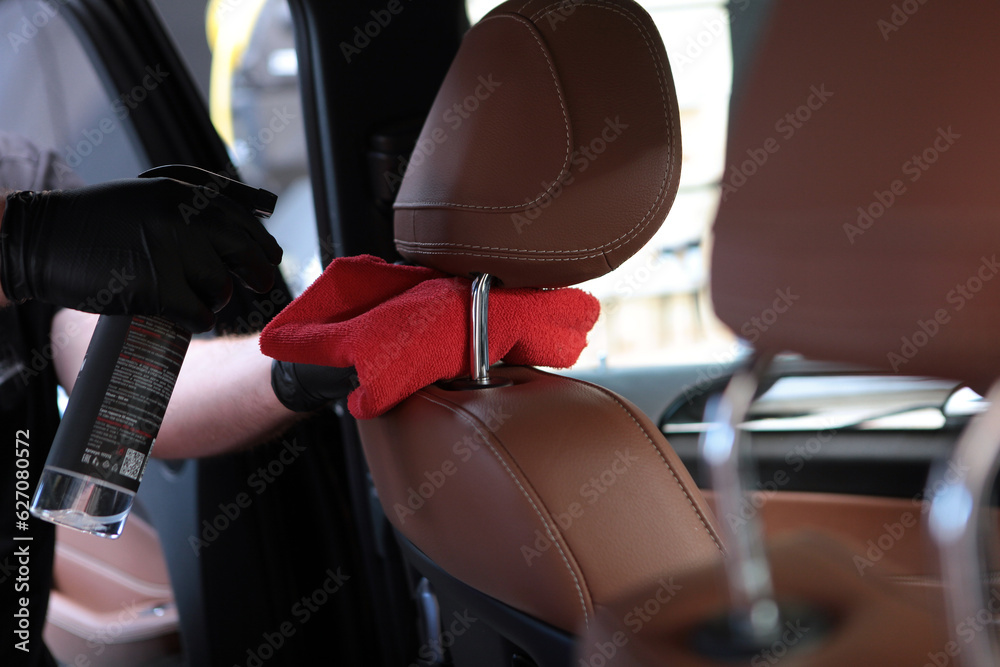
- Dampen the cloth. Dip a microfiber cloth into the solution and wring it out well. It should be damp, not wet.
- Blot and wipe. Work from the outside of the stain toward the center. This helps reduce a visible ring.
- Use a soft brush if needed. Brush gently in one direction. Do not grind the stain into the fibers.
- Remove soap residue. Use a second cloth dampened with clean water. Wring it out well first.
- Dry the area. Press a dry towel against the headrest. Leave the vehicle in a well-ventilated place until the fabric is fully dry.
Do not spray a large amount of cleaner directly onto the headrest. Liquid can move through the fabric and remain in the foam. That may cause odor, slow drying, or water marks.
For greasy marks
Start with mild soap and water. Skin oil and hair products often respond to a gentle degreasing action.
If the mark remains, use an automotive fabric cleaner according to its label. Do not increase the strength of the mixture simply because the stain is old. A stronger chemical can damage the fabric without removing the embedded oil.
For food and drink stains
Remove solid material with a spoon or dull edge. Blot liquid with a dry towel. Then use a damp cloth with mild soap.
Sugary drinks may leave a sticky film. Rinse the area lightly with a clean, damp cloth after cleaning. Avoid saturating the headrest.
For odors
First remove the source. Vacuuming and proper drying often help more than adding fragrance.
Do not pour baking soda, vinegar, or deodorizer into the headrest. Powders and liquids can become trapped in the foam. If a strong odor remains after cleaning and drying, the spill may have reached the padding. A professional automotive detailer may need to inspect it.

How to clean a leather or vinyl headrest
Leather and vinyl need controlled moisture and gentle wiping. They should not be soaked or aggressively scrubbed.
What you need
- A product labeled safe for automotive leather or vinyl
- A soft microfiber cloth
- A second dry cloth
- Clean water
- A soft detailing brush for seams, if needed
Step-by-step method
- Check the material and manual. Confirm whether the surface is leather, vinyl, or synthetic leather.
- Remove dry dust. Wipe gently with a dry microfiber cloth.
- Test a hidden area. Check for color transfer, gloss change, or tackiness after the test area dries.
- Apply the cleaner to the cloth. Avoid spraying into seams, perforations, or around the headrest posts.
- Wipe a small section. Use light pressure and short passes.
- Clean seams carefully. A soft brush can loosen dirt from stitching. Do not push liquid into the seam.
- Wipe away residue. Use a separate cloth lightly dampened with clean water if the product instructions allow it.
- Dry and inspect. Buff gently with a dry microfiber cloth.
If the leather feels dry after cleaning, use a compatible automotive leather conditioner only when the manufacturer permits it. Conditioner is not a cleaning agent. It will not remove heavy dirt, ink, or dye transfer.
Why household disinfecting wipes can be risky
Many disinfecting wipes contain alcohol, solvents, or other ingredients designed for hard, nonporous surfaces. They may dull a coating, dry the surface, or cause uneven color.
If disinfection is needed because of illness, follow the vehicle manufacturer’s instructions. The Centers for Disease Control and Prevention advises following product labels and surface compatibility guidance. A product that kills germs on a countertop is not automatically safe for a vehicle seat or headrest.

Which cleaning agents should you avoid?
Avoid a chemical when its label does not clearly identify the headrest material as a safe use. Car interiors include coatings, adhesives, foam, stitching, and plastic parts that can react differently.
Do not use:
- Bleach or chlorine cleaners
- Ammonia-based glass cleaners
- Acetone or nail-polish remover
- Paint thinner or mineral spirits
- Strong degreasers
- Abrasive powders
- Scouring pads
- Furniture polish
- Household leather polish
- Undiluted vinegar
- Large amounts of water
- Steam unless the vehicle maker allows it
Bleach can change color and weaken some fibers. Solvents can dissolve finishes or transfer color. Abrasive tools can make a shiny patch that cannot be reversed.
A popular home remedy is a mixture of vinegar and baking soda. It may seem harmless, but the mixture is not a reliable headrest cleaner. It can leave residue, add moisture, and provide no material-specific safety guarantee.

Should you remove the headrest before cleaning it?
Usually, clean the headrest while it remains installed unless the owner’s manual gives a removal procedure.
A headrest is part of the vehicle’s occupant protection system. It helps support the head and may reduce the risk of neck injury during a crash. Do not force the release buttons, bend the posts, or drive with the headrest removed.
Some vehicles also have wiring or sensors in or near the seat. The exact design varies by vehicle. If the headrest is stained on all sides and must be removed, use the procedure in the manual. If removal is unclear, ask a dealership or qualified automotive technician.
Never spray cleaner into:
- Headrest post openings
- Seat seams
- Electrical connectors
- Seat controls
- Side-airbag areas
- Speakers or screens built into the seat

How much cleaner should you use?
Use the least amount that cleans the surface. A headrest should feel slightly damp after wiping, not wet.
A practical rule is:
- Start with one or two sprays onto a microfiber cloth
- Clean an area about the size of your hand
- Check the result after drying
- Repeat only if needed
This is not a fixed chemical measurement. Product formulas and materials differ. Follow the cleaner’s label when it gives a specific dilution or dwell time.
If a cleaner creates heavy foam, wipe the residue away with a clean, damp cloth. Soap left in fabric can attract more dirt. Residue left on leather or vinyl may make the surface sticky.

What should you do if the stain does not come out?
Stop after two or three gentle cleaning attempts if the mark remains. Repeated scrubbing can damage the surface.
The stain may be:
- Dye transfer from clothing
- Ink
- Permanent marker
- Hair dye
- Grease deep in the foam
- Mold or mildew
- Sun fading rather than dirt
- A damaged or worn finish
Ink, dye, and hair color can become permanent. Strong solvents may remove the stain but also remove the headrest’s color or protective coating.
For mold, mildew, or a strong odor after a major spill, use a professional detailer. A detailer can determine whether the contamination is only on the surface or inside the foam. Do not use bleach as a shortcut.
If the headrest covering is torn, loose, or badly discolored, replacement may be safer than aggressive cleaning. Ask the vehicle manufacturer or a qualified upholstery shop about the correct replacement part.

Common mistakes when cleaning car headrests
The most common mistake is using too much liquid. Foam dries slowly, and moisture can remain below the surface even when the outside feels dry.
Other mistakes include:
- Skipping the spot test. A cleaner may alter color only after it dries.
- Using a household glass cleaner. It may contain ammonia or alcohol.
- Scrubbing in circles. This can create a visible texture change.
- Cleaning only the stain. A clean spot can look brighter than the surrounding fabric. Lightly clean the nearby area when the material allows it.
- Using a hair dryer on high heat. Heat can affect synthetic materials and adhesives.
- Applying leather conditioner to vinyl. The finish may become greasy or slippery.
- Ignoring the label. Some fabric cleaners require ventilation or protective gloves.
- Reinstalling a wet headrest. Moisture trapped in the foam can produce odor.
Keep the doors open when practical and provide ventilation while the interior dries. Follow all warning instructions on the cleaner’s label.
Cleaning agent decision guide
Choose the mildest option that matches the material and the stain.
| Situation | First choice | Next step if it fails |
|---|---|---|
| Light dust on fabric | Vacuum and dry microfiber cloth | Mild soap solution |
| Food mark on fabric | Mild soap solution and blotting | Automotive fabric cleaner |
| Light dirt on vinyl | Mild soap solution | Vinyl-safe interior cleaner |
| Dirt on leather | Automotive leather cleaner | Professional leather cleaning |
| Greasy hair-product mark | Mild soap solution | Material-approved interior cleaner |
| Ink or dye transfer | Do not scrub hard | Professional detailer |
| Strong odor after a spill | Clean and dry the surface | Inspect the foam professionally |
| Mold or mildew | Avoid bleach and soaking | Professional inspection |
The best product is not always the strongest product. A mild cleaner that preserves the material is usually better than a powerful solvent that removes both the stain and the finish.

Key takeaways
- Use mild soap and water for many light stains on fabric and vinyl.
- Use an automotive leather cleaner for leather.
- Test every cleaner on a hidden area first.
- Put cleaner on the cloth, not directly on the headrest.
- Avoid bleach, ammonia, solvents, abrasives, and excess water.
- Do not remove the headrest unless the owner’s manual explains how.
- Let the headrest dry fully before using the vehicle.
- Contact a professional for mold, deep odors, ink, dye, or damaged upholstery.
Frequently asked questions
Can I use dish soap on a car headrest?
Yes, a small amount of mild dish soap diluted in water can work on many fabric and vinyl headrests. Use a damp, well-wrung cloth and remove soap residue afterward. Test a hidden area first, and do not use the method if the owner’s manual prohibits it.
Can I use an all-purpose cleaner on a headrest?
Only if the product label says it is safe for the specific material. Many all-purpose cleaners are too strong for leather, coated fabric, or synthetic leather. An automotive interior cleaner with clear material guidance is a safer choice.
Can I use rubbing alcohol to remove ink?
Rubbing alcohol may affect dyes, coatings, and synthetic materials. Do not apply it unless the vehicle or material manufacturer approves it. For ink on a visible headrest, professional cleaning is often safer than experimenting with solvents.
How do I clean a headrest without leaving water marks?
Use very little liquid, clean a small area at a time, and blend the edges of the cleaned area. Blot rather than scrub, then dry with a towel. Fabric may show rings when only a small spot is wet, so lightly cleaning the surrounding area can help when the material allows it.
Can I use a steam cleaner on a car headrest?
Do not use steam unless the vehicle manufacturer or cleaner manufacturer specifically permits it. Heat and moisture can affect upholstery coatings, adhesives, foam, and nearby electronics. A low-moisture method is safer for most headrests.
Final recommendation
Start with your vehicle owner’s manual, identify the headrest material, and use the mildest compatible cleaner. For most light fabric or vinyl dirt, use a damp microfiber cloth with a small amount of mild soap. For leather, choose an automotive leather cleaner. Work slowly, keep liquid away from posts and seams, and let the headrest dry completely before driving.
The next best step is simple: test your chosen cleaner on a hidden area before cleaning the visible surface.