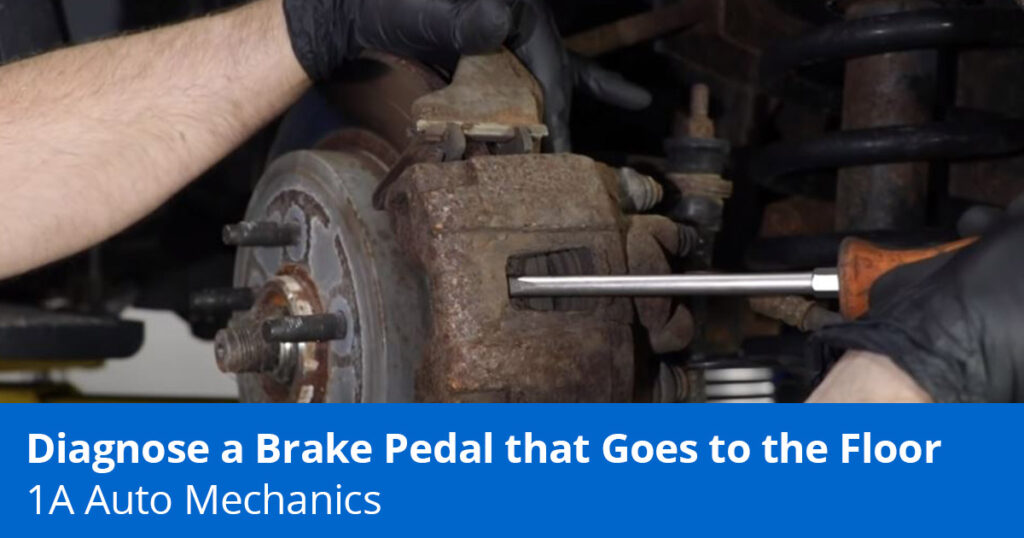
If the brake pedal goes to floor, you likely have a fluid leak or failing master cylinder.
I’ve fixed dozens of brake issues in my years as a mechanic and writer. If your brake pedal goes to floor, this guide will help you find the cause, decide what to do next, and avoid dangerous surprises. I’ll walk you through clear diagnostics, practical fixes, cost expectations, and safety steps you can take right now.
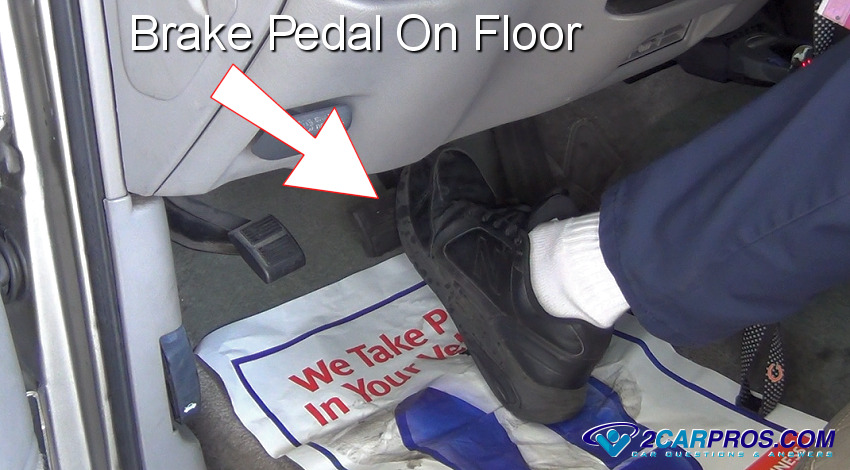
Why the brake pedal goes to floor
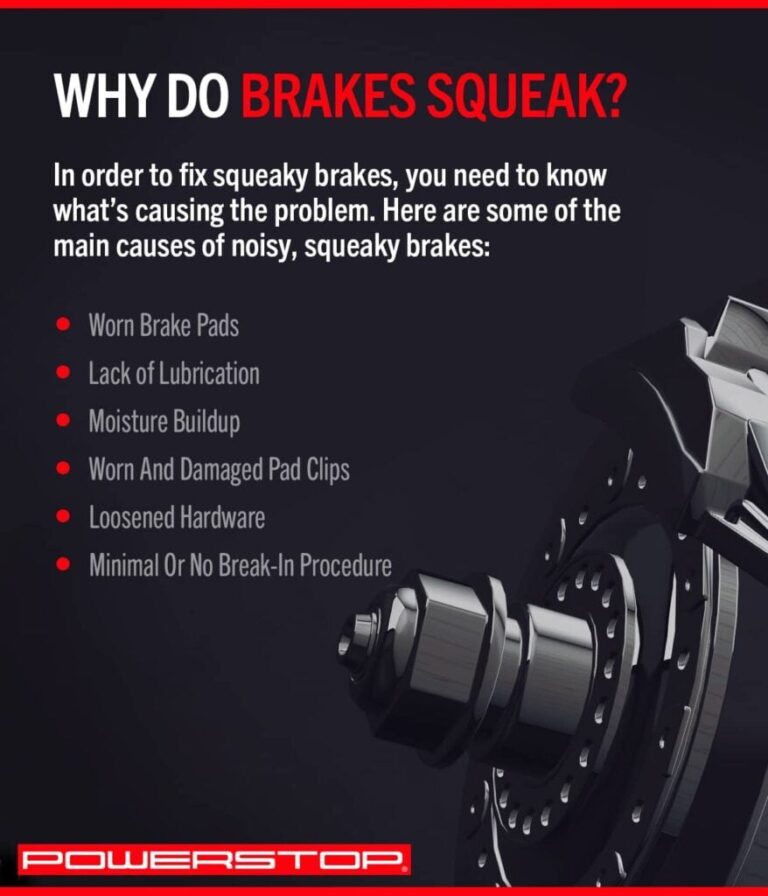
When the brake pedal goes to floor, the system is not building or holding hydraulic pressure. That loss of pressure can come from several places. Common causes include a fluid leak, worn brake pads, collapsed hoses, or a failing master cylinder. Each issue needs a different fix and different urgency.

Common causes explained
Brake fluid leak
- A leak anywhere in the hydraulic system lets fluid escape. Low fluid means low pressure and a pedal that sinks to the floor.
- Look for wet spots under the car, fluid on wheels, or a low reservoir level.
Air in the brake lines
- Air compresses. Hydraulic fluid does not. If air enters the lines, the pedal feels spongy and can sink.
- Air usually gets in after a repair or leak.
Worn brake pads or discs
- Excessively worn pads reduce mechanical leverage. The pedal may travel farther before brakes engage.
- This is common when pads wear unevenly or discs are badly warped.
Master cylinder failure
- The master cylinder seals can fail. When they do, the unit cannot maintain hydraulic pressure.
- A failing master cylinder often makes the pedal go to floor even with good fluid level.
Collapsed brake hose
- Old rubber hoses can swell or collapse. A collapsed hose can block fluid return or fail to transmit pressure.
- Symptoms vary by route and which wheel is affected.
ABS module or valve faults
- Rarely, a stuck valve or failed ABS pump affects pressure. Diagnosis often needs scan tools.
- These issues are more likely in newer cars with complex systems.
Immediate steps if your brake pedal goes to floor
Stay calm. Pull over safely and turn on hazard lights. Call for help if you can’t safely control the car.
Stop driving if brakes are unreliable
- Find a safe spot and park.
- Driving with a pedal that goes to floor is dangerous.
Check fluid level
- Look at the brake fluid reservoir. Low fluid is a clear sign of a leak or worn components.
- Top off only to get to a safe spot. You still need a proper repair.
Use emergency braking techniques
- Pump the pedal several times. Sometimes temporary pressure builds for a short stop.
- Use the parking brake carefully. Pull it gradually to avoid locking wheels.
Call roadside help if unsure
- A tow to a shop is the safest option for most people.
- If you have basic skills and are comfortable, you can try simple checks first.

How to diagnose the problem (step-by-step)
Visual checks
- Inspect under the car for fluid puddles.
- Check around wheel hubs and lines for wetness or stains.
Check the reservoir
- A low reservoir means fluid loss or worn pads. Note color and debris.
- Dark, dirty fluid suggests long-term neglect.
Pedal feel test
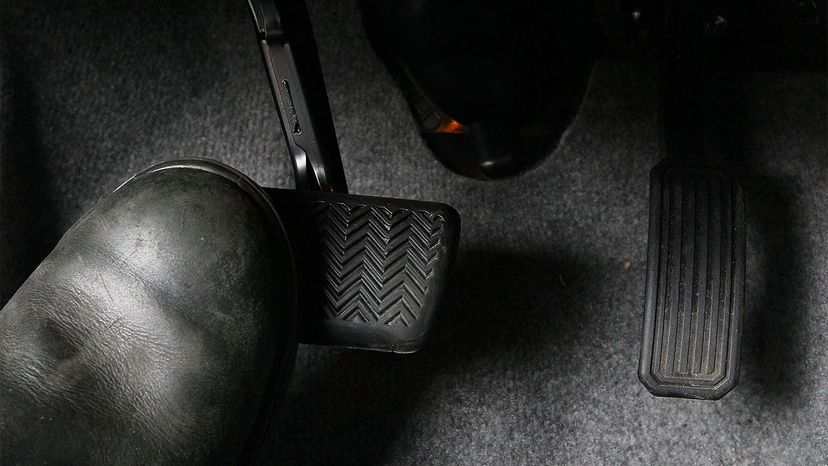
- With the engine off and car secure, press the pedal repeatedly. Note if it rises or stays low.
- With the engine on, watch for pedal sinking under steady pressure.
Look for brake fade causes
- Overheated brakes from heavy towing or steep descents can cause poor stopping.
- Smell burned pads or check for glazed discs.
Bleed the brakes
- Bleeding removes air. If bleeding restores firmness, air was the issue.
- If bleeding doesn’t help, suspect a leak or master cylinder.
Professional scan and pressure test
- Shops can test master cylinder pressure and ABS valves.
- This is useful when visual checks don’t reveal the issue.

Fixes: DIY vs professional repair
DIY fixes you can attempt
- Topping brake fluid to move the car to safety.
- Bleeding brakes to remove air if you have tools and help.
- Replacing brake pads and rotors on many common cars.
When to call a pro
- Suspected fluid leak anywhere in the hydraulic system.
- Master cylinder replacement.
- ABS module faults or pressure testing needs.
Parts commonly replaced
- Brake pads and rotors.
- Brake lines or hoses.
- Master cylinder and seals.
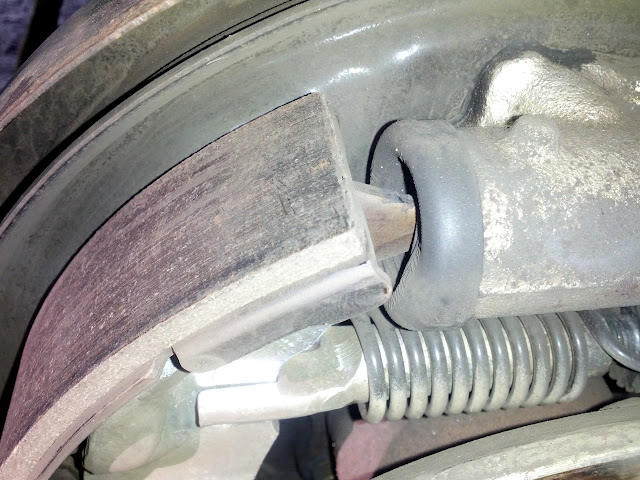
- Wheel cylinders on older drum brakes.
Safety note
- Brakes are life-critical. If you’re not fully confident, pay for a professional repair.

Cost expectations
Typical cost ranges
- Brake fluid and bleeding: low cost if DIY, modest at a shop.
- Brake pads: budget-friendly for parts, moderate for labor.
- Rotors: moderate to higher depending on quality and labor.
- Master cylinder replacement: moderate to high cost due to labor and parts.
Factors that affect cost
- Vehicle make and model.
- Whether ABS or electronic braking systems are involved.
- Extent of damage from fluid loss (corrosion, seized parts).
Budgeting tip
- Get multiple quotes. A clear diagnosis reduces surprise costs.
Prevention and regular maintenance
Check fluid level monthly
- Low fluid is often the first sign of trouble.
- Keep a spare bottle of manufacturer-recommended fluid.
Change fluid on schedule
- Brake fluid absorbs moisture. Old fluid lowers boiling point and causes corrosion.
- Follow the manufacturer schedule or do it every 2 years for peace of mind.
Inspect brake lines and pads
- Visual checks every oil change catch wear early.
- Replace hoses and lines if cracking or bulging appears.
Drive with care
- Avoid hard stops when possible.
- Reduce towing weight and overheating risks.

Personal experience and practical tips
A few years ago I had a car where the brake pedal goes to floor after highway driving. The culprit was a collapsed hose near one rear wheel. The pedal felt firm again after replacing the hose. Lesson learned: don’t ignore minor sponginess.
Tips from the shop
- If the pedal feels soft, schedule a check, don’t wait.
- Always use the correct DOT fluid type. Mixing types causes problems.
- Keep a small log when you top off fluid. It helps spot leaks.
Common mistakes to avoid
- Relying on the parking brake alone.
- Ignoring a slow drop in fluid level.
- Attempting major hydraulic repairs without the right tools or knowledge.
Frequently Asked Questions of brake pedal goes to floor
Why does the brake pedal go to floor suddenly?
A sudden drop often means a fluid leak or a failed master cylinder seal. It can also happen if a brake hose ruptures or an ABS valve fails.
Can I drive if the brake pedal goes to floor?
You should not drive a vehicle with unreliable brakes. Move to a safe spot and call for help or tow the car to a shop.
Will adding brake fluid fix a pedal that goes to floor?
Adding fluid can temporarily help if the level was low, but it won’t fix leaks or a bad master cylinder. Use it only to reach a safe location.
How long does it take to fix a pedal that goes to floor?
Simple jobs like bleeding brakes can take under an hour. Replacing a master cylinder or hoses may take a few hours. ABS repairs can take longer.
How much does it cost to replace a master cylinder?
Costs vary by vehicle but expect moderate to high labor and parts costs. Obtain quotes from two or three shops for an accurate range.
Conclusion
A brake pedal that goes to floor is a clear sign of a serious braking issue. Act quickly by checking fluid, stopping safely, and calling a professional when needed. Regular inspections and timely fluid changes help prevent this problem. Take action now: check your brake fluid, listen for unusual feels, and book a brake inspection if anything seems off. Share your experience or questions below, or subscribe for more practical car care tips.