A check engine light on but car runs fine often means a non-urgent sensor or emissions issue.
I’ve spent years fixing cars and writing about common car problems. If your check engine light on but car runs fine, this guide will walk you through what that light means, the most likely causes, how to diagnose it, when to act fast, and what you can do yourself to save time and money. Read on for clear steps, real-world tips, and easy checks you can do today.

Why the check engine light comes on
The check engine light is a dashboard alert from your car’s computer. It means the engine control unit saw a fault. That fault can be minor or serious. Often the car still runs fine even with the light on, but the issue needs a proper check.
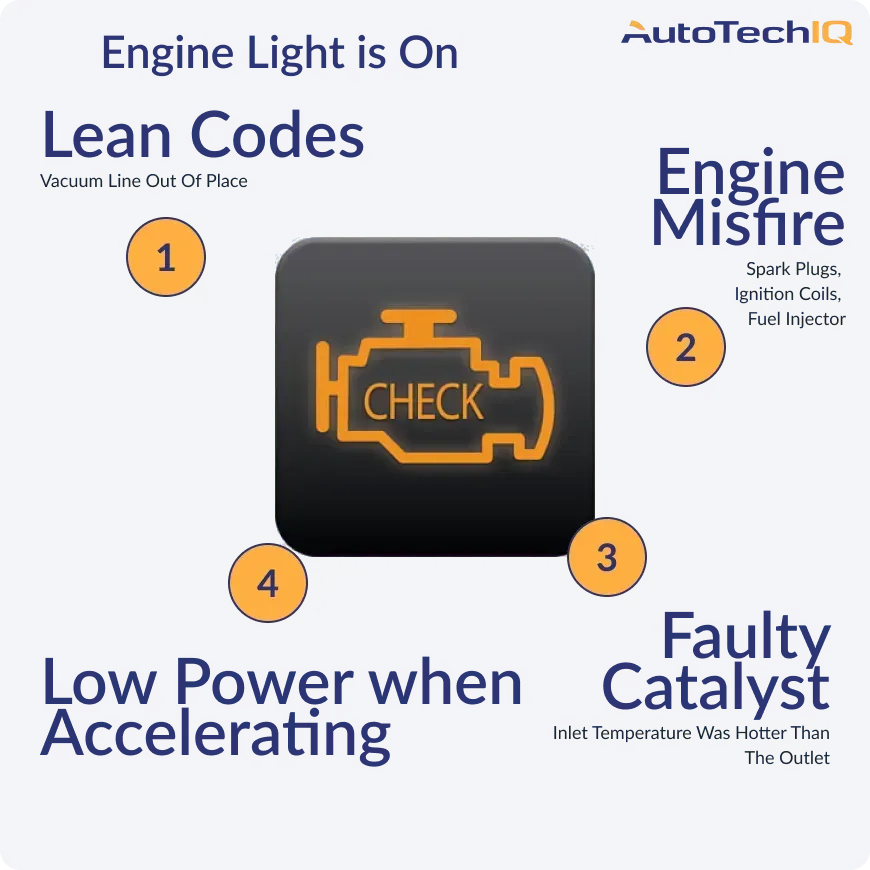
Common causes when the check engine light on but car runs fine
Here are frequent reasons you’ll see the check engine light on but car runs fine:
- Loose or damaged gas cap. This is the simplest cause and often the easiest to fix.
- Faulty oxygen sensor. A worn sensor can trigger a code yet let the engine run.
- Failing catalytic converter. Early signs can light the dash before driving changes.
- Mass airflow sensor issue. Bad readings can set a code but the car may drive okay.
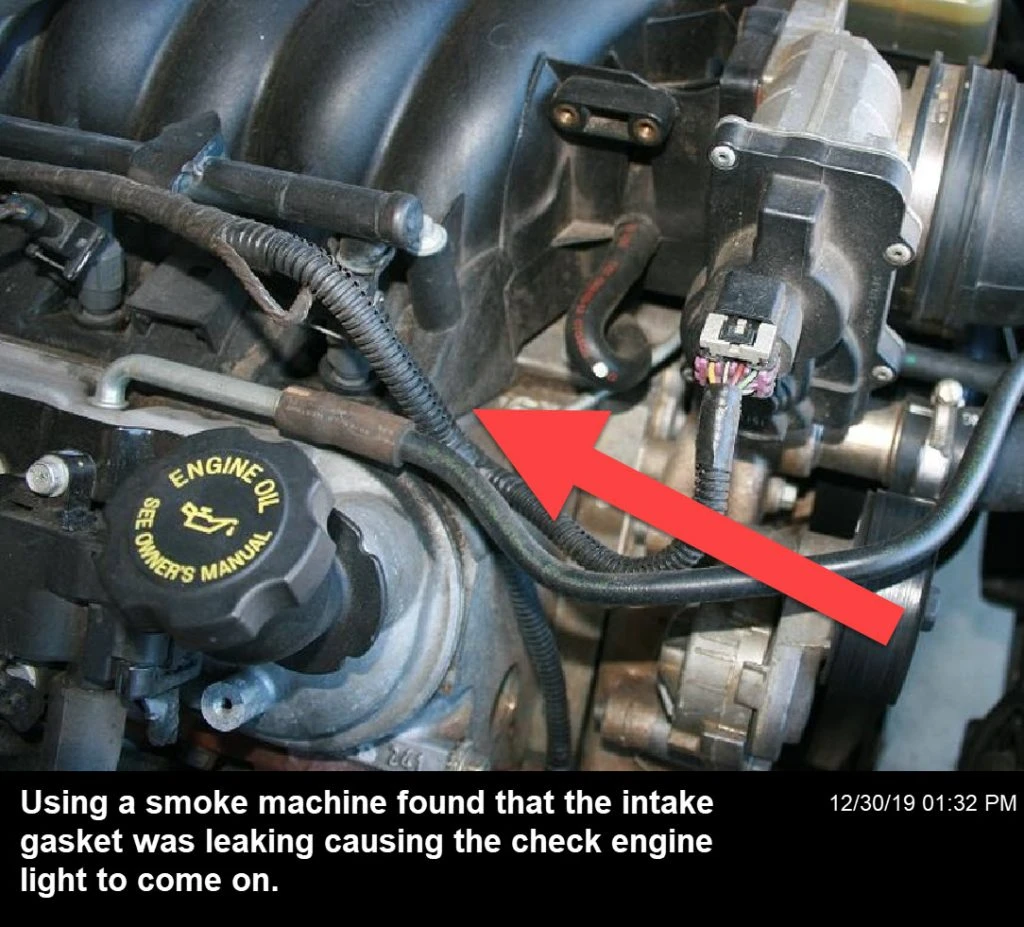
- Evaporative emissions leaks. Small leaks in the EVAP system can show the light.
- Spark plug or ignition coil misfires. Intermittent misfires may not change drivability.
- Software or firmware glitches in the ECU. Resetting or updating can clear false alerts.
I’ve seen many vehicles where the check engine light on but car runs fine turned out to be a loose gas cap. It is worth checking first to save a shop visit.

How to diagnose the check engine light on but car runs fine
Follow these steps to find the issue:
- Check the gas cap. Tighten it until it clicks three times and see if the light clears.
- Scan for error codes. An OBD-II scanner reads the code and points to the system at fault.
- Note behaviors. Record when the light appears, fuel mileage, and any noises or changes.
- Clear the code and monitor. Some faults are one-time glitches and do not come back.
- Visit a trusted shop if codes repeat. A technician can test sensors and systems.
Quick checks, like tightening the fuel cap or scanning with an inexpensive code reader, often reveal why the check engine light on but car runs fine. If you get a P0300 or P0420 code, that provides clear direction for the next steps.

PAA-style questions
What does a P0420 code mean?
A P0420 code usually signals low catalytic converter efficiency and points to emissions control problems. It may show up when the check engine light on but car runs fine if the converter is beginning to fail.
Will driving with the check engine light on damage the car?
Short trips with the light on often cause no immediate damage, but leaving faults unchecked can worsen parts like the catalytic converter. If the light flashes, stop driving and seek service.
Can an OBD-II scanner fix the issue?
A scanner only reads and clears codes; it does not fix hardware problems. Clearing codes may turn off the light temporarily, but the underlying cause will return if it’s not repaired.

When to worry: safety and risk
Not all codes are urgent. If the check engine light on but car runs fine, monitor the car closely. If the light flashes, you may have active misfires that can damage the catalytic converter. If you smell fuel, see smoke, or the car runs rough, stop driving and get help.
From my experience, a steady light often allows safe driving to a repair shop. A flashing light is often a sign to stop immediately.
Cost estimates and repair options
Costs range widely by cause. Typical ranges I’ve seen:
- Tighten gas cap: free to $10.
- Oxygen sensor replacement: $150 to $400.
- Mass airflow sensor: $150 to $350.
- Catalytic converter: $500 to $2,500 depending on make and model.
- Diagnostics and labor: $80 to $200 for initial testing.
If your check engine light on but car runs fine, start with low-cost checks before jumping to expensive parts. Always get a clear diagnostic code first.

Preventive maintenance and tips
Keep the engine and systems healthy to avoid surprise codes:
- Replace air filter regularly to prevent sensor errors.
- Use the right fuel and avoid overfilling the tank.
- Follow scheduled tune-ups and replace spark plugs on time.
- Scan the system quarterly if you drive older cars prone to faults.
- Keep records of repairs and codes to help technicians diagnose recurring issues.
A simple habit I use is to scan the car monthly. It catches small issues early and keeps the check engine light from turning on unexpectedly.
Frequently Asked Questions of check engine light on but car runs fine
Why is my check engine light on but car runs fine and shows no symptoms?
This often happens when a sensor detects emissions or efficiency issues that don’t affect short-term drivability. The car computer stores a code even if the engine feels normal.
Can I drive long distances with the check engine light on but car runs fine?
Short trips are usually okay, but long trips risk worsening a hidden problem. If the light is steady and no odd signs appear, drive cautiously and plan a check soon.
Will clearing the code make the check engine light stay off?
Clearing codes can turn the light off temporarily, but if the issue remains, the light will return. Use clearing as a diagnostic step only after identifying the cause.
How much does it cost to diagnose the check engine light on but car runs fine?
An initial scan typically costs $0 to $100 depending on shop policy. In many cases, a local parts store will scan for free and give you the trouble code.
Do dealerships charge more for fixing check engine light problems?
Dealerships often charge more for labor and parts, but they have factory tools and software that can help with complex issues. For common fixes, a trusted independent mechanic is usually cheaper.
Conclusion
A check engine light on but car runs fine is common and often fixable with simple checks or a quick diagnostic scan. Start with the gas cap, read the trouble codes, and act based on the code’s severity. If you are unsure, get a trusted mechanic to test the car to avoid bigger costs later. Take action now: scan your car, jot down any codes, and schedule a check if codes persist — and if this helped, leave a comment or subscribe for more practical car advice.