Yes, changing a car battery is usually easy if you follow safe, step-by-step instructions.
For most cars, the job takes about 20 to 30 minutes and needs only basic tools. Still, battery placement, corrosion, computer settings, and safety risks can make some vehicles more complex. This guide explains when changing a car battery is simple, how to do it safely, and when it is smarter to call a professional.
Is It Easy to Change a Car Battery?
For many older cars, changing a car battery is one of the easiest maintenance jobs. The battery is often under the hood, held in place by a bracket, with two cable terminals attached to the top.
The basic process is simple:
- Turn off the car and remove the keys.
- Disconnect the negative cable.
- Disconnect the positive cable.
- Remove the battery hold-down.
- Lift out the old battery.
- Install the new battery.
- Connect the positive cable first.
- Connect the negative cable last.
The main challenge is not the number of steps. It is avoiding a short circuit, installing the wrong battery, or damaging the cable terminals. A car battery can also be heavy, so use both hands and lift with care.
Changing a car battery is usually easy on a standard gasoline car with a clear battery location. It may be harder on a hybrid, luxury car, or vehicle with a battery in the trunk or under a seat.
How Long Does It Take to Change a Car Battery?
A skilled technician may replace a battery in 10 to 15 minutes. A first-time DIY repair may take 30 to 45 minutes, especially if the battery terminals are dirty or rusty.
Plan extra time if you need to:
• Find the battery under a cover or inside the trunk
• Remove an air intake tube or other parts
• Clean heavy corrosion from the terminals
• Reset the clock, radio, windows, or other settings
• Register the new battery with the vehicle computer
The physical replacement is often quick. The extra steps are what make the total job longer. Before you begin, read the owner’s manual and check whether the car has special battery replacement instructions.
What You Need to Change a Car Battery
Gather everything before you disconnect the old battery. This keeps the job smooth and prevents you from leaving the car without power while searching for a tool.
You will usually need:
• The correct replacement battery
• A socket wrench or combination wrench
• The correct socket, often 10 mm, 12 mm, or 13 mm
• Safety glasses
• Work gloves
• A battery terminal brush
• A clean cloth
• Anti-corrosion spray or terminal protectant
• A memory saver, if your vehicle requires one
The replacement battery must match the vehicle’s size, terminal layout, power rating, and battery type. Common types include flooded lead-acid, AGM, and enhanced flooded batteries. Some vehicles must use AGM batteries because of stop-start systems or high electrical demand.
Do not choose a battery based only on price. Check the cold cranking amps, reserve capacity, group size, and technology listed in the owner’s manual or on the old battery.
How to Change a Car Battery Step by Step
Changing a car battery is safest when you follow the same order every time. Work in a dry, well-ventilated place. Keep cigarettes, flames, and sparks away from the battery.
1. Park safely and switch off the car
Park on a flat surface. Put the car in Park, or in first gear if it has a manual transmission. Set the parking brake and turn off the ignition, lights, radio, and other accessories.
Open the hood and let the engine cool if you have been driving. Remove jewelry such as rings or bracelets, since metal can create a dangerous short circuit.
2. Find the positive and negative terminals
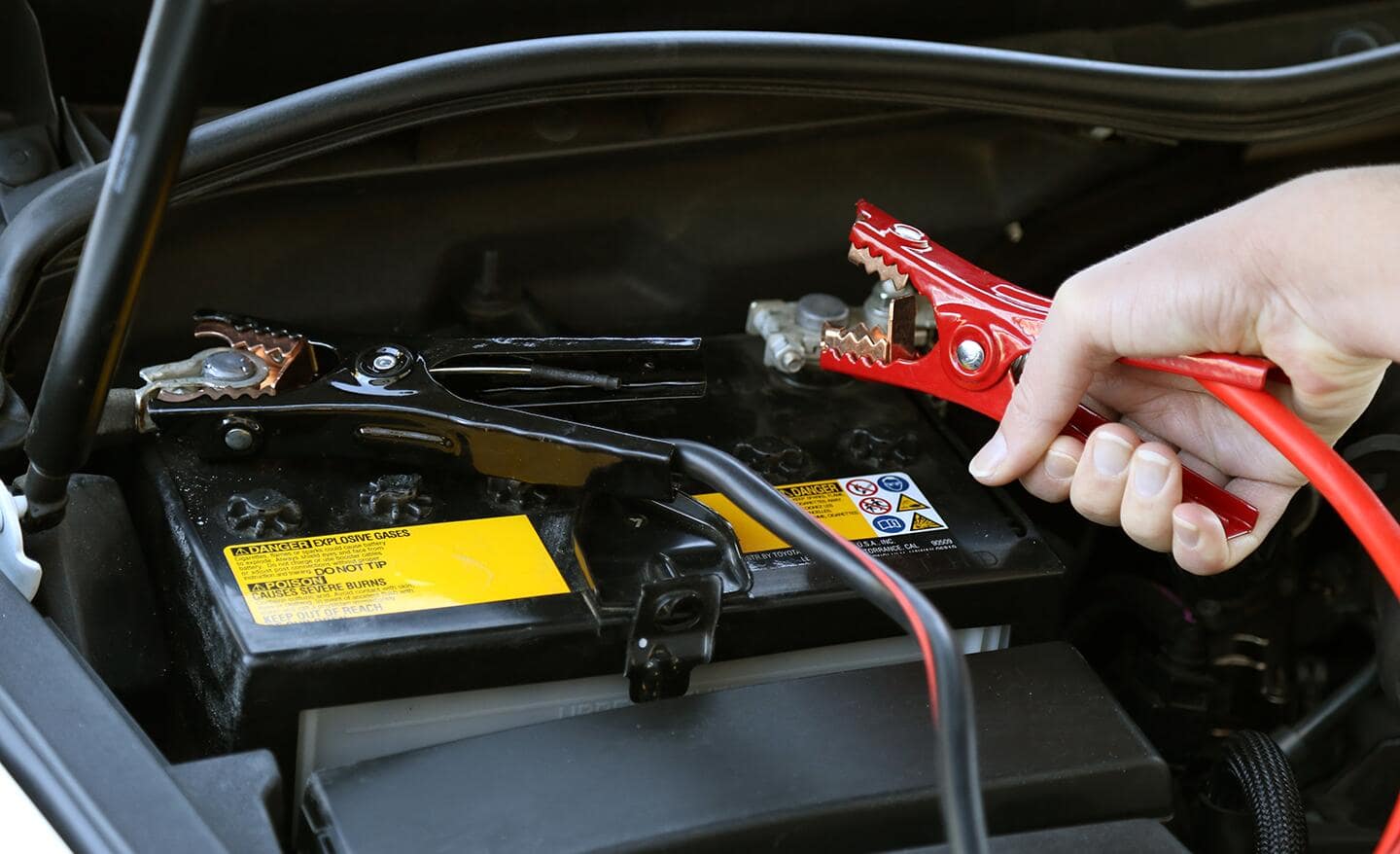
The positive terminal usually has a plus sign and a red cover. The negative terminal has a minus sign and connects to the vehicle body through a ground cable.
Check the markings carefully. Never rely only on cable color, because older wiring may not follow the usual color pattern.
3. Disconnect the negative cable first
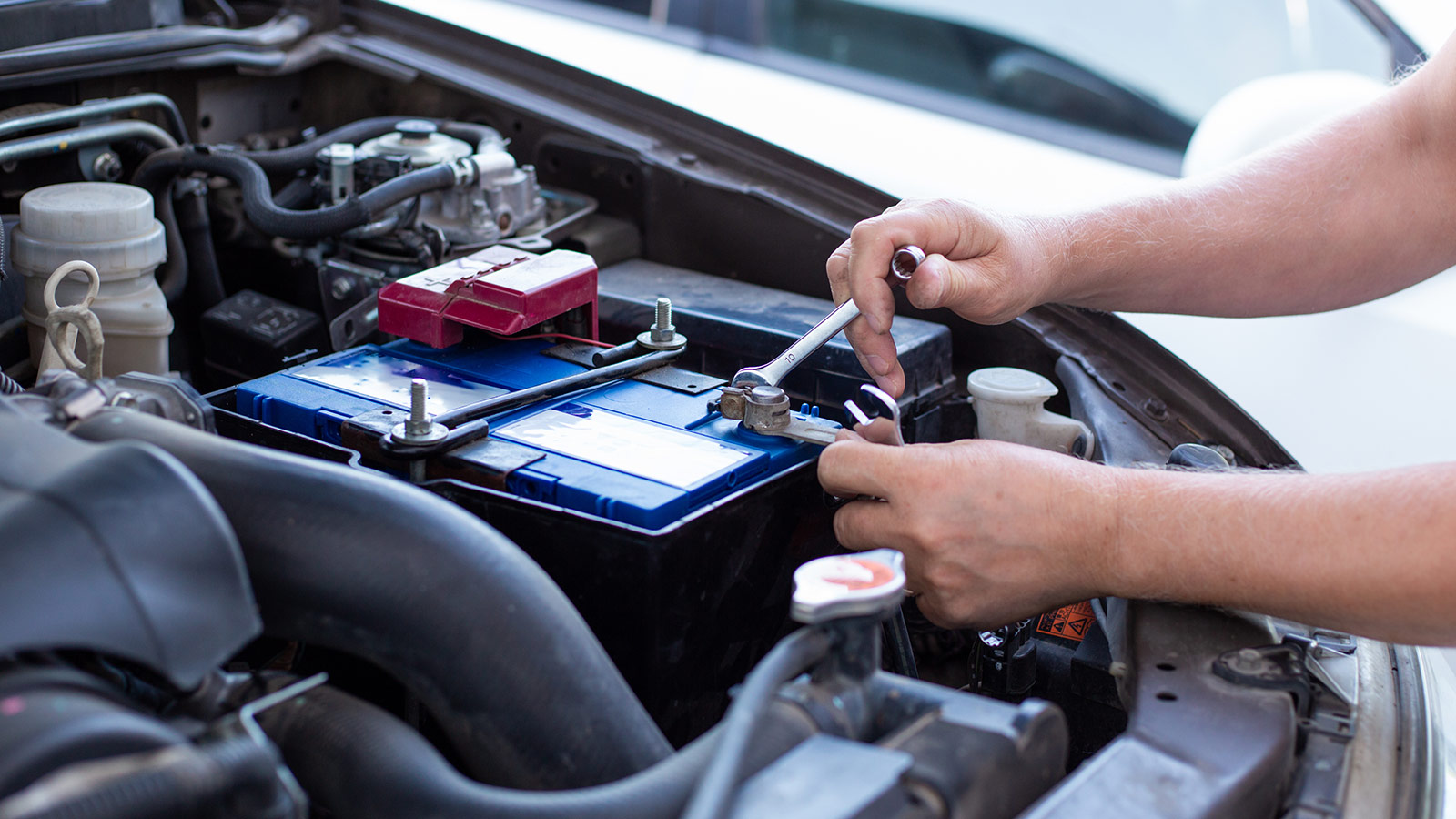
Loosen the nut on the negative terminal. Lift the cable off the battery post and move it away from the battery so it cannot touch the terminal again.
Disconnecting the negative cable first lowers the risk of a short circuit. If your wrench touches the vehicle body while working on the negative terminal, it normally will not complete a circuit.
4. Disconnect the positive cable
Next, loosen the positive terminal clamp and remove it from the battery post. Keep the positive cable away from metal parts of the car.
Never allow a tool to connect the positive terminal with the vehicle body. That can cause sparks, damage, or burns.
5. Remove the hold-down bracket
Most batteries have a clamp, bar, or bracket that stops the battery from moving. Remove it before trying to lift the battery.
Do not pull on the cables or force the battery out. A hidden bracket or tray may still be holding it in place.
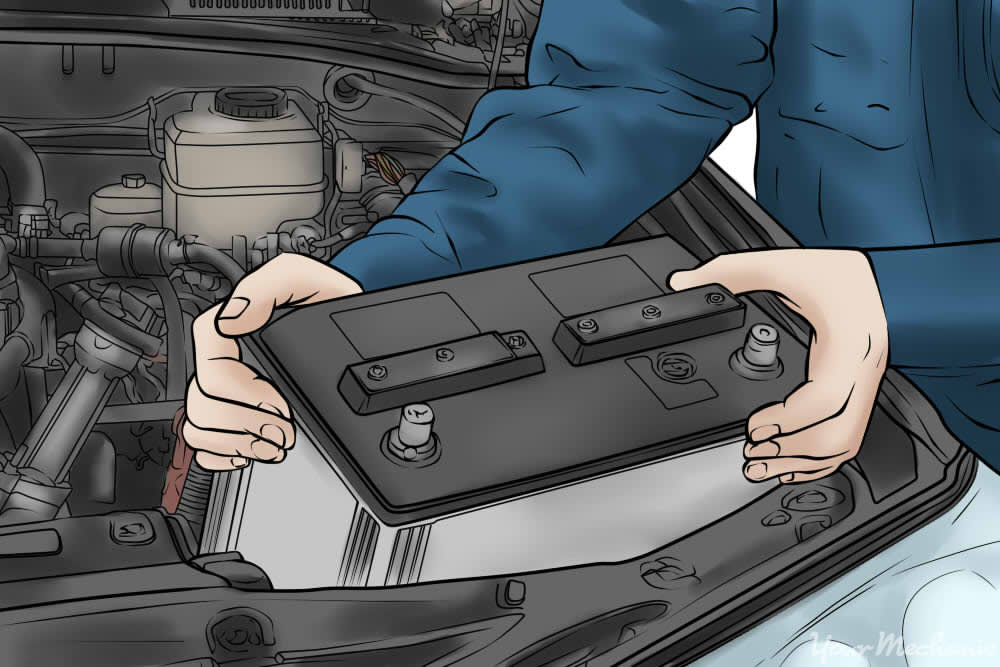
6. Lift out the old battery
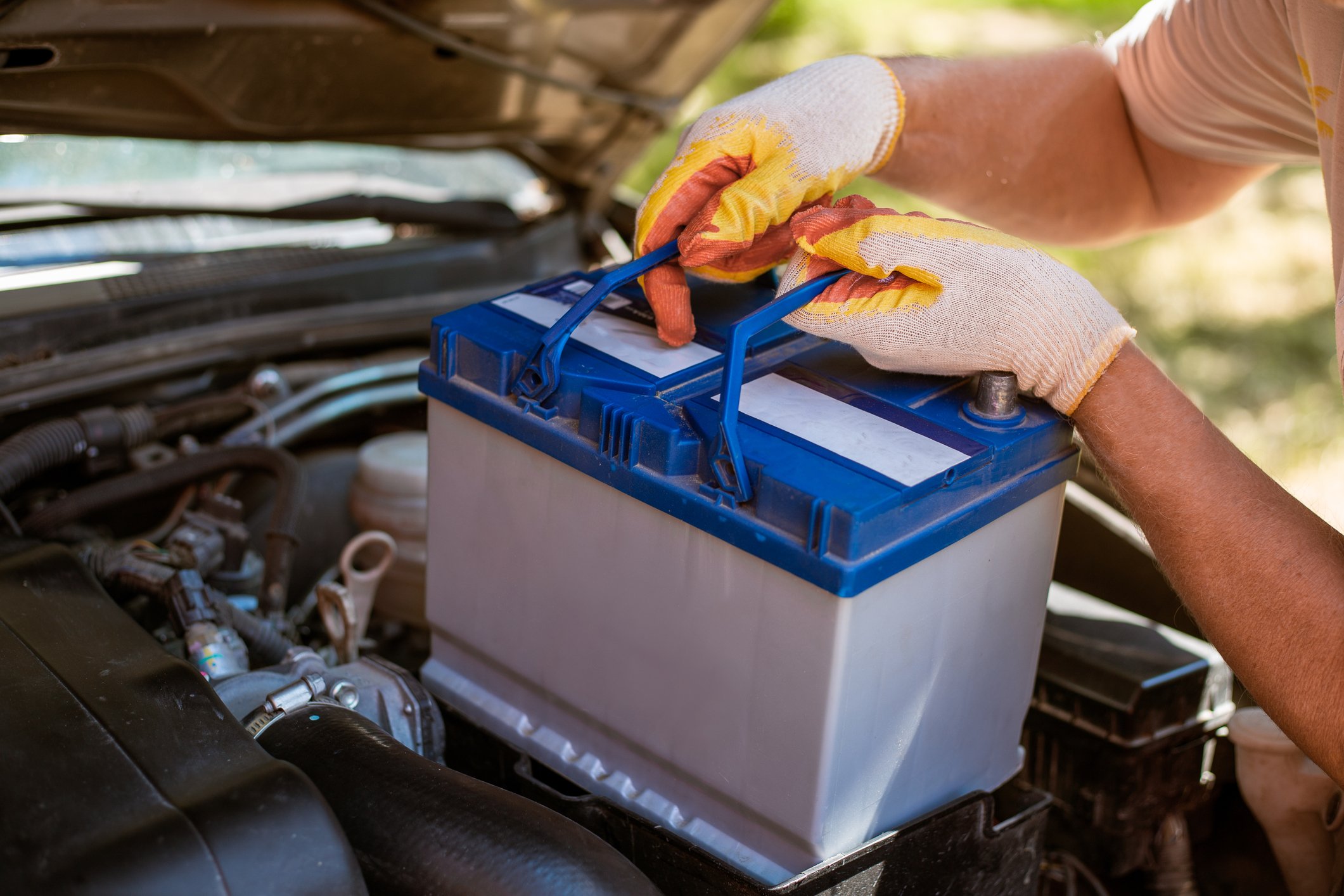
Car batteries are heavy. Lift with both hands, keep the battery level, and avoid touching the acid residue around the case.
Place the old battery on a stable surface. Do not put it near children, pets, heat, or anything that could create a spark.
7. Clean the tray and terminals
Inspect the battery tray for rust, cracks, or acid damage. Use a terminal brush to clean dirt and corrosion from the cable ends.
White, blue, or green powder around a terminal often indicates corrosion. Wear gloves and eye protection, and avoid touching your face while cleaning.
8. Install the new battery
Place the new battery in the tray with the positive and negative posts in the same positions as the old battery. Reinstall and tighten the hold-down bracket.
The battery should not rock or slide. Do not overtighten the bracket, because excessive pressure can damage the battery case.
9. Connect the positive cable first
Push the positive cable firmly onto the positive post. Tighten the nut until the clamp does not move by hand.
Do not hammer the cable onto the post. If the fit is poor, clean the clamp and post again.
10. Connect the negative cable last
Attach the negative cable to the negative post and tighten it securely. The cable should stay still when you gently try to move it.
A loose connection can cause flickering lights, starting problems, or repeated battery failure.
11. Test the car
Start the engine and check for warning lights. Test the headlights, interior lights, radio, windows, and other major electrical systems.
If the engine does not crank, switch the car off and check the terminal connections. If the battery light stays on, the alternator or charging system may need testing.
Important Safety Tips When Changing a Car Battery
A lead-acid battery stores a large amount of electrical energy. It also contains corrosive acid and can release flammable hydrogen gas during charging or use.
Follow these safety rules:
• Wear safety glasses and gloves
• Keep sparks and flames away from the battery
• Disconnect the negative cable first
• Connect the negative cable last
• Never place tools on top of the battery
• Do not smoke while working
• Keep the battery upright
• Do not use a damaged, swollen, or leaking battery
• Wash your hands after the job
If battery acid touches your skin, rinse the area with clean water right away. If it reaches your eyes, flush them with water and seek urgent medical care.
Never try to open a sealed battery. If the battery case is cracked, swollen, hot, or leaking, avoid handling it and contact a repair shop or battery recycler.
Common Mistakes to Avoid
Even though changing a car battery is often easy, small mistakes can create large problems. The most common error is disconnecting the positive cable first.
Other mistakes include:
• Installing the wrong battery size
• Reversing the positive and negative cables
• Forgetting the hold-down bracket
• Leaving the terminals loose
• Connecting the cables in the wrong order
• Ignoring corrosion on the cable ends
• Dropping the battery into the tray
• Throwing the old battery in household trash
• Skipping the owner’s manual
One mistake I often see in driveway repairs is rushing the final check. A new battery may start the car once, even with a loose terminal. Always test the cables by hand and inspect the battery before closing the hood.
A second common issue is replacing the battery without asking why it failed. If the alternator is weak, the new battery may also go flat. If a light stays on overnight, the car may have an electrical drain that needs diagnosis.
Do Modern Cars Need Special Battery Procedures?
Some modern cars need more than a simple battery swap. Vehicles with start-stop systems, advanced safety features, or high electrical demand may require battery registration.
Battery registration tells the vehicle computer that a new battery has been installed. Without it, the charging system may use the wrong charging pattern. This can shorten battery life or cause electrical warnings.
Some vehicles may also lose:
• Radio presets
• Clock settings
• Automatic window calibration
• Steering angle information
• Anti-theft system settings
• Seat and mirror memory
A memory saver can preserve some settings through the diagnostic port or power outlet. However, memory savers do not replace the need to follow the manufacturer’s instructions. Using the wrong device or procedure can damage electronics.
Hybrid and electric vehicles require extra caution. They contain high-voltage systems that are different from the small 12-volt battery. Do not attempt high-voltage battery work unless you have the correct training and equipment.
How to Tell If the Battery Is the Problem
A dead battery is not always the true cause of a no-start condition. A weak alternator, damaged starter, bad cable, or electrical drain can create similar symptoms.
Common signs of a weak battery include:
• Slow engine cranking
• A clicking sound when you turn the key
• Dim headlights before starting
• Needing frequent jump-starts
• A battery that is more than three to five years old
• Electrical accessories that work poorly when the engine is off
A fully charged 12-volt battery often measures close to 12.6 volts after resting. A much lower reading may suggest low charge, but voltage alone cannot prove that the battery is healthy.
A professional load test gives a better answer. The charging system should also be checked, especially if the battery keeps dying. Charging voltage varies by vehicle, so use the manufacturer’s specifications rather than one fixed number for every car.
When Should You Call a Professional?
Changing a car battery is not difficult for most basic vehicles. However, professional help is a better choice in certain situations.
Contact a technician if:
• The battery is under the seat or in a hard-to-reach area
• The vehicle is a hybrid or electric model
• The battery is swollen, leaking, or damaged
• The terminals are badly corroded
• The car requires battery registration
• You are unsure which battery to buy
• The engine still will not start after replacement
• Warning lights appear after the installation
• You do not have safe lifting space
Many auto parts stores test and install batteries as part of their service. This can be useful if the battery location is easy to reach and the car does not need special programming.
There is no shame in asking for help. A simple job becomes risky when poor access, heavy corrosion, or complex electronics are involved.
How to Dispose of an Old Car Battery
Never place a car battery in regular household trash. Lead and battery acid can harm people, soil, and water if handled incorrectly.
Most retailers, repair shops, and recycling centers accept used car batteries. In many states, stores charge a refundable core deposit when you buy a replacement battery. Returning the old battery may allow you to recover that deposit.
Carry the old battery upright in a sturdy box or approved container. Keep it away from metal objects that could touch both terminals. Recycling allows valuable lead and plastic to be recovered and reduces environmental risk.
Frequently Asked Questions About Is It Easy to Change a Car Battery
Is it easy to change a car battery at home?
Yes, changing a car battery at home is usually easy when the battery is easy to reach and the vehicle uses a standard 12-volt system. You need basic hand tools, the correct replacement battery, and a safe work area.
Can I change a car battery without a mechanic?
You can change many car batteries without a mechanic. Check the owner’s manual first, because some newer vehicles need battery registration or special reset procedures.
Which battery cable do I remove first?
Remove the negative cable first, then remove the positive cable. When installing the new battery, connect the positive cable first and the negative cable last.
How long does a new car battery last?
Many car batteries last about three to five years, but heat, cold, driving habits, vibration, and charging problems can shorten that time. A battery test is more reliable than age alone.
What happens if I connect the battery backward?
Connecting the battery backward can cause sparks, blown fuses, damaged electronics, or other expensive problems. Stop immediately if you notice the mistake, disconnect the battery safely, and have the vehicle inspected.
Do I need to drive after replacing the battery?
A short drive can confirm that the engine starts and the charging system works, but driving does not fix a loose connection or charging fault. Check for warning lights and unusual electrical behavior before and during the drive.
Can changing a car battery damage the computer?
It can cause temporary loss of settings, and an incorrect connection may damage electronic components. Follow the vehicle manual and use a memory saver only when the procedure allows it.
Conclusion
Changing a car battery is easy for most standard vehicles when you use the correct battery and follow the right order. Disconnect the negative cable first, connect it last, keep tools away from the terminals, and secure the battery firmly.
Take extra care with modern cars, hybrids, batteries in unusual locations, and vehicles that need battery registration. If the new battery does not solve the starting problem, test the alternator and electrical system instead of replacing more parts.
With a little preparation, you can handle this common maintenance task with confidence. Check your owner’s manual, gather the right tools, and share your battery replacement experience or questions in the comments.