Yes—many Kärcher car shampoos are marketed as pH neutral, but the answer depends on the exact product and formula. Kärcher sells several vehicle-cleaning products in the United States, and not all of them have the same pH or intended use.
For example, a Kärcher car shampoo made for routine vehicle washing may be labeled pH neutral. A heavy-duty foam cleaner, truck wash, wheel cleaner, or commercial vehicle detergent may be alkaline or acidic instead. Always check the bottle label or the current Safety Data Sheet (SDS) for the specific Kärcher product you own.
What “pH neutral” means for car shampoo
A pH-neutral car shampoo is close to pH 7, which is the midpoint of the pH scale. In practical car care, products described as pH neutral are often near the neutral range rather than being strongly acidic or alkaline.
This matters because modern vehicles in the United States often have:
- Clear-coated paint
- Plastic trim
- Rubber seals
- Vinyl surfaces
- Painted wheels
- Protective waxes or ceramic coatings
A mild shampoo is less likely to interfere with these surfaces when used as directed. However, pH neutral does not mean risk-free. A product can still cause problems if it is used at the wrong dilution, allowed to dry on the vehicle, or applied with a dirty wash mitt.
The word “neutral” also does not tell you everything about a detergent. Cleaning strength depends on the entire formula, including surfactants, solvents, builders, fragrance, wax additives, and other ingredients.

Which Kärcher car shampoo is pH neutral?
The specific product name is the deciding factor. Kärcher’s consumer and professional ranges include different detergents for different jobs.
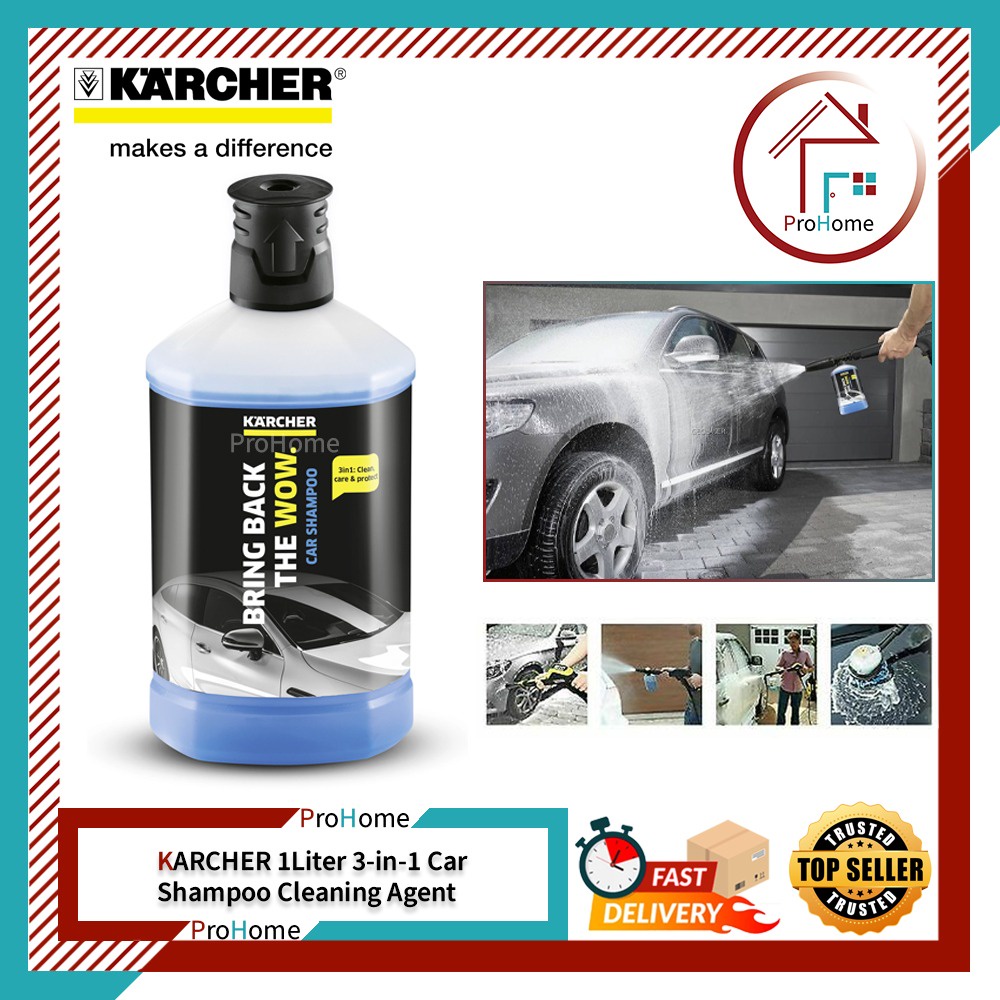
A Kärcher product labeled Car Shampoo, 3-in-1 Car Shampoo, or a similar light-duty vehicle shampoo may be described as pH neutral or gentle for vehicle surfaces. Other Kärcher products may be intended for:
- Removing road film
- Cleaning trucks or commercial vehicles
- Removing grease and oil
- Cleaning wheels
- Producing thick foam
- Washing floors, patios, or outdoor equipment
Those products should not automatically be treated as pH neutral.
Check these three details
Before using any Kärcher detergent on a car, check:
- The exact product name
- The product number or SKU
- The label or current SDS
Kärcher product names can vary by country, retailer, package size, and equipment bundle. A product sold in the United States may also have a different formula or label from a product with a similar name sold in Europe.
Does the concentrate have the same pH as the mixed solution?
Not always. The pH listed on an SDS may refer to the concentrated product. Once diluted with water, the working solution may have a different pH.
This is why the label’s dilution instructions matter. Do not assume that a concentrated detergent’s listed pH directly describes the solution touching your vehicle.
Is pH-neutral Kärcher shampoo safe for car paint?
A properly diluted, pH-neutral Kärcher car shampoo is generally suitable for routine washing of modern automotive paint. It is designed to loosen dirt while reducing the need for harsh chemical action.
Still, the shampoo is only one part of the process. Paint damage usually comes from dirt and grit being dragged across the surface. A gentle soap cannot prevent scratches if the wash method is poor.
For safer washing:
- Rinse loose dirt off first.
- Use a clean microfiber wash mitt.
- Work from the roof downward.
- Rinse the mitt often.
- Use separate tools for wheels and paint.
- Keep the shampoo from drying on the surface.
- Dry with a clean, soft microfiber towel.
A pH-neutral shampoo may help preserve wax or sealant, but it does not guarantee that every protective coating will remain unchanged. Some coatings and waxes have their own care instructions.

How to confirm the pH of your Kärcher shampoo
The most reliable method is to identify the exact product and review its current manufacturer information.
Step 1: Read the front and back labels
Look for terms such as:
- pH neutral
- Neutral cleaner
- Suitable for vehicle paint
- Safe for wax or sealants
- Dilution ratio
- Intended surface
Also look for warnings that limit use to wheels, commercial vehicles, engines, or outdoor surfaces.
Step 2: Find the product number
The product number may appear near the barcode, on the back label, or in the product specifications. Record the full number, including any letters or regional identifiers.
This step prevents a common mistake: checking the SDS for a similar Kärcher detergent rather than the exact product.
Step 3: Check Kärcher’s U.S. product information
Use the Kärcher United States website or contact Kärcher customer support. Product pages can change, so the current label and SDS should take priority over an old retailer description.
The SDS may list:
- pH
- Hazard classification
- Ingredients or ingredient ranges
- Storage information
- First-aid measures
- Safe handling instructions
An SDS is mainly a safety document. It may not provide a complete formula or a full assessment of paint-care performance.
Step 4: Do not rely on a home pH test alone
Litmus paper or a consumer pH meter may give a rough reading, but the result can vary with:
- Water hardness
- Dilution accuracy
- Test-strip quality
- Temperature
- Product mixing
- Meter calibration
A home test can help identify whether a solution is strongly acidic or alkaline. It does not replace the manufacturer’s product documentation.
How to use Kärcher car shampoo correctly
Use the manufacturer’s stated dilution ratio. More detergent does not always mean a cleaner car. Too much soap can leave residue, make rinsing harder, and increase the chance of streaks.
Recommended washing process
-
Park in the shade.
Avoid washing hot paint or working in direct, intense sunlight. -
Rinse the vehicle first.
Remove loose sand, dust, and road grit before touching the paint. -
Mix the shampoo as directed.
Use the correct amount of detergent and clean water. Do not guess if the label provides a ratio. -
Wash from top to bottom.
The roof and upper panels are usually less dirty than the lower doors, bumpers, and rocker panels. -
Use light pressure.
Let the shampoo and wash mitt lift dirt. Heavy pressure can grind particles into the clear coat. -
Rinse the mitt often.
A grit guard can help, but it does not replace frequent rinsing. -
Rinse the entire vehicle well.
Pay attention to mirrors, trim gaps, badges, wheels, and panel seams. -
Dry promptly.
Use a clean drying towel or suitable air blower. This helps limit water spots, especially in areas with hard water.
Pressure washer use
If you use Kärcher shampoo with a pressure washer, follow the instructions for the correct foam cannon, detergent tank, or suction tube. Some systems require a specific detergent setting or a particular accessory.
Do not assume that a detergent designed for a pressure washer should be sprayed undiluted onto paint. The pressure washer may dilute the product during application, but the final concentration depends on the machine, nozzle, water flow, and detergent setting.

pH-neutral versus alkaline car shampoo
The better choice depends on the dirt and the protection already on the vehicle.
| Shampoo type | Best use | Main benefit | Main limitation |
|---|---|---|---|
| pH-neutral shampoo | Regular maintenance washing | Mild cleaning for routine dirt | May struggle with heavy grease or traffic film |
| Mild alkaline shampoo | Heavy road film and oily dirt | Stronger cleaning action | May reduce wax or sealant durability with repeated use |
| Acidic cleaner | Mineral deposits and some wheel contamination | Helps dissolve certain deposits | Can damage surfaces if misused |
| Dedicated wheel cleaner | Brake dust and wheel grime | Formulated for wheel materials | Not automatically safe for painted bodywork |
This table is a general guide, not permission to use one product on every surface. Read the product label before applying a cleaner to chrome, aluminum, anodized metal, matte paint, ceramic coatings, or aftermarket wheels.
Does pH neutral protect wax or ceramic coating?
It can be a better routine option than a strong cleaner, but “pH neutral” is not the same as “coating safe under all conditions.”
A coating’s durability may also be affected by:
- Solvents
- High detergent concentration
- Repeated scrubbing
- Very hot surfaces
- Mineral deposits
- Poor drying
- Contaminated wash tools
If a coating manufacturer specifies a certain shampoo, follow that guidance. For a waxed vehicle, use a mild shampoo and avoid strong degreasers unless you intend to remove old protection.
Common mistakes when using Kärcher car shampoo
Assuming every Kärcher detergent is pH neutral
Kärcher makes products for cars, trucks, wheels, patios, floors, and industrial cleaning. The brand name alone does not establish the pH.
Using too much product
Extra shampoo can create more foam but not necessarily more cleaning. Follow the stated dose.
Applying soap to a dry, dusty car
This increases the chance of dragging abrasive dirt across the paint. Rinse first.
Letting the shampoo dry
Drying detergent can leave marks and may be harder to remove. Wash smaller sections when the weather is hot or windy.
Using one mitt for wheels and paint
Wheels can contain sharp metal particles and heavy brake dust. Keep wheel tools separate from paint tools.
Trusting a retailer description without checking the package
Retailer listings can contain old data, shortened names, or errors. The exact bottle label and current Kärcher documentation are better sources.
Mixing detergents
Do not combine Kärcher shampoo with bleach, acids, ammonia, household dish soap, or another cleaning product. Unplanned mixtures can change the product’s behavior and create safety risks.
What should you do if the product information is unclear?
If the bottle does not clearly state that the product is suitable for vehicle paint, do not use it on the painted body as a test. First identify the exact product number and obtain the current instructions or SDS from Kärcher.
If you already used the product and see residue:
- Rinse the vehicle with plenty of clean water.
- Wash it again with a known mild car shampoo.
- Dry it with a clean microfiber towel.
- Inspect the paint in good light.
- Stop using the product if you see staining, dullness, or unusual surface changes.
For etched water spots, paint damage, or coating failure, a professional detailer or body-shop specialist may need to inspect the surface. A shampoo cannot repair clear-coat damage.
Quick decision guide
Use this simple guide before washing:
- Routine wash on a normal clear coat: Use a Kärcher car shampoo labeled pH neutral or suitable for regular vehicle washing.
- Vehicle has wax or sealant: Choose a mild maintenance shampoo and follow the protection maker’s care instructions.
- Heavy road film: Use a product specifically intended for that contamination, then rinse well.
- Wheel cleaning: Use a wheel cleaner approved for the wheel’s finish.
- Unknown Kärcher detergent: Check the product number and SDS before applying it to paint.
- Ceramic coating: Use the coating manufacturer’s recommended maintenance wash when available.
Frequently asked questions
Is Kärcher 3-in-1 Car Shampoo pH neutral?
Kärcher’s 3-in-1 car shampoo products are commonly presented as mild vehicle shampoos, and some regional product descriptions identify them as pH neutral. Product formulas and names can vary by market and revision, so confirm the claim on the U.S. package or current SDS for your exact product number.
Is Kärcher foam cleaner safe for car paint?
Some Kärcher foam cleaners are made for vehicles, while others are intended for stronger cleaning jobs. A product being used with a foam cannon does not automatically make it safe for every painted surface. Check the stated application, dilution, and warnings before use.
Can I use Kärcher car shampoo in a bucket?
If the product instructions allow bucket washing, follow the listed dilution. Some products are intended mainly for pressure-washer application, so check the label before using them by hand.
Can I use dish soap instead of Kärcher car shampoo?
Dish soap may remove grease, but it is not designed as a dedicated automotive maintenance shampoo. Repeated use can remove wax and may leave a less controlled cleaning result. A vehicle shampoo is the better choice for routine washing.
Is pH-neutral shampoo safe for matte paint?
It may be suitable if the label specifically allows use on matte or satin finishes. Do not polish, wax, or use gloss-enhancing products on matte paint unless the vehicle or coating maker approves them.
How often should I wash my car with Kärcher shampoo?
Wash when dirt, salt, pollen, or road film builds up. Vehicles exposed to winter road salt, coastal air, heavy rain, or frequent highway driving may need more frequent washing than vehicles kept indoors. Use a mild shampoo for regular maintenance.
Key takeaways
- Many Kärcher car shampoos are pH neutral, but not every Kärcher detergent is.
- Check the exact product name, product number, label, and current SDS.
- Use the correct dilution and rinse the vehicle before touching the paint.
- Keep wheel-cleaning tools separate from paint-washing tools.
- A pH-neutral product can be a good routine choice, but it does not replace safe washing technique.
- When product information is unclear, contact Kärcher before using the detergent on automotive paint.
Conclusion
Kärcher car shampoo can be pH neutral when the specific formula is designed and labeled that way. The safest answer is not based on the Kärcher brand alone. Confirm the exact product, follow its U.S. instructions, use the correct dilution, and keep the shampoo from drying on the vehicle.
For most routine washes, a clearly labeled pH-neutral Kärcher car shampoo is a reasonable choice for modern automotive paint when used with clean tools and gentle technique.