
Clorox wipes can damage some car interior materials, especially leather, suede, screens, painted trim, and delicate coatings. They are usually less risky on hard, nonporous plastic and vinyl, but the product label and your vehicle manual should come first.
For most routine cleaning, use a damp microfiber cloth and a cleaner made for automotive interiors. Use a Clorox wipe only when you need to disinfect a compatible, hard surface and can test it first.
Introduction
In the United States, many drivers use Clorox Disinfecting Wipes to clean high-touch areas such as steering wheels, door handles, cup holders, and center consoles. The main concern is that a wipe may remove more than dirt. Its cleaning agents can also affect color, shine, texture, or protective coatings.
The risk depends on the exact Clorox product, the vehicle material, how often you use it, and how long the surface stays wet. A wipe that works well on a plastic door handle may leave marks on leather seats or damage the finish on a touch screen.
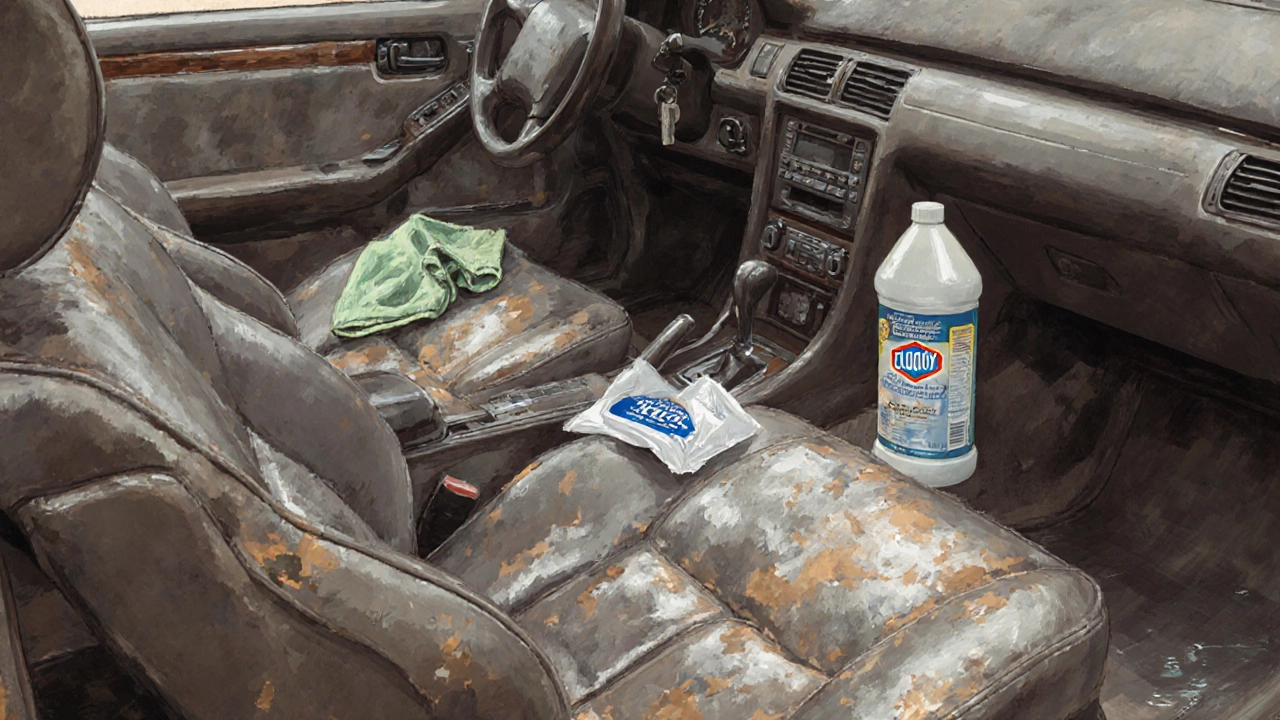
Can Clorox wipes damage a car interior?
Yes, Clorox wipes can damage a car interior, but the risk is not the same for every surface.
The greatest risk is on:
- Leather and perforated leather
- Suede, Alcantara, and other microfiber fabrics
- Touch screens and instrument displays
- Wood, piano-black, and painted trim
- Unfinished or porous materials
- Seats with special dyes or protective coatings
The risk is lower on hard, sealed, nonporous surfaces such as some types of:
- Textured plastic
- Vinyl
- Rubber floor mats
- Plastic door handles
- Plastic cup holders
“Lower risk” does not mean “safe for every vehicle.” Interior materials differ by brand, model, trim level, and year. A black plastic panel in one car may have a soft-touch coating that reacts differently from a similar-looking panel in another.
Why damage can happen
Clorox disinfecting wipes use cleaning agents that can affect a finish when they are used too often or left wet for too long. Depending on the product, the formula may contain quaternary ammonium compounds, alcohol, fragrances, or other ingredients. Exact formulas can change, so check the package label.
A wipe may cause:
- Fading or discoloration
- A sticky or dull surface
- Streaks or cloudy marks
- Dry or stiff leather
- Peeling of a soft-touch coating
- Damage to anti-glare screen coatings
- Changes to the feel of vinyl or rubber
Most damage comes from repeated use, strong rubbing, too much liquid, or the wrong surface. One careful use on a compatible plastic surface may cause no visible problem. That does not prove the product is suitable for regular cleaning.
Which car interior surfaces can you clean with Clorox wipes?
Clorox wipes are most suitable for hard, sealed, nonporous surfaces that the vehicle maker allows you to clean with a disinfectant. Always test a hidden area first.
| Interior surface | Risk from Clorox wipes | Better approach |
|---|---|---|
| Hard plastic | Low to medium | Test first; wipe dry |
| Vinyl | Low to medium | Use a mild automotive cleaner when possible |
| Rubber mats | Low to medium | Rinse or wipe clean and dry |
| Leather | Medium to high | Use a leather cleaner approved for automotive leather |
| Perforated leather | High | Avoid excess liquid and disinfectant wipes |
| Suede or Alcantara | High | Use the material maker’s cleaning method |
| Touch screen | High | Use a dry or slightly damp microfiber cloth |
| Gauge cluster | High | Use a soft microfiber cloth only |
| Piano-black trim | Medium to high | Avoid wet wipes and abrasive rubbing |
| Cloth upholstery | Medium | Use an upholstery cleaner; avoid soaking |
| Unfinished wood | High | Do not use disinfecting wipes |
Plastic and vinyl
Hard plastic and vinyl often tolerate occasional cleaning better than leather or screens. Even so, a wipe can leave a film or change the sheen of soft-touch plastic.
To reduce the risk:
- Remove loose dust first.
- Use light pressure.
- Do not scrub textured areas repeatedly.
- Wipe away residue with a clean, damp microfiber cloth.
- Dry the surface with another microfiber cloth.
Do not allow liquid to collect around buttons, seams, vents, USB ports, or switches.
Leather
Avoid making Clorox wipes your normal leather cleaner. Leather needs controlled moisture and products that help protect its finish. Disinfecting wipes may strip some surface oils or leave leather feeling dry and stiff.
The risk is higher with:
- Perforated leather
- Cracked leather
- Light-colored leather
- Older leather
- Leather with a worn protective coating
If you must clean a small leather area after a contamination concern, follow the vehicle manual first. Use as little moisture as possible, then dry the area. A suitable leather conditioner may help maintain the finish, but it cannot reverse discoloration or coating damage.
Touch screens and displays
Do not use Clorox wipes on a car’s touch screen unless the vehicle manufacturer specifically permits that product. Many displays have anti-glare, anti-fingerprint, or other surface coatings.
A safer general method is:
- Turn the screen off and let it cool.
- Remove dust with a clean microfiber cloth.
- Lightly dampen the cloth with water if needed.
- Never spray liquid onto the display.
- Keep moisture away from edges and controls.
- Dry the screen with a second clean cloth.
Do not use paper towels, abrasive pads, glass cleaner, bleach, or ammonia on a touch screen unless the manual says otherwise.
How to use a Clorox wipe safely in a car
Use these steps only on a compatible hard surface. If the vehicle manual prohibits disinfectant wipes, follow the manual instead.
1. Read both labels
Check the Clorox package for the exact product name, surface warnings, and required wet contact time. Then check the vehicle owner’s manual for cleaning instructions.
The word “Clorox” covers many products. Clorox Disinfecting Wipes are not the same as bleach wipes, cleaning sprays, or multipurpose wipes. Never assume that instructions for one product apply to another.
2. Remove loose dirt
Dust and grit can scratch glossy trim when you rub them across the surface. Use a soft microfiber cloth or vacuum first.
3. Test an unseen spot
Apply the wipe to a hidden area, such as the underside of a trim piece. Wait until the area dries fully. Check for:
- Color change
- Dullness
- Stickiness
- Streaks
- Softened coating
- A change in texture
If you see any change, do not use the product on visible areas.
4. Use light, even passes
Do not scrub hard. Avoid seams, perforations, switches, screens, and openings. Use enough pressure to lift dirt, not enough to polish the surface.
5. Do not leave excess liquid behind
After cleaning, use a clean microfiber cloth to remove residue and moisture. This step matters around controls and trim joints.
6. Let the surface dry
Keep the vehicle ventilated. Do not close wet wipes or damp cloths against leather, fabric, or trim.
7. Wash your hands
Clorox wipes are intended for surfaces, not skin. Do not use them to clean your hands, face, or body.

What should you use instead of Clorox wipes?
For everyday interior care, an automotive interior cleaner is usually the better choice. It is designed for the material and is less likely to leave residue or alter the finish when used as directed.
Choose the cleaner by surface:
- Leather: Automotive leather cleaner, followed by a compatible conditioner if required.
- Plastic and vinyl: Mild automotive interior cleaner and a microfiber cloth.
- Touch screens: Manufacturer-approved screen method, usually a dry or lightly damp microfiber cloth.
- Cloth seats: Automotive upholstery cleaner used without soaking the padding.
- Suede or Alcantara: The material maker’s approved cleaner and brush method.
- Rubber mats: Soap and water, followed by thorough drying.
A diluted mild soap solution may work for some hard plastic surfaces, but do not use one universal mixture across the entire cabin. Soap residue can create a film, and excess water can enter electrical parts.
Disinfecting versus cleaning
Cleaning removes dirt and some germs. Disinfecting uses a product and contact time designed to kill specified germs on a listed surface.
If you need disinfection, follow the product label exactly. The surface may need to remain visibly wet for a stated time. Wiping once and drying immediately may clean the surface without meeting the label’s disinfection directions.
The label also controls where the product is approved. An EPA registration for a disinfectant does not mean the product is suitable for every material inside every car.
What to do if Clorox wipes already damaged the interior
Stop using the wipes on that material. Do not try to fix a stain by applying stronger chemicals.
If the surface feels sticky
Wipe it gently with a clean microfiber cloth lightly dampened with water. Dry it at once. If the film remains, use a material-specific automotive cleaner.
If leather looks dry or dull
Do not add household oils, furniture polish, or alcohol. Clean the area with a suitable automotive leather product. If the finish has cracked, peeled, or changed color, a professional automotive upholstery technician may be needed.
If a screen looks cloudy
Turn the screen off and stop rubbing it. Use a clean, dry microfiber cloth. If the haze remains after the surface is dry, the coating may have been affected. The vehicle dealer or display repair specialist can assess it.
If discoloration or peeling appears
Take clear photos and record the product name, date, and area cleaned. Do not continue testing chemicals on the same spot. A professional detailer may be able to improve the appearance, but some coating damage cannot be reversed with cleaning.
If liquid entered a control or vent
Stop using more liquid. Dry the area from the outside without pushing moisture deeper into the opening. If buttons malfunction, lights appear, or the vehicle behaves unusually, seek qualified automotive service.
Common mistakes to avoid
Several cleaning habits raise the chance of interior damage:
- Using bleach products on the dashboard
- Treating all Clorox wipes as the same formula
- Scrubbing leather or soft-touch plastic
- Leaving a wet wipe on a surface
- Spraying cleaner near screens or electronics
- Using a wipe on suede or Alcantara
- Ignoring the vehicle owner’s manual
- Cleaning in direct sun while the cabin is hot
- Using one dirty cloth across the whole interior
- Assuming “disinfecting” means “safe for every material”
Heat can make coatings softer and increase the chance of streaks or marks. Clean when the interior is cool, and use a small amount of product.

A simple decision guide
Use this quick rule:
- Hard plastic or vinyl: A tested, occasional wipe may be acceptable if the manual allows it.
- Leather: Use a leather cleaner instead.
- Screen or gauge cluster: Use a microfiber cloth and the manufacturer’s method.
- Suede or microfiber fabric: Avoid Clorox wipes.
- Unknown surface: Do not use the wipe until you confirm the material and instructions.
- Need routine cleaning: Choose an automotive interior product.
- Need disinfection: Use a labeled product on an approved surface and follow its wet contact time.
The safest general approach is to clean first, use the mildest suitable product, and reserve disinfecting wipes for compatible hard surfaces.
Frequently asked questions
Are Clorox wipes safe for car leather?
They are not the best routine choice for car leather. They may dry, dull, or discolor the finish, especially with repeated use. Use a cleaner made for automotive leather and follow the vehicle manual.
Can I use Clorox wipes on my steering wheel?
The answer depends on the steering wheel material. Hard plastic may tolerate a carefully tested wipe, but leather, coated surfaces, and soft-touch materials may be damaged. Wipe lightly, remove residue, and dry the surface.
Can Clorox wipes damage car plastic?
They can. Hard, sealed plastic is usually less sensitive, but soft-touch coatings, glossy trim, and dyed plastics may become dull, sticky, or discolored. Test a hidden spot first.
Can I use Clorox wipes on a car touch screen?
Avoid them unless the vehicle manufacturer specifically approves them. Use a clean microfiber cloth, with only slight dampness if the manual permits it. Never spray liquid directly on the screen.
Do Clorox wipes remove germs from a car interior?
They can disinfect only when the product label lists the surface and you follow the required contact time. A quick wipe that dries at once may not meet the label’s disinfection instructions.
Conclusion
Clorox wipes will not automatically ruin every car interior, but they are not a universal interior cleaner. They are most appropriate, if allowed by the vehicle maker, for occasional use on tested hard, nonporous surfaces.
Avoid them on leather, suede, touch screens, displays, unfinished materials, and delicate coatings. For regular care, use a material-specific automotive cleaner, a soft microfiber cloth, and minimal moisture. When unsure, test a hidden area or choose the gentler cleaning method.
Sources
- Clorox Disinfecting Wipes product information and directions
- U.S. Environmental Protection Agency: List N disinfectants
- Centers for Disease Control and Prevention: Cleaning and disinfecting vehicles
- Your vehicle’s owner’s manual and interior material care instructions


