For drivers in the United States, you can use Clorox disinfecting wipes on some hard, nonporous car interior surfaces—but not on every material. They are generally suitable for areas such as plastic door handles, vinyl trim, cup holders, and other sealed hard surfaces when the vehicle maker allows it. Do not use them on leather, suede, cloth upholstery, Alcantara, screens, or other delicate materials unless the vehicle or material maker specifically approves them.
Always check the wipe label and your owner’s manual first. Clorox states that its disinfecting wipes are made for hard, nonporous surfaces, while many vehicle manufacturers warn against household disinfectants on leather, displays, and soft-touch trim.

Where Can You Use Clorox Wipes in a Car?
Clorox wipes are best for sealed, hard, nonporous surfaces that can tolerate water-based cleaners. In a typical car, these may include:
- Plastic door handles
- Vinyl armrests
- Plastic dashboard trim
- Center-console storage bins
- Cup holders
- Gear-shift surrounds made from hard plastic
- Seat-belt buckles
- Interior door pull handles
- Hard plastic controls
- Steering-wheel surfaces made from vinyl or hard plastic, if the owner’s manual allows it
The surface must be sealed and intact. Cracked, peeling, porous, or heavily worn materials can absorb liquid and show stains.
Surfaces that usually need caution
Some car parts look like plastic but have a coating, soft-touch finish, paint, or delicate texture. Use extra care with:
- Glossy black trim
- Painted trim
- Rubberized buttons
- Soft-touch dashboards
- Synthetic leather
- Coated steering wheels
- Wood-look trim
- Clear plastic instrument covers
- Touchscreen bezels
A wipe may not cause visible damage after one use. Repeated use can still dry the surface, leave a film, dull the finish, or affect a protective coating.
Surfaces to avoid
Do not use regular Clorox disinfecting wipes on these materials unless the product label and manufacturer specifically say they are compatible:
- Genuine leather
- Suede
- Alcantara
- Cloth seats
- Carpet
- Headliners
- Unfinished wood
- Touchscreens
- Digital instrument displays
- Camera lenses
- Piano-black display surfaces
- Perforated leather seats
- Steering wheels with unknown coatings
Clorox’s own product guidance generally excludes leather, fabric, and other surfaces that are not hard and nonporous. Your vehicle manual may be even more restrictive.
Why Clorox Wipes Can Damage Car Materials
Clorox wipes contain cleaning and disinfecting chemicals intended for approved hard surfaces. A car interior may use dyes, coatings, adhesives, oils, plasticizers, and protective finishes that household wipes were not designed to protect.
The main risks are:
- Color change: Leather and dyed trim may lighten or become uneven.
- Dryness: Repeated cleaning can remove natural oils from leather.
- Sticky residue: Some wipes leave surfactants or other ingredients behind.
- Clouding: Clear plastic screens and instrument covers can become hazy.
- Finish damage: Glossy, painted, or soft-touch surfaces may turn dull.
- Material wear: Strong rubbing can speed up wear on textured or coated surfaces.
Disinfecting and cleaning are also different tasks. A wipe may remove some dirt and reduce germs on a compatible surface, but it does not make every car interior surface safe to disinfect. The label’s required wet contact time must also be met. If the surface dries too soon, the disinfecting claim may not apply.

How to Use Clorox Wipes Safely on Approved Car Surfaces
Use this process only on a hard, nonporous surface that both the wipe label and vehicle manufacturer allow.
1. Read the vehicle owner’s manual
Look under sections such as:
- Interior care
- Cleaning
- Leather care
- Touchscreen care
- Instrument panel care
- Steering wheel care
If the manual says to use only a mild soap solution, follow that direction instead of using disinfecting wipes.
2. Read the exact wipe label
Clorox sells several wipe types. Their ingredients, intended uses, and contact times may differ. Check the canister for:
- Approved surface types
- Surfaces to avoid
- Required wet contact time
- Ventilation instructions
- Rinse instructions
- Warnings about skin or eye contact
Do not assume that every product labeled “Clorox wipe” has the same instructions.
3. Remove loose dirt first
Brush or vacuum away dust, sand, crumbs, and grit. Dirt acts like fine sandpaper when you rub it across plastic or trim.
For a small area, a clean microfiber cloth can remove loose dust before wiping.
4. Test a hidden area
Wipe a small hidden spot, such as the underside of a console lid. Let it dry fully. Check for:
- Color transfer
- Cloudiness
- Sticky residue
- Dullness
- Swelling
- Roughness
- Peeling or cracking
A hidden test reduces risk, but it cannot guarantee long-term compatibility.
5. Wipe gently
Use light pressure. Do not scrub hard. Avoid pushing liquid into:
- Buttons
- Seams
- Speaker grilles
- Vents
- USB ports
- Switch gaps
- Seat-belt retractors
- Electrical connectors
The wipe should be damp, not dripping.
6. Follow the contact-time directions
If the label requires the surface to stay visibly wet for a stated period, apply enough product to meet that condition. Do not flood the area. If the surface dries early, the disinfecting claim may not have been achieved.
7. Remove residue when the label permits
Some hard surfaces may benefit from a clean, damp microfiber cloth after the required contact time. Only do this when it does not conflict with the product directions. Dry the area with a separate microfiber cloth.
8. Leave the interior open to dry
Park in a safe, well-ventilated place. Keep the doors or windows open when practical, and let the surface dry before closing the car.
Stop if the surface changes appearance or texture. Do not continue using the wipes to “see whether it gets better.”

Can You Use Clorox Wipes on Leather Car Seats?
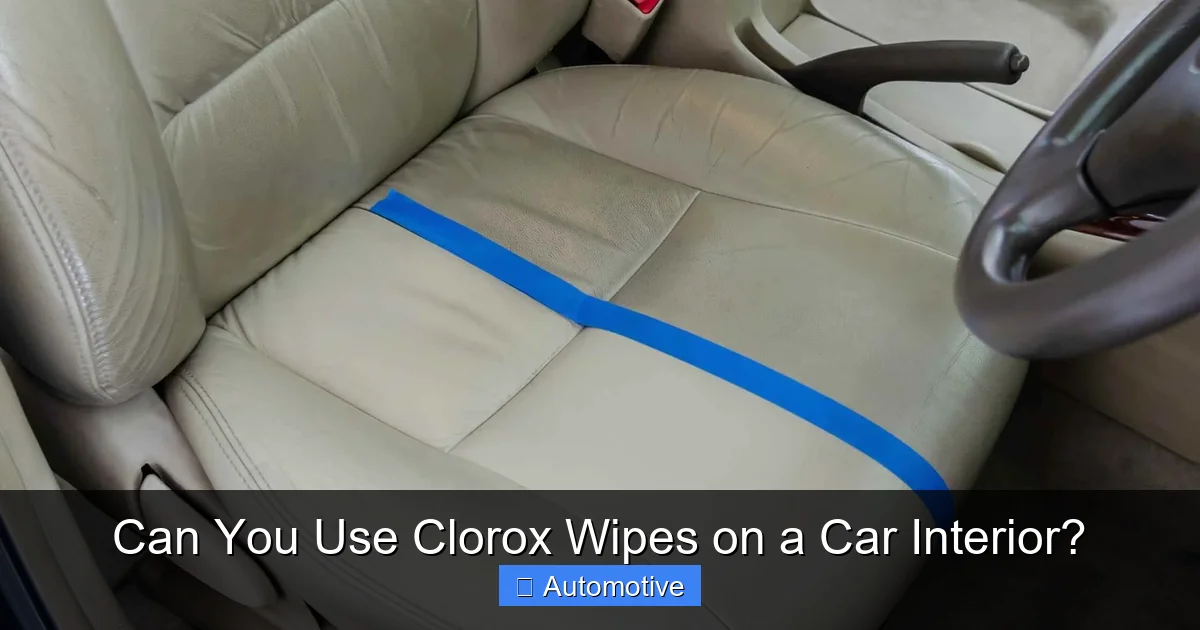
Do not use standard Clorox disinfecting wipes on leather car seats unless the leather supplier or vehicle manufacturer specifically approves them.
Leather is not the same as sealed plastic. It may have a protective topcoat, but it still contains dyes, coatings, and oils that can react poorly to disinfectants. Wipes may cause dryness, discoloration, stiffness, or a change in sheen.
For leather seats:
- Vacuum loose dirt.
- Use a cleaner labeled for automotive leather.
- Apply it to a microfiber cloth rather than soaking the seat.
- Wipe gently.
- Use a leather conditioner only if the vehicle or leather maker recommends one.
- Pay special attention to perforations and seams.
Do not saturate perforated leather. Liquid can move below the surface and reach foam, heaters, sensors, or wiring.
Can You Use Clorox Wipes on a Car’s Touchscreen?
Avoid using Clorox wipes directly on a car touchscreen unless the screen manufacturer expressly permits them.
Touchscreens often have anti-glare, anti-fingerprint, or protective coatings. Household disinfectant wipes can leave streaks or damage those coatings. Liquid may also enter the edge of the screen.
A safer general method is:
- Turn the screen off and let it cool.
- Remove dust with a clean, dry microfiber cloth.
- Use the screen cleaner recommended by the vehicle maker.
- Put the cleaner on the cloth, not directly on the display.
- Wipe lightly.
- Keep liquid away from edges, controls, and vents.
Never spray cleaner onto a dashboard display or touchscreen.
Can You Use Clorox Wipes on the Steering Wheel?
The answer depends on the steering-wheel material.
A hard plastic or vinyl wheel may tolerate a Clorox wipe if the owner’s manual permits it. Leather-wrapped, synthetic-leather, suede, and coated wheels should normally be cleaned with a product made for that material.
The steering wheel receives frequent hand contact, so residue matters. After using an approved wipe, follow the label directions and remove excess residue if permitted. A slippery steering wheel can reduce grip and create a safety concern.
Avoid soaking the wheel, stitching, buttons, or spoke controls.

What Should You Use on Other Car Interior Materials?
The right cleaner depends on the material, not just the amount of dirt.
| Interior material | Better general choice | Clorox wipe guidance |
|---|---|---|
| Hard plastic | Mild interior cleaner or approved disinfecting wipe | Use only if the label and manual allow it |
| Vinyl | Automotive vinyl cleaner | Test first; avoid repeated harsh cleaning |
| Leather | Automotive leather cleaner | Usually avoid standard disinfecting wipes |
| Cloth seats | Upholstery cleaner or mild soap solution | Do not use standard wipes |
| Carpet | Automotive carpet cleaner | Do not use standard wipes |
| Touchscreen | Manufacturer-approved screen cleaner | Usually avoid |
| Instrument display | Dry microfiber cloth or approved screen cleaner | Usually avoid |
| Suede or Alcantara | Material-specific cleaner | Avoid unless specifically approved |
| Rubber trim | Mild soap and water or approved rubber cleaner | Test first |
| Seat-belt webbing | Mild soap and water, following the manual | Avoid soaking with disinfectant |
The safest option is usually the least aggressive cleaner that can solve the problem. Disinfecting wipes are not automatically better than soap and water for routine dust, fingerprints, or food marks.
How to Clean a Car Interior Without Causing Damage
For normal cleaning, use a simple method:
- Remove trash and loose items.
- Vacuum seats, carpets, and floor mats.
- Dust the dashboard and vents with a microfiber cloth.
- Use a mild cleaner made for the specific material.
- Apply cleaner to the cloth instead of spraying sensitive surfaces.
- Work in small areas.
- Wipe away residue.
- Dry the surface.
- Check seams, vents, and controls for trapped moisture.
Use separate cloths for glass, leather, screens, and general trim. This helps prevent grit and cleaner residue from moving between surfaces.
For a spill involving bodily fluids, raw meat, or another contamination concern, follow the cleaner’s label and consider professional detailing if liquid entered upholstery, seat foam, vents, or electrical parts. A surface wipe cannot disinfect material it cannot reach.

Common Mistakes to Avoid
Using one wipe on the whole interior
A wipe that is suitable for a door handle may not be suitable for leather or a display. Sort surfaces by material before cleaning.
Spraying or squeezing liquid into controls
Moisture can damage switches, screens, speakers, and electronic modules. Keep liquid on the cloth or wipe, not inside the component.
Scrubbing to remove a mark
Hard scrubbing can create a shiny patch or remove a coating. Use a material-safe cleaner and allow it time to loosen the soil.
Leaving residue on the steering wheel
Residue can make the wheel slick. Follow the product directions and wipe away excess when allowed.
Cleaning in direct heat
Hot surfaces dry too quickly and may streak. They can also increase fumes and make coatings more vulnerable.
Mixing cleaners
Never mix Clorox wipes with ammonia-based glass cleaner, bleach, vinegar, alcohol, or another chemical. Use one product at a time and let the surface dry.
Ignoring the owner’s manual
A vehicle maker’s cleaning instructions can override general advice. This is especially true for leather, touchscreens, seat belts, and special trim.
What If Clorox Wipes Already Damaged the Interior?
If you notice a problem after using a wipe, stop using the product on that surface.
- Sticky residue: Wipe gently with a clean, damp microfiber cloth if the material allows water.
- Streaks on plastic: Use a compatible automotive interior cleaner.
- Leather dryness: Do not apply random oils. Use a leather-care product approved for the specific finish.
- Cloudy screen: Stop wiping and check the vehicle maker’s display-care instructions.
- Color loss or peeling: Contact an automotive upholstery or detailing professional.
- Liquid in electronics: Turn off the vehicle when safe and allow the area to dry. Seek professional help if controls malfunction.
Take a photo of the surface and keep the product container. The exact wipe formula and the material type may matter when a manufacturer or professional assesses the damage.
Frequently Asked Questions
Are Clorox wipes safe for car interiors?
They can be safe on some hard, sealed, nonporous surfaces. They are not automatically safe for leather, fabric, screens, suede, or coated trim. Check both the wipe label and the vehicle manual.
Can Clorox wipes remove germs from a car?
They may reduce germs on an approved hard surface when used exactly as the label directs, including any required wet contact time. They cannot disinfect hidden contamination inside upholstery, foam, vents, or porous materials.
Can I use Clorox wipes on car windows?
Avoid using them on glass unless the specific label allows glass and you can remove the residue. They may leave streaks or a film. A glass cleaner made for automotive windows is usually a better choice.
Can I use Clorox wipes on a fabric car seat?
Standard Clorox disinfecting wipes are generally not the right choice for fabric seats. Use an upholstery cleaner approved for the seat material and test it in a hidden area.
Are Clorox wipes safe for a car’s seat belts?
Do not soak or aggressively scrub seat-belt webbing. Follow the vehicle manual. Many manufacturers recommend mild soap and water because harsh chemicals may affect the belt material.
Can I use baby wipes instead?
Baby wipes may be gentler, but they are not necessarily disinfectants and may leave oils or conditioners behind. Choose the product based on the cleaning goal and the surface material.
Bottom Line
You can use Clorox wipes on some hard plastic and vinyl areas of a car, but they are not an all-purpose car-interior cleaner. Avoid them on leather, cloth, suede, Alcantara, touchscreens, displays, and unknown coatings unless the manufacturer gives clear approval.
Check the exact label, read the owner’s manual, test a hidden area, use light pressure, and keep moisture away from electronics. For routine cleaning, a material-specific automotive cleaner is usually the safer long-term choice.