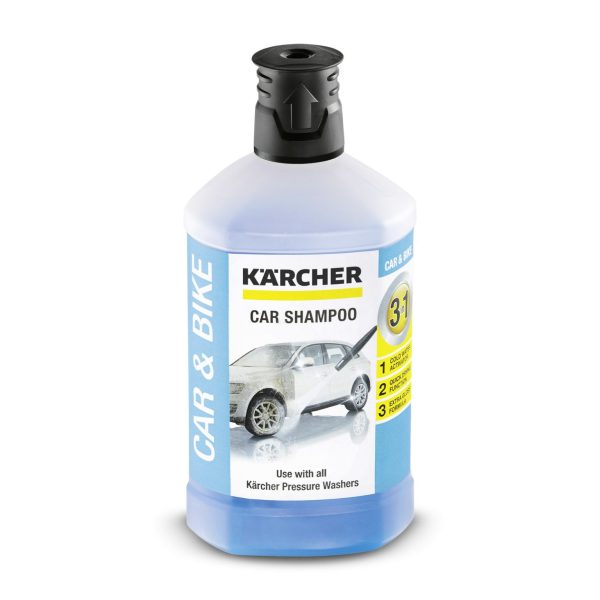
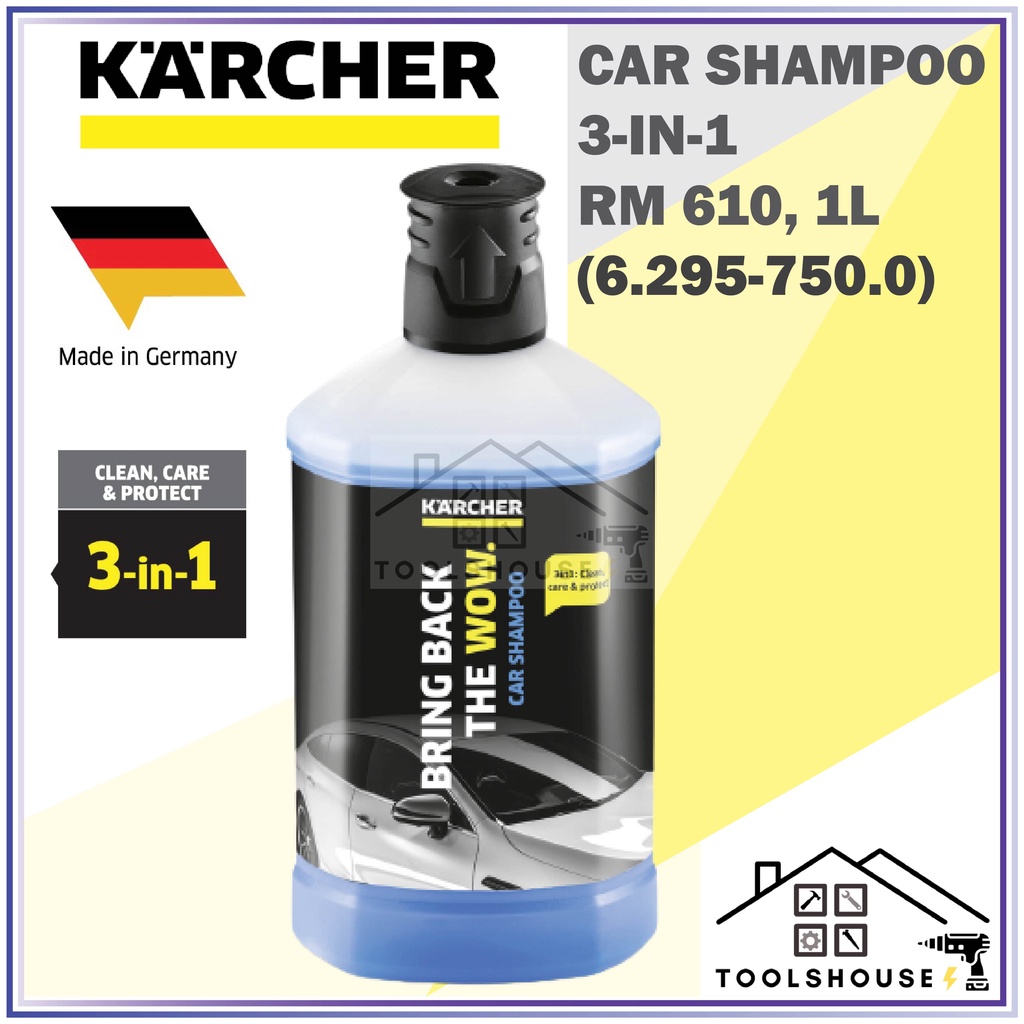
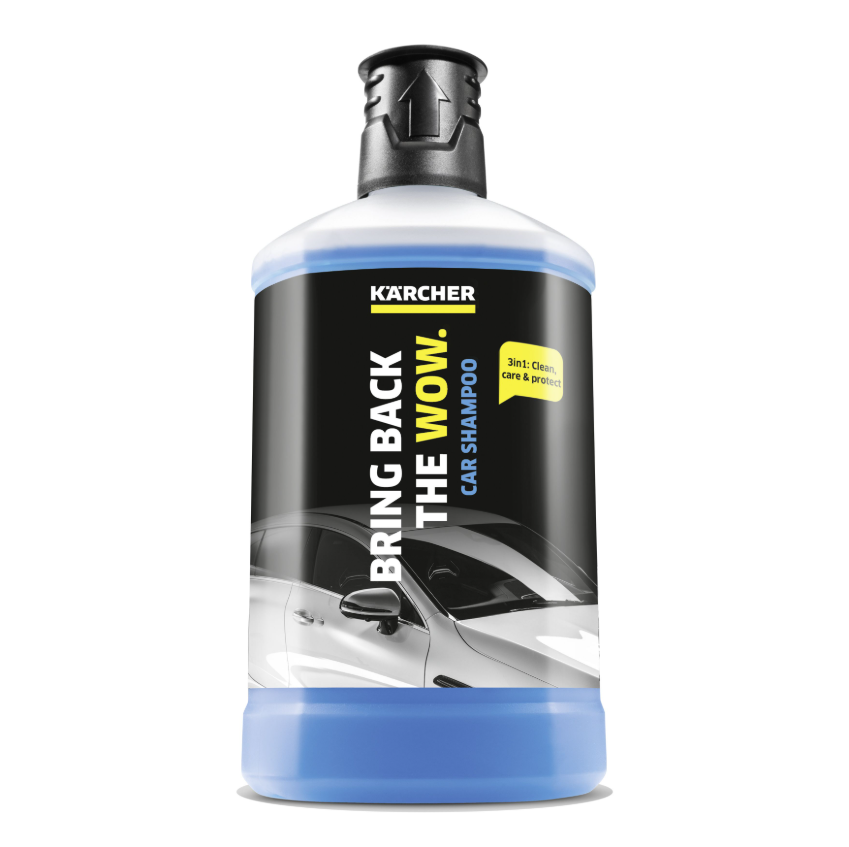
Kärcher 3-in-1 Car Shampoo is made for washing vehicles with a Kärcher pressure washer or compatible foam system. Use it on a cool car, apply it at low pressure, let it work without drying, and rinse the vehicle well from top to bottom.
The exact dilution and attachment method depend on your Kärcher model and the product label. Always follow the instructions on the bottle and in your pressure washer manual.
What Kärcher 3-in-1 Car Shampoo Does
Kärcher 3-in-1 Car Shampoo is a vehicle detergent designed to help clean road film, dust, and light dirt. Its formula is also intended to support vehicle care and reduce water marks when used as directed.
The product is generally used with:
- Kärcher pressure washers
- Kärcher detergent tanks
- Kärcher Plug ’n’ Clean systems
- Compatible foam nozzles or foam cannons
- Some handheld or garden-hose foam sprayers
The soap does not replace safe washing methods. Heavy grit can scratch paint if you rub it across the surface. A pressure washer helps remove loose dirt first, but it does not make every wash touch-free.
Use Kärcher 3-in-1 Car Shampoo for routine washing, not for removing tar, tree sap, heavy oxidation, or baked-on contaminants. Those jobs may need a separate product and a different cleaning method.

What You Need Before Washing
Gather the right tools before you start. This helps prevent the soap from drying on the paint while you look for equipment.
You will need:
- Kärcher 3-in-1 Car Shampoo
- A compatible Kärcher pressure washer or foam sprayer
- A clean water supply
- A suitable pressure washer nozzle
- Two clean buckets if you plan to hand wash
- A soft automotive wash mitt
- Several clean microfiber towels
- A soft brush for tires and wheels, if needed
- Eye protection and gloves when handling detergent
Park the vehicle in a shaded area. The body should be cool to the touch. Do not wash a hot car or work in strong direct sunlight, because the detergent can dry before you rinse it.
Close the windows, sunroof, trunk, and doors. Check that the fuel door and charging port are shut. Remove loose items from the vehicle before washing.
Check the Pressure Washer
Read the manual for your specific Kärcher model. Kärcher pressure washers differ in how they draw and mix detergent.
Your machine may use:
- A built-in detergent tank
- A removable Plug ’n’ Clean bottle
- A detergent suction tube
- A low-pressure detergent nozzle
- A separate foam jet or foam cannon
Do not force a bottle, tube, or fitting into the machine. If the pressure washer does not list the attachment as compatible, use the correct adapter or a Kärcher-approved accessory.
Check the Product Label
The bottle label is the best source for:
- Dilution instructions
- Compatible surfaces
- Storage guidance
- First-aid information
- Environmental precautions
- Any regional instructions for use
Do not guess the concentrate ratio. A stronger mix does not always clean better. It may leave more residue, waste product, or increase the chance of staining on a hot surface.
How to Use Kärcher 3-in-1 Car Shampoo
Follow these steps for a safe and effective car wash.
1. Rinse the Vehicle first
use clean water to rinse the vehicle and remove loose dust, sand, and grit.
Work from the roof downward. Pay extra attention to:
- Wheel wells
- Lower doors
- Rocker panels
- Rear bumper
- Front grille
- Areas behind the wheels
Use the pressure and distance stated in your Kärcher manual. Keep the spray moving. Do not hold a powerful jet close to paint, badges, window seals, convertible tops, or damaged trim.
The first rinse is one of the most important steps. It removes particles that could act like sandpaper during the wash.
2. Add the Shampoo to the Correct System
Turn off the pressure washer before connecting the detergent system.
For a Kärcher Plug ’n’ Clean model, insert the shampoo bottle as shown in the machine instructions. For a model with a detergent tank, add the product only where the manual directs. For a foam cannon, use the product according to the foam cannon maker’s instructions.
Do not pour car shampoo into the machine’s fuel, oil, or water connection. Use only the detergent inlet or container.
If the bottle requires dilution, measure the product and water carefully. If the Kärcher system mixes the detergent automatically, do not add extra water unless the manual or label tells you to do so.
3. Set the Machine to Detergent or Low Pressure
Most pressure washers apply detergent at low pressure. Fit the detergent nozzle or select the detergent setting listed in the manual.
High pressure may not draw detergent correctly on some machines. If the soap stops flowing, return to the approved low-pressure nozzle or check the suction tube.
Test the spray on a small, hidden area first. The spray should produce an even layer of foam or liquid detergent. Thick foam is not always a sign of better cleaning.
4. Apply the Shampoo in Sections
Apply the shampoo from the bottom of the vehicle upward or follow the method in your Kärcher manual. A bottom-up application can help you see which areas have received detergent.
Work in small sections, such as:
- Roof and upper glass
- Hood and trunk
- Upper doors and fenders
- Lower doors and bumpers
- Wheels and lower trim
Keep the spray moving. Cover the surface evenly, but do not flood gaps, vents, or electrical openings.
Avoid spraying directly into:
- Door and window seals
- Engine-bay electrical parts
- Open air intakes
- Damaged paint
- Loose decals
- Soft convertible-top seams
5. Let the Shampoo Work, but Do Not Let It Dry
Allow the detergent to loosen dirt for the time stated on the product label. If the label does not give a dwell time, keep the wait short and monitor the surface.
The shampoo should remain wet. If it begins to dry, rinse that section at once.
Do not wash the entire car with soap and then leave it in the sun. Clean one section at a time when the weather is warm or dry.
6. Hand Wash if the Vehicle Is Still Dirty
Kärcher 3-in-1 Car Shampoo can help loosen dirt, but a touch-free rinse may not remove all road film.
If dirt remains:
- Rinse or refresh the wash solution.
- Use a clean microfiber wash mitt.
- Start at the cleanest upper panels.
- Move toward the lower panels.
- Rinse the mitt often.
- Use a separate mitt or brush for wheels and tires.
Do not use the same mitt on wheels and painted panels. Brake dust and grit can scratch clear coat.
7. Rinse Thoroughly
Switch back to clean water and rinse from the roof downward. Remove all visible soap from:
- Panel edges
- Door handles
- Mirrors
- Grilles
- Emblems
- Wheel arches
- Glass
- Lower trim
Use overlapping passes. Soap left in seams can dry into streaks or white residue.
Keep the nozzle at a safe distance. The correct distance depends on the pressure washer, nozzle, surface, and condition of the vehicle. Start farther away and move closer only if the manual permits it and the surface remains safe.
8. Dry the Vehicle
Dry the car soon after rinsing.
Use a clean, soft microfiber drying towel. Pat or lightly drag the towel across the surface rather than pressing hard. You can also use an automotive air dryer to remove water from mirrors, grilles, badges, and trim.
Drying helps reduce water spots, especially when washing with hard water or in warm weather.
Do not use household bath towels, rough paper towels, or dirty rags. They can leave lint or create fine marks in the paint.
How Much Kärcher 3-in-1 Car Shampoo Should You Use?
Use the dilution listed on the current US product label or the instructions for your foam attachment. Kärcher pressure washers can mix detergent in different ways, so one amount will not work for every setup.
Use this basic rule:
- Built-in detergent system: follow the pressure washer manual.
- Plug ’n’ Clean system: follow the bottle and machine instructions.
- Foam cannon: follow the foam cannon instructions and the shampoo label.
- Hand washing: use only the label’s recommended dilution.
A Simple Dilution Example
If a product label calls for a hypothetical 1:20 dilution, that means:
- 1 part concentrate
- 20 parts water
For a 21-fluid-ounce container, the total mixture would contain about 1 fluid ounce of concentrate and 20 fluid ounces of water.
This is only an example of how to read a ratio. Do not use this ratio unless it appears on your product label or attachment instructions.
Using too much shampoo can cause:
- Excess foam
- More rinsing time
- Soap residue
- Faster product use
- Poor detergent draw in some machines
Using too little may reduce cleaning power. The best setting is the lowest amount that gives even coverage and removes normal road film.
The Best Washing Order for a Car
A good order reduces scratches and prevents clean areas from becoming dirty again.
| Area | Recommended approach |
|---|---|
| Roof | Wash first because runoff moves downward |
| Windows | Clean with the body panels or glass-safe method |
| Hood and trunk | Work while the surface is cool |
| Upper side panels | Use a clean mitt if touching the paint |
| Lower panels | Wash after the upper panels |
| Wheels and tires | Use separate tools |
| Rinse | Move from top to bottom |
| Drying | Start with glass and upper panels |
Always clean the dirtiest surfaces last. Wheels and lower body panels usually hold the most grit.
Do not allow dirty wash water to run back over a panel that you have already cleaned if you can avoid it. Frequent rinsing helps limit this problem.
What Surfaces Can You Clean With It?
Kärcher 3-in-1 Car Shampoo is intended for vehicle cleaning, but the condition of the surface still matters.
It is commonly used on:
- Factory-painted automotive panels
- Clear-coated paint
- Automotive glass
- Exterior plastic trim
- Rubber seals
- Painted wheels
- Some metal exterior parts
Check the product label before using it on:
- Matte paint
- Satin finishes
- Vinyl wraps
- PPF or paint protection film
- Freshly repaired paint
- Ceramic-coated surfaces
- Convertible fabric
- Unsealed aluminum
- Delicate aftermarket finishes
A product that is safe for normal automotive paint may not be suitable for every special finish. When unsure, test a hidden spot and follow the coating, wrap, or vehicle manufacturer’s care instructions.
Avoid Using It on Household Surfaces Without Checking
Car shampoo is made for vehicles. Do not assume it is suitable for decks, siding, stone, floors, or outdoor furniture.
Different materials can react to detergents and pressure. Use a product designed for the surface you are cleaning.
Common Problems and Fixes
The Pressure Washer Does Not Draw Shampoo
Possible causes include:
- The machine is using the wrong nozzle
- The detergent tube is loose
- The tube has an air leak
- The bottle is not seated correctly
- The detergent control is set too low
- The pressure washer is not designed for that system
- The product is too thick for the attachment
Try the following:
- Turn off the machine.
- Check the detergent bottle or tank.
- Inspect the tube for kinks or cracks.
- Fit the approved low-pressure nozzle.
- Confirm the detergent control setting.
- Flush the detergent system with clean water after use.
If the machine still does not draw detergent, check the Kärcher manual or contact Kärcher support. Do not dismantle the pump unless the manual authorizes that repair.
The Shampoo Leaves White Streaks
White streaks usually mean the product dried or was not rinsed fully. Hard-water minerals can also leave spots.
To prevent this:
- Wash in shade.
- Work in smaller areas.
- Keep the surface wet.
- Rinse before the shampoo dries.
- Dry the car with a clean microfiber towel.
- Use filtered or softened rinse water when appropriate.
If streaks remain, do not scrub hard. Re-wet the area and use a paint-safe method recommended for the vehicle’s finish.
The Car Still Looks Dirty
This can happen when the vehicle has bonded contamination, road film, tar, or grease.
A stronger mix is not always the answer. First check whether:
- The vehicle was rinsed before applying soap.
- The detergent reached the entire surface.
- The dwell time was long enough but still safe.
- The rinse pressure and distance were suitable.
- A wash mitt was needed.
- The dirt requires a specialist cleaner.
Use tar remover, iron remover, clay products, or polish only when suitable for the surface and used according to their labels.
The Foam Is Thin
Thin foam does not prove that the shampoo is failing. Foam depends on:
- Water hardness
- Water temperature
- Pressure washer output
- Foam cannon design
- Nozzle size
- Detergent concentration
- Air intake
- Product temperature
Focus on even coverage and cleaning performance. Do not keep increasing the concentration just to create thicker foam.
The Machine Loses Pressure
Stop using the pressure washer and check:
- The water supply
- The inlet filter
- The hose for kinks
- The nozzle for blockage
- The detergent accessory for obstruction
- The quick-connect fittings
Never point the spray at your hands or skin to check pressure. High-pressure water can cause serious injury even when a cut looks small.
Safety and Environmental Precautions
Read the safety information on the bottle before use. Wear gloves and eye protection if the label recommends them, especially when handling concentrate.
Follow these rules:
- Keep the product away from children and pets.
- Avoid eye and skin contact.
- Do not mix it with bleach, acids, ammonia, or other cleaners.
- Do not spray it into your eyes, mouth, or face.
- Wash your hands after use.
- Store the bottle closed in a suitable place.
- Follow the label for spills and first aid.
- Use only in a well-ventilated outdoor area.
- Keep runoff away from storm drains where local rules require it.
Pressure washers can damage paint, trim, seals, and skin. Use the lowest pressure that completes the job. Never use a high-pressure spray on people, animals, or electrical connections.
For electric vehicles, wash the exterior as directed by the vehicle maker. Keep charging connections closed and do not direct high-pressure water into charging ports or other openings.
How Often Should You Use It?
Use Kärcher 3-in-1 Car Shampoo when the vehicle has normal road dirt and needs a routine wash. The right schedule depends on weather, parking conditions, road salt, pollen, and how often the vehicle is driven.
Wash more often when the vehicle is exposed to:
- Road salt
- Coastal air
- Mud
- Bird droppings
- Tree sap
- Heavy pollen
- Construction dust
Remove bird droppings and similar deposits as soon as practical. They can damage paint if left in place.
Do not wash only to chase a spotless look if the process will grind dry grit into the paint. A careful wash with clean tools is better than frequent careless washing.

Frequently Asked Questions
Can I use Kärcher 3-in-1 Car Shampoo without a pressure washer?
Yes, if the product label allows hand washing. Use the stated dilution, a clean wash mitt, and plenty of rinse water. Do not pour undiluted concentrate directly onto the vehicle.
Can I use it in a foam cannon?
Usually, the product can be used with a compatible foam cannon, but the correct mix depends on the cannon and pressure washer. Follow both the Kärcher label and the accessory instructions.
Do I need to scrub after applying the shampoo?
Not always. Light dirt may rinse away after the detergent works. If road film remains, use a clean microfiber wash mitt with gentle pressure and frequent rinsing.
Is Kärcher 3-in-1 Car Shampoo safe for ceramic coatings?
Do not assume that every car shampoo is approved for every coating. Check the shampoo label and the ceramic-coating manufacturer’s care instructions. Avoid products that conflict with the coating maker’s guidance.
Can I let the shampoo dry on the car?
No. Keep the detergent wet and rinse it before it dries. Drying can leave streaks, residue, or water marks.
Why does the car look streaky after washing?
The most common causes are dried detergent, incomplete rinsing, hard-water minerals, dirty towels, or washing on a hot surface. Re-rinse the area and dry it with a clean microfiber towel.
Key Takeaways
- Use Kärcher 3-in-1 Car Shampoo with a compatible pressure washer, detergent system, or foam sprayer.
- Read the current US product label for dilution and surface instructions.
- Rinse loose dirt before applying soap.
- Wash the car in shade while the surface is cool.
- Use low-pressure detergent application.
- Work in sections and never let the shampoo dry.
- Rinse from top to bottom.
- Use separate tools for wheels and painted panels.
- Dry with clean microfiber towels.
- Check your Kärcher manual if the machine does not draw detergent or loses pressure.
Final Recommendation
For the best results, treat Kärcher 3-in-1 Car Shampoo as part of a complete wash process rather than as a shortcut. Use the correct detergent setting, rinse loose grit first, keep the panels wet, and follow the exact instructions for your Kärcher model and product label. If the car remains dirty after a safe wash, use a suitable specialty cleaner instead of increasing the shampoo concentration.