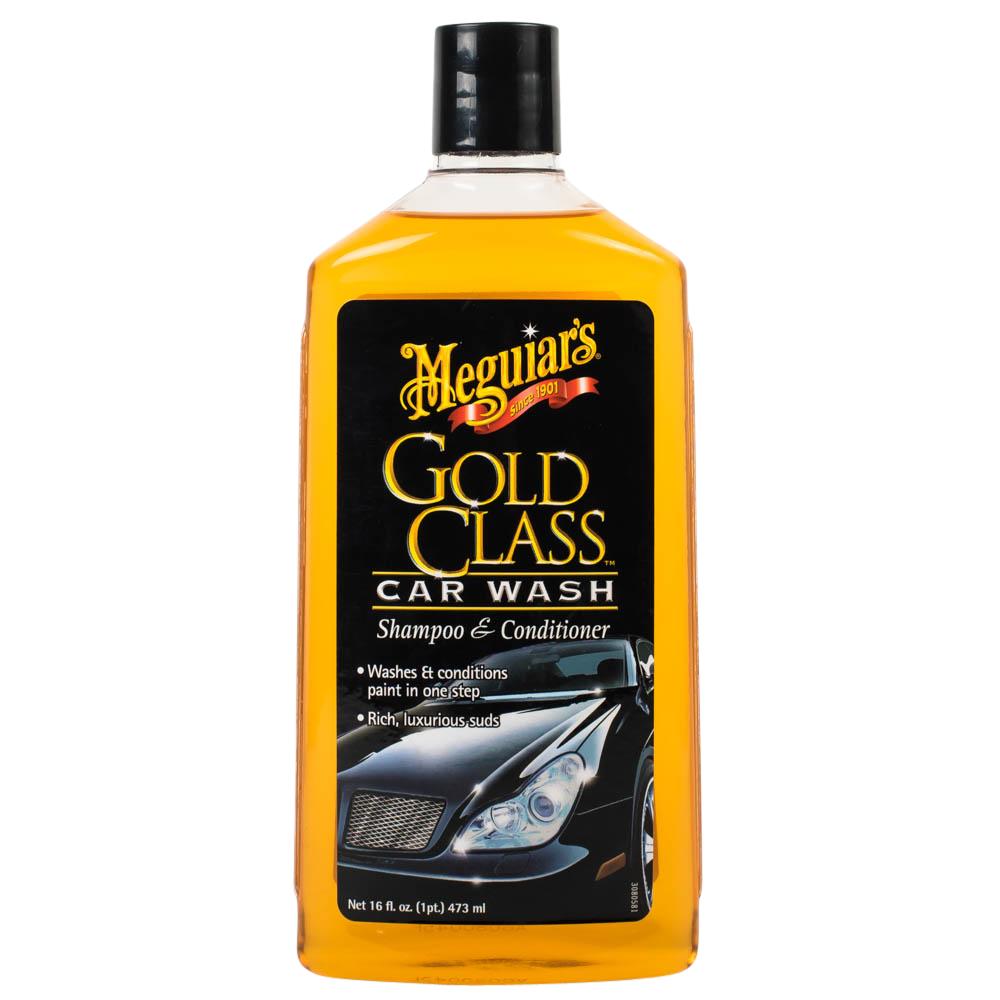
For drivers in the United States, Meguiar’s Wash and Conditioner usually refers to Meguiar’s Gold Class Car Wash Shampoo & Conditioner. It is a liquid car shampoo made to remove road dust, dirt, and light grime while leaving the paint with a smooth, clean feel.
The “conditioner” in the name does not mean a separate paint treatment. It refers to cleaning agents and lubricants blended into the soap. These ingredients help the wash mitt move across the paint and can reduce the dry, stripped feel that some strong cleaners leave behind.
Meguiar’s Wash and Conditioner is designed for routine exterior washing. It is not a wax, polish, ceramic coating, degreaser, or interior cleaner. Its main job is simple: clean a vehicle’s painted surfaces without needlessly removing a properly applied wax or sealant when used as directed.

What Is Meguiar’s Wash and Conditioner?
Meguiar’s Wash and Conditioner is a pH-balanced car wash soap that combines cleaning power with lubricating and conditioning agents. The product is commonly sold in the United States as Gold Class Car Wash Shampoo & Conditioner.
The soap is intended for use on common exterior vehicle surfaces, including:
- Clear-coated paint
- Gloss-painted panels
- Metal trim
- Plastic exterior parts
- Glass, when rinsed well
- Wheels that are safe to clean with car shampoo
The product lifts ordinary road film and dirt so that it can be rinsed away. Its lubricating formula also helps reduce friction between the wash mitt and the vehicle’s paint.
That function matters because dry dirt can act like fine sandpaper. If a mitt pushes that dirt across the paint, it may leave swirl marks or light scratches. No car soap can prevent all scratches, but good lubrication and safe washing technique lower the risk.
What does “conditioner” mean?
In this product name, “conditioner” means the formula contains ingredients intended to improve lubrication, slip, and the feel of the surface after washing. It does not repair paint defects or restore faded clear coat.
The conditioner does not replace:
- Wax
- Paint sealant
- Ceramic coating
- Polish
- Paint correction
- Clay-bar treatment
A vehicle may feel smooth after washing because the soap has left the surface clean and lubricated. That temporary feel should not be mistaken for a new layer of long-term paint protection.

What Does Meguiar’s Wash and Conditioner Do?
Meguiar’s Wash and Conditioner performs three main tasks: it loosens dirt, provides washing lubrication, and rinses away with water.
1. It removes routine road dirt
The soap helps break the bond between the vehicle and common contaminants such as:
- Dust
- Mud
- Road film
- Light grease
- Insects
- Tree residue
- Salt residue
- Traffic grime
It is best suited to normal maintenance washing. Heavy tar, thick grease, tree sap, brake dust, and mineral water spots may need separate products.
2. It improves wash-mitt glide
A wash shampoo needs more than foam. It should help the mitt glide over the paint while carrying dirt away from the surface.
This lubricating effect is one reason a dedicated car shampoo is usually a better choice than dish soap. Dish soap is made to cut food grease from dishes, not to provide a balanced wash for automotive paint and protection products.
3. It helps preserve existing protection
When used according to the label, Gold Class Car Wash Shampoo & Conditioner is marketed as safe for common automotive waxes and paint protection products. However, every wash removes some loose surface contamination and can gradually reduce the performance of older protection.
The product does not create the same level of protection as a wax or sealant. Think of it as a maintenance cleaner, not a protective coating.

Is Meguiar’s Wash and Conditioner Safe for Car Paint?
Yes, it is intended for vehicle paint when used correctly. The safest results come from using the proper dilution, a clean wash mitt, plenty of water, and a vehicle that is cool and out of direct sunlight.
A car wash soap can still cause problems if it is:
- Allowed to dry on the paint
- Used with a dirty sponge
- Mixed far stronger than directed
- Applied to hot panels
- Used with contaminated wash water
- Scrubbed aggressively against dry dirt
“Safe for paint” describes the product’s intended use. It does not make unsafe washing habits harmless.
Is it safe for wax and ceramic coatings?
The shampoo is generally intended for use on waxed and coated vehicles. It can clean without being a dedicated coating remover.
Still, coating owners should follow the coating maker’s care guide. Some coatings require a specific wash method or recommend a coating-safe shampoo. Avoid assuming that any soap labeled “pH balanced” is suitable for every coating system.
Is it safe for matte paint?
Use caution with matte or satin finishes. Matte paint needs products that will not add gloss or leave unwanted residue. Check the vehicle manufacturer’s care instructions and the shampoo label before use.
Do not use polishing products on matte paint unless the manufacturer specifically approves them. Polishing can create shiny spots that are difficult or impossible to remove without refinishing.
Is it safe for wheels?
It may be suitable for light wheel cleaning, especially when the wheels are not heavily soiled. It is not a dedicated wheel cleaner.
Do not use ordinary car shampoo as a substitute for a wheel cleaner when the wheels contain heavy brake dust, baked-on iron, or road buildup. Use a product designed for the wheel’s finish and follow the wheel manufacturer’s instructions.
How to Use Meguiar’s Wash and Conditioner
Use the two-bucket wash method when possible. This method separates the clean shampoo solution from the water used to rinse dirt from the mitt.
What you need
Gather:
- Meguiar’s Wash and Conditioner
- A clean bucket
- A second rinse bucket
- A soft microfiber wash mitt
- A hose or pressure washer
- A soft microfiber drying towel
- A wheel brush or separate mitt, if needed
Use separate tools for wheels and painted panels. Wheel tools can collect sharp grit and brake dust.
Step-by-step washing method
-
Park in a safe washing area.
Choose a shaded location with good drainage. Avoid washing on hot panels or in direct midday sun. -
Rinse the vehicle first.
Use a steady stream of water to remove loose dust and grit. A pressure washer can help, but keep the nozzle at a safe distance and avoid damaged paint, loose trim, and electrical openings. -
Mix the soap according to the bottle label.
Product directions can change by package size or formula. Measure the recommended amount instead of guessing. More soap does not automatically mean a safer or better wash. -
Wash from the top down.
Start with the roof, glass, hood, and upper doors. Leave the lower panels, bumpers, and wheels for later because they usually hold the most dirt. -
Use straight, light passes.
Do not press hard. Let the shampoo and mitt do the work. Rinse the mitt often in the clean-water bucket. -
Clean one small area at a time.
If the soap begins to dry, stop and rinse the panel. Do not allow the solution to bake onto hot paint. -
Rinse the whole vehicle.
Remove all soap from panel gaps, mirrors, trim, glass, and emblems. -
Dry promptly.
Use a clean, absorbent microfiber drying towel. Blotting or lightly dragging the towel reduces the chance of leaving water spots.
Signs that the wash went well
After washing, the vehicle should have:
- No visible soap film
- No loose dirt remaining
- No fresh water spots
- An even appearance
- Clean glass and trim
- A smooth feel consistent with the vehicle’s existing protection
If the surface still feels rough after washing, bonded contamination may remain. A clay product or chemical decontamination step may be needed, but those are separate processes.

How Much Meguiar’s Wash and Conditioner Should You Use?
Use the dilution printed on the current bottle. Do not rely on an old internet recommendation because product packaging and directions can change.
A useful way to think about dilution is:
Soap amount = bucket water volume × label-recommended soap ratio
For example, if a label recommends a certain amount for one gallon of water, use that same ratio when preparing a larger or smaller bucket. Measure the soap with a cap, measuring cup, or marked dispenser rather than pouring freely.
Using too little soap may reduce cleaning and lubrication. Using too much may:
- Create excess residue
- Make rinsing harder
- Waste product
- Increase the chance of streaks in direct sun
- Encourage the user to believe more foam equals more safety
Foam is not a direct measure of cleaning power. A low-foam wash can still lubricate well, while a very foamy wash can still scratch if the mitt is dirty.

Meguiar’s Wash and Conditioner vs. Other Car Wash Products
The right product depends on the type of dirt and the protection already on the vehicle.
| Product type | Main purpose | Best use | Main limit |
|---|---|---|---|
| Meguiar’s Wash and Conditioner | Routine cleaning and lubrication | Regular exterior washes | Does not remove heavy contamination |
| Waterless wash | Cleaning with very little water | Light dust on suitable surfaces | Poor choice for heavily dirty vehicles |
| Rinseless wash | Low-water cleaning | Garages, driveways, and water-restricted areas | Requires correct towel and solution control |
| Degreaser | Breaks down heavy grease | Engines, oily areas, and severe grime | Can be too strong for delicate finishes |
| Wheel cleaner | Removes brake dust and wheel buildup | Wheels and tires | Not intended as a general paint shampoo |
| Wax or sealant | Adds protection and gloss | After cleaning | Does not replace washing |
| Polish or compound | Improves paint defects | Swirls, oxidation, and scratches | Removes a small amount of paint and requires skill |
Is it better than dish soap?
For regular car washing, a dedicated car shampoo is the better choice. Dish soap is designed to remove cooking oils and food residue. It may also reduce or shorten the life of wax and other surface protection.
Occasional use of dish soap is unlikely to destroy a vehicle’s paint, but it is not a sound maintenance routine.
Is it a wash-and-wax product?
The name “shampoo and conditioner” does not mean the product is a traditional wash-and-wax formula. It may improve gloss by removing dirt and leaving the surface clean, but it should not be treated as a replacement for a wax or sealant.
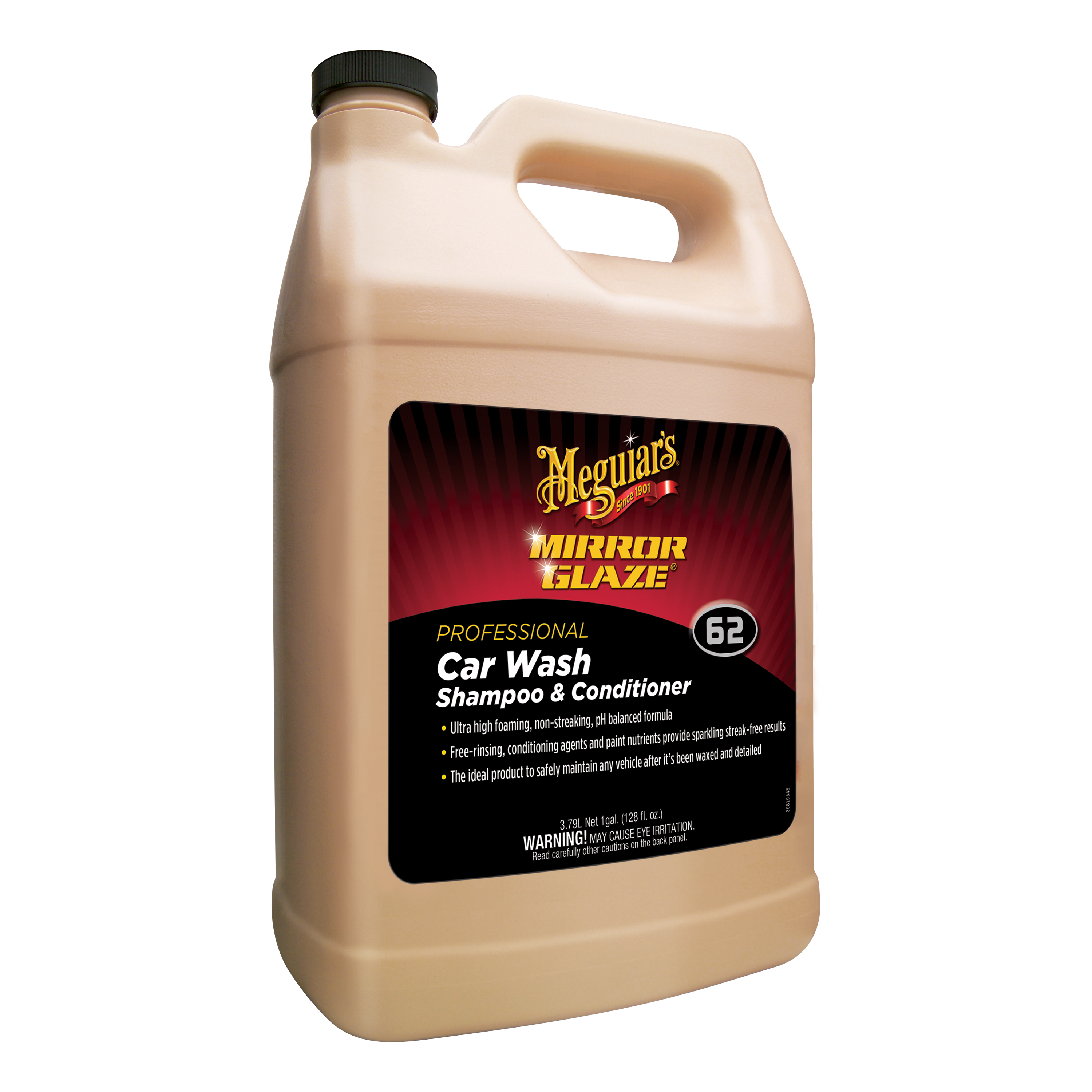
Check the exact product label. Meguiar’s sells several car wash formulas, and their features are not identical.

Common Mistakes to Avoid
The most common problems come from technique rather than the shampoo itself.
Washing with one dirty sponge
A single sponge can move grit from the lower panels onto the upper paint. Use a clean microfiber mitt and rinse it often.
Washing in circles with pressure
Circular scrubbing can spread dirt in every direction and may make swirl marks more visible. Use light, straight passes and let the soap provide glide.
Using hot water or washing in full sun
Heat makes soap dry quickly. It can also leave mineral deposits before you have time to rinse. Wash in shade when possible and work in small sections.
Letting the soap dry
Dried soap can leave a film or spot pattern. Rinse the panel while the solution is still wet.
Mixing it with other chemicals
Do not mix car shampoo with bleach, household cleaners, strong acids, solvents, or other detailing chemicals. Mixing products can change their behavior and create avoidable safety risks.
Using the same mitt on wheels and paint
Brake dust and grit from wheels can scratch clear coat. Keep wheel tools separate and label them clearly.
Skipping the final rinse
Soap trapped in mirrors, door handles, emblems, and trim can drip onto clean paint later. Rinse these areas carefully.

What Meguiar’s Wash and Conditioner Cannot Do
Meguiar’s Wash and Conditioner is not a problem-solving product for every paint issue.
It will not reliably:
- Remove deep scratches
- Repair clear-coat failure
- Restore severely oxidized paint
- Remove hardened tree sap by itself
- Dissolve thick tar safely in every case
- Remove all brake dust
- Prevent future water spots
- Replace a paint sealant or ceramic coating
- Permanently restore faded plastic trim
A clean surface can look much better, but cleaning and paint correction are different tasks. If the paint is dull, scratched, or rough after washing, identify the problem before selecting a stronger chemical.
Frequently Asked Questions
Does Meguiar’s Wash and Conditioner add wax?
Not necessarily. The conditioner can improve lubricity and the temporary feel of the surface, but it should not be treated as a wax unless the specific bottle clearly states that it contains wax or protection ingredients.
Can I use it in a foam cannon?
It may be used in a foam cannon if the equipment and product directions allow it. Follow the foam-cannon manufacturer’s dilution instructions and the shampoo label. Foam is mainly a pre-wash aid; it does not replace safe hand washing.
Can I use it on motorcycles?
It may be suitable for painted motorcycle surfaces, but avoid sensitive areas such as brake components, tires, grips, electrical connectors, and exposed air intakes. Follow the motorcycle manufacturer’s cleaning instructions.
Can it remove water spots?
It may remove light, fresh residue during washing. Older mineral water spots usually need a dedicated water-spot remover or another safe decontamination method. Test any stronger product in a small area first.
How often should I use it?
Use it whenever the vehicle needs a routine wash. The correct schedule depends on weather, parking conditions, road salt, dust, pollen, and how much the vehicle is driven. Wash sooner when salt, bird droppings, or insect residue sit on the paint.
Does it expire?
Car shampoo does not usually have a short household-style expiration date, but storage conditions matter. Keep the bottle closed and away from extreme heat and freezing temperatures. If the formula separates, develops an unusual odor, or no longer mixes normally, contact Meguiar’s or replace it.
Key Takeaways
- Meguiar’s Wash and Conditioner usually refers to Meguiar’s Gold Class Car Wash Shampoo & Conditioner.
- It is a routine exterior car shampoo with cleaning and lubricating properties.
- The “conditioner” does not replace wax, sealant, ceramic coating, or polish.
- Use it with a clean mitt, proper dilution, frequent rinsing, and a top-down wash method.
- Do not let it dry on hot paint or mix it with household chemicals.
- Heavy stains, tar, brake dust, scratches, and water spots may require separate products.
For most U.S. vehicle owners, the next practical step is to check the exact product name and dilution instructions on the bottle, then use a two-bucket wash with separate tools for the wheels and painted surfaces.