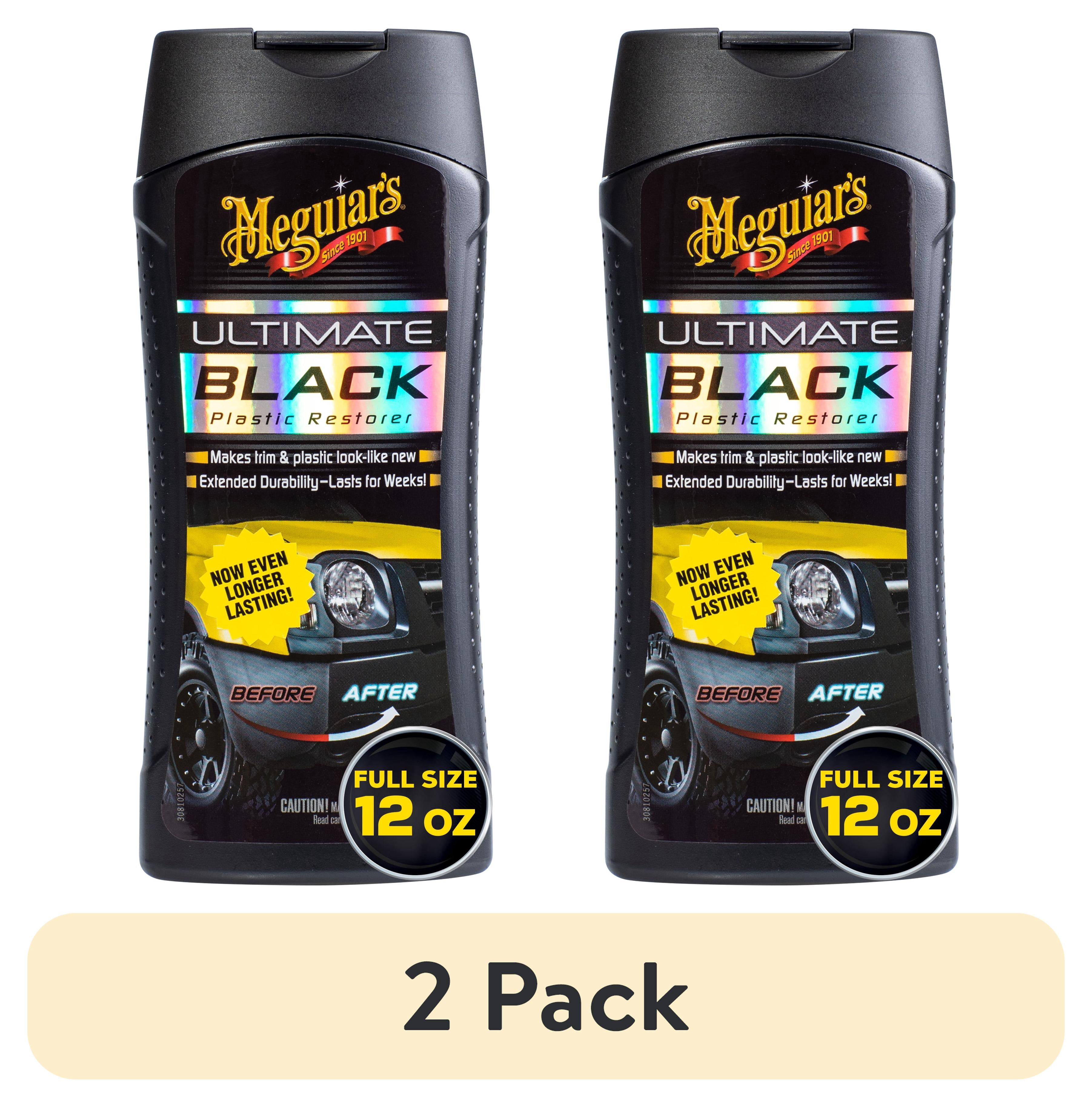
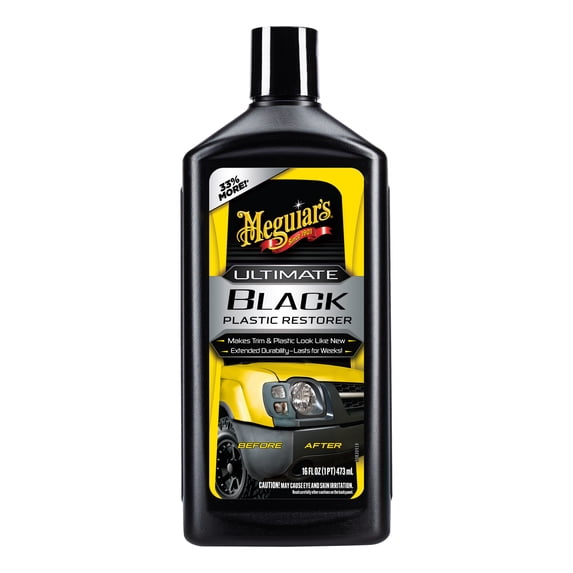
For drivers in the United States, Meguiar’s Ultimate Black Plastic Restorer can refresh faded exterior trim, vinyl, and rubber on cars, trucks, SUVs, and motorcycles. The best results come from cleaning the surface first, applying a small amount to a dry applicator, spreading a thin coat, and removing excess before driving.
Meguiar’s Ultimate Black is a trim-restoring product, not a cleaner or paint. It can improve the look of dull plastic and rubber, but it will not repair cracks, deep scratches, peeling coatings, or permanently damaged trim.

What Is Meguiar’s Ultimate Black Used For?
Meguiar’s Ultimate Black is designed to improve the appearance of unpainted plastic, vinyl, and rubber surfaces. It is commonly used on exterior trim such as:
- Black plastic bumpers
- Door handles
- Mirror housings
- Cowl panels
- Wiper arms
- Window trim
- Roof-rack trim
- Running boards
- Plastic grille sections
- Rubber moldings
- Exterior weather seals
- Tire sidewalls, when the product label permits that use
The product darkens and adds a cleaner look to faded surfaces. It may also help the surface resist drying from sun exposure, but it does not make old plastic new again.
What Meguiar’s Ultimate Black does not do
Ultimate Black is not intended to:
- Remove deep oxidation from paint
- Repair cracked plastic
- Restore broken or peeling trim coatings
- Remove heavy dirt without prior cleaning
- Replace a plastic repair product
- Protect leather or fabric
- Polish clear coat
- Remove stains from carpets
Always check the instructions on your specific bottle. Product packaging and formulas can change, and the label is the controlling source for current use directions.

What You Need Before Applying It
Gather the right tools before you start. A basic application usually needs:
- Meguiar’s Ultimate Black
- A clean microfiber towel
- A foam or microfiber applicator pad
- Car wash soap or an automotive-safe cleaner
- Water
- A soft detailing brush
- Nitrile gloves, if you have sensitive skin
- Painter’s tape for nearby paint or glass
Work in a shaded, well-ventilated area. The surface should be cool to the touch. Applying the product in direct sun can cause it to dry too quickly and leave streaks or an uneven finish.
Clean the surface first
Dirt, road film, wax, and old dressing can block the product from reaching the trim. Wash the vehicle first, then clean the trim with an automotive-safe cleaner.
For textured plastic, use a soft brush to loosen dirt from the grain. Rinse or wipe away the cleaner, then let the surface dry fully. Do not apply Ultimate Black over mud, dust, or standing water.
Test an unseen area
Test the product on a small hidden section before treating the whole vehicle. This check can reveal:
- Uneven darkening
- Streaking
- An unwanted level of shine
- A reaction with an older coating
- Color changes on unusual plastic
Wait until the test area dries before judging the result. If the finish looks acceptable, continue with the rest of the trim.

How to Use Meguiar’s Ultimate Black Step by Step
Use a thin, even coat rather than flooding the surface. More product does not normally create a better finish. It mainly increases drying time and the chance of sling or residue.
1. Wash and dry the vehicle
clean the vehicle with car wash soap. Focus on the trim you plan to restore. Remove grease, road salt, bugs, and loose dust.
Dry the trim with a clean microfiber towel. Water trapped in textured plastic can dilute the product and create light spots.
2. Shake the bottle
Shake the bottle well before use. This helps mix the formula so the product spreads more evenly across the surface.
3. Apply a small amount to an applicator
Put a small amount of Ultimate Black on a foam applicator or clean microfiber pad. Start with less than you think you need.
Avoid pouring the product directly onto the vehicle. Direct application can create runs and may spread the product onto glass, paint, or other areas where you do not want it.
4. Spread the product over the trim
Work in small sections. Use overlapping strokes to cover the plastic, vinyl, or rubber evenly.
For textured trim, move the applicator in different directions so the product reaches the grooves. Do not scrub aggressively. The product is a dressing and restorer, not a heavy abrasive cleaner.
5. Wipe off excess product
Use a separate clean microfiber towel to remove extra product. Pay close attention to:
- Edges around painted panels
- Gaps between trim pieces
- Body seams
- Textured grooves
- Areas near glass
- Door handles and mirror edges
The surface should look even, not wet or oily.
6. Allow the product to dry
Let the trim dry according to the product label. Keep the vehicle dry during this time when possible.
Do not drive immediately if excess product remains on the surface. Air movement can carry wet dressing onto nearby paint, glass, or body panels. This is called sling.
7. Inspect the finish
After the product dries, check the trim from several angles. A successful application should look:
- Even in color
- Free of wet patches
- Free of visible runs
- Darker or fresher than before
- Dry enough that it does not feel greasy
If one area looks too shiny or heavy, buff it with a clean, dry microfiber towel.

How Much Meguiar’s Ultimate Black Should You Use?
Use enough product to wet the surface lightly, then spread it across the section. The correct amount depends on the size, texture, and condition of the trim.
| Surface condition | Starting amount | Application advice |
|---|---|---|
| Smooth plastic | Small dab | Spread it into a thin film |
| Textured plastic | Small dab, added as needed | Work it into the grain |
| Large bumper | Several small dabs | Treat one section at a time |
| Rubber molding | Very small amount | Wipe away excess from edges |
| Tire sidewall | Small amount on an applicator | Keep it away from the tread |
A thin coat is easier to control than one heavy coat. If the finish looks too light after drying, apply a second thin coat only if the label allows it and the first coat is fully dry.
One coat or two?
One coat is usually the best starting point. A second coat may deepen the appearance, but it can also increase gloss and residue.
Wait until the first coat has dried before deciding. Do not keep adding product to solve a cleaning problem. If the trim still looks dirty, clean it again instead.

Where Should You Avoid Using Ultimate Black?
Do not apply a trim dressing to surfaces where extra slickness or residue could create a safety risk.
Avoid using it on:
- Steering wheels
- Pedals
- Brake or clutch surfaces
- Running-board areas where footing matters
- Seat fabric
- Motorcycle controls
- Windshields
- Windows
- Headlight lenses unless the label specifically permits it
- Painted body panels
- Motorcycle or bicycle tire tread
A slippery product on pedals or a steering wheel can reduce control. Product on glass can cause haze or glare. Product on tire tread can reduce traction.
For tires, apply only to the sidewall when the product label permits it. Keep all dressing away from the tread and brake components.
How to Prevent Streaks, Sling, and Uneven Color
Most application problems come from too much product, poor preparation, or high heat.
If the trim looks streaky
Possible causes include:
- The surface was still wet
- The trim had old dressing on it
- Too much product was applied
- The surface was hot
- The applicator was dirty
Wipe the area with a clean microfiber towel. If the streaks remain, wash the trim with an automotive-safe cleaner, rinse or wipe it clean, dry it, and apply a much thinner coat.
If the product gets on paint
Remove it promptly with a clean, damp microfiber towel. Do not let a heavy deposit dry on the paint.
If a haze remains, wash the panel with car wash soap. Avoid aggressive rubbing on delicate or soft paint.
If the product gets on glass
Wipe the glass with a clean towel, then use an automotive glass cleaner. Check the glass from both inside and outside for haze.
If the finish feels greasy
You applied too much product or did not buff away the excess. Use a dry microfiber towel to level the finish. If it remains greasy, clean the surface and start again with less product.
If the trim still looks gray
The plastic may have permanent UV damage, oxidation, or surface wear. A dressing can improve the color for a time, but it cannot rebuild missing plastic or restore a failed coating.

How Long Does Meguiar’s Ultimate Black Last?
The lasting time varies. Sun exposure, rain, car washes, road salt, cleaners, and the condition of the plastic all affect durability.
Heavily weathered trim may lose the effect sooner than newer trim. Frequent use of strong degreasers can also remove the dressing more quickly.
Treat the product as a maintenance dressing, not a permanent restoration. Reapply when the trim becomes visibly lighter and the previous application has worn away. Clean the surface before each new application.
Avoid layering new product over a thick, dirty old layer. That can create a blotchy finish.
Common Mistakes to Avoid
Applying it to a hot surface
Heat speeds up drying and can make the product difficult to spread. Move the vehicle into shade and let the trim cool first.
Using too much product
A thick coat may look glossy at first but can later attract dust, streak, or sling onto nearby panels.
Skipping surface cleaning
Dressing cannot hide every type of dirt. Cleaning first produces a more even and longer-lasting result.
Using one towel for every task
Use one applicator for spreading and a separate microfiber towel for buffing. A dirty towel can move grime across the trim.
Treating painted surfaces as plastic
If the product lands on paint, wipe it away. Do not use Ultimate Black as a general paint polish or wax.
Applying it to safety-related surfaces
Do not use it on pedals, steering wheels, brake parts, tire tread, or any place where reduced friction could affect control.
Judging the result while it is wet
Freshly applied product can look darker and shinier than the final finish. Allow it to dry before deciding whether another coat is needed.

Frequently Asked Questions
Can you use Meguiar’s Ultimate Black on the interior?
Use it only on interior vinyl or plastic surfaces that the product label permits. Avoid steering wheels, pedals, shift controls, and seats where a slippery or oily finish could create a safety problem.
For interior trim, apply a very small amount to an applicator rather than spraying or pouring it directly onto the panel. Wipe the surface until it feels dry.
Can you use Ultimate Black on tires?
It may be used on tire sidewalls when the product instructions allow it. Apply it with an applicator and keep it off the tread, brakes, and wheels.
Do not apply any tire dressing to the tread because traction is more important than appearance.
Does Ultimate Black remove faded plastic oxidation?
It can improve the appearance of faded plastic, but it does not remove deep oxidation or repair damaged material. If the plastic is cracked, chalky, peeling, or structurally weak, a restoration coating or replacement part may be a better solution.
Can you apply a second coat?
You can consider a second thin coat after the first coat has dried, provided the product label allows it. Test a small area first. A second coat may increase darkness or gloss, but it may also increase residue.
Can rain remove Meguiar’s Ultimate Black?
Rain and repeated washing can reduce the effect over time. If rain reaches the product before it dries, the finish may become uneven. Let the trim dry fully before exposing it to water whenever possible.
Is Ultimate Black safe for matte plastic?
Test it first. Matte and textured plastics can react differently from smooth trim. Apply a small amount to a hidden area and check the finish after drying. Stop if the product changes the surface to an unwanted glossy appearance.
Final Recommendation
To use Meguiar’s Ultimate Black correctly, wash and dry the trim, test a hidden spot, apply a small amount with an applicator, spread a thin coat, and buff away excess. Keep the product off glass, paint, tire tread, pedals, and steering controls.
The next time you use it, judge the finish only after it dries. If the result is streaky or greasy, clean the surface and use less product rather than adding more.