Introduction
For drivers in the United States, a pH-neutral car shampoo is a safe choice for regular washing. It helps lift road dust, pollen, salt, grime, and oily film without using a strongly acidic or alkaline formula.
The main reason to use one is simple: it cleans routine dirt while placing less stress on automotive paint, clear coat, wax, sealants, trim, and sensitive finishes. However, pH balance alone does not make every soap safe. The formula, dilution, wash method, and surface condition also matter.

What Does “pH-Neutral” Mean in Car Shampoo?
A pH-neutral car shampoo is designed to stay close to pH 7, which is the middle point of the pH scale. Acids have a pH below 7. Alkaline products have a pH above 7.
The pH scale is logarithmic. This means a small change in number can represent a large change in acidity or alkalinity. A product with a pH of 10 is not simply “three points stronger” than one with a pH of 7.
In car care, “pH-neutral” usually means the shampoo is mild enough for frequent use when mixed as directed. It does not mean the soap has no cleaning power. Surfactants still loosen and surround dirt so water can carry it away.
pH-neutral does not mean chemical-free
All cleaning products contain chemicals, including water-based car shampoos. The useful question is not whether a product contains chemicals. The better questions are:
- What is the product’s pH?
- What surfactants and solvents does it use?
- Is it safe for the vehicle surfaces listed on the label?
- Does it require dilution?
- Does it leave wax, gloss agents, or a coating behind?
- Does it work without heavy scrubbing?
The EPA’s Safer Choice program explains that safer cleaning products must meet ingredient and performance standards. This can help shoppers assess a product, but an EPA label is not required for a car shampoo to be suitable for vehicle washing.

Why Use pH-Neutral Car Shampoo?
The main benefit of pH-neutral car shampoo is balanced cleaning for routine maintenance. It removes common road film without the extra strength often used for heavy correction work.
1. It is suitable for regular washing
Most vehicles need a wash after normal exposure to dust, rain, pollen, bird droppings, bugs, and road film. A mild shampoo can be used often because it is less likely to interfere with existing protection when used correctly.
This does not mean it will never affect wax or a sealant. Repeated washing, hot water, strong water pressure, and friction can reduce protection over time. The mild formula simply avoids adding unnecessary chemical stress.
2. It is gentler on automotive paint and clear coat
Modern vehicles usually have a clear coat over the colored paint layer. The clear coat gives the finish gloss and some protection from the environment.
A pH-neutral shampoo does not repair damaged clear coat. It also cannot prevent scratches caused by a dirty wash mitt. Its value is that it gives you a mild cleaning base, so the wash process starts with less aggressive chemistry.
3. It helps protect waxes, sealants, and ceramic coatings
many car owners apply wax, paint sealants, or ceramic coatings. These products create a water-repellent layer over the paint.
A pH-neutral shampoo is often the best daily option for protected paint because it cleans without relying on strong acids or bases. Still, check the coating maker’s care guide. Some coatings call for a specific shampoo or recommend a certain pH range.
A neutral soap also does not “recharge” every coating. A product with added polymers or gloss agents may change how the paint feels or beads. That is different from restoring the coating itself.
4. It is safer for trim and mixed materials
A single vehicle can include clear-coated paint, chrome, plastic, rubber, glass, aluminum, vinyl, and painted wheels. A mild shampoo is more practical for a general wash because it is less aggressive toward many of these surfaces.
You should still keep soap off hot surfaces and avoid allowing it to dry. Uncoated metal, matte paint, soft-touch trim, and aftermarket finishes may need special products.
5. It reduces the risk of surface dulling from harsh cleaners
Strong alkaline cleaners can remove heavy grease and traffic film. Strong acids can dissolve mineral deposits and brake dust deposits. These products have useful jobs, but frequent use can be excessive for a routine wash.
A neutral shampoo is less likely to dull or stain a surface when used as directed. That makes it a good starting point for regular care.
6. It supports safer contact washing
A quality shampoo does more than adjust pH. It should also provide lubrication. Lubrication helps the wash mitt move across the surface and reduces direct rubbing between dirt and paint.
This point matters because many swirl marks come from poor wash technique, not from shampoo pH alone. Use plenty of rinse water, a clean mitt, and a separate method for wheels and tires.
Is pH-Neutral Car Shampoo Always Better?
No. pH-neutral shampoo is usually better for routine washing, but it is not the best tool for every type of dirt.
The right product depends on the contaminant and the surface.
| Cleaning need | Product type that may fit | Why |
|---|---|---|
| Dust, pollen, light road film | pH-neutral shampoo | Mild routine cleaning |
| Bugs and fresh bird droppings | Pre-treatment plus mild shampoo | Softens stuck organic matter |
| Grease and heavy traffic film | Stronger pre-wash or degreaser | Breaks down oily soil |
| Hard-water spots | Mineral or water-spot remover | Targets mineral deposits |
| Brake dust on suitable wheels | Wheel cleaner matched to the wheel finish | Targets metallic and road deposits |
| Tar and tree sap | Solvent-based spot remover | Dissolves sticky contaminants |
| Matte paint or wraps | Product approved for that finish | Helps avoid unwanted gloss or staining |
A neutral car shampoo may not remove bonded iron, tar, old wax, or mineral scale. Trying to force it to do so can lead to more rubbing. That can cause more harm than using the correct targeted cleaner.
Neutral shampoo versus dish soap
Dish soap is made for food grease and kitchen soils. It can clean a vehicle, but it is not designed around automotive paint, trim, coatings, or wash lubrication.
Dish soap may remove some wax or leave a finish that feels dry. It also may not offer the same level of lubricity as a purpose-made car shampoo. Use an automotive shampoo for routine car washing.
Neutral shampoo versus high-pH soap
High-pH products can be useful for neglected vehicles, oily traffic film, and pre-wash cleaning. They may also remove wax or weaken some forms of protection faster than a mild shampoo.
That does not make high-pH soap automatically bad. It makes it a specialized tool. Use the least aggressive product that can solve the problem.
Neutral shampoo versus low-pH soap
Low-pH cleaners can help with mineral deposits and some brake dust. They require care because acidic products may affect sensitive metals, trim, or damaged finishes.
Follow the label. Never mix acidic and alkaline cleaners. Use eye protection and gloves when the product label calls for them.

How to Use pH-Neutral Car Shampoo Correctly
A pH-neutral shampoo works best when you combine mild chemistry with good technique. The process below suits most routine washes in the United States.
What you need
Gather:
- A pH-neutral car shampoo
- Two buckets or a wash system with separate rinse water
- A clean microfiber wash mitt
- A hose or pressure washer
- A soft wheel brush or separate wheel mitt
- Several clean drying towels
- A shaded work area
- A grit guard, if used according to the bucket maker’s instructions
Step-by-step washing method
-
Read the product label first.
Check the dilution ratio, surface limits, and safety directions. Do not guess the amount of soap. -
Work in the shade when possible.
The vehicle should be cool to the touch. Hot panels can dry soap before you rinse it. -
Rinse the vehicle well.
Use free-flowing water to remove loose dirt. A pressure washer can help, but keep the nozzle at a safe distance and avoid damaged paint or loose trim. -
Clean the wheels and tires first.
Use a separate mitt or brush. Wheels often contain brake dust and grit that you do not want on painted panels. -
Mix the shampoo with the correct amount of water.
More soap does not always mean better cleaning. Too much product can leave residue and waste money. -
Wash from the top down.
Start with the roof and glass. Move to the upper doors and hood, then finish with lower panels. -
Use straight, light passes.
Do not press hard. Rinse the mitt often. If the mitt touches the ground, replace or clean it before continuing. -
Rinse each section before the shampoo dries.
Drying soap can leave spots, especially in hot weather or areas with hard water. -
Dry with a clean microfiber towel.
Pat or lightly glide the towel over the surface. Do not use an old towel that may contain grit. -
Inspect the finish.
If dirt remains, identify it before rubbing again. The problem may need a bug remover, tar remover, clay treatment, or water-spot product.
How to know the wash worked
A successful wash should leave the surface free of loose dirt and soap residue. The paint should look even under good light. Water behavior may change, but beading alone does not prove that the paint is clean or protected.
If the vehicle still feels rough, do not scrub harder. Bonded contamination needs a different treatment.

Common Mistakes to Avoid
Even a mild shampoo can cause problems when the wash process is poor.
Using too much soap
Extra soap does not replace water, lubrication, or good technique. It can make rinsing harder and may leave a film.
Washing in direct sun
Sunlight can heat the panels and dry the solution quickly. Work in the shade or wash one small section at a time.
Using one mitt for the whole vehicle
Wheels and lower panels hold more grit. Keep wheel tools separate from paint tools.
Reusing dirty wash water
A bucket full of grit can put abrasive particles back onto the paint. Use a rinse bucket or rinse the mitt often.
Letting bird droppings and bug remains sit
These deposits can bond to the surface. Soak them first. Do not scrape them dry.
Assuming pH-neutral means safe for every finish
A neutral product may still be unsuitable for matte paint, damaged clear coat, leather, convertible tops, or certain wraps. Read the label and test an unseen area when unsure.
Applying soap to a hot surface
Heat speeds drying and can increase residue. Let the vehicle cool before washing.
Using a pressure washer too close
High pressure can damage loose trim, chipped paint, decals, and weather seals. Keep the spray moving and follow the equipment maker’s safety guidance.
How to Choose a pH-Neutral Car Shampoo
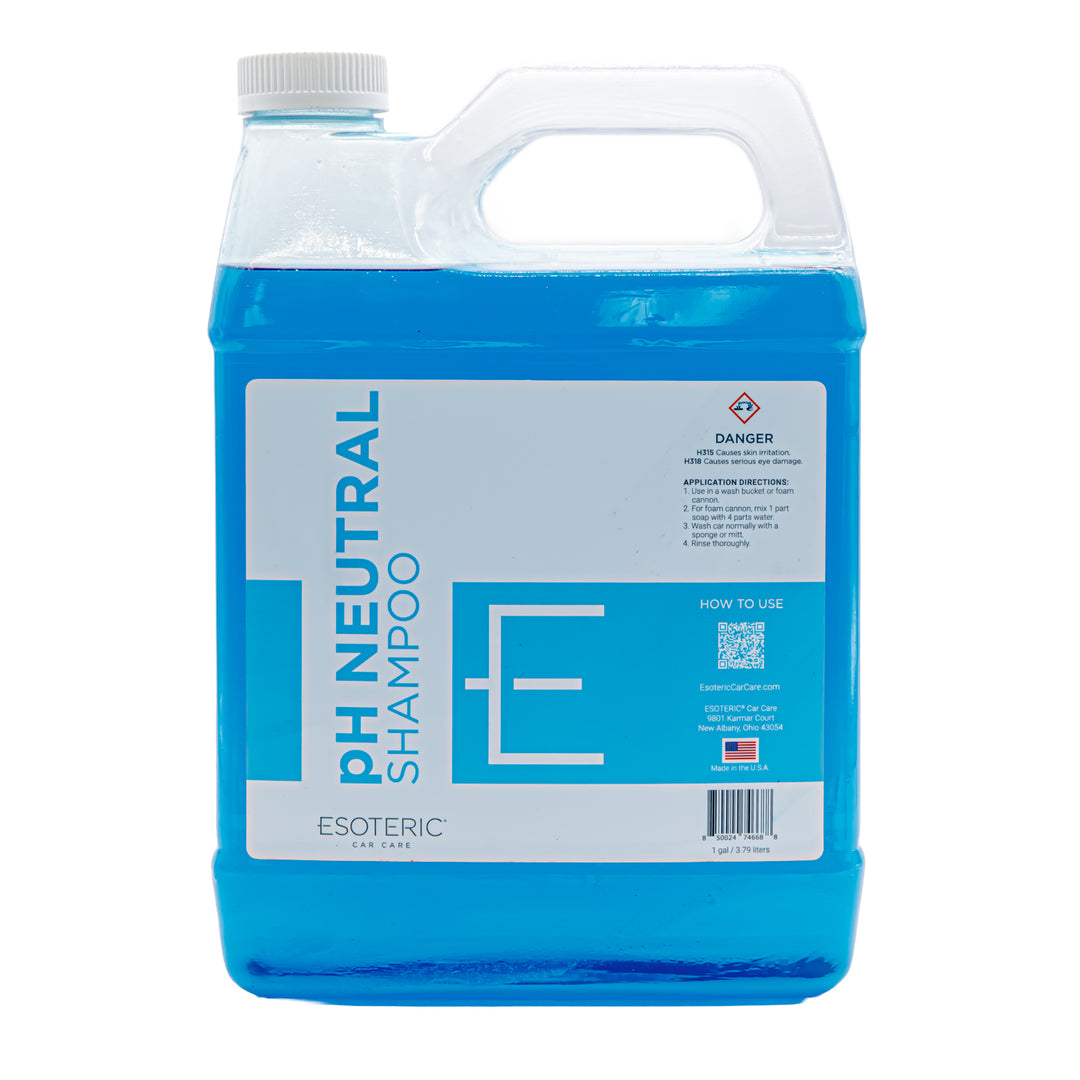
Look beyond the words “pH neutral.” A useful car shampoo should match your vehicle and your wash habits.
Check these points:
- Dilution: A concentrated formula may last longer, but only when measured correctly.
- Lubrication: Look for a product made for contact washing.
- Residue: Some shampoos add gloss or polymers. These may change the finish or water behavior.
- Coating compatibility: Follow the coating maker’s instructions.
- Surface coverage: Confirm whether it is safe for paint, glass, plastic, wheels, and trim.
- Fragrance and dye: These do not prove cleaning power or safety.
- Product directions: Use the label as the main guide.
- Environmental claims: Look for clear standards or certifications instead of broad claims.
The best choice for most drivers is a mild automotive shampoo that cleans routine dirt, provides good lubrication, rinses clean, and fits the protection already on the vehicle.

Frequently Asked Questions
Does pH-neutral car shampoo remove wax?
It may reduce wax over time through washing and surfactant action, but it is generally less aggressive than a strong alkaline or acidic cleaner. If preserving wax is a priority, choose a shampoo labeled as wax-safe and follow the wax maker’s care instructions.
Can I use pH-neutral shampoo on a ceramic coating?
Often, yes. Many ceramic coating makers recommend a pH-neutral shampoo for routine maintenance. However, the coating manufacturer’s instructions control. Some products add gloss agents or polymers that may change how the coating feels or beads.
Is pH-neutral shampoo safe for matte paint?
It may be, but confirm that the label specifically allows matte or satin finishes. Avoid wax, glaze, and gloss-enhancing shampoos unless the finish maker approves them.
Can pH-neutral shampoo remove hard-water spots?
Usually not. Hard-water spots contain mineral deposits that may need a dedicated water-spot remover. Remove them carefully and follow the product directions. Do not use an acid cleaner on an unknown or damaged surface without checking compatibility.
How often should I wash my car with pH-neutral shampoo?
Wash when the vehicle has visible dirt, road salt, bird droppings, or other contamination. Many drivers wash about every one to two weeks, but weather, parking conditions, mileage, and local road treatments change the need.
Is pH-neutral shampoo safe for car windows?
A product made for automotive washing is usually suitable for exterior glass when used as directed. It may leave a film if it contains gloss additives. Use a dedicated automotive glass cleaner when a streak-free finish is needed.
What should I do if the shampoo leaves spots?
Rinse the vehicle with clean water and dry it before the solution evaporates. If spots remain, they may be mineral deposits rather than soap. A dedicated water-spot product may be needed.
Conclusion
Use pH-neutral car shampoo for regular vehicle washing because it offers mild cleaning, useful lubrication, and broad compatibility with paint, clear coat, trim, wax, sealants, and many coatings. It is a strong default for routine dirt, but it is not a cure for every contaminant.
The safest method is simple: use the correct dilution, rinse loose grit first, wash from top to bottom, keep wheels separate, prevent the soap from drying, and choose a specialized cleaner when the dirt requires one.
For most vehicles, the next step is to check the car’s finish and protection system, then select a labeled automotive shampoo that matches both.