Introduction
Most carwashes in the United States use commercial vehicle wash soap, not human shampoo. The product may be called carwash detergent, tunnel soap, foam detergent, presoak, or auto shampoo.
A modern carwash may use several chemical products in one wash. These can include a presoak to loosen dirt, a foaming soap to clean the paint, a rinse aid to help water run off, and a drying agent. The exact formula depends on whether the wash is touchless, brush-based, or self-service.
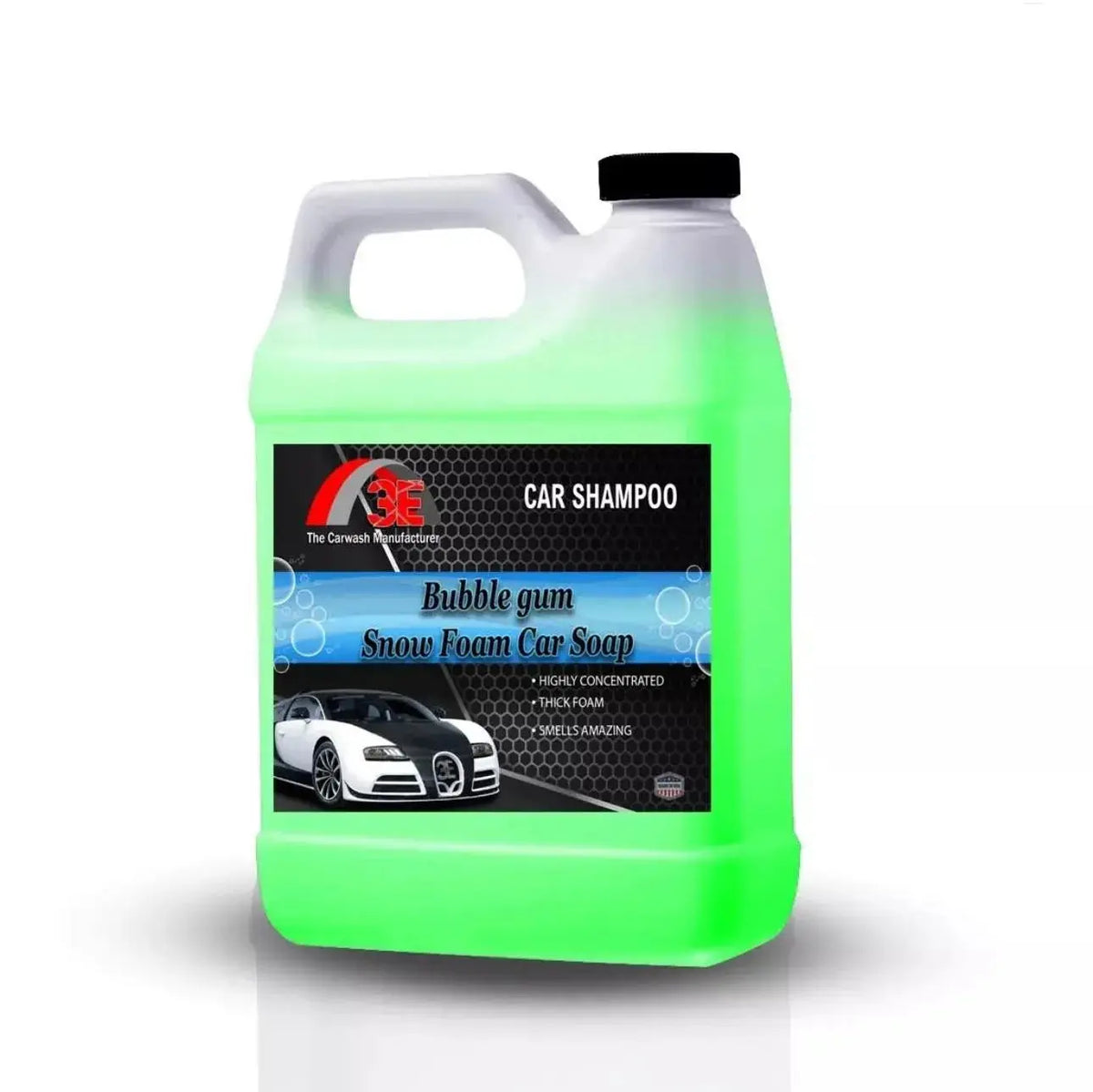
The Short Answer: Commercial Car Wash Soap
Carwashes use highly concentrated automotive detergents made for vehicle paint, glass, plastic, rubber, and metal. These products are mixed with water before use.
Commercial carwash soap is designed to:
- Lift road film, dust, grease, and traffic dirt
- Create thick foam or visible lubrication
- Reduce friction during brush contact
- Rinse away without leaving heavy residue
- Work in automatic dosing systems
- Perform in hard or soft water
- Support high-pressure or low-pressure spray systems
The soap is not always a simple pH-neutral shampoo. Many carwashes use a chemical system with different products for different steps.
A typical automatic carwash may use:
- Alkaline presoak to break down oily road film
- Foaming detergent to clean the vehicle
- Brush lubricant to reduce contact friction
- Acid rinse or conditioner to remove mineral deposits
- Drying aid to help water slide off
- Wax or sealant product for short-term gloss and water beading
The wash name on the sign does not always reveal which chemicals the operator uses. Each carwash chooses products based on its equipment, water quality, local rules, and cleaning goals.
What Is Car Wash Shampoo?
Car wash shampoo is a water-based cleaner made for vehicle surfaces. It contains surfactants, which are cleaning agents that help water spread and lift dirt.
Some products also contain:
- Foam boosters
- Water softeners
- Lubricants
- Solvents
- Fragrance
- Dyes
- Gloss agents
- Wax or polymer additives
- Corrosion inhibitors
A surfactant helps loosen the bond between dirt and a surface. Water can then carry the dirt away. In a tunnel wash, the soap also helps brushes move across the vehicle with less drag.
Commercial formulas are often sold as concentrates. A small amount may be mixed with a large amount of water. The correct dilution is set by the manufacturer and adjusted by the carwash operator.
Do not assume that more foam means better cleaning. Foam makes the wash easy to see, but cleaning power also depends on contact time, water pressure, chemistry, temperature, and rinsing.
What Soap Does a Touchless Carwash Use?
A touchless carwash usually uses a chemical presoak and high-pressure water, rather than rotating brushes.
The presoak often has a higher or lower pH than a normal car shampoo. Its job is to loosen different types of soil before the pressure rinse.
A touchless system may use:
- An alkaline cleaner for oily road film
- An acidic cleaner for mineral scale and road salt
- A low-foam detergent
- A high-pressure rinse
- A spot-free rinse
- A drying agent
Touchless washes need stronger chemical action because they do not use brushes or wash mitts. However, the result can vary. Heavy mud, baked-on bugs, and thick road film may not come off fully without gentle hand cleaning.
The chemical strength also depends on dilution. A strong concentrate in the storage tank does not mean the same strong solution reaches the vehicle. The equipment meters and mixes the product before application.
What Soap Does a Brush or Tunnel Carwash Use?
A brush-based tunnel carwash commonly uses foaming tunnel detergent or friction soap. This soap creates a lubricating layer between the vehicle and the wash material.
The goal is not just to make suds. The soap helps:
- Loosen dirt before brushes touch the paint
- Carry suspended dirt away
- Make brush movement smoother
- Limit dry contact with the vehicle
- Improve the appearance of the finished wash
The condition of the brushes matters as much as the soap. Dirty or poorly maintained wash material can hold grit. In that case, even good detergent may not prevent every mark.
A tunnel wash may apply foam through arches, spray bars, or curtain systems. The product can look white, blue, red, or another color because of added dye. Color does not prove that one product cleans better than another.
Do Carwashes Use Dish Soap?
Professional carwashes generally do not use ordinary dish soap. They use products made for vehicle washing and commercial equipment.
Dish soap can remove grease well, but it is not designed for the full carwash process. It may remove protective wax more quickly than a mild car shampoo. It also may not work well in automatic dosing pumps or large wash systems.
This does not mean every dish soap contact will damage paint. A single wash will not normally strip clear coat by itself. The bigger concern is repeated use, poor rinsing, surface drying, or washing in direct sun.
For home washing, use a product labeled for cars. Follow the label dilution. Avoid using commercial carwash concentrate unless the label gives instructions for consumer use.

The Main Types of Carwash Chemicals
The word “shampoo” can describe only one part of the wash. These are the main product types used in U.S. carwashes.
| Product type | Main job | Where it is used |
|---|---|---|
| Presoak | Loosens road film and heavy dirt | Before the main wash |
| Foaming detergent | Cleans and lubricates the surface | Foam arch or wash stage |
| Friction soap | Supports brush contact | Tunnel wash |
| Touchless detergent | Helps high-pressure water remove soil | Touchless bay |
| Acid conditioner | Helps remove minerals and improves rinsing | Near the final rinse |
| Drying aid | Helps water sheet or blow off | Final rinse and dryer |
| Wax or sealant | Adds temporary gloss and water behavior | Optional final step |
| Spot-free rinse | Reduces visible water spots | Final rinse |
One product may perform more than one task. The formula and equipment decide how the chemical is used.
Presoak
Presoak is applied before the main wash. It helps soften dirt, grease, bug residue, and road film.
Many operators use different presoaks for different parts of the wash. A high-alkaline product may target oily soil. An acidic product may target mineral deposits. The operator must use the product at the correct concentration and contact time.
Foam Detergent
Foam detergent gives the wash its visible suds. It also adds surfactants and lubricants that help clean the vehicle.
Foam does not replace rinsing. If soap dries on paint or glass, it can leave spots or a film. Carwashes control this risk with timed applications and rinse stages.
Drying Aid
A drying aid changes how water behaves on the surface. It may help water sheet off or form droplets that dryers can remove.
A drying aid is not the same as a full paint sealant. It may provide a short-term appearance benefit, but the effect depends on the formula, weather, surface condition, and prior protection.
Wax or Sealant
Many carwashes offer a product called wax, hot wax, ceramic protectant, or clear coat protectant. These names can describe different formulas.
An automatic wash protectant usually offers a brief cosmetic benefit. It should not be treated as a replacement for a properly applied long-term paint coating or hand-applied wax.
What Makes Commercial Carwash Soap Different?
Commercial carwash soap must work in a large, fast system. It must mix with water, move through pumps, spray evenly, and rinse within a short time.
The main differences from home car shampoo include:
- Higher concentration
- Use in metering systems
- More foam or controlled foam
- Greater tolerance for hard water
- Special formulas for brushes or pressure nozzles
- Compatibility with reclaim-water systems
- Use across many vehicles each day
Some carwashes reuse and treat part of their water. A soap made for reclaim systems may be different from a product intended only for fresh water.
This is one reason a commercial product may not be suitable for a bucket wash at home. The label, dilution instructions, and water conditions matter.
Is Carwash Soap Safe for Paint?
Carwash soap is generally intended to be safe for automotive finishes when the operator uses the correct product, dilution, equipment, and process.
That does not mean every carwash is equally gentle. The final result also depends on:
- The age and condition of the paint
- Existing scratches or clear-coat failure
- Brush cleanliness
- Water quality
- Chemical concentration
- Contact time
- Whether the soap dries before rinsing
- The type of dirt on the vehicle
Modern vehicles normally have a clear coat over the colored paint. A carwash detergent is meant to clean the surface without harming that coating under normal use.
A carwash cannot remove every risk. Grit trapped in a brush can cause fine marks. Strong chemicals can cause problems if misapplied. Poorly rinsed products can leave residue on glass, trim, or paint.
If your vehicle has peeling paint, loose trim, a damaged convertible top, or a recently repaired panel, ask the wash operator about the safest wash method.
Commercial Carwash Soap vs. Home Car Shampoo
Both products clean vehicles, but they are made for different settings.
| Feature | Commercial carwash soap | Home car shampoo |
|---|---|---|
| Main setting | Automatic or self-service equipment | Bucket, foam cannon, or hand wash |
| Concentration | Often very high | Usually lower |
| Dosing | Pump or injector system | Measured by the user |
| Foam | Often made for visual coverage | Varies by product |
| Water conditions | May support hard or reclaimed water | Depends on product |
| Contact method | Brushes, spray, or pressure | Wash mitt or foam |
| Main risk | Wrong machine dilution | User overuse or poor rinsing |
A home user should not copy a commercial carwash formula by guessing. Use the directions on the bottle. If the product is labeled for professional equipment only, choose a consumer vehicle shampoo instead.
How to Find Out Which Shampoo a Local Carwash Uses
Carwashes do not always publish their chemical list. You can still ask for useful information.
Ask these questions:
- Do you use a vehicle-safe detergent made for automatic carwashes?
- Is the wash touchless or brush-based?
- Do you use reclaimed water?
- Do you offer a final spot-free rinse?
- What product is included in the wax or protectant option?
- Can I review the product label or safety data sheet?
A Safety Data Sheet, or SDS, lists hazards, handling steps, storage guidance, and emergency information. It does not prove that a product gives the best shine or protects paint. It helps identify how the chemical should be handled.
The carwash operator may use more than one product. Asking for “the shampoo” may not identify the presoak, detergent, drying aid, or protectant separately.

Common Mistakes About Carwash Shampoo
Mistake 1: Assuming every carwash uses the same soap
Carwashes use different chemical systems. A touchless bay may use a different cleaner from a soft-cloth tunnel.
Mistake 2: Treating foam as proof of cleaning power
Foam is easy to see, but it is not a direct measure of cleaning ability. Contact time, water pressure, brush condition, and rinsing also matter.
Mistake 3: Calling every final-step product “wax”
A final rinse product may be a drying aid, polymer, or temporary protectant. The name on the menu may be broad.
Mistake 4: Using commercial concentrate at home without checking the label
Commercial products can be much stronger than consumer shampoos. Incorrect dilution may leave residue or create a safety risk.
Mistake 5: Expecting touchless washing to remove all dirt
Touchless washes reduce brush contact, but they may leave bonded dirt, bugs, or heavy road film. A safe hand wash may be needed later.
Mistake 6: Ignoring the vehicle’s condition
A wash cannot repair failing clear coat, deep scratches, or damaged trim. It only cleans the surface.
What Should You Use at Home?
Use a pH-balanced car shampoo labeled for hand washing if you wash your vehicle at home. Use clean wash media, rinse often, and keep the surface wet until the final rinse.
A simple home process is:
- Park in shade when possible.
- Rinse loose dirt from the vehicle.
- Mix the shampoo at the label rate.
- Wash from the top down.
- Rinse the mitt often.
- Rinse the vehicle fully.
- Dry with a clean microfiber towel or suitable air dryer.
Do not let soap dry on the paint or glass. Do not use a household cleaner unless its label clearly says it is safe for automotive surfaces.
If the vehicle has ceramic coating, matte paint, vinyl wrap, or a special finish, follow the care instructions for that finish. Some coatings and wraps have specific cleaning limits.
Safety and Environmental Limits
Commercial carwash chemicals should be handled according to the product label and SDS. Operators may need gloves, eye protection, ventilation, chemical storage controls, and spill procedures.
Do not mix acidic and alkaline products unless the manufacturer specifically permits it. Do not transfer chemicals into unmarked containers. Keep concentrates away from children, pets, drains, and food areas.
Commercial carwashes also manage wastewater and chemical discharge under local, state, and federal requirements. Rules vary by location. A professional operator is responsible for using the wash system and disposing of wastewater in a lawful manner.
For home washing, check local rules before allowing soapy water to flow into a storm drain. Storm drains may lead to waterways without normal wastewater treatment.
The U.S. Environmental Protection Agency’s Safer Choice program explains how some cleaning products are assessed for safer chemical ingredients. OSHA provides general information on hazard communication and Safety Data Sheets. These resources help with chemical handling, but they do not approve every carwash product or certify its cleaning performance.
FAQs About Carwash Shampoo
Is carwash shampoo the same as car soap?
They are similar terms. “Car soap,” “car shampoo,” and “vehicle wash detergent” can all describe a cleaner made for automotive surfaces. The formula may differ based on whether it is for hand washing, tunnel equipment, or touchless equipment.
Does carwash soap remove wax?
Some stronger detergents and presoaks may reduce or remove some wax protection over time. A mild car shampoo is less likely to do so when used correctly. An automatic wash may also apply a new temporary protectant during the final step.
Is touchless carwash soap stronger than regular car shampoo?
It can be. Touchless systems rely more on chemical action and water pressure because they do not use brushes. The actual strength depends on the product, dilution, soil, water temperature, and equipment settings.
Can I buy the same soap used at a carwash?
Sometimes. Many commercial products are sold through carwash supply companies, but they may be intended for trained operators or specific machines. Check the label, dilution rate, equipment requirements, and safety data before buying one.
Why does carwash soap have different colors?
Color often comes from dye. It may help show where foam has been applied or support a themed wash experience. Color alone does not show cleaning strength or paint safety.
Does more expensive wash soap protect paint better?
Not necessarily. Paint results depend on the whole process, including dirt removal, brush condition, rinsing, and drying. A more expensive menu option may include a protectant, but its effect and duration depend on the product and vehicle surface.
Final Answer
The shampoo used at most U.S. carwashes is commercial automotive wash detergent. It may include a presoak, foaming soap, brush lubricant, drying aid, or temporary wax product.
Touchless washes often rely on stronger chemical cleaning plus high-pressure water. Brush tunnels use foaming, lubricating detergent to support contact cleaning. For home washing, use a car shampoo labeled for consumer use rather than guessing with commercial concentrate or household soap.
The best next step is to ask your local carwash whether it uses a touchless or friction system and whether it can provide the product label or SDS. That will tell you more than the word “shampoo” on the menu.