Introduction
For most car owners in the United States, the best car shampooer is a compact portable carpet and upholstery extractor. The BISSELL Little Green line is a strong all-around choice because it can spray cleaning solution, scrub fabric, and recover dirty water from seats, carpets, and floor mats. The Hoover CleanSlate is another useful option, especially for spot cleaning.
The right machine depends on the job. A small extractor works well for routine stains and cloth interiors. A larger heated extractor may suit professional detailers. A wet/dry vacuum alone can remove liquid, but it does not apply and rinse cleaning solution in the same way.
This guide explains what a car shampooer does, which features matter, how to use one safely, and when a different tool is better.

What Is a Car Shampooer?
A car shampooer is a spray-and-extract cleaning machine for fabric surfaces. It applies a small amount of water and cleaning solution, agitates the fabric, and then pulls the dirty liquid back into a separate tank.
The term “car shampooer” can mean several different products in U.S. stores:
- A portable carpet extractor for seats and carpets
- A wet/dry vacuum used after hand cleaning
- A steam cleaner
- A foaming interior cleaner
- A pressure washer for exterior car washing
These tools do different jobs. A portable extractor is usually the best match when the goal is to clean cloth seats, carpets, door panels, and floor mats.
How an extractor works
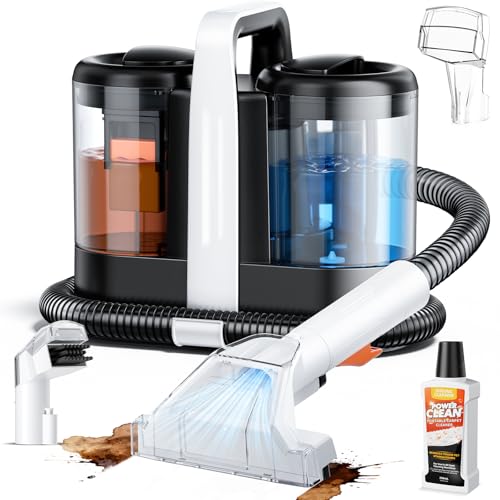
Most portable extractors have four main parts:
- Clean-water tank: Holds water and approved cleaning solution.
- Spray nozzle: Applies the liquid to the surface.
- Brush or tool head: Helps loosen soil from the fabric.
- Recovery tank: Stores the dirty water pulled from the surface.
The machine does not magically remove every stain. Its main advantage is that it combines controlled moisture with suction. This lets the user rinse away loosened dirt instead of leaving all of it in the fabric.

Best Car Shampooers for Different Needs
There is no single best model for every vehicle. The best choice changes with the size of the interior, cleaning frequency, storage space, and type of stain.
Best overall for most car owners: BISSELL Little Green
The BISSELL Little Green Portable Carpet Cleaner is a practical general-purpose choice for small fabric areas. It is widely designed around spot cleaning, which fits car interiors well.
Why it works well for cars:
- Compact body for home storage
- Separate clean and dirty water tanks
- Spray and suction in one tool
- Small nozzle for seats and floor areas
- Useful for both vehicles and household upholstery
Its main limitation is capacity. A small tank may require more refills when cleaning a large SUV, minivan, or heavily soiled interior. It also may not dry fabric quickly if the user applies too much liquid.
BISSELL sells several Little Green variants, and the included tools and features can differ. Check the exact model page and manual before buying. Do not assume that every Little Green model has the same heater, hose length, or attachment.
Best for quick spot cleaning: Hoover CleanSlate
The Hoover CleanSlate Portable Carpet and Upholstery Spot Cleaner is another suitable option for vehicle interiors. It is aimed at stains and small areas rather than whole-room carpet cleaning.
It may fit a buyer who wants:
- A portable machine for occasional spills
- A narrow tool for seats and carpet
- Easy storage in a garage or utility room
- A dedicated unit instead of a full-size carpet cleaner
As with any compact extractor, the trade-off is limited tank size and slower progress on a complete vehicle. Compare the exact CleanSlate version because Hoover has sold more than one configuration.
Best for heavier or repeated work: a larger professional extractor
A professional detailer may need a larger machine from a company such as Mytee or another commercial equipment maker. These units can offer larger tanks, stronger construction, longer hoses, or more sustained use.
A larger extractor makes sense when:
- You clean several vehicles each week
- You need long hose reach
- You work on large vans or trucks
- Downtime for refilling is costly
- The machine will be transported and used often
The trade-off is price, weight, storage space, and more complex maintenance. A large unit is usually unnecessary for a person who cleans one sedan a few times each year.
Best alternative for delicate surfaces: a low-moisture or steam method
An extractor is not ideal for every interior. Leather, vinyl, suede-like microfiber, headliners, and electronic areas need different care.
Use a suitable product or method for:
- Leather seats
- Vinyl dashboards
- Alcantara-style trim
- Headliners
- Switches and screens
- Areas near air bags and wiring
Steam can help with some hard surfaces, but high heat and moisture can damage adhesives, coatings, plastics, or sensitive electronics. Always follow the vehicle maker’s care guidance and the tool maker’s instructions.
| User need | Best tool type | Main trade-off |
|---|---|---|
| Occasional cloth-seat stains | Compact portable extractor | Small tanks |
| Full interior cleaning at home | Portable extractor with a narrow tool | Requires drying time |
| Frequent professional detailing | Commercial extractor | Higher cost and weight |
| Leather or vinyl care | Dedicated interior cleaner and cloth | Not a shampooing job |
| Exterior body washing | Car wash soap and hose or pressure washer | Does not clean fabric |

What Features Matter in a Car Shampooer?
The most useful features are controlled spray, real extraction, a small upholstery tool, and easy cleanup. Extra features matter less than these basics.
Strong suction
Suction removes water and suspended dirt from the fabric. Strong suction can shorten drying time, but suction ratings are not always measured in the same way between brands. Do not compare a marketing number from one model with a different number from another as if they were equal lab results.
Look for:
- A sealed recovery tank
- A tool that sits flat on fabric
- A hose that does not kink easily
- A reputation for reliable water recovery
- A tool designed for upholstery or auto interiors
Controlled water flow
More water is not always better. Excess moisture can soak seat foam, padding, carpet backing, and insulation. It can also create odors if the vehicle stays damp.
A good machine should let you apply a small amount of solution. The operator should make several light passes rather than flood the surface.
Narrow cleaning tools
A small nozzle is useful because car seats and carpet sections are narrow. It can reach:
- Seat bolsters
- Foot wells
- Door pockets
- Carpet edges
- Around seat rails
- Small spills
A wide floor head may clean faster, but it can be awkward inside a vehicle.
Separate tanks
Separate clean and dirty water tanks help prevent used water from being sprayed back onto the surface. They also make it easier to see how much liquid the machine has recovered.
Easy maintenance
After each use, the user should be able to:
- Empty the dirty-water tank
- Rinse the recovery tank
- Flush the hose and tool
- Clean the nozzle
- Store the machine dry
A machine that is hard to clean can develop odor and residue. Maintenance is part of the product’s real value.
Heat and built-in heaters
Some carpet cleaners advertise heated cleaning. Heat may help dissolve certain soils, but it does not replace good technique. High heat can be unsuitable for some vehicle materials.
For a car, controlled moisture and good drying often matter more than a built-in heater. Check the owner’s manual before using heated water or a heated function on delicate fabric.

How to Shampoo Car Seats and Carpets Correctly
The safest process is to vacuum first, test a hidden area, use minimal solution, extract thoroughly, and dry the interior before closing the vehicle.
What you need
Prepare:
- A portable extractor
- Manufacturer-approved cleaning solution
- A vacuum cleaner
- Soft interior brushes
- Clean microfiber towels
- A fan or open-air drying area
- A small detailing brush for seams and crevices
Read both the vehicle-care instructions and the extractor manual. Some machines require a specific solution or a measured amount of concentrate.
Step 1: Remove loose dirt
Take out floor mats and remove trash. Vacuum the seats, carpet, seams, and floor wells before adding liquid.
Dry soil turns into mud when wet. Vacuuming first reduces that problem and helps the extractor work more efficiently.
Step 2: Check the material
Confirm that the surface is fabric or another water-safe material. Avoid soaking:
- Headliners
- Leather
- Suede-like trim
- Electronic controls
- Seat-belt retractors
- Areas near air-bag covers
- Exposed wiring or connectors
If a seat has ventilation, heating, or electrical controls, use very little moisture around those components.
Step 3: Test a hidden area
Apply a small amount of diluted solution to an unseen section. Check for:
- Color transfer
- Bleeding
- Light or dark rings
- Texture changes
- Adhesive failure
- Unusual odor
Let the test area dry before deciding to continue. A wet test can hide a color change until the material dries.
Step 4: Treat visible stains
Use the correct product for the stain. Grease, coffee, food, mud, and pet contamination may need different approaches.
Do not mix cleaners. Combining bleach, ammonia, acids, solvents, or other chemicals can create harmful fumes or damage the surface.
Step 5: Apply a light spray
Spray a small section. Work in manageable areas instead of soaking the entire seat.
For a car seat, a controlled pass is usually better than repeated wet spraying. The goal is to loosen soil without saturating the cushion.
Step 6: Agitate gently
Use the machine’s brush or a soft interior brush. Follow the fabric grain when possible. Aggressive scrubbing can damage fibers, create fuzz, or spread a stain.
Step 7: Extract slowly
Place the tool flat on the surface and pull it back slowly. Make extra suction-only passes if the machine allows it.
A slow dry pass often removes more moisture than another wet pass. Stop adding solution when the recovered water becomes clearer and the soil has lifted as much as practical.
Step 8: Dry the vehicle
Leave doors or windows open in a safe, dry place. Use fans to move air through the cabin.
Do not close a damp vehicle and leave it in the sun without ventilation. Trapped moisture may cause a musty smell or encourage mold growth. The surface should feel dry, not cool and clammy, before the vehicle is closed for long storage.
Signs the process worked
You should see:
- Less visible soil
- No sticky cleaner residue
- Fabric that feels close to its original texture
- A clean smell rather than a strong chemical smell
- No wetness several hours later
If the fabric remains damp, stop cleaning and focus on air movement. More shampoo will not solve a drying problem.

Common Mistakes and Troubleshooting
Most poor results come from too much liquid, weak preparation, or the wrong cleaner. The machine may be working correctly even when the outcome is poor.
The seats stay wet
Likely causes:
- Too much solution was applied
- The tool was moved too quickly
- The recovery tank is full
- The suction path is blocked
- The hose or nozzle has a poor seal
What to do:
- Empty the recovery tank.
- Check the nozzle and hose for blockage.
- Make slow suction-only passes.
- Improve ventilation with doors or windows open.
- Use fans until the material is dry.
Do not keep spraying wet solution onto an already damp seat.
The interior smells musty
Likely causes:
- Foam or carpet backing stayed wet
- Dirty water remained in the machine
- Cleaner residue was left behind
- A pre-existing spill reached deep padding
Clean and dry the machine after use. Increase airflow in the vehicle. If the odor remains after the material is fully dry, the contamination may be below the surface and may require professional treatment or replacement of affected padding.
Stains return after drying
This is called wicking. Dirt from deeper layers can move toward the surface as moisture evaporates.
Try a smaller section with less liquid and more extraction. For a deep stain, repeated treatment may not work if the material or padding has been permanently discolored.
The fabric feels sticky
Too much cleaning solution or poor rinsing may leave residue. Use the extractor with clean water only if the manual permits it, then make thorough extraction passes.
Never assume that more detergent produces a cleaner result. Residue can attract new soil.
The machine loses suction
Check:
- Recovery tank level
- Tank lid and gasket
- Hose connection
- Nozzle opening
- Float shutoff
- Filter, if fitted
Turn off and unplug the machine before clearing a blockage. Follow the owner’s manual for electrical and maintenance instructions.
The stain will not disappear
Some stains are not removable without changing the material. Bleach, aggressive solvents, and hard scrubbing can cause more damage than the original stain.
A professional detailer may be appropriate when the stain involves bodily fluids, heavy mold, oil-soaked padding, or a large area. Professional help is also sensible when the vehicle has a strong odor that persists after proper cleaning and drying.
How Much Should You Spend?
A compact car extractor is usually the sensible starting point for home use. The exact price changes by model, retailer, attachments, and sales period, so compare current listings rather than relying on an old price claim.
Use this decision rule:
- Occasional use: Choose a basic portable extractor with a narrow tool.
- Several vehicles per month: Prioritize tank size, hose reach, tool quality, and warranty support.
- Professional work: Consider commercial equipment and replacement parts.
- One isolated stain: Renting a machine or hiring a detailer may cost less than buying one.
The purchase is not the full cost. Include cleaning solution, replacement tools, filters, storage space, and time for drying.
A compact extractor is usually better value when it can also clean household rugs, stairs, sofas, and fabric chairs. A commercial model earns its higher cost only when its capacity and durability will actually be used.

Key Takeaways
- The best car shampooer for most U.S. drivers is a portable upholstery extractor.
- BISSELL Little Green and Hoover CleanSlate models are practical choices for home spot cleaning.
- Choose a commercial extractor for frequent professional work, not occasional use.
- Vacuum first and use as little liquid as possible.
- Always test an unseen area before cleaning the full surface.
- Avoid soaking headliners, leather, electronics, seat-belt parts, and air-bag areas.
- Slow extraction and strong airflow matter as much as the machine itself.
- A wet/dry vacuum alone is not the same as a spray-and-extract cleaner.
Frequently Asked Questions
Is a carpet cleaner the same as a car shampooer?
Usually, yes. In this context, a car shampooer normally means a compact carpet and upholstery extractor used on vehicle fabric. A full-size household carpet cleaner can work, but it may be too large for tight vehicle spaces.
Can I use dish soap in a car shampooer?
It is better not to. Dish soap can create excess foam and leave residue. Use a cleaning solution approved by the machine maker and suitable for automotive upholstery.
Can a car shampooer clean leather seats?
Not in the same way it cleans cloth. Leather should be cleaned with a leather-safe product and then conditioned when appropriate. Excess water can enter seams and damage underlying materials.
How long do car seats take to dry?
Drying time depends on the amount of water, humidity, temperature, airflow, fabric, and seat padding. Lightly cleaned fabric may dry in a few hours, while heavily saturated foam can take much longer. Do not close the vehicle until the seats and carpet are fully dry.
Is steam cleaning better than shampooing?
Neither method is always better. Extraction is useful for rinsing and recovering soil from water-safe fabric. Steam can help with some surfaces but may damage heat-sensitive materials, adhesives, coatings, or electronics. Choose the method that matches the material.
Should I buy or rent a car extractor?
Buy one when you expect regular use or also want to clean household upholstery. Renting or hiring a professional may be more practical for a one-time deep clean.
Conclusion
For most people, the best car shampooer is a small portable extractor with controlled spray, useful suction, a narrow upholstery tool, and simple tank maintenance. A BISSELL Little Green or Hoover CleanSlate-style machine can handle common cloth-seat and carpet stains when used with care.
The machine is only one part of the result. Vacuum loose dirt first, avoid over-wetting, extract slowly, and dry the interior fully. If the surface is leather, suede-like, electronic, or deeply contaminated, use a material-specific method or contact a qualified automotive detailer.
Sources and Further Reading
- BISSELL Little Green product and support pages
- Hoover carpet cleaner and CleanSlate support pages
- U.S. Environmental Protection Agency: Mold and moisture guidance
- National Highway Traffic Safety Administration: Vehicle safety information
- Vehicle owner’s manual and upholstery-care instructions for the specific car model