How to Buff, Polish, and Wax a Car: Complete Step-by-Step Guide
To buff, polish, and wax a car, first wash and dry the vehicle, remove surface contaminants, polish the paint to correct imperfections, buff away residue, and apply wax to protect the finished surface.
In the United States, where vehicles are exposed to road salt, harsh sunlight, rain, dust, and seasonal weather changes, regular paint care can help maintain a car’s appearance and protect its finish. Buffing, polishing, and waxing are three separate detailing processes that work together to improve gloss and reduce visible paint defects.
A successful car polishing and waxing process depends on preparation, using the correct products for the paint condition, and avoiding excessive pressure or aggressive compounds. Polishing removes a very small amount of damaged clear coat to improve the surface, while wax creates a protective layer that helps preserve the shine.
Source: Bing
What Is the Difference Between Buffing, Polishing, and Waxing a Car?
Buffing, polishing, and waxing are related but different steps in automotive detailing. Understanding the purpose of each step helps prevent using the wrong product or technique.
Car polishing uses mild abrasives to remove or reduce defects such as swirl marks, oxidation, and light scratches from the clear coat. Buffing is often used to describe the machine-assisted process of spreading and working polishing compounds across the paint surface. Waxing does not correct paint defects; instead, it adds a protective layer and improves surface gloss.
Source: Bing
Buffing
Uses a pad or machine to work polishing products into the paint and remove residue while improving smoothness.
Polishing
Removes a thin layer of clear coat to reduce minor imperfections and restore clarity.
Waxing
Adds a protective coating that helps protect the polished surface from environmental exposure.
Tools and Supplies Needed to Buff, Polish, and Wax a Car
Gathering the correct supplies before starting makes the process safer and more consistent. The exact products depend on the condition of the paint and the level of correction needed.
For most DIY vehicle owners, a dual action polisher, quality microfiber towels, polishing pads, automotive polish, and wax are enough for routine paint maintenance.
Source: Bing
Car wash supplies
Use automotive shampoo, wash mitts, clean water, and drying towels to remove contaminants before polishing.
Polishing equipment
A dual action polisher, polishing pads, and suitable compound or polish help correct paint imperfections.
Protection products
Car wax, sealant, or similar paint protection products help preserve the finished surface.
Choose the Right Buffer for Your Experience Level
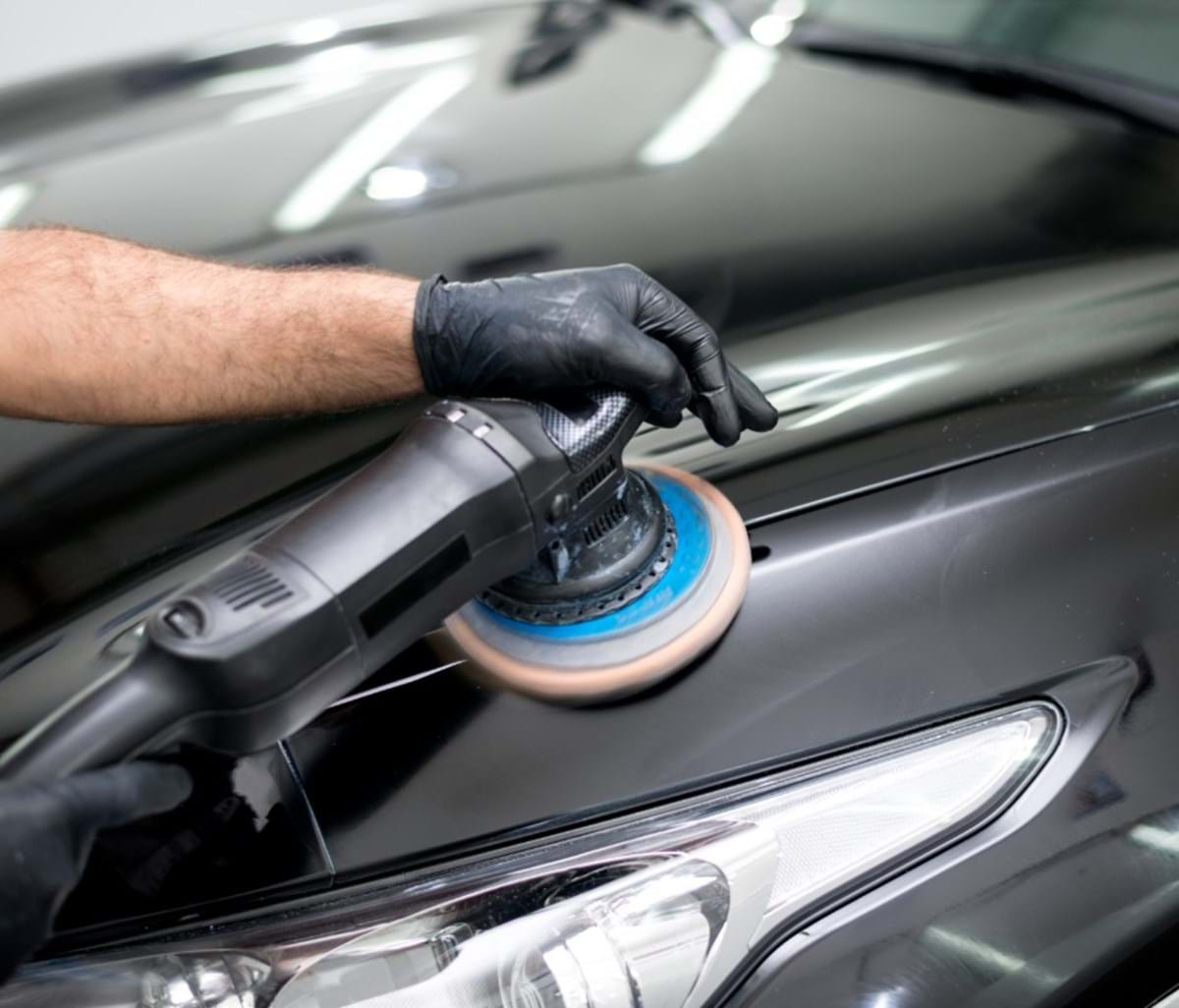
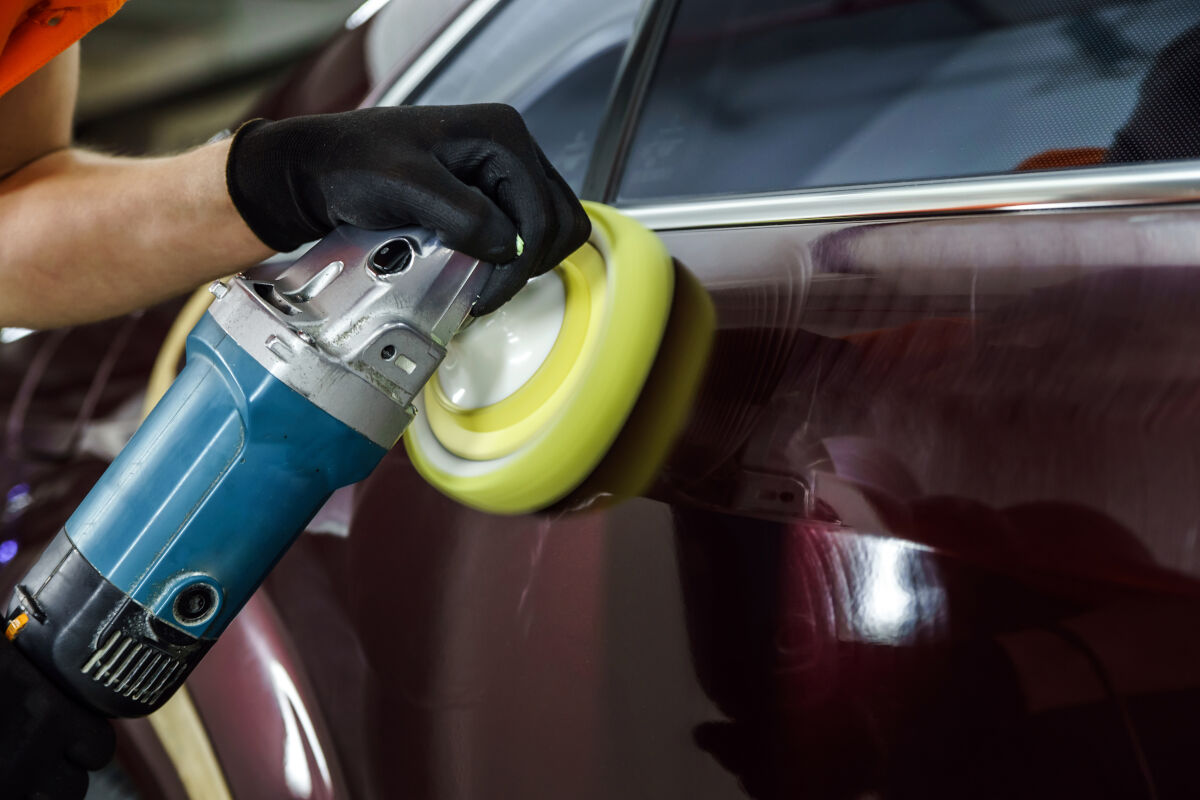
A dual action polisher is commonly recommended for beginners because its random orbital movement reduces the chance of creating severe paint damage. Rotary buffers can correct paint faster but require more skill because concentrated heat and friction can damage clear coat.
Beginner option
Dual action polishers provide better control for learning proper polishing techniques.
Professional option
Rotary buffers can provide stronger correction but require careful speed and pressure control.
How to Buff and Polish a Car Step by Step
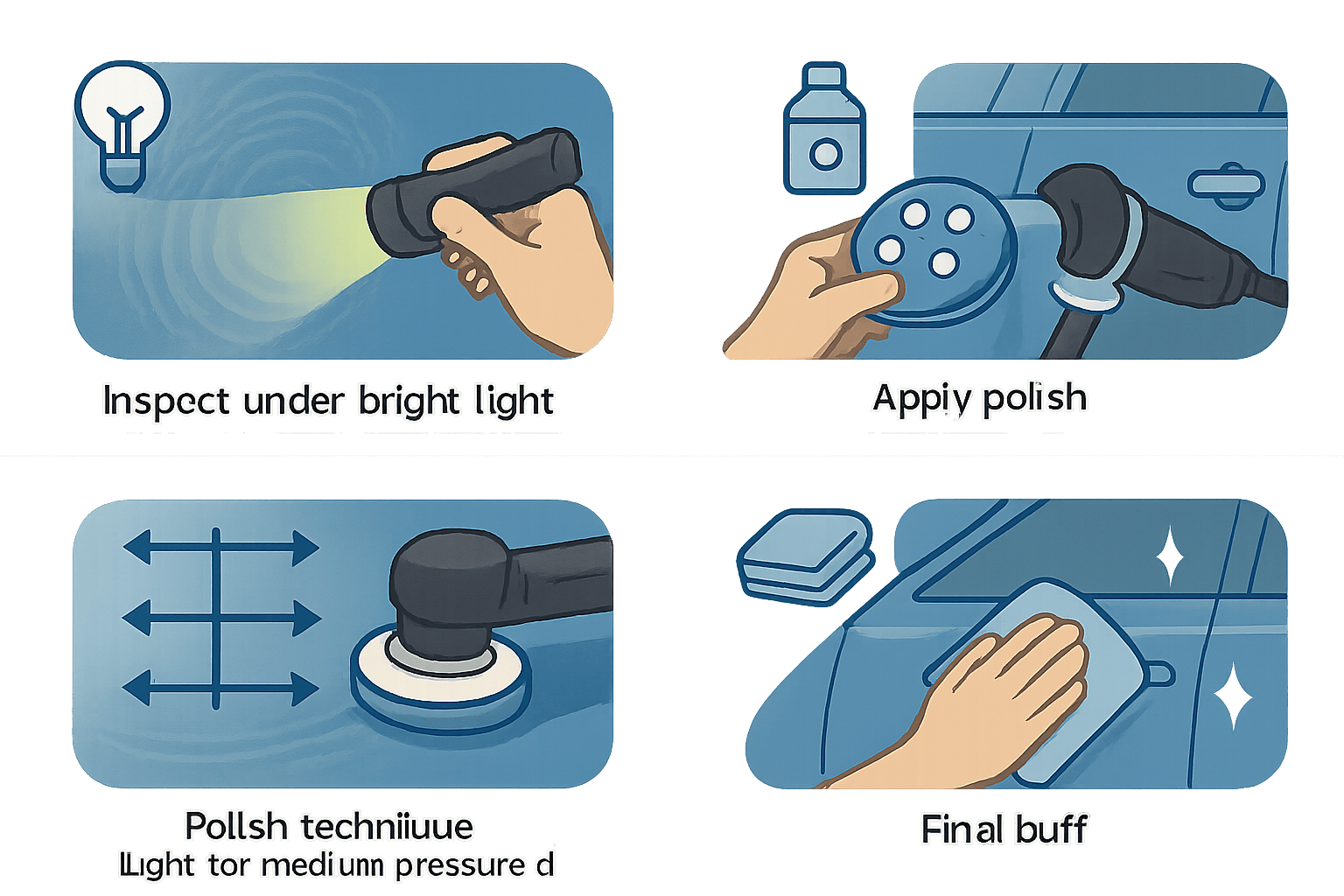
The safest way to polish a car is to work in small sections, use controlled movements, and inspect the paint regularly. Rushing the process can create uneven results or unnecessary clear coat removal.
Always test your chosen polish on a small hidden area before completing the entire vehicle.
Source: Bing
Step 1: Wash the car thoroughly
Remove dirt, mud, road film, and contaminants that could scratch the paint during polishing.
Step 2: Dry and inspect the paint
Look for scratches, oxidation, swirl marks, and areas requiring extra attention.
Step 3: Apply polish
Spread polish evenly on a small section using appropriate pad pressure and machine speed.
Step 4: Buff the residue
Use a clean microfiber towel or polishing pad to remove residue and reveal the improved finish.
How to Know When the Paint Is Properly Polished
A properly polished surface should appear clearer, smoother, and more reflective. Remaining defects may require additional correction, but excessive polishing can reduce clear coat thickness over time.
Wax should be applied after polishing because polishing prepares the paint surface while wax protects the corrected finish. Applying wax to a dirty or unpolished surface can lock in contaminants and reduce the quality of the result.
Apply a thin, even layer of wax according to the product instructions. More wax does not necessarily provide better protection and may only make removal more difficult.
Source: Bing
Prepare the surface
Make sure the paint is clean, dry, and free from polishing residue before applying wax.
Apply thin layers
Use an applicator pad and spread wax evenly over small sections.
Remove haze
Buff dried wax residue with a clean microfiber towel until the paint looks clear and glossy.
Common Mistakes When Buffing, Polishing, and Waxing a Car
Many paint problems happen because of poor preparation, excessive pressure, or using products that are too aggressive for the vehicle’s finish. Understanding common mistakes helps protect the paint.
Source: Bing
Skipping the wash step
Polishing dirty paint can spread abrasive particles and create additional scratches.
Using too much pressure
Heavy pressure can generate heat and increase the risk of damaging clear coat.
Polishing damaged paint
Deep scratches reaching primer or metal may require professional repair instead of additional polishing.
Professional assistance may be appropriate when paint is peeling, severely oxidized, has exposed metal, or requires significant correction. Incorrect polishing techniques can permanently reduce the remaining clear coat.
Professional help needed
Consider a detailer for severe paint damage or complex restoration work.
Frequently Asked Questions
Q
How often should you buff, polish, and wax a car?
Most vehicles do not need frequent polishing because polishing removes a small amount of clear coat. Waxing frequency depends on the product used, weather exposure, and washing habits.
Q
Can you wax a car without polishing it first?
Yes, waxing can be done without polishing when the paint is already in good condition. However, wax will not remove scratches, oxidation, or swirl marks.
Q
Is it better to buff a car by hand or with a machine?
Hand polishing offers more control but requires more time and may not correct deeper defects effectively. Machine polishing is faster but requires proper technique.
Q
Can polishing damage car paint?
Polishing can damage paint if aggressive products, excessive pressure, or incorrect machine techniques remove too much clear coat. Proper preparation and controlled application reduce this risk.
Q
What should you do after waxing a car?
After waxing, allow the product to cure according to the manufacturer instructions, avoid harsh washing immediately, and use gentle maintenance methods to preserve the finish.
✦ Wrapping Up
Conclusion
Learning how to buff, polish, and wax a car allows vehicle owners to improve paint appearance while protecting the finish. The key is understanding that polishing corrects imperfections and waxing protects the corrected surface.
A careful process that includes proper cleaning, suitable tools, controlled polishing, and correct wax application can help maintain a cleaner and more reflective vehicle finish.
💡 Key Takeaway
Start with a clean surface, use the least aggressive polishing method needed, and protect the finished paint with a quality wax or paint protection product.
Tyron Torres is an automotive diagnostics writer and hands-on vehicle maintenance enthusiast with years of experience troubleshooting brake systems, suspension issues, and everyday car performance problems. He specializes in breaking down complex mechanical issues into simple, practical guides that drivers can use to quickly identify and fix common vehicle faults.
Learn the different car polishing pads types, including foam, wool, microfiber, and specialty pads. Discover how to choose the right polishing pad for paint correction, scratches, and finishing.
Discover which cars support wireless Apple CarPlay, how factory wireless CarPlay works, compatible vehicle brands, and what to do if your car only supports wired CarPlay.
Learn how polishing compound for cars removes paint imperfections, reduces scratches, and restores vehicle shine. Discover types, usage steps, safety tips, and common mistakes.
Learn why your transmission whining noise at low speed happens, signs to watch, and quick fixes to save money. Expert tips to diagnose and fix it fast.