Use a tire sealant, a CO2 inflator, or transfer to a spare—safe temporary fixes without a pump.
I’ve spent years helping friends and drivers solve flat-tire headaches on the road. This guide on how to air up a car tire without a pump explains safe, practical options you can use right away. You’ll learn step-by-step methods, the tools to carry, real-world tips from my experience, and the limits of each fix. Read on to feel confident handling low air without a pump and to know when to call for professional help.
Why you might need to air up a car tire without a pump
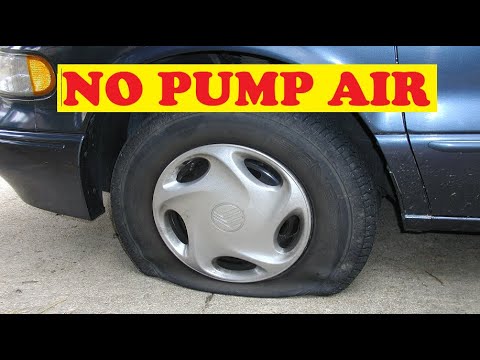
A low or flat tire can happen for many reasons. Nails, sharp debris, worn valves, potholes, and slow leaks all steal air over time. Sometimes the nearest gas station with an air pump is far away. In other situations, a pump might be broken or you might not have one on hand. Knowing how to air up a car tire without a pump gives you options to get moving or to reach help.
I’ve been stranded twice on long drives. Both times a small toolkit and a can of sealant got me to the next service stop. Learning a few safe tricks saves time and stress.
Safety first: when not to attempt DIY inflation
Tires can fail suddenly. If you see sidewall bulges, severe cuts, or hear loud thumps, do not try to inflate. Driving on a severely damaged tire risks a blowout. Use a spare or call roadside help instead.
If the rim is bent or the bead is damaged, inflation won’t seal the tire and could be dangerous. Also, if the tire is extremely hot after high-speed driving, let it cool before any repair attempt. These safety calls protect you and other drivers.

Tools and supplies to carry for no-pump fixes
Being prepared is half the battle. Keep these items in your trunk so you can handle low air without a pump:
- Tire sealant can (temporary inflator + sealant)
- CO2 cartridge inflator with valve adapters
- Tire pressure gauge (digital or stick)
- Valve core tool and replacement valve cores
- Portable jack and lug wrench
- Spare tire or donut
- Gloves, flashlight, and reflective triangle
From my experience, a small kit with sealant and a CO2 inflator weighs little and pays off in peace of mind. Both are common in auto stores and online.

Safe methods to air up a car tire without a pump
Below are the most reliable, safe approaches to inflate a tire without a pump. I list step-by-step directions and when to use each method.
CO2 cartridge inflator
- What it is: A threaded inflator that uses pressurized CO2 cartridges to add air quickly.
- When to use: Fast, temporary inflation on the roadside. Good for small to medium leaks.
- Steps:
- Park safely and apply the parking brake.
- Remove the valve cap and attach the adapter.
- Screw in the CO2 cartridge to release gas into the tire in short bursts.
- Check pressure with a gauge and stop when near recommended PSI.
- Drive slowly to a service shop for a permanent repair.
- Notes: CO2 cools rapidly and can freeze the adapter. Use gloves and short bursts. CO2 inflators give limited volume per cartridge.
Tire sealant (aerosol cans like fix-a-flat)
- What it is: A pressurized can that injects sealant and air through the valve stem.
- When to use: Quick, easy fix for small punctures and slow leaks. Best for short-term use to reach repair shop.
- Steps:
- Read the can’s instructions.
- Shake the can and attach it to the valve stem.
- Inject the sealant until the tire is firm and the can is empty or pressure is adequate.
- Drive immediately for a short distance (per instructions) to spread sealant.
- Visit a tire shop soon; the seal is temporary.
- Notes: Sealant can affect TPMS sensors and often requires professional cleaning.
Use the spare tire or donut
- What it is: Replace the flat tire with your vehicle’s spare.
- When to use: When the flat is severe or no safe seal method exists.
- Steps:
- Loosen lug nuts, jack the car, remove wheel.
- Mount the spare, tighten lug nuts, lower car, then fully tighten.
- Drive slowly and follow spare’s speed limits.
- Notes: Many spares are temporary and require short-distance travel only.
Transfer air from another tire (caution)
- What it is: Move a limited amount of air from a healthy tire to the low tire using a valve-to-valve hose and gauge.
- When to use: Emergency measure when no other options exist and pressure difference is small.
- Steps:
- Use a valve stem transfer hose with check valves and a gauge.
- Attach to both valve stems and let air balance carefully.
- Monitor pressures to avoid underinflating the donor tire.
- Notes: This is a last-resort option. It reduces pressure in a safe tire.
Call roadside assistance
- What it is: Professional help sent to your location.
- When to use: If the tire is severely damaged or you feel unsafe.
- Steps:
- Contact your provider or a towing service.
- Wait in a safe spot until help arrives.
- Notes: Might cost more, but it’s the safest option for tricky failures.
I once used a CO2 inflator on a highway shoulder. The cartridge ran out faster than I expected. That taught me to carry two cartridges and a gauge. Small prep prevents big headaches.

Step-by-step: using a tire sealant can safely
Tire sealant is the most common no-pump solution. Follow these steps to do it right.
- Park safely away from traffic and set the parking brake.
- Read the manufacturer’s instructions on the can.
- Remove the valve cap and attach the can nozzle.
- Inject the sealant while monitoring firmness by feel.
- Replace the valve cap and drive per product instructions to spread sealant.
- Get a professional repair within 24–48 hours.
Remember: sealant is temporary. My mistake once was driving too far after using sealant. The tire still needed professional patching. Always visit a tire shop.

Limitations and downsides of pump-free fixes
Every no-pump method has trade-offs. Know them before relying on one.
- Sealant can clog TPMS and requires cleaning by a shop.
- CO2 cartridges have limited air and can get cold when used.
- Spare tires are often temporary and not for long trips.
- Valve transfers risk making a good tire underinflated.
- No method replaces a professional repair for large punctures or sidewall damage.
I always tell friends: these methods buy you time and distance. They don’t replace a proper repair.

Cost, availability, and timing
Understanding cost helps you choose what to carry.
- Tire sealant can: $8–$25 depending on size and brand.
- CO2 inflator kit: $20–$60 for a handheld inflator and a few cartridges.
- Valve transfer hose: $10–$30.
- Spare tire: already included on most cars; replacement cost varies.
Buy products from auto stores or online. Keep them in your trunk, especially for long trips. From experience, a $20 kit saved me a tow fee more than once.

Repair and follow-up: what to do after a temporary fix
Temporary fixes need proper follow-up.
- Visit a tire shop as soon as possible. They will remove sealant and repair or replace the tire.
- Inspect TPMS sensors if you used sealant.
- Replace used CO2 cartridges and replenish your kit.
- Recheck all tires and wheel torque after replacing a spare.
Don’t delay. Temporary fixes mask problems and can let a slow leak become a bigger issue.
Personal tips and common mistakes to avoid
From my roadside experience, these tips keep you safe and efficient.
- Carry a small, basic kit. It takes little space and repays you when needed.
- Practice replacing a spare at home once. It reduces panic in real situations.
- Don’t overinflate using CO2—check with a gauge frequently.
- Avoid DIY valve fixes that compromise the rim or bead.
- Always prioritize safety. If unsure, wait for pros.
A few simple habits prevented longer waits for me and others. Short prep makes a big difference.
Frequently Asked Questions of how to air up a car tire without a pump
How long does tire sealant last after use?
Tire sealant is a short-term solution. It typically holds for a few days to get you to a repair shop, but you should have the tire professionally inspected within 24–48 hours.
Can I use canned compressed air to inflate a car tire?
Canned compressed air for dust cleaning is not designed for tire inflation. It may lack volume and proper pressure control, so it is not recommended for safely inflating car tires.
Will using sealant damage my tire pressure monitoring system (TPMS)?
Sealant can coat TPMS sensors and cause issues. Many shops can clean or replace affected sensors, so expect a possible shop visit after using sealant.
Are CO2 cartridges safe for car tires?
Yes, CO2 cartridges are a safe, quick option when used correctly. Use short bursts, wear gloves if needed, and check pressure frequently; cartridges have limited air capacity.
Can I drive on a tire after using a temporary fix?
You can drive for short distances at low speeds after a temporary fix to reach a service center. Follow product instructions and avoid long or high-speed trips until repaired professionally.
Conclusion
You don’t always need a pump to address a low tire. Using tire sealant, CO2 inflators, a spare, or calling roadside help are practical, safe ways to handle flats without a pump. Each option has pros and cons, so choose based on the damage and your safety. Pack a small kit, practice basic tire changes, and get professional repairs after a temporary fix. Try one of these solutions next time you face a flat, and consider subscribing or leaving a comment with your experience.