Yes, Simple Green can clean some car interior surfaces, but only when it is diluted, tested first, and kept away from sensitive materials. It works best on hard, nonporous surfaces such as plastic, vinyl, and rubber. It is not the best choice for leather, suede, screens, headliners, or delicate trim.
For most cars in the United States, a dedicated automotive interior cleaner is the safer choice. Simple Green can still help with greasy marks, dirt, and grime when you use the right product and method.

Which Simple Green Product Should You Use?
The product matters. “Simple Green” is a brand name with several cleaners, and they do not all have the same use instructions.
Simple Green Original All-Purpose Cleaner is a strong general cleaner. It is often used on hard surfaces, but the bottle directions require dilution for many jobs. Simple Green Automotive Cleaner is made for vehicle cleaning and may be a better fit for interior work.
Always read the current label before use. Product formulas and directions can change.
| Product or cleaner | Suitable interior uses | Main limits |
|---|---|---|
| Simple Green Original | Diluted plastic, vinyl, and rubber surfaces after a spot test | Can leave residue or affect sensitive finishes |
| Simple Green Automotive Cleaner | Some vehicle surfaces, when the label allows interior use | Still requires a spot test and careful use |
| Leather cleaner | Finished leather seats and trim | Use only as directed for leather |
| Interior detailer | Dashboards, trim, and general cabin surfaces | May not remove heavy grease |
| Glass cleaner | Interior windows and mirrors | Keep away from leather, screens, and soft trim |
Do not assume that a cleaner safe for an engine bay is safe for a dashboard. Vehicle interiors use many materials in a small area. Plastic, coated vinyl, leather, fabric, foam, paint, and electronics may all be next to each other.
What Interior Surfaces Can Simple Green Clean?
Simple Green is most useful on hard, washable, nonporous surfaces. These include many types of textured plastic, vinyl door panels, rubber floor mats, and plastic storage areas.
Use less product than you think you need. Spray the diluted cleaner onto a microfiber towel rather than directly onto the surface. This gives you better control and helps keep liquid away from switches, seams, speakers, and electronics.
Usually suitable with care
- Plastic door panels
- Vinyl armrests
- Rubber floor mats
- Plastic cup holders
- Hard plastic consoles
- Plastic kick panels
- Some textured dashboard plastics
The surface should be sealed and in good condition. Old plastic may have a soft-touch coating, faded dye, or a worn protective layer. A cleaner that works well on a new plastic panel may change the look of an older one.
Use extra care on these surfaces
- Painted interior trim
- Gloss-black plastic
- Soft-touch coatings
- Synthetic leather
- Cloth seats
- Carpeting
- Headliners
- Perforated seat surfaces
For these materials, use a product made for that surface when possible. If you must use Simple Green, test a hidden area first and use very little moisture.

Can You Use Simple Green on Leather Car Seats?
Simple Green is not the first choice for leather car seats. Leather may have a protective coating, but it can still react poorly to strong cleaners, degreasers, excess water, or repeated scrubbing.
Some automotive interiors also contain vinyl or synthetic leather that looks like real leather. You may not know which material you have without checking the vehicle manual or asking the manufacturer.
For leather seats:
- Vacuum loose dirt first.
- Use a leather cleaner made for automotive seats.
- Apply the product to a cloth, not directly to the seat.
- Wipe a small hidden area.
- Keep liquid away from seams and perforations.
- Dry the seat with a clean towel.
- Apply conditioner only if the leather-care instructions call for it.
Do not use a harsh cleaner to remove a small mark from leather. The mark may be less harmful than a dull, sticky, or discolored patch caused by the wrong product.
Can Simple Green Clean Car Upholstery and Carpet?
It can help with some fabric dirt, but it is not the best all-purpose choice for upholstery. Fabric seats and carpets can hold cleaner below the surface. If you use too much, the area may dry with a ring, stiff texture, or sticky residue.
For cloth upholstery or carpet, follow this process:
- Vacuum the area well.
- Check the vehicle manual and cleaner label.
- Test a hidden section for color loss.
- Mix or dilute the cleaner as directed.
- Apply a small amount to a towel or soft brush.
- Work from the outside of the stain toward the center.
- Wipe with a clean, damp cloth.
- Remove as much moisture and residue as possible.
- Let the area dry fully with good airflow.
Do not soak the headliner. Its fabric can separate from the backing or sag when it becomes too wet. Clean a headliner with a lightly damp cloth and gentle pressure, or use a product designed for headliners.
Simple Green is also not automatically a disinfectant. Cleaning removes dirt and some germs from a surface, but it does not prove that the surface has been disinfected. Use a disinfectant only when its label specifically allows use on that material and purpose.
How to Use Simple Green Safely in a Car Interior
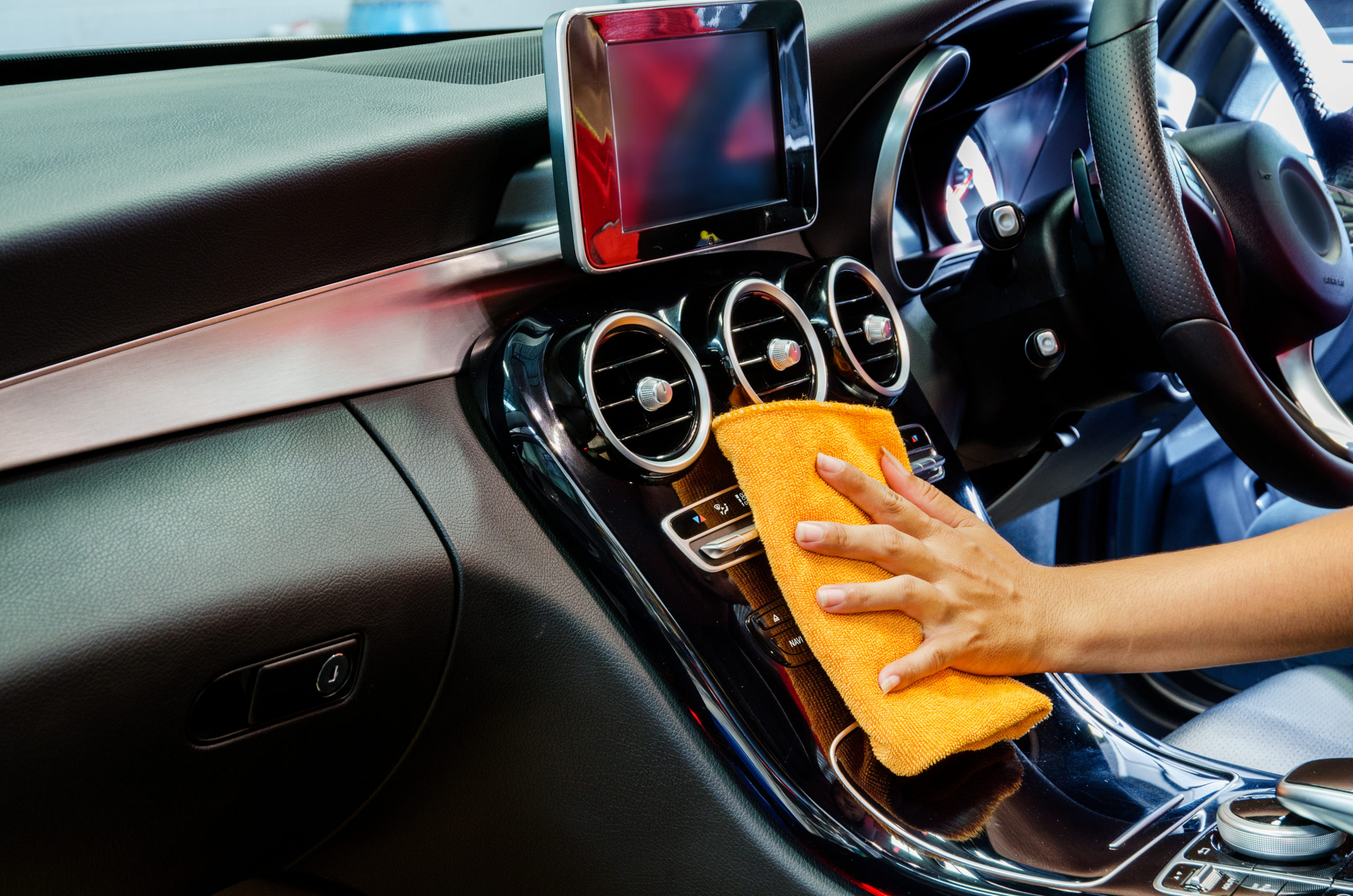
The safest method is controlled cleaning, not heavy spraying.
1. Remove loose dirt
Take out floor mats and remove trash. Vacuum dust, sand, and crumbs. Loose grit can scratch plastic and spread a stain during wiping.
2. Check the material
Identify the surface before choosing the cleaner. A rubber mat, coated leather seat, touchscreen, and cloth headliner need different care.
3. Read the label
Use the dilution ratio and application instructions on the exact Simple Green bottle. Do not guess the strength. Do not use a concentrated product when the label calls for dilution.
4. Test a hidden spot
Apply a small amount to an unseen area. Wait until it dries. Check for:
- Color change
- Dullness
- A sticky feel
- Whitening
- Streaks
- Cracking
- Dye transfer
If you see a change, stop using the product on that material.
5. Apply it to the towel
Put the diluted cleaner on a microfiber towel. Avoid spraying near:
- Touchscreens
- Instrument clusters
- Steering-wheel buttons
- Window switches
- Air vents
- Speakers
- Seat controls
- USB ports
- Airbag covers
6. Wipe gently
Use light pressure. Let the cleaner loosen dirt instead of scrubbing hard. A soft detailing brush can help with textured plastic, but do not force cleaner into seams.
7. Wipe away residue
Use a second cloth dampened with clean water. This step matters because cleaner left behind can feel sticky and attract dust.
8. Dry the surface
Use a dry microfiber towel. Leave doors open for a short time when practical so moisture can escape.
9. Inspect the result
A clean surface should look even and feel dry. It should not have a strong chemical smell, oily film, white haze, or sticky finish.

Simple Green on Common Car Interior Materials
The best answer depends on the surface. This table gives a practical starting point, but your vehicle manual and the cleaner label take priority.
| Interior material | Simple Green recommendation | Better approach |
|---|---|---|
| Hard plastic | Usually acceptable when diluted and tested | Apply to a towel and wipe dry |
| Vinyl | Often acceptable with care | Use a mild interior cleaner for regular care |
| Rubber mats | Usually suitable after removing dirt | Rinse or wipe away all residue |
| Finished leather | Avoid unless the product label clearly allows it | Use an automotive leather cleaner |
| Suede or Alcantara-style material | Do not use without material-specific approval | Use the maker’s care method |
| Cloth seats | Possible for small spots after testing | Use upholstery cleaner and low moisture |
| Carpet | Possible for spot cleaning | Extract or rinse residue when appropriate |
| Headliner | Avoid heavy use and soaking | Use a headliner-safe cleaner |
| Touchscreen | Do not spray Simple Green on it | Follow the vehicle maker’s screen instructions |
| Instrument cluster | Avoid liquid cleaners | Use a clean, dry or lightly damp microfiber cloth |
| Glass | Not the best choice | Use an automotive glass cleaner |
| Gloss-black trim | Risk of streaks and fine marks | Use a clean microfiber cloth and mild product |
What Can Go Wrong?
Most problems come from using too much product, using the wrong strength, or ignoring the material.
Sticky or greasy surface
Likely cause: Cleaner residue or a product that does not suit the finish.
Fix: Wipe the area with a clean, damp microfiber towel. Dry it well. If the film remains, use a product made for that surface.
White haze or dull patches
Likely cause: Residue, chemical reaction, or damage to a soft-touch coating.
Fix: Stop using the cleaner. Do not scrub harder. Try a clean damp towel first. If the finish remains changed, the coating may be damaged.
Faded color
Likely cause: Dye or coating instability.
Fix: Stop immediately. Do not spread the product to other areas. Take a photo and contact the vehicle maker or a professional detailer if the panel is valuable or difficult to replace.
Water marks or damp smell
Likely cause: Too much moisture trapped in fabric, foam, or carpet.
Fix: Blot rather than scrub. Improve airflow. Do not close the vehicle while the interior is still wet.
Streaks on the dashboard
Likely cause: Uneven application, excess product, or a textured finish that holds residue.
Fix: Wipe with a clean damp towel, then buff gently with a dry microfiber towel.
Never mix Simple Green with bleach, ammonia, acids, or other cleaners. Mixing household chemicals can create dangerous fumes or unwanted reactions.

Simple Green Versus a Dedicated Car Interior Cleaner
A dedicated interior cleaner is usually the better daily option because it is designed around common vehicle materials. Simple Green may offer more cleaning power on greasy grime, but stronger cleaning power also raises the risk of residue or finish damage.
Choose Simple Green when:
- You are cleaning a hard, washable surface.
- You can dilute it as directed.
- You have tested the material.
- You need to remove grime from rubber or textured plastic.
- You can control moisture and wipe the surface clean.
Choose a dedicated interior product when:
- You are cleaning leather.
- The surface has a soft-touch coating.
- The trim is glossy or painted.
- You are cleaning a touchscreen or instrument cluster.
- The material is suede-like or perforated.
- You want a product for frequent maintenance.
A mild product used often is usually safer than a strong product used aggressively. Think of interior cleaning as removing a thin layer of dust, not stripping the surface.
How Often Should You Use It?
Use Simple Green only when the surface needs stronger cleaning. It does not need to be part of every interior wash.
For routine care:
- Vacuum weekly or as needed.
- Wipe dust with a dry microfiber towel.
- Use a mild interior cleaner for light marks.
- Clean rubber mats when they become dirty.
- Use material-specific products for leather and specialty trim.
Frequent use of a strong cleaner may remove surface protectants or change the finish over time. There is no universal schedule because driving habits, pets, children, climate, and the material itself all affect how often cleaning is needed.

When Should You Avoid Simple Green Completely?
Do not use it if the label does not approve the intended surface and you cannot perform a safe spot test. Avoid it on unknown materials, valuable vintage interiors, damaged coatings, and surfaces that already show peeling or cracking.
Get professional help when:
- A chemical has already caused discoloration.
- Leather is cracked, dyed, or badly stained.
- Mold or heavy contamination is present.
- Water has entered seats, carpeting, or electronic parts.
- The interior has a strong fuel, solvent, or chemical odor.
- You need to clean around damaged airbags or electrical systems.
If cleaner enters a switch, screen, seat control, or other electrical part, stop using that control and follow the vehicle manufacturer’s guidance. Do not flood the area while trying to remove the product.
Quick Answer: Is Simple Green Safe for a Car Dashboard?
It may be safe for hard plastic dashboards when diluted and tested first, but it is not a universal dashboard cleaner. Apply it to a microfiber towel, not the dashboard. Avoid screens, vents, buttons, airbag covers, and soft-touch coatings. Wipe away residue with a clean damp cloth.
FAQs
Can I use Simple Green without diluting it inside a car?
Usually, no. Use the dilution listed on the label for the exact product and task. Concentrated cleaner increases the chance of residue, dullness, or damage.
Can I use Simple Green on car windows?
It is not the best option for interior glass. An automotive glass cleaner is more likely to dry clear and avoid streaks. Keep any cleaner away from leather, dashboard screens, and soft trim.
Does Simple Green remove smoke smell from a car?
It may clean smoke residue from some hard surfaces, but it does not guarantee odor removal. Smoke can remain in fabric, foam, carpet, vents, and headliners. Deep odor treatment may require professional cleaning.
Can Simple Green remove grease from a steering wheel?
It may remove grease from some plastic or vinyl steering-wheel surfaces, but use caution around buttons, controls, and airbag covers. A mild interior cleaner and a microfiber towel are safer for regular use.
Is Simple Green safe for car floor mats?
It is often suitable for rubber or plastic floor mats when used according to the label. Remove the mats from the vehicle, clean them outside, rinse or wipe away residue, and let them dry before reinstalling them.
Final Recommendation
Simple Green can be good for cleaning parts of a car interior, especially diluted hard plastic, vinyl, rubber, and washable mats. It is not a one-product solution for every interior material.
For the lowest risk, use a dedicated cleaner for leather, fabric, screens, headliners, and specialty trim. Whatever product you choose, test a hidden spot, use a small amount, keep liquid away from electronics, and remove all residue when finished.