How to Polish and Wax a Car: Complete Step-by-Step Guide for a Professional Finish
To polish and wax a car, first wash and dry the vehicle, remove contaminants, apply polish to correct paint imperfections, then apply wax to add a protective layer and enhance shine.
For drivers across the United States, maintaining a vehicle’s paint is especially important because cars are exposed to road salt, UV rays, rain, dust, bird droppings, and seasonal weather changes. Learning how to polish and wax a car at home can help restore gloss and protect the clear coat when the process is done correctly.
Car polish and car wax serve different purposes. Polish uses mild abrasives to improve the appearance of paint by reducing the visibility of swirl marks, oxidation, and light defects, while wax creates a protective barrier that helps the finish stay cleaner and shinier. The best results come from preparing the surface properly and using the correct technique for your vehicle’s paint condition.
Source: Bing
What You Need Before Polishing and Waxing a Car
Before starting, gather the correct tools and choose a suitable location. A shaded area such as a garage or covered driveway is preferred because direct sunlight can make polish and wax dry too quickly, making them harder to remove.
The condition of the paint determines whether you need only waxing or a full polishing process. A newer vehicle with good paint may only need cleaning and protection, while older paint with oxidation or swirl marks may benefit from polishing first.
Source: Bing
Car wash supplies
Use automotive soap, microfiber towels, a wash mitt, and clean water to remove dirt without creating additional scratches.
Polishing products
Choose a car polish based on the severity of imperfections. Light polishes are generally safer for minor defects.
Wax or paint protectant
Wax helps protect the polished surface and can improve gloss after paint correction.
Application tools
Use microfiber applicators, polishing pads, and separate towels for different steps to prevent contamination.
Check Your Paint Condition First
Inspect the vehicle under good lighting before applying any product. Look for swirl marks, faded areas, water spots, scratches, or rough-feeling contamination. Deep scratches that expose primer or metal usually require professional repair rather than simple polishing.
Minor imperfections
Light swirls and dullness may improve with polishing.
Major damage
Peeling clear coat, deep scratches, or rust require repair beyond waxing.
How to Polish a Car Step by Step
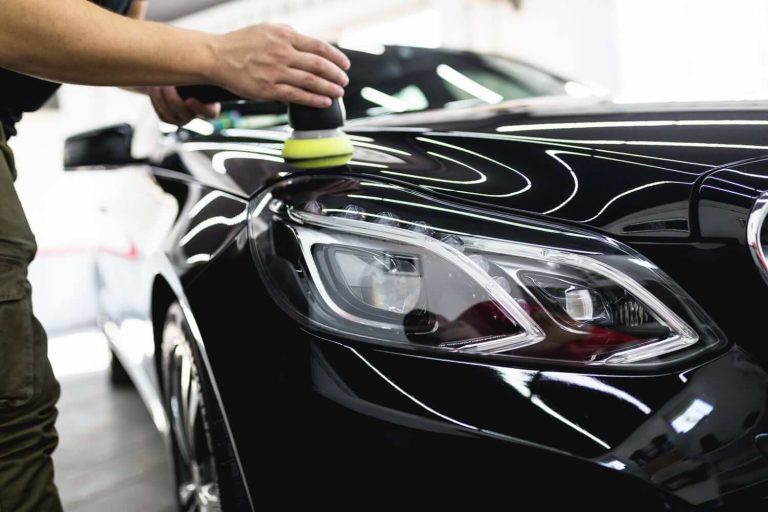
Polishing should be performed after the vehicle is completely clean. The goal is to refine the paint surface by removing a very small amount of clear coat to reduce the appearance of imperfections.
Work slowly and inspect your progress frequently. Removing too much clear coat through aggressive polishing can weaken paint protection.
Source: Bing
Step 1: Wash and dry the vehicle
Remove dirt, grease, and road debris before polishing. Dry the surface completely with clean microfiber towels.
Step 2: Remove bonded contaminants
Use an appropriate decontamination method if the paint feels rough after washing.
Step 3: Apply polish in small sections
Work on one panel at a time using a small amount of polish and controlled movements.
Step 4: Remove polish residue
Wipe away residue with a clean microfiber towel and check the finish before moving to another area.
Hand Polishing vs Machine Polishing
Hand polishing gives beginners more control and is suitable for light correction work. Machine polishers can provide faster and more consistent results but require practice because incorrect use can create paint damage.
Hand polishing
Best for small areas, light defects, and beginners who want maximum control.
Machine polishing
Useful for larger surfaces and more advanced paint correction when used properly.
How to Wax a Car After Polishing
Waxing should be the final step after polishing because wax does not correct paint defects. Instead, it adds a protective layer over the clean and refined surface.
Apply wax according to the product instructions and avoid using excessive amounts. A thin, even layer is usually easier to remove and can provide an attractive finish.
Source: Bing
Apply wax evenly
Use a foam or microfiber applicator and spread a thin layer across one section at a time.
Allow proper curing time
Follow the wax manufacturer’s recommended waiting period before removal.
Buff with microfiber towels
Remove haze gently until the surface looks clear and glossy.
Choosing the Right Type of Car Wax
Different wax products offer different application methods and durability characteristics. Paste wax, liquid wax, and spray wax can all be useful depending on the owner’s goals and maintenance routine.
Paste wax
Often preferred by enthusiasts who want a traditional application method.
Many paint problems happen because of incorrect preparation or using the wrong technique. Avoiding common mistakes helps protect the vehicle’s clear coat and improves the final appearance.
Source: Bing
Polishing a dirty car
Dirt particles can create additional scratches when rubbed against the paint.
Using household cleaners
Some household products may not be designed for automotive paint and can affect the finish.
Applying too much pressure
Aggressive pressure can increase the risk of uneven polishing or paint damage.
Waxing without correcting severe defects
Wax improves appearance but does not remove deep scratches or damaged paint.
When You Should Avoid DIY Polishing
Professional help may be appropriate when the vehicle has extensive clear coat failure, deep scratches, rust, or paint damage that reaches beyond the surface layer.
Clear coat peeling
Polishing cannot restore a clear coat that has already failed.
Deep scratches
Damage reaching the primer or metal may require paint repair.
How Often Should You Polish and Wax a Car
Waxing frequency depends on the product used, driving conditions, climate, and how the vehicle is stored. Many owners apply wax periodically to maintain protection, while polishing is usually performed less often because it removes a small amount of clear coat.
Vehicles exposed to harsh winters, road salt, intense sunlight, or frequent outdoor parking may require more attention than cars stored indoors.
Source: Bing
Regular waxing
Helps maintain protection and shine between major detailing sessions.
Occasional polishing
Should be used when paint correction is needed rather than as a daily maintenance step.
Frequently Asked Questions
Q
Should I polish or wax my car first?
Polish first, then wax. Polishing prepares and improves the paint surface, while wax seals and protects the finished surface.
Q
Can polishing remove deep scratches from a car?
Polishing can reduce the appearance of minor surface imperfections, but deep scratches that go through the clear coat may require professional repair.
Q
Can I wax a car without polishing it?
Yes. If the paint is already smooth and in good condition, waxing alone can help protect the finish and improve gloss.
Q
How long should I wait to wax after polishing?
Wax can usually be applied after polishing once all polish residue has been removed and the paint surface is clean. Follow the instructions for the specific products being used.
Q
Is it better to polish a car by hand or with a machine?
Hand polishing offers better control for beginners and small areas, while machine polishing can be more effective for larger correction jobs when used correctly.
✦ Wrapping Up
Conclusion
Knowing how to polish and wax a car allows vehicle owners to improve paint appearance and add protection through a careful maintenance routine. The key is understanding that polishing corrects surface imperfections while waxing protects the improved finish.
A successful result depends on proper preparation, suitable products, clean tools, and patience. Taking time to evaluate the paint condition before starting helps prevent unnecessary damage and produces a cleaner, longer-lasting shine.
💡 Key Takeaway
Wash and inspect your vehicle first, polish only when correction is needed, and always finish with a protective wax layer for better paint maintenance.
Tyron Torres is an automotive diagnostics writer and hands-on vehicle maintenance enthusiast with years of experience troubleshooting brake systems, suspension issues, and everyday car performance problems. He specializes in breaking down complex mechanical issues into simple, practical guides that drivers can use to quickly identify and fix common vehicle faults.
Learn how to polish a car after body repair with proper preparation, paint inspection, polishing techniques, and finishing steps to restore a smooth professional shine.
Learn what a tire pressure monitor fault means, why it happens, common causes, warning signs, troubleshooting steps, and when you should repair your TPMS system.