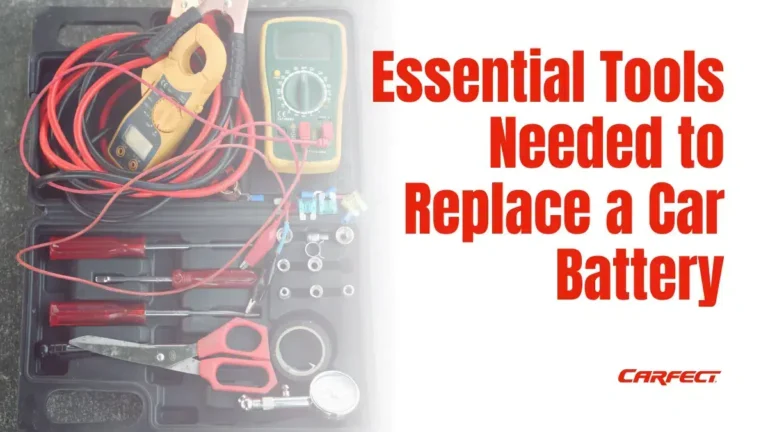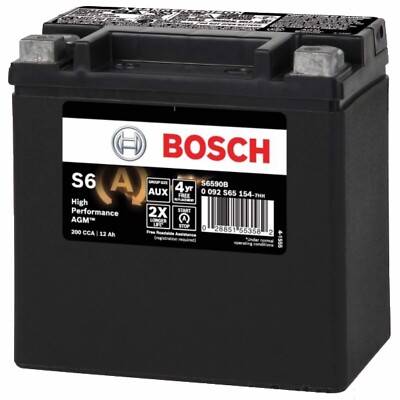
The positive and negative car battery terminals move electrical power through your vehicle in a safe, complete circuit.
Understanding the positive and negative car battery terminals helps you jump-start, replace, and test a battery without sparks, damage, or injury. After years of seeing simple battery mistakes leave drivers stranded, I’ve learned that knowing the symbols, cable order, and safety steps can save time and money.
What Are the Positive and Negative Car Battery Terminals?
A car battery has two main terminals:
• The positive terminal is marked with a plus sign (+). It often has a red cable or red cover.
• The negative terminal is marked with a minus sign (−). It usually has a black cable and connects to the vehicle’s metal body or engine block.
The positive and negative car battery terminals create a path for electrical current. The battery sends power from the positive terminal through the starter, lights, computer, and other parts. Current then returns to the battery through the negative cable and the vehicle’s metal chassis.
Think of the system like a water loop. The positive side pushes energy out, while the negative side gives that energy a path back. If the loop is broken, the starter will not turn and most electrical parts will not work.
The negative side is often called ground. Most modern cars use a negative-ground electrical system. This means the negative battery cable connects to the vehicle’s metal frame or engine.

How the Positive and Negative Car Battery Work Together
A 12-volt car battery does not simply “send electricity” in one direction without a return path. It supplies direct current, often called DC power, through a complete circuit.
When you turn the key or press the start button, this process begins:
-
The battery sends power through the positive cable.
-
The power reaches the starter motor and starter solenoid.
-
The starter motor turns the engine’s crankshaft.
-
Electrical current returns through the engine block, chassis, and negative battery cable.
-
Once the engine starts, the alternator recharges the battery.
The positive and negative car battery cables must both make strong contact. A clean positive cable with a loose negative connection can still cause a no-start problem. The same is true when the negative cable is secure but the positive terminal is badly corroded.
The battery itself contains lead plates, an electrolyte solution, and separators. A chemical reaction creates electrical energy. When the engine runs, the alternator reverses part of that chemical process and restores the battery’s charge.
A healthy battery may show about 12.6 volts when fully charged and resting. A reading near 12.2 volts often means the battery is partly discharged. These numbers can vary with temperature, battery age, and test conditions.
How to Identify Positive and Negative Battery Posts
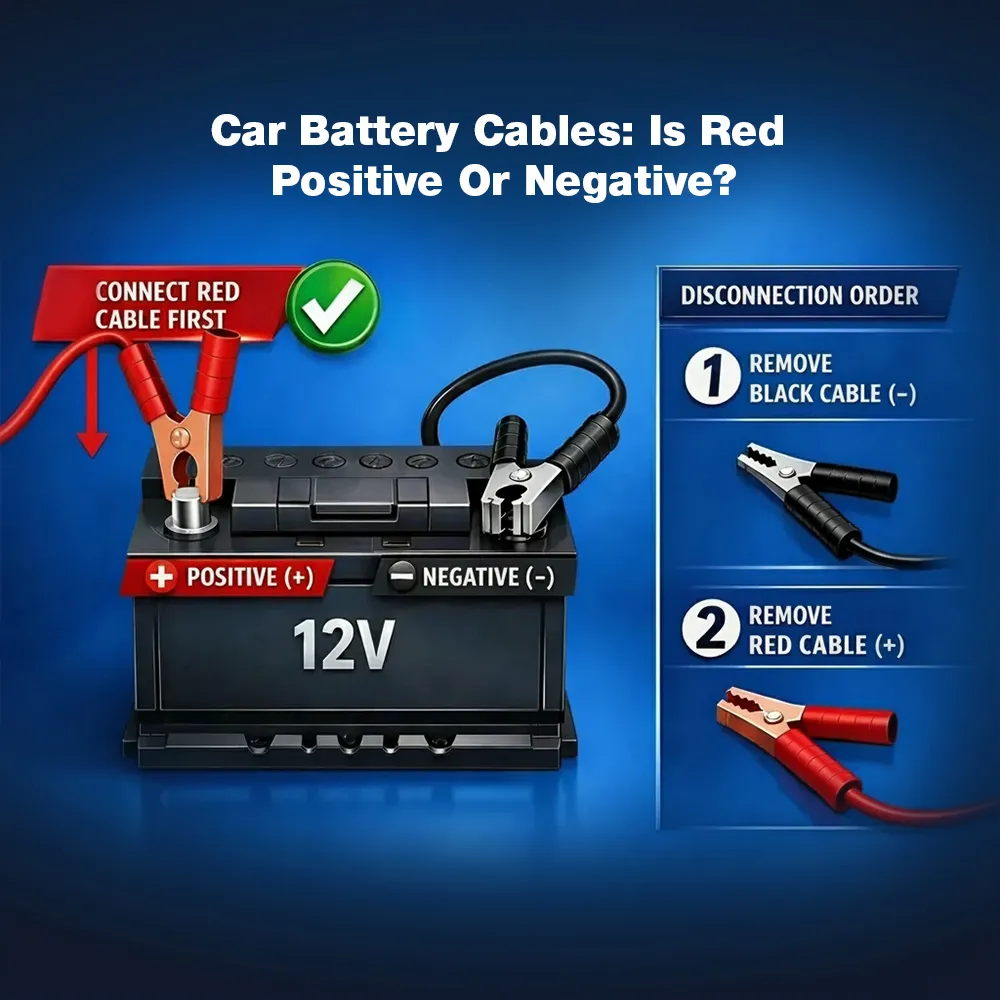
Finding the correct terminal is easy when you know what to look for. Never rely only on cable color because repairs or previous owners may have changed the cables.
Check these signs:
• Look for a plus sign (+) molded into the battery case near the positive post.
• Look for a minus sign (−) near the negative post.
• The positive post may have a red plastic cover.
• The positive post is often slightly larger than the negative post.
• The negative cable usually leads to the car body or engine block.
• The battery label may show a diagram with terminal locations.
Some vehicles place the battery in the trunk, under a seat, or inside a protected compartment. Others use remote jump-start terminals under the hood. In those cases, follow the vehicle owner’s manual rather than guessing.
The positive and negative car battery terminals may also have different shapes or cable ends. Still, the symbols on the battery are the most reliable guide.
A common mistake is assuming the terminal nearest the front of the car is positive. Battery placement differs by vehicle, so location alone tells you nothing.

What Happens If You Connect the Battery Backward?
Connecting the positive and negative car battery cables backward is called reverse polarity. It can cause a large spark and may damage sensitive electronic parts.
Possible problems include:
• Blown fuses
• Damaged alternator diodes
• Faults in engine computers
• Damaged sensors
• Melted battery cables
• A ruined battery
• Damage to the starter or charging system
Modern vehicles often have protective fuses and fusible links. These parts may limit damage, but they cannot guarantee full protection. A reverse connection can still create a dangerous short circuit.
If you connect the cables backward and notice smoke, sparks, burning smells, or melted insulation, stop immediately. Do not continue trying to start the vehicle. Disconnect the battery only when it is safe, and arrange for a qualified technician to inspect the charging and computer systems.
In my experience, rushing is the main cause of this mistake. Drivers often focus on the red and black clamps but forget to check the symbols. Taking five seconds to confirm the plus and minus signs is worth it.

Safe Order for Connecting and Disconnecting a Car Battery
Correct cable order reduces the chance of short circuits and sparks. This matters during battery replacement, cleaning, and jump-starting.
Disconnecting a car battery
Use this order:
-
Turn off the engine and remove the key.
-
Turn off lights, radio, and accessories.
-
Wear eye protection and keep metal tools away from both terminals.
-
Disconnect the negative cable first.
-
Disconnect the positive cable second.
-
Remove the battery hold-down and lift the battery carefully.
Disconnecting the negative cable first removes the vehicle’s ground connection. If your wrench touches the vehicle body while working on the positive terminal, the chance of a short circuit is lower.
Connecting a replacement battery
Use the reverse order:
-
Place the battery in the correct position.
-
Secure the battery hold-down.
-
Connect the positive cable first.
-
Connect the negative cable second.
-
Make sure both terminals are tight.
-
Start the vehicle and check for warning lights.
The positive and negative car battery connection order is simple: negative off first, positive off second; positive on first, negative on second.
Do not overtighten the terminals. Excess force can damage the battery posts or cable ends. The connection should be firm enough that the terminal cannot twist by hand.
How to Jump-Start a Car Correctly
Jump-starting uses another battery to provide enough power for a weak battery. A small error can create sparks, so follow the correct order.
For a typical jump-start:
-
Park the assisting vehicle close enough for the cables to reach, but do not let the vehicles touch.
-
Turn both vehicles off.
-
Connect one red clamp to the dead battery’s positive terminal.
-
Connect the other red clamp to the good battery’s positive terminal.
-
Connect one black clamp to the good battery’s negative terminal.
-
Connect the final black clamp to an unpainted metal ground on the disabled vehicle, away from its battery.
-
Start the assisting vehicle and let it run for a few minutes.
-
Try to start the disabled vehicle.
-
Remove the cables in reverse order.
Always check the vehicle manual first. Some cars have special jump points, hybrid systems, or battery monitoring sensors that require a different method.
The positive and negative car battery terminals must never touch through a tool or loose cable. Keep clamps separated, and do not allow the red clamp to contact metal parts connected to ground.
If the battery is cracked, leaking, frozen, or badly swollen, do not jump-start it. A damaged battery can release acid or hydrogen gas. Call for roadside help instead.

Cleaning and Testing the Positive and Negative Car Battery
Corrosion can form around the terminals. It often looks white, blue, or green. This buildup increases electrical resistance and may cause slow cranking, flickering lights, or charging problems.
Before cleaning:
• Turn off the engine.
• Disconnect the negative cable first.
• Disconnect the positive cable second.
• Wear gloves and eye protection.
• Use a battery terminal brush and a mixture made for battery cleaning.
Avoid getting cleaning liquid inside the battery vents. Do not use a metal tool to bridge the two posts. After cleaning, dry the terminals and reconnect the positive cable first, followed by the negative cable.
You can test battery voltage with a digital multimeter. Set it to DC volts, then place the red probe on the positive post and the black probe on the negative post.
Typical resting readings are:
• About 12.6 volts: fully charged battery
• About 12.4 volts: partly charged battery
• About 12.2 volts: roughly half charged
• Below 12 volts: deeply discharged battery
Voltage alone does not prove that a battery is healthy. A weak battery can show a normal voltage but fail under the heavy load required by the starter. A professional load test or electronic conductance test gives a better view of battery condition.
The positive and negative car battery cables should also be checked for swelling, cracked insulation, loose ends, and hidden corrosion. Corrosion can travel inside a cable, where it is difficult to see.
Common Problems With Positive and Negative Car Battery Connections
Poor connections can mimic a dead battery. Before buying a new battery, inspect the complete circuit.
Loose battery terminals
A loose terminal may work sometimes and fail at other times. You may hear a click instead of engine cranking, or the dashboard may go dark when you turn the key.
Corroded cable ends
Corrosion creates resistance. The starter needs a large amount of current, so even a thin layer of corrosion can cause trouble.
Damaged ground cable
A damaged negative cable can prevent the starter from receiving a complete circuit. Check the cable from the negative terminal to the body and engine.
Wrong battery size
A battery can fit physically but still have the wrong capacity, cold-cranking rating, or terminal position. Use the specifications listed in the owner’s manual or on the original battery.
Failed alternator
If the alternator does not recharge the battery, the car may start after a jump but stop again later. A charging system test can separate an alternator problem from a battery problem.
Parasitic drain
A light, phone charger, alarm, or electronic module may continue using power after the car is parked. Repeated overnight battery failure may point to a parasitic drain rather than a bad battery.
One lesson I often share is this: do not replace parts based only on one symptom. Test the battery, cables, ground points, and alternator as a system.
Positive and Negative Car Battery Safety Tips
Car batteries are useful but deserve respect. They can produce high current, corrosive acid, and flammable hydrogen gas.
Follow these safety rules:
• Wear safety glasses when working near the battery.
• Remove jewelry, watches, and metal bracelets.
• Keep cigarettes, flames, and sparks away from the battery.
• Use insulated tools when possible.
• Never place tools on top of the battery.
• Do not lean over a battery while jump-starting it.
• Keep children and pets away from the work area.
• Replace a cracked, leaking, or swollen battery.
• Secure the battery so it cannot move while driving.
• Wash your hands after handling corroded terminals.
If battery acid touches your skin, rinse the area with plenty of clean water. If it enters your eyes, flush them with water and seek medical care. Do not delay treatment.
The positive and negative car battery terminals should always remain clearly identified. If labels are damaged, mark the cables before removal and confirm the symbols on the battery case.
When Should You Replace a Car Battery?
Most car batteries last about three to five years, but climate, driving habits, and maintenance can change that range. Hot weather speeds up battery wear, while very cold weather makes starting harder.
Consider testing or replacing the battery when you notice:
• Slow engine cranking
• Repeated jump-starts
• Dim headlights at idle
• Battery warning light
• Swollen battery case
• Strong sulfur or rotten-egg smell
• Corrosion that quickly returns
• A battery older than three years in a hot climate
• A battery older than five years in mild conditions
Do not wait for complete failure if the battery is old and you are planning a long trip. A battery test at an auto parts store or repair shop can help you make a sound choice.
When buying a replacement, match the battery group size, terminal layout, reserve capacity, and cold-cranking amps. A higher number is not always better if the battery does not fit the vehicle’s electrical system.
Positive and Negative Car Battery: Key Differences at a Glance
| Feature | Positive terminal | Negative terminal |
|---|---|---|
| Common symbol | Plus sign (+) | Minus sign (−) |
| Common cable color | Red | Black |
| Main role | Sends electrical power into the circuit | Returns current and provides ground |
| Usual connection | Starter, fuse box, and electrical system | Vehicle body or engine block |
| Jump-start connection | Red clamp | Black clamp or approved ground point |
| Connection order | Connect first | Connect second |
| Disconnection order | Disconnect second | Disconnect first |
This table is a useful reminder, but always confirm the symbols on your specific battery. Cable color and terminal position can change after repairs or custom modifications.
Frequently Asked Questions About Positive and Negative Car Battery
Which car battery terminal is positive?
The positive terminal has a plus sign (+) and is often covered in red. It may also be slightly larger than the negative terminal, but the symbol is the best way to confirm it.
Which car battery terminal should I disconnect first?
Disconnect the negative terminal first. This reduces the risk of a short circuit if your tool touches the vehicle’s metal body while you remove the positive connection.
Which terminal do I connect first when replacing a battery?
Connect the positive terminal first, then connect the negative terminal. This order helps reduce accidental sparks and makes the installation safer.
Can connecting the positive and negative terminals backward damage a car?
Yes. Reverse polarity can blow fuses and damage the alternator, wiring, sensors, or engine computer. Disconnect the cables immediately if you notice sparks, smoke, or heat.
Can a car run with a bad negative battery cable?
Usually, no. A damaged negative cable can stop the starter and electrical system from completing the circuit, even when the battery itself is fully charged.
Why does my battery have corrosion on the positive terminal?
Corrosion may result from acid vapor, a loose connection, overcharging, or an aging battery. Clean the terminal safely, tighten the connection, and have the charging system tested if corrosion returns.
Can I use the engine block as the negative connection during a jump-start?
Many vehicles allow an unpainted metal point on the engine block or chassis to serve as the negative connection. Check the owner’s manual because some vehicles specify a particular grounding point.
Conclusion
The positive and negative car battery terminals work as a team to power the starter, lights, computers, and other electrical systems. The positive terminal sends power out, while the negative terminal completes the circuit through the vehicle’s ground.
Remember the key safety rule: remove negative first and positive second; connect positive first and negative second. Check the symbols, avoid sparks, keep the terminals clean, and test the battery and charging system before replacing parts.
Use these steps the next time you inspect or replace a battery, and you will be far less likely to face a costly mistake. If this guide helped, share it with another driver or explore more vehicle maintenance resources before your next roadside emergency.