To change a car battery, park safely, disconnect the negative cable first, replace the battery, and reconnect positive first.
Learning how to change a car battery can save time and a service call when your vehicle will not start. The job is often simple, but safe cable removal, correct battery matching, and proper disposal matter. This guide explains each step in plain language, including common mistakes, battery testing, and what to do after installation.
What You Need Before You Change a Car Battery
Most car batteries sit under the hood, near the front corner of the engine bay. Some vehicles place the battery in the trunk, under a seat, or inside a protected compartment. Check your owner’s manual before opening panels or removing covers.
Gather these items:
• A replacement battery with the correct group size, voltage, and terminal layout
• Safety glasses and work gloves
• A socket wrench, often with a 10 mm or 13 mm socket
• A battery terminal cleaner or wire brush
• A small flashlight
• A memory saver, if your vehicle needs one
• A rag for cleaning light corrosion
• A box or strap to carry the old battery
A standard automotive battery is usually a 12-volt lead-acid battery. However, many newer vehicles use AGM batteries, start-stop systems, or batteries that need computer registration. The replacement must match the vehicle’s specifications, not just its physical size.
If you are unsure, use the battery label, vehicle manual, or a trusted parts catalog. Battery group numbers, cold cranking amps, reserve capacity, and terminal position all matter.
Safety Rules for Changing a Car Battery
A car battery can deliver enough current to cause sparks, burns, or damage to electronic parts. The battery also contains sulfuric acid, which can irritate skin and damage clothing. Treat it with care, even when the engine is off.
Follow these basic safety rules:
• Park on a flat surface and set the parking brake.
• Turn off the engine, lights, radio, climate controls, and accessories.
• Remove the key from the ignition and keep it away from the vehicle.
• Wear eye protection and gloves.
• Keep metal tools away from both battery terminals at the same time.
• Never smoke or use an open flame near the battery.
• Do not lean over the battery while connecting or disconnecting it.
• Keep children and pets away from the work area.
Some batteries release hydrogen gas while charging or operating. A spark near the battery can ignite this gas. Good airflow lowers the risk, so avoid working in a cramped, closed space.
If the battery is cracked, leaking, swollen, or frozen, do not change it yourself. Call a qualified technician. A frozen battery can explode when connected to a charger or electrical system.
How to Change a Car Battery Step by Step
Changing a car battery usually takes 15 to 30 minutes. Take photos before removing anything. A quick photo can show the cable positions, hold-down bracket, and routing of wires when it is time to reinstall them.
1. Confirm the battery is the problem
A dead battery is not always the cause of a no-start condition. A failed alternator, loose cable, bad starter, blown fuse, or damaged ground connection can create similar symptoms.
Common signs of a weak battery include:
• Slow engine cranking
• A clicking sound when you turn the key
• Dim headlights before starting
• Interior lights that fade quickly
• A battery warning light
• A battery that is more than three to five years old
If you have a multimeter, test the battery with the engine off. A fully charged battery often reads about 12.6 volts. A reading near 12.2 volts suggests a low state of charge, while a reading near 12 volts or lower may indicate a serious discharge. Voltage alone cannot prove that a battery is healthy, so a load test gives a better answer.
2. Locate and identify the battery terminals
Find the positive and negative terminals. The positive terminal usually has a plus sign and a red cover. The negative terminal has a minus sign and connects to the vehicle body or engine with a ground cable.
Do not rely only on cable color. Look for the plus and minus symbols molded into the battery case. Confusing the terminals can damage fuses, wiring, computers, and other electrical parts.
3. Disconnect the negative cable first
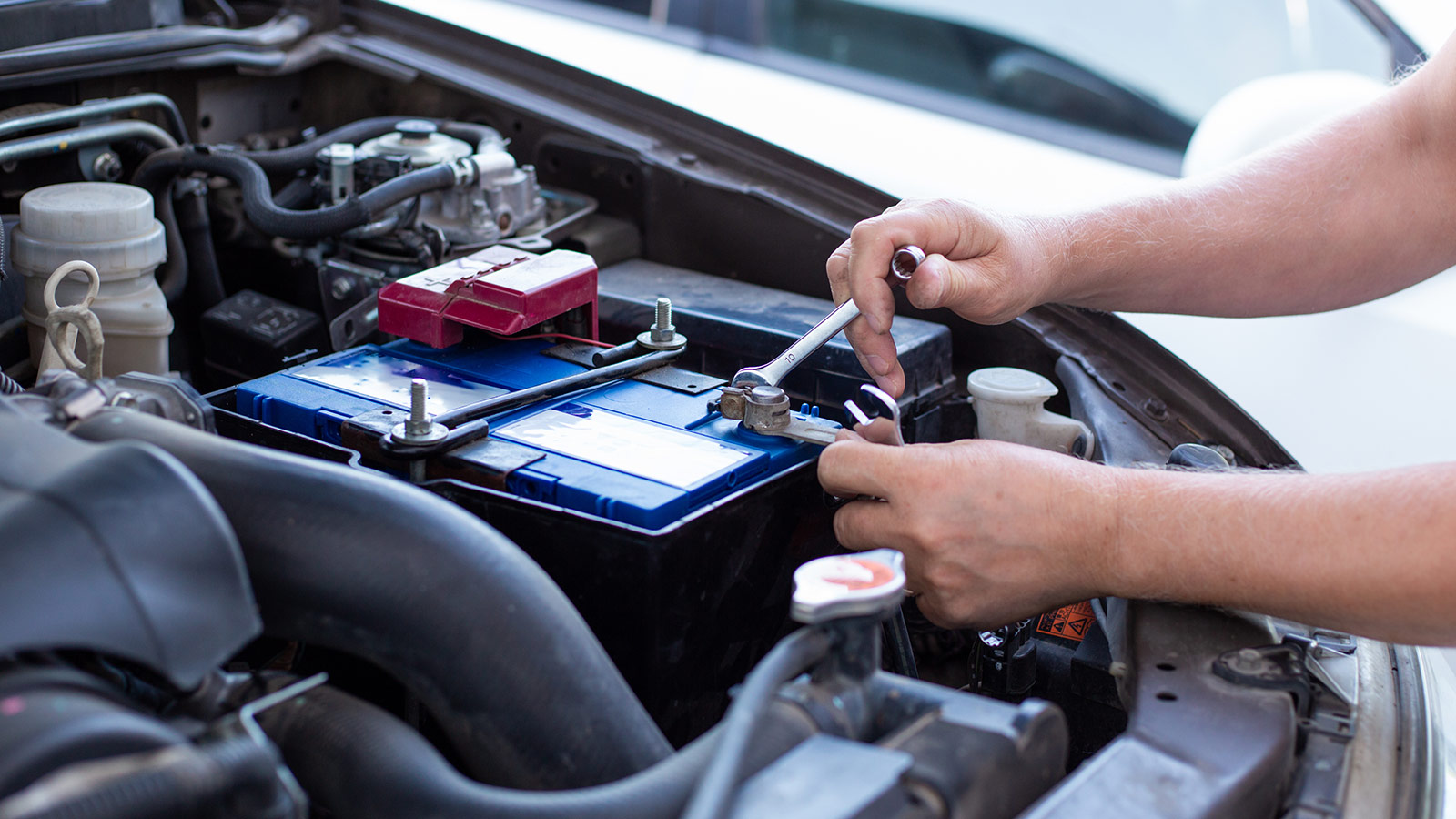
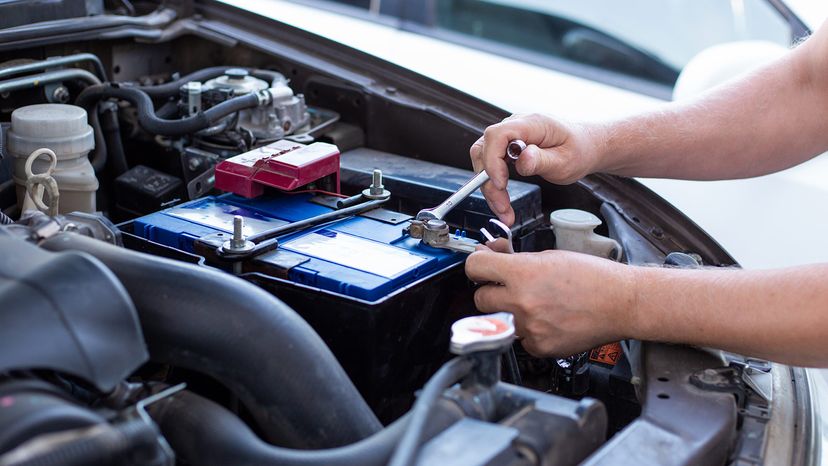
Use the correct socket to loosen the nut on the negative terminal. Pull the cable straight up or gently twist it free. Move it away from the terminal so it cannot spring back into contact.
Disconnecting the negative cable first reduces the chance of a short circuit. If your wrench touches the vehicle body while working on the positive terminal, the circuit is still open. This small habit is one of the most important parts of learning how to change a car battery safely.
4. Disconnect the positive cable
Remove the cover from the positive terminal if your vehicle has one. Loosen the terminal nut and lift the positive cable from the battery post.
Keep the positive cable from touching metal parts. Some vehicles have several wires connected to this terminal, so do not force or bend them sharply.
5. Remove the battery hold-down
A bracket, clamp, or bar keeps the battery from moving. Remove the hold-down hardware and place it where it will not fall into the engine bay.
Never drive without the hold-down installed. A loose battery can move during hard braking or a crash. Movement can break the case, pull off cables, and create an electrical short.
6. Lift out the old battery
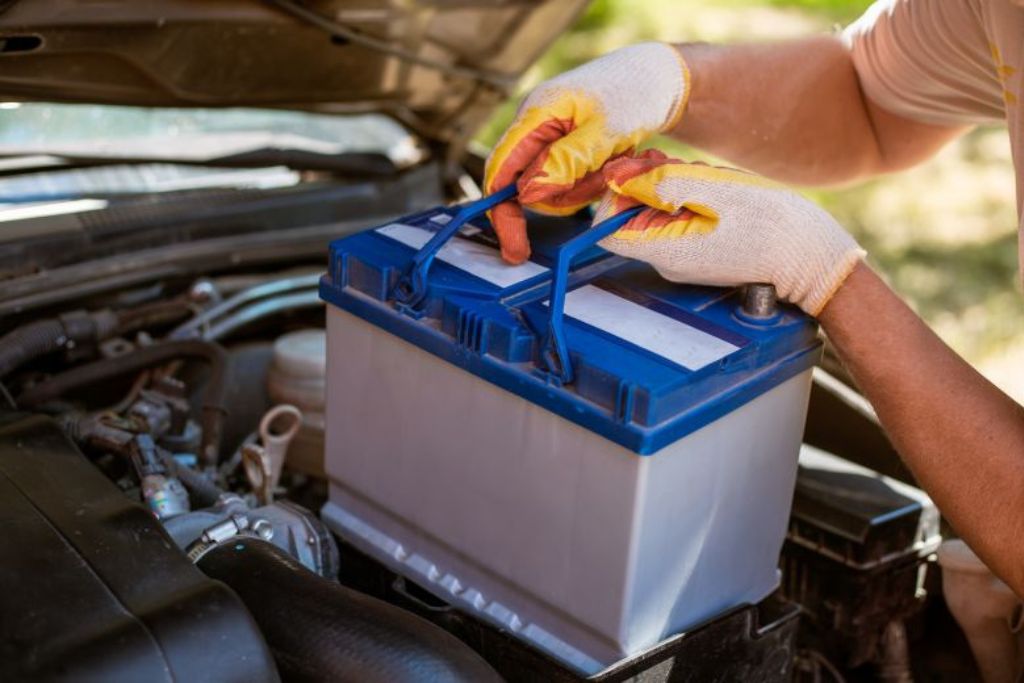
Automotive batteries are heavy. Many weigh between 30 and 50 pounds, so lift with both hands and keep your back straight. Use the built-in handle if one is available.
Keep the battery level while carrying it. Tilting a damaged or leaking battery can spread acid. Place the old battery in a safe spot away from children, tools, and heat.
7. Inspect and clean the battery tray
Check the tray for rust, cracks, loose bolts, or acid damage. Clean light corrosion with a battery brush and a small amount of baking soda mixed with water. Keep the mixture away from open battery vents and electrical connectors.
Dry the area before installing the new battery. If corrosion has eaten through the tray or nearby metal, repair it before fitting the replacement battery.
8. Place the new battery correctly
Set the replacement battery into the tray. Make sure the positive and negative posts are in the same positions as the old battery. The label may face a different direction, but the cable reach and terminal layout must work.
The battery should sit flat and stable. Do not use a battery that is too tall, too wide, or too short for the tray.
9. Reinstall the hold-down bracket
Fit the bracket or clamp and tighten it firmly. Do not overtighten it, because excessive force can damage the battery case.
The battery should not rock or slide when you gently push it. A secure hold-down protects the battery from vibration, which can shorten its life.
10. Connect the positive cable first
Place the positive cable on the positive post. Tighten the terminal nut until the connection is snug and cannot rotate by hand. Do not crush the terminal with excessive force.
If your vehicle uses a battery sensor on the negative cable, do not damage or bypass it. This sensor helps the charging system manage battery power.
11. Connect the negative cable
Attach the negative cable to the negative post. Tighten it until secure, but avoid stripping the nut or damaging the post.
A small spark can occur when the final cable is connected because the vehicle’s computers may wake up. A large spark, smoke, heat, or a burning smell is not normal. Stop at once and inspect the connections.
12. Test the vehicle
Turn on the headlights for a few seconds, then start the engine. The starter should crank strongly. Check the dashboard for warning lights and confirm that the headlights, horn, radio, and climate controls work.
If the vehicle has a start-stop system, hybrid system, or battery management module, follow the manufacturer’s reset or registration procedure. Some vehicles need a scan tool after battery replacement.
What to Do After Installing the New Battery
A battery replacement may reset the clock, radio presets, power window settings, seat memory, and other features. Some vehicles may need a simple relearn process. Your owner’s manual should explain these steps.
Let the engine run for a few minutes and watch for warning lights. If the battery warning light stays on, the alternator or charging system may have a problem. A new battery cannot fix a faulty alternator.
You can check charging voltage with a multimeter. Many conventional vehicles show about 13.7 to 14.7 volts while running, but the correct range varies by vehicle and charging strategy. Smart charging systems may show different readings, so use the service information for your model.
Drive normally and monitor the starting performance over the next few days. If the vehicle needs another jump-start, the problem may be a parasitic drain, weak alternator, poor cable connection, or incorrect battery type.
Battery Registration and Modern Vehicles
Some newer vehicles use a battery management system, often called a BMS. This system tracks battery age, charge level, temperature, and electrical demand. When you install a new battery, the vehicle may need to be told that the battery has been replaced.
Battery registration is common on vehicles with:
• Start-stop technology
• AGM or enhanced flooded batteries
• Advanced charging systems
• Extensive electronic features
• Battery sensors on the negative terminal
The exact process differs by manufacturer. Some vehicles register the battery automatically. Others need a scan tool or a dealer procedure. Skipping registration may cause undercharging, overcharging, reduced fuel economy, or a shortened battery life.
Always follow the vehicle manufacturer’s instructions. A parts store may install the battery correctly but may not have the equipment needed for electronic registration.
Common Mistakes to Avoid
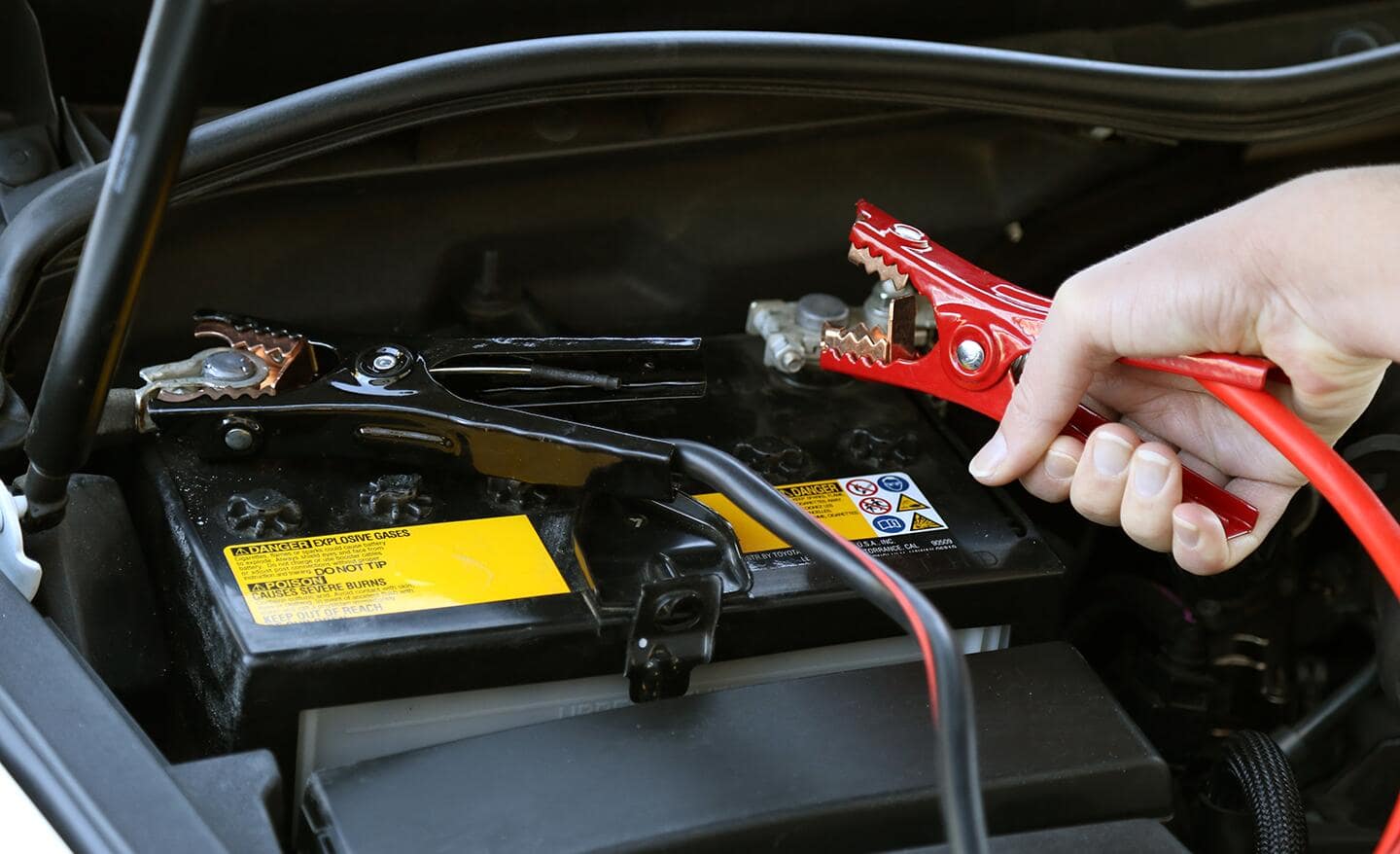
The most common mistake is disconnecting the positive terminal first. This can create a short if the tool touches the body of the vehicle. Remember the simple rule: negative off first, positive off second; positive on first, negative on second.
Other mistakes include:
• Installing the wrong battery group size
• Reversing the positive and negative terminals
• Leaving the hold-down bracket loose
• Tightening terminal nuts too much
• Reusing badly corroded cables
• Forgetting a battery cover or vent tube
• Ignoring a battery warning light
• Throwing the old battery in the trash
• Driving without checking the charging system
In my own hands-on battery work, the rushed moments caused the most trouble. One easy mistake is placing the hold-down bracket aside and forgetting it until the job is nearly finished. Another is cleaning corrosion without checking whether the cable end is loose or damaged.
A photo before removal and a final shake test can prevent both problems. These simple habits make how to change a car battery safer and less stressful.
How to Clean Corroded Battery Terminals
White, blue, or green buildup around a terminal can increase electrical resistance. It may cause slow cranking, intermittent power, or trouble starting. Corrosion can also travel inside the cable and weaken the connection.
To clean a terminal:
- Disconnect the negative cable first.
- Disconnect the positive cable.
- Brush corrosion from the posts and cable ends.
- Use a small amount of baking soda solution for light acid residue.
- Wipe the area with a damp cloth.
- Dry all parts completely.
- Reconnect the positive cable, then the negative cable.
Replace a cable end that is cracked, loose, badly rusted, or too stretched to grip the post. Do not cover a poor connection with grease and assume it is fixed. The metal must make firm contact first.
After tightening the terminals, you may apply a thin layer of battery terminal protectant. Avoid placing thick grease between the terminal post and cable end unless the product instructions specifically allow it.
How to Choose the Right Replacement Battery
The correct replacement battery must fit the vehicle physically and electrically. Check these specifications:
• Battery group size
• Cold cranking amps, or CCA
• Reserve capacity
• Battery type, such as flooded, AGM, or enhanced flooded
• Terminal position
• Manufacturer requirements
• Warranty length
Cold cranking amps describe how much starting current a battery can provide in cold conditions. A higher CCA rating is not always harmful, but the battery must still fit the vehicle and work with its charging system.
AGM batteries are built differently from standard flooded batteries. Installing the wrong type in a vehicle designed for AGM technology may reduce performance and battery life. When in doubt, use the original battery label and owner’s manual as your main guides.
Climate also affects battery life. Extreme heat can speed internal battery wear, while cold weather makes the engine harder to crank. A battery that works well in mild weather may struggle during a cold winter start.
How Long Does a Car Battery Last?
Many car batteries last about three to five years, but life varies. Heat, vibration, short trips, poor charging, and long periods of inactivity can shorten that range.
A battery may fail sooner if the vehicle sits for weeks. Small electrical systems continue to draw power when the car is parked. Frequent short trips may also prevent the alternator from fully restoring the energy used during starting.
To extend battery life:
• Keep the terminals clean and tight.
• Make sure the battery is held firmly in place.
• Avoid leaving lights or accessories on.
• Drive long enough for the alternator to recharge the battery.
• Use a maintainer when storing a vehicle for a long period.
• Test the battery before extreme summer or winter weather.
A battery test is more useful than age alone. A three-year-old battery can fail, while a six-year-old battery may still work. Age is a warning sign, not a final diagnosis.
When You Should Call a Professional
Changing a car battery is a practical home repair, but not every vehicle or situation is suitable for a beginner. Get professional help if the battery is in a difficult location or if access requires removing major components.
Contact a technician when:
• The battery is leaking, swollen, cracked, or frozen.
• The vehicle is a hybrid or electric model.
• The battery is under a seat or inside a sealed compartment.
• The vehicle needs battery registration.
• The car has repeated battery failures.
• Cables are melted, damaged, or heavily corroded.
• The charging system warning light remains on.
• You are not sure which terminal is positive or negative.
Hybrid and electric vehicles can contain high-voltage systems. Their small 12-volt battery may look familiar, but the surrounding safety procedures are different. Do not treat a hybrid or electric vehicle like a standard gasoline car.
Industry safety guidance and vehicle manuals consistently stress correct polarity, eye protection, ventilation, and proper battery recycling. These are not minor details. They protect you and the vehicle.
How to Dispose of an Old Car Battery
Do not place an old automotive battery in household trash. Lead and battery acid can harm people, soil, and water. Most auto parts stores, battery retailers, recycling centers, and local waste facilities accept used car batteries.
Many retailers offer a core charge. You pay a small deposit when buying the new battery and receive it back when you return the old one. Keep the old battery upright in a sturdy box during transport.
Wear gloves when carrying it, and do not leave it in a hot vehicle for a long time. Store it away from metal objects that could bridge the terminals.
Proper recycling allows useful lead and plastic to be recovered. It is one of the easiest ways to reduce the environmental impact of vehicle maintenance.
Frequently Asked Questions About How to Change a Car Battery
Which battery terminal do I disconnect first?
Disconnect the negative terminal first. When installing the replacement, connect the positive terminal first and the negative terminal last.
How long does it take to change a car battery?
Most accessible batteries take about 15 to 30 minutes to replace. The job may take longer if the battery is in the trunk, under a seat, or connected to a battery management system.
Can I change a car battery without a memory saver?
Yes, many vehicles will start and operate without one, but some settings may reset. A memory saver can preserve radio presets, clock settings, and electronic memory, but it must be used according to the vehicle and tool instructions.
How do I know if I need a new battery or an alternator?
A battery test and charging-system test can separate these problems. A new battery that quickly loses power may point to a failing alternator, parasitic drain, loose cable, or another electrical fault.
Can I replace a standard battery with an AGM battery?
Only if the vehicle supports that battery type and the size and specifications match. Some vehicles need a computer reset or battery registration after installation.
What happens if I connect a car battery backward?
Reverse polarity can blow fuses and damage sensitive electronic components. Stop immediately, disconnect the battery safely, and have the vehicle inspected before trying to start it.
Should I replace both battery cables with the battery?
Not always. Replace a cable if it is damaged, badly corroded, loose, or unable to make a solid connection; otherwise, clean and inspect the existing cables carefully.
Conclusion
Changing a car battery is usually a straightforward repair when you use the correct battery and follow the right order. Park safely, disconnect the negative cable first, remove the hold-down, install the matching battery, and reconnect the positive cable before the negative cable.
Take your time, protect your eyes, and test the vehicle after the installation. If the battery fails again or a warning light stays on, check the charging system instead of replacing batteries repeatedly. Use your owner’s manual for model-specific steps, recycle the old battery, and explore more vehicle maintenance guides to build your repair skills.