A car battery stores chemical energy and turns it into electrical power to start the engine.
Understanding how does a car battery work can help you spot weak starting power, avoid common charging mistakes, and choose the right replacement. A battery is more than a box under the hood. It works with the starter, alternator, engine computer, lights, and many other systems. This guide explains the process in simple terms, with practical checks you can use in real life.
What Is a Car Battery?
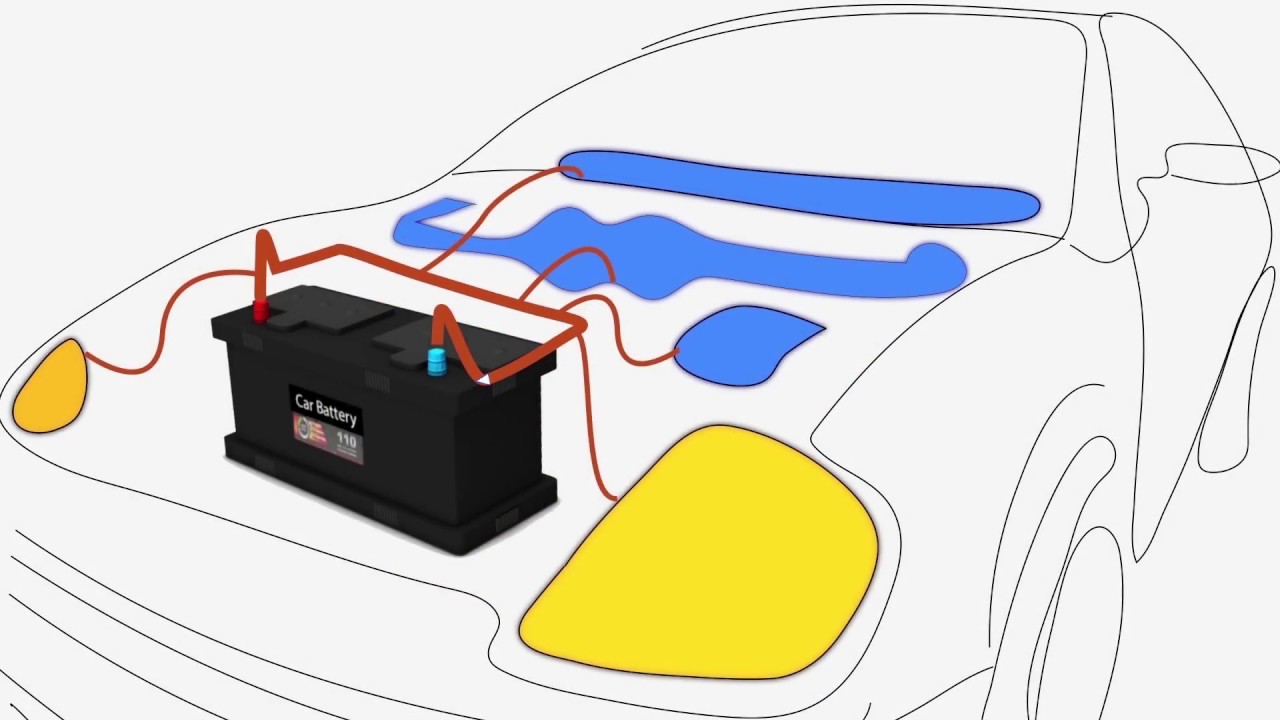
A car battery is a rechargeable energy storage device. Most gasoline and diesel cars use a 12-volt lead-acid battery. It supplies a strong burst of current for a few seconds, then the alternator recharges it while the engine runs.
The battery does three main jobs:
- It powers the starter motor.
- It supplies electricity when the engine is off.
- It helps stabilize voltage while the engine runs.
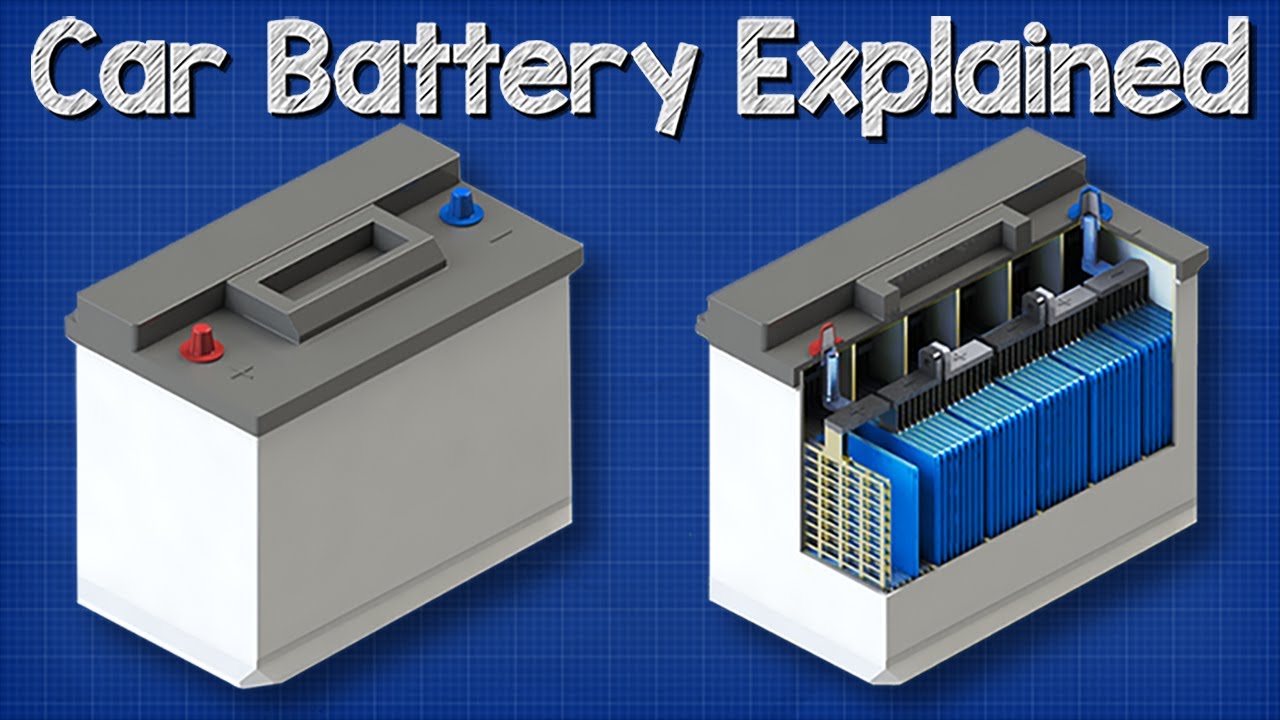
A typical 12-volt battery has six internal cells. Each cell produces about 2.1 volts when fully charged, giving the battery a resting voltage near 12.6 volts.
The battery does not usually power the whole car for long periods. It acts more like a quick helper. The alternator supplies most electrical power after the engine starts.
Learning how does a car battery work starts with its two types of energy. Inside the battery, chemical energy changes into electrical energy. When the alternator sends power back into the battery, electrical energy changes into chemical energy again.

How Does a Car Battery Work Inside?
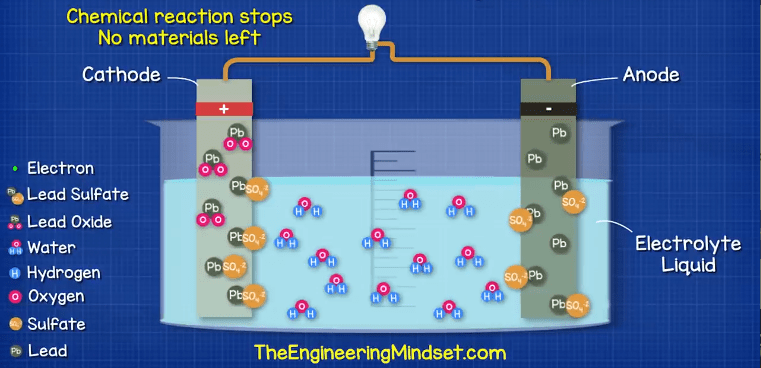
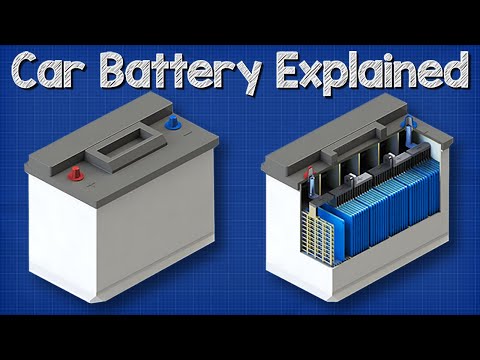
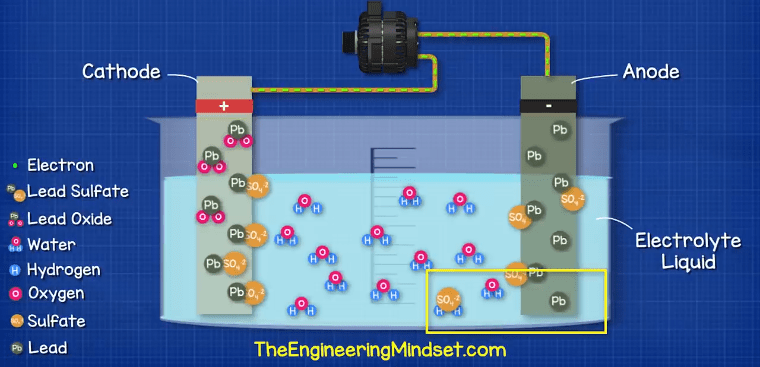
A standard car battery uses lead plates, lead dioxide plates, and an electrolyte. The electrolyte is a liquid mixture of sulfuric acid and water. These parts work together through a controlled chemical reaction.
Each battery cell contains:
- A negative plate made mainly of lead.
- A positive plate made mainly of lead dioxide.
- An electrolyte that allows ions to move.
- Separators that keep the plates from touching and causing a short circuit.
When the battery powers the car, the sulfuric acid reacts with both plate materials. This reaction releases electrons at the negative plate. The electrons then flow through the car’s electrical circuit toward the positive plate.
That electron flow is electric current. It travels through the starter motor, lights, or another electrical device before returning to the battery.
Inside the battery, ions move through the electrolyte. Outside the battery, electrons move through wires. Both movements are needed for the chemical reaction to continue.
The reaction slows as the battery discharges. The electrolyte becomes less concentrated, and lead sulfate forms on the plates. When the battery charges, the alternator reverses much of this process.
This explains how does a car battery work without using magic or stored “electricity” in the simple sense. It stores energy in chemical form and releases that energy through a chemical reaction.
How the Battery Starts the Engine
Starting an engine requires a large amount of power. The starter motor must turn the crankshaft before the engine can run on its own.
Here is the usual starting sequence:
- You turn the key or press the start button.
- A small control signal reaches the starter relay or solenoid.
- The solenoid connects the battery to the starter motor.
- The battery sends a high current through the starter cable.
- The starter motor turns the engine.
- The engine begins combustion and starts running.
- The starter disengages.
The starter motor may draw several hundred amps for a short time. Cold weather can make this task harder because engine oil becomes thicker and the battery produces less power.
This is why a battery can show a reasonable voltage but still fail to start a car. Voltage is only one part of battery health. The battery must also deliver enough cold cranking amps, often called CCA.
Cold cranking amps describe how much current a battery can provide in cold conditions. The exact rating depends on testing standards and battery design. Always compare a replacement battery with the vehicle maker’s required rating.
When people ask how does a car battery work during startup, the simplest answer is that it acts as a powerful temporary source for the starter motor.
What the Alternator Does
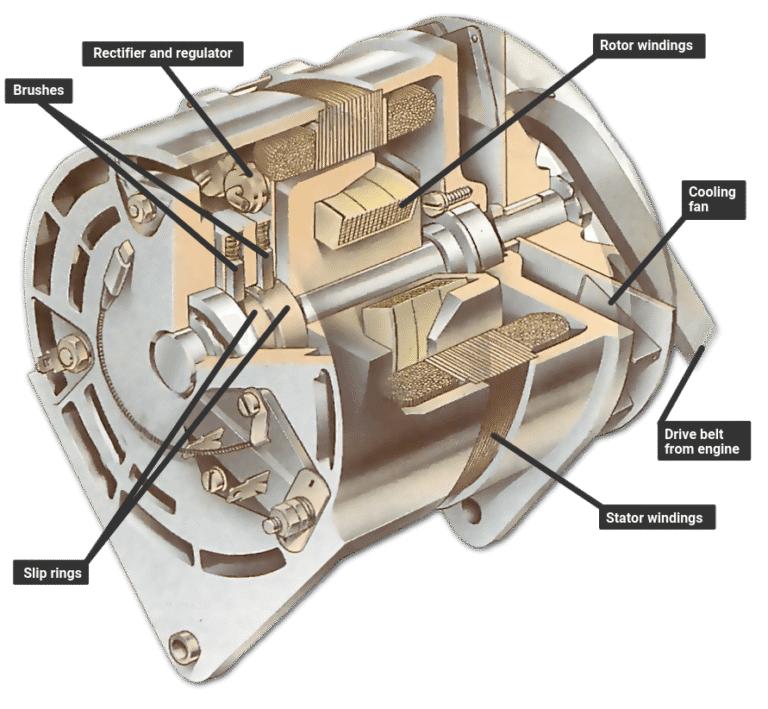
The alternator recharges the battery and powers the car’s electrical systems after the engine starts. A belt connected to the engine spins the alternator’s rotor.
The alternator creates alternating current. A rectifier changes that current into direct current, which the vehicle can use. A voltage regulator controls the output so the battery does not receive too much or too little charge.
In many vehicles, the charging voltage is around 13.5 to 14.8 volts. The exact value can change with temperature, battery condition, vehicle design, and smart charging controls.
The alternator supplies electricity to systems such as:
- Headlights and interior lights.
- The engine control module.
- Fuel injectors and ignition parts.
- Heating and air conditioning fans.
- Audio and navigation systems.
- Safety systems and electronic controls.
A healthy alternator does not automatically mean a healthy battery. The alternator may charge a weak battery, but it cannot always restore a battery with damaged plates or severe sulfation.
A common mistake is replacing the battery when the real problem is a failing alternator. Another mistake is replacing the alternator when loose battery terminals are blocking proper current flow.
A complete charging test should check the battery, alternator, cables, grounds, and belt. This full approach gives a clearer answer to how does a car battery work in the entire charging system.
How the Battery Powers the Car When It Is Off
The battery continues to supply small amounts of power when the engine is off. Modern cars need electricity for memory settings, alarms, remote locks, computers, and sensors.
This small flow is called parasitic draw. A normal vehicle has some parasitic draw, but the amount varies by model. If a light stays on or a control module fails to sleep, the battery may drain overnight.
Common causes of battery drain include:
- A trunk, glove box, or door light that stays on.
- An aftermarket alarm or stereo.
- A phone charger left connected.
- A faulty relay.
- A computer module that does not shut down.
- Corroded wiring or damaged insulation.
- Repeated short trips that do not replace starting energy.
The battery may also lose power naturally while parked. Heat speeds up internal chemical activity and can shorten battery life. Cold weather, however, makes starting harder and reduces available cranking power.
This balance explains how does a car battery work when the vehicle is parked. It provides small amounts of current, but too much draw can discharge it.
If a battery dies after one night, do not assume the battery is the only cause. A professional can measure the parasitic draw and test the charging system.

Battery Types Used in Cars
Not every car uses the same type of 12-volt battery. Choosing the wrong design may cause poor performance or early failure.
Flooded lead-acid batteries
These are common and often affordable. They contain liquid electrolyte and may have removable vent caps, although many modern versions are labeled maintenance-free.
A flooded battery can work well in standard vehicles. It may be less suitable for cars with heavy electrical demand or frequent start-stop operation.
Absorbent glass mat batteries
AGM batteries hold the electrolyte in fiberglass mats. They resist vibration and can provide strong starting power.
Many vehicles with start-stop systems, advanced electronics, or high electrical demand use AGM batteries. Replacing an AGM unit with a standard flooded battery can lead to charging and service problems.
Enhanced flooded batteries
An enhanced flooded battery is stronger than a basic flooded design. It may support some start-stop systems, depending on the vehicle requirements.
Lithium-ion batteries
Some performance cars, motorcycles, and specialty vehicles use lithium-ion 12-volt batteries. They are light and powerful but need the correct charging system and safety controls.
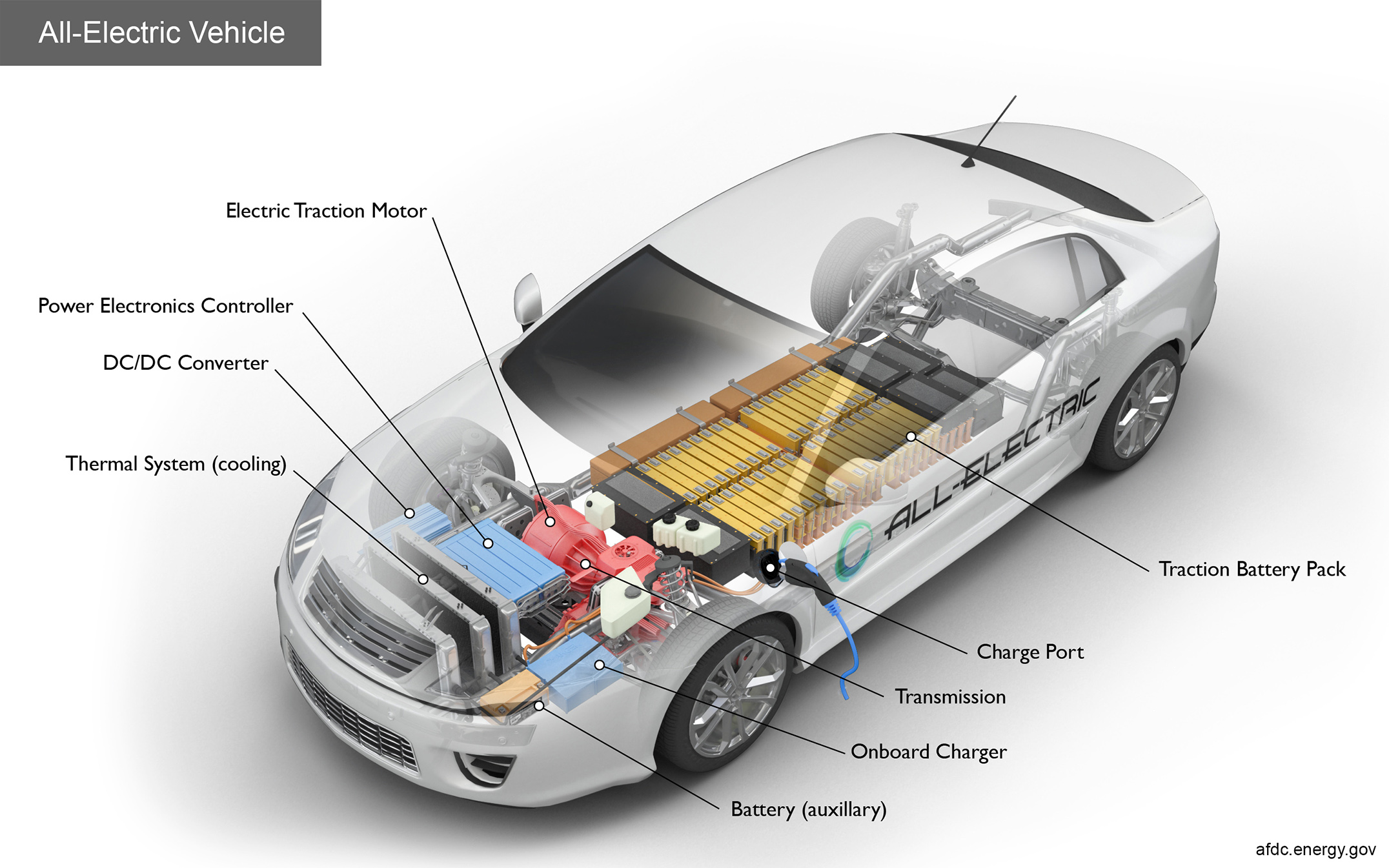
Electric vehicles usually have a large high-voltage battery pack plus a smaller 12-volt battery. The small battery runs lights, computers, locks, and control systems. The high-voltage pack powers the drive motor.
Battery labels, vehicle manuals, and manufacturer specifications are more reliable than guessing from size alone. Battery technology is one important part of how does a car battery work across different vehicles.
Signs of a Weak or Failing Battery
A battery can weaken slowly or fail without much warning. Pay attention to changes in starting behavior.
Common warning signs include:
- The engine turns over more slowly than normal.
- Interior lights dim when you start the car.
- The battery warning light appears.
- The clock or radio resets.
- You hear a rapid clicking sound.
- The battery case looks swollen or cracked.
- There is a rotten-egg smell near the battery.
- The car needs frequent jump-starts.
A slow crank often points to low battery power, poor cable connections, thick oil, or a starter problem. Rapid clicking often means the battery voltage drops too low when the starter tries to operate.
A swollen case may indicate heat damage, overcharging, freezing, or internal failure. Do not keep using a visibly damaged battery. It can leak acid or fail suddenly.
Battery age also matters. Many car batteries last about three to five years, but climate, driving habits, vibration, and maintenance can change that range. Hot climates often place more stress on battery materials, while very cold climates expose weak batteries quickly.
Knowing how does a car battery work makes these symptoms easier to understand. A weak chemical reaction cannot provide the high current needed for a strong start.
How to Test a Car Battery
You can perform a basic voltage check with a digital multimeter. Turn the vehicle off and let it sit for several hours before testing for the most useful resting reading.
Use these general readings as a guide:
- About 12.6 volts suggests a fully charged battery.
- About 12.4 volts suggests partial charge.
- About 12.2 volts suggests a low charge.
- Below 12.0 volts suggests a deeply discharged battery.
These numbers are approximate. Surface charge, temperature, recent driving, and battery age can affect the result.
A proper battery test also measures available cranking power. Many auto parts stores and repair shops can perform a conductance or load test. This test is more useful than voltage alone because it checks whether the battery can deliver current under demand.
You can also check charging voltage with the engine running. A reading near the vehicle’s normal charging range may suggest that the alternator is working, but smart charging systems can show changing values.
Before testing, inspect:
- Battery terminals.
- Ground connections.
- Positive and negative cables.
- Battery hold-down hardware.
- Signs of corrosion or acid leakage.
- The alternator belt, if accessible.
One practical lesson from hands-on battery checks is simple: clean, tight connections matter. A new battery cannot solve a loose ground cable. Always test the complete starting and charging system.
Safe Battery Care and Maintenance
Car batteries are generally easy to use, but they contain corrosive acid and can release flammable hydrogen gas. Safety should come first.
Follow these basic steps:
- Turn off the engine and all electrical accessories.
- Wear eye protection and suitable gloves.
- Keep sparks, flames, and cigarettes away from the battery.
- Do not place metal tools across the terminals.
- Make sure the battery is secured in its tray.
- Clean corrosion with the correct method and avoid skin contact.
- Follow the vehicle manual when disconnecting or replacing the battery.
If you need to remove a conventional battery, the negative cable usually comes off first. The positive cable is removed next. When installing the replacement, connect the positive cable first and the negative cable last.
Some vehicles require battery registration after replacement. This process tells the charging system that a new battery is installed. Without it, the vehicle may charge the battery incorrectly or fail to use its full capacity.
Do not add water to a maintenance-free battery unless the manufacturer specifically allows it. Do not open an AGM battery. If acid touches your skin, rinse the area with plenty of clean water and seek medical advice if irritation continues.
Good care supports how does a car battery work over time, but no maintenance routine can repair badly worn internal plates.
Why Car Batteries Fail
Battery failure usually comes from age, heat, vibration, deep discharge, or charging problems.
Sulfation is one major cause. It happens when lead sulfate crystals build up on the plates. A small amount forms during normal use, but long periods of low charge can make the crystals harder to reverse.
Overcharging can damage the plates and cause water loss. Undercharging can leave the battery partly charged for too long. Both problems reduce battery life.
- Short trips that do not replace starting energy.
- Long periods of parking.
- Extreme heat or cold.
- Loose or corroded connections.
- A weak alternator.
- Excessive electrical accessories.
- Physical damage or strong vibration.
- An incorrect battery size or type.
A battery may also fail after being completely drained. One deep discharge does not always destroy it, but repeated deep discharges can cause lasting damage.
This is another important part of how does a car battery work. The battery depends on a healthy chemical balance. Poor charging, high heat, and long periods of low charge upset that balance.
How to Jump-Start a Car Safely
A jump-start can restore enough power to start a vehicle, but it does not repair the battery. Use the vehicle owner’s manual when possible, especially with hybrid, electric, luxury, or start-stop models.
For a standard vehicle:
- Park the support vehicle close enough for the cables to reach, but do not let the vehicles touch.
- Turn both vehicles off.
- Connect the red cable to the dead battery’s positive terminal.
- Connect the other red clamp to the support battery’s positive terminal.
- Connect the black cable to the support battery’s negative terminal.
- Connect the other black clamp to a clean, unpainted metal ground on the disabled vehicle, away from the battery.
- Start the support vehicle, then try to start the disabled vehicle.
- Remove the cables in reverse order.
Never connect the positive and negative terminals incorrectly. Reverse polarity can damage electronic modules, fuses, and batteries.
If the battery is cracked, swollen, frozen, or leaking, do not jump-start it. Call for professional help. After a successful start, drive long enough for the charging system to restore some energy, then have the battery and alternator tested.
A jump-start shows how does a car battery work under stress, but it should be viewed as a temporary solution.
Battery Replacement Tips
Use the owner’s manual or the original battery label to find the right replacement. Important specifications include:
- Battery group size.
- Voltage.
- Cold cranking amps.
- Reserve capacity.
- Battery type.
- Terminal position.
- Start-stop compatibility.
A battery with a higher rating is not always better. The vehicle’s charging system and computer controls are designed for certain battery characteristics.
Before installing a battery, compare its physical size and terminal layout. A battery that fits poorly can move during driving, damage cables, or create a safety hazard.
After installation, check the following:
- The battery is firmly held down.
- The terminals are clean and tight.
- The cables are routed correctly.
- The vehicle starts normally.
- Warning lights are not present.
- Power windows, radio settings, and clocks work properly.
- Battery registration is completed if required.
Recycle the old battery through an auto parts store, repair shop, or approved recycling center. Lead and battery acid should not enter household waste.
Choosing the correct replacement is the practical side of how does a car battery work. The battery must match the vehicle’s electrical design, not just the space under the hood.
Frequently Asked Questions About How Does a Car Battery Work
How does a car battery work when starting the engine?
The battery sends a large flow of current to the starter motor. The starter turns the engine until combustion begins, then the alternator takes over most electrical duties.
How long does a car battery usually last?
Many car batteries last about three to five years. Heat, vibration, short trips, deep discharges, and poor charging can shorten or sometimes extend that service life.
Can a car battery recharge itself?
No. The battery needs electrical energy from the alternator or an external charger. Driving may recharge it if the battery and charging system are healthy, but a severely discharged battery may need a dedicated charger.
Why does a car battery die overnight?
A weak battery, interior light, aftermarket accessory, faulty relay, or control module may drain power while the vehicle is parked. A parasitic draw test can help identify the cause.
Does a car battery power the vehicle while driving?
The alternator usually powers the vehicle’s electrical systems while the engine runs. The battery helps stabilize voltage and supplies power when demand briefly exceeds alternator output.
Can cold weather damage a car battery?
Cold weather reduces the battery’s available starting power and makes the engine harder to turn. Extreme cold can freeze a deeply discharged battery, which may damage its case and internal parts.
Is a higher cold cranking amp rating always better?
Not always. A higher rating can provide strong starting ability, but the replacement must still have the correct size, type, terminal layout, and charging requirements for the vehicle.
Conclusion
A car battery changes chemical energy into electrical energy when the vehicle needs power. It sends high current to the starter, supports electrical systems when the engine is off, and works with the alternator after startup.
The best way to protect your battery is to inspect the terminals, watch for slow cranking, test the charging system, and replace the battery with the correct type and rating. If your car needs repeated jump-starts, have the battery, alternator, cables, and parasitic draw checked together.
Use this knowledge to make smarter maintenance choices and avoid being stranded. Explore your vehicle manual for its exact battery requirements, and share your own battery questions or experiences in the comments.