The Jackery Explorer 1000 v2 is my top pick for reliable, long-lasting car-camping power.
A quiet campsite feels less relaxing when your phone is low, your camera needs a charge, or a small cooler stops running. I have found that the best portable power station for car camping turns the trunk into a simple mobile power hub. It can charge phones, lights, laptops, cameras, and small cooking tools without fuel, smoke, or engine noise. The right model should balance battery size, weight, ports, safety, and recharge speed. This guide compares nine useful options for weekend trips, road travel, emergency use, and off-grid stays.
EnginStar 300W 296Wh Portable Power Station

The EnginStar 300W model gives car campers a useful middle ground between a tiny battery pack and a large power station. Its 296Wh capacity can handle phones, lights, tablets, cameras, and other small camp gear for a short trip. The 300W output also suits many low-power devices. I like this size for campers who want real AC power without carrying a bulky unit.
The built-in display helps you see battery level and power use at a glance. That matters at night when you need to decide whether to charge a camera or save power for a light. The unit can also support solar charging when paired with a compatible panel, though charging times depend on sun, panel size, and input limits. For many users, this is a practical first step into portable solar power.
Pros:
- Useful 296Wh capacity for weekend trips
- 300W output supports many small AC devices
- Compact size fits well in a car trunk
- Helpful screen shows battery and output data
- Can support solar recharging with a compatible panel
- Good balance of cost, size, and useful power
Cons:
- Not designed for high-watt appliances
- Large coolers and heaters may drain it quickly
- Solar panel may need to be purchased separately
My Recommendation
I recommend the EnginStar to campers who need basic AC power, USB charging, and a modest battery reserve. It is especially useful for one or two people who spend a night or two outdoors. If you want the best portable power station for car camping on a reasonable budget, this model offers a sensible mix of portability and power. It is also a good backup for short outages and road emergencies.
MARBERO 200W 148Wh Portable Power Station

The MARBERO 200W unit is made for light, simple camping power. Its 148Wh battery is enough for phones, tablets, lights, small fans, and camera batteries. It also includes an AC outlet, DC ports, USB ports, and a built-in flashlight. That mix makes it handy when you want one small box instead of several separate chargers.
This power station is easy to carry and easy to place beside a sleeping bag or camp chair. Its lower capacity means I would not choose it for long stays or heavy loads. Still, it works well as a personal charging station for a solo camper. The light can also help when setting up camp after sunset or checking gear during a roadside stop.
Pros:
- Lightweight design is easy to carry
- Multiple port types cover common camp devices
- Built-in flashlight adds useful emergency value
- 200W output suits many small electronics
- Good fit for solo trips and day outings
- Simple size for car, tent, or emergency bag storage
Cons:
- 148Wh capacity is limited for long trips
- Not suitable for high-draw appliances
- AC use can reduce runtime faster than USB use
My Recommendation
I recommend this MARBERO for solo campers, hikers who want power at the car, and buyers who value low weight. It is not the strongest option in this guide, but it is one of the easiest to pack. For basic charging, the best portable power station for car camping may be a small model like this when space matters most. It also makes a useful emergency phone and light backup.
Jackery Explorer 1000 v2 Portable Power Station

The Jackery Explorer 1000 v2 is the most capable option in this group. Its 1070Wh battery and 1500W output provide much more room for longer trips and larger loads. It can power many common camp devices, though actual runtime depends on each device’s watt draw and the station’s conversion losses. This is the model I would pack for a family trip or several nights away from hookups.
The larger battery brings more freedom, but it also adds weight and cost compared with compact stations. I like the extra reserve for laptops, camera batteries, lights, fans, and small kitchen tools. Users should still check the startup and running wattage of appliances before plugging them in. Fast charging and optional solar input can make this a strong choice for changing travel plans and longer stays.
Pros:
- Large 1070Wh capacity supports extended trips
- 1500W output handles more demanding devices
- Strong choice for families and group camping
- Useful reserve for several types of electronics
- Suitable for car camping, RV use, and outages
- Jackery offers a familiar and widely recognized product line
Cons:
- Heavier than compact camping power stations
- Costs more than small-capacity options
- May be more power than a solo camper needs
My Recommendation
I recommend the Explorer 1000 v2 for families, photographers, remote workers, and campers who stay out for several nights. It gives you a wide safety margin for power use and reduces the need to run a vehicle. In my view, it is the best portable power station for car camping when capacity and output matter more than minimum weight. It is also a strong home backup for essential small electronics.
Daran 300W 192Wh LiFePO4 Power Station

The Daran portable power station uses a 192Wh LiFePO4 battery and provides 300W of regular output. LiFePO4 chemistry is popular among campers because it can offer a long service life when used and stored correctly. This model also includes a 60W USB-C PD port, which is helpful for compatible phones, tablets, and laptops. Its 600W surge rating may help with brief startup demands, but it does not turn a high-power appliance into a low-power one.
The eight-in-one design gives this station strong everyday value. It can serve as a charger, small lighting source, and emergency power box in one compact package. I would use it for camera batteries, phones, a laptop, and LED lights. It is a smart choice for campers who want modern USB-C charging without moving up to a large, heavy battery.
Pros:
- LiFePO4 battery supports long-term everyday use
- 300W output fits many small camping devices
- 60W USB-C PD supports compatible electronics
- 600W surge rating adds flexibility for brief starts
- Built-in LED light helps with camp setup
- Compact design suits cars and small tents
Cons:
- 192Wh capacity may not cover long stays
- High-draw heating tools are outside its ideal use
- Actual solar time depends on panel and weather
My Recommendation
I recommend the Daran for tech-focused campers who want USB-C power and a durable battery type. It fits solo travelers, drone users, and people who charge several small devices each day. If you want the best portable power station for car camping with a modern port setup, this is a strong value pick. Its compact build also makes it useful for emergency kits.
Anker SOLIX C300 288Wh Portable Power Station

The Anker SOLIX C300 is a compact station with a 288Wh battery for campers who want many charging choices. Anker gives this model a practical mix of AC, USB, and DC outputs for common travel gear. The capacity sits near the sweet spot for a short weekend. It gives more reserve than tiny power banks without feeling like a full-size home backup battery.
I see this as a polished choice for people who care about daily ease of use. It can charge phones, tablets, cameras, lights, and other small electronics from one place. As with any power station, users should check watt limits before plugging in a device. Its compact footprint should work well under a car seat, in a trunk corner, or beside a tent.
Pros:
- Good 288Wh capacity for short outdoor trips
- Versatile port selection supports varied gear
- Compact design is easy to store in a vehicle
- Useful for phones, cameras, tablets, and lights
- Anker brand offers a familiar support ecosystem
- Good middle ground between small and large stations
Cons:
- Not intended for large heaters or electric cookware
- Solar accessories may cost extra
- Capacity may feel small for groups or long trips
My Recommendation
I recommend the Anker SOLIX C300 for weekend campers who want a neat, versatile, and easy-to-pack unit. It works especially well for travelers with several USB devices and a few low-power AC needs. For many buyers, the best portable power station for car camping is a balanced model, and the C300 fits that role well. It offers useful capacity without taking over the cargo area.
MARBERO 300W 237Wh Pure Sine Wave Station

This MARBERO model adds a 237Wh battery and pure sine wave AC output to a compact design. Pure sine wave power is a useful feature for sensitive electronics because it more closely matches the smooth power delivered by a home outlet. I would still check the manual for every device, but this design can provide peace of mind for laptops and similar gear. The 300W rating covers many small camp loads.
The unit offers USB-C, USB-A, DC, and AC charging in one package. That makes it easy to run a small light while charging a phone or camera. It is not a substitute for a large generator, and the battery will not last long with high-watt equipment. For short trips, it offers a practical blend of output, port choice, and portability.
Pros:
- Pure sine wave AC output suits sensitive electronics
- 237Wh capacity works for short camping trips
- 300W output supports many everyday devices
- USB-C and USB-A ports improve charging flexibility
- Compact form fits in a vehicle or tent
- Useful choice for laptop and camera users
Cons:
- Not powerful enough for large cooking devices
- Runtime drops quickly with AC appliances
- Users must manage limited battery capacity on longer trips
My Recommendation
I recommend this MARBERO for campers who want pure sine wave AC power in a smaller unit. It is a good fit for laptops, camera equipment, phones, and lights during short trips. Buyers seeking the best portable power station for car camping should consider this model when clean AC output matters. Its value is strongest for light loads and careful energy use.
200W 192Wh LiFePO4 Portable Power Station

This 200W portable power station keeps things simple with a 192Wh LiFePO4 battery. It is designed for basic camping loads such as phones, lights, tablets, and small fans. The battery chemistry gives it an appealing service-life profile for buyers who plan to use the station often. Its smaller output also helps keep the unit light and easy to move.
This model makes sense when you want dependable personal power rather than a large appliance supply. I would pack it for a quick overnight trip, a fishing day, or a roadside emergency kit. It may not offer the same headroom as a 300W station, so check device ratings before use. For simple charging, its modest size can be a benefit rather than a weakness.
Pros:
- LiFePO4 battery is suited to repeated use
- 192Wh capacity handles common small electronics
- Light and easy to move around camp
- Good option for overnight or day trips
- Lower output helps keep energy use manageable
- Useful as a vehicle emergency backup
Cons:
- 200W output limits appliance choices
- Not ideal for groups or long camping stays
- Users need to monitor battery levels closely
My Recommendation
I recommend this station for simple trips where low weight matters most. It suits solo campers, anglers, tailgaters, and drivers who want backup power in the car. It may be the best portable power station for car camping for users with modest needs and a small budget. Choose a larger model if you need regular AC power or several days of reserve.
DYNESS 300W 256Wh LiFePO4 Power Station

The DYNESS portable power station combines a 256Wh LiFePO4 battery with 300W output. It includes a 110V pure sine wave AC outlet, which is useful for compatible small electronics. The capacity is large enough for a short weekend when you focus on efficient devices. It also gives more room than many small personal power banks.
I like the balance between battery chemistry, AC output, and portable size. It can charge phones, lights, laptops, cameras, and other low-watt gear at camp. The optional solar panel gives users a path to recharge away from an outlet, but sunlight and panel setup will affect results. This model is a useful choice for campers who want a little more reserve without jumping to a 1000Wh unit.
Pros:
- LiFePO4 battery supports frequent camping use
- 256Wh capacity suits short weekend trips
- 300W output covers many small AC loads
- Pure sine wave outlet supports sensitive devices
- Optional solar charging adds off-grid flexibility
- Good capacity-to-size balance for car campers
Cons:
- Solar panel is not included with every package
- Not suitable for high-watt heaters or hot plates
- Long trips may require careful power planning
My Recommendation
I recommend the DYNESS for campers who want a LiFePO4 battery and clean AC power at a reasonable size. It is well suited to couples, short road trips, and users who may add solar charging later. If your idea of the best portable power station for car camping includes room for growth, this unit is worth a look. It gives more flexibility than the smallest models without the bulk of a large station.
MARBERO 150Wh Portable Power Station
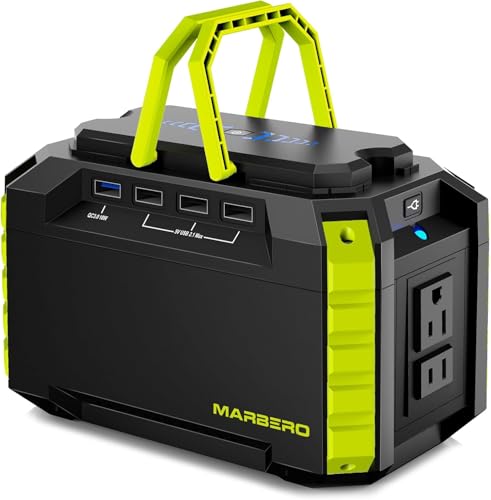
This MARBERO 150Wh station focuses on portability and simple charging. It provides a 110V AC outlet, USB ports, DC ports, and a built-in flashlight. The 150W peak output fits phones, lights, tablets, and other small electronics. It is a practical choice for campers who want several ports in a very small package.
The low weight makes it easy to carry from the car to a picnic table or tent. It can also work as a basic emergency supply during a short outage. I would not use it for long AC sessions or demanding appliances because the battery is small. For personal devices and lighting, however, the station can be a handy little power tool.
Pros:
- Very portable for short trips and day use
- Four USB and four DC ports offer flexibility
- AC outlet supports small compatible electronics
- Built-in flashlight helps during nighttime tasks
- Easy to store in a car emergency kit
- Good option for personal charging needs
Cons:
- 150Wh capacity limits total runtime
- 150W peak output excludes many appliances
- Not the best choice for multi-day camping
My Recommendation
I recommend this MARBERO for light use, quick trips, and emergency storage. It suits people who mainly charge phones, lights, and small accessories. For those needs, the best portable power station for car camping can be a small and easy-to-carry model. Pick a larger unit if you plan to run a laptop for long periods or power several AC devices.
How I Choose a Portable Power Station for Car Camping
Battery capacity is the first number I check. Manufacturers list capacity in watt-hours, or Wh. A 200Wh station stores less energy than a 1000Wh station, but it is often lighter and cheaper. I estimate needs by multiplying a device’s watts by the hours of use, then leave extra room for conversion loss and changing conditions.
Output is just as important as capacity. A station rated at 200W may not run a 500W appliance, even if the battery has plenty of energy. I check both running watts and startup watts for devices with motors. Coolers, pumps, and some fans can need a short surge when they start.
Port selection changes how easy a station feels at camp. USB-A works with many older cables, while USB-C can support newer phones, tablets, and laptops. DC ports may run some camp gear with less conversion loss than AC. I also value a clear display, a built-in light, and a layout that makes each port easy to reach.
Battery chemistry matters for long-term value. LiFePO4 batteries are popular because they can offer a long cycle life and strong thermal stability when used within the maker’s limits. Lithium-ion stations can still be useful and compact. I advise buyers to follow the manual, avoid extreme heat, and store any battery with a partial charge rather than leaving it empty for months.
Recharge speed can shape an entire trip. Wall charging is usually the easiest choice before departure. Car charging can help during a road trip, but it may take time and should not replace safe driving habits. Solar charging works best with direct sun, a suitable panel, clear cable placement, and realistic expectations.
Best Features for Car Camping
The best portable power station for car camping should feel like a quiet helper, not a second piece of luggage. Weight matters because you may carry it from the trunk to a tent several times. A solid handle, rubber feet, and a readable display make a difference after dark. I also prefer a unit with cooling space around its vents.
Pure sine wave AC output is helpful for sensitive electronics. It does not guarantee that every device will work, so I still check the user guide and watt rating. A regulated DC output can also help certain 12V devices run more smoothly. Never assume that a power station can replace a proper vehicle battery or a medical backup system.
Safety features should include overload, short-circuit, over-temperature, and low-voltage protection. These systems reduce risk, but they do not remove the need for careful use. Keep the station dry, do not cover its vents, and avoid charging it inside a hot closed vehicle. Use only approved cables and panels.
Best For Comparison
| Best for | Why |
|---|---|
| Long trips and family camping | Jackery Explorer 1000 v2 offers the largest capacity and highest output here. |
| Lightweight personal charging | MARBERO 150Wh and 148Wh models are easy to carry and store. |
| Balanced weekend power | EnginStar, Anker, DYNESS, and similar 192Wh–296Wh models offer useful middle-ground performance. |
How Much Power Do You Need?
A phone charger may use only a few watts, while a laptop can use much more. LED lights are usually efficient, but electric kettles, heaters, and hot plates can drain a small station quickly. Before buying, write down each device, its watt rating, and the number of hours you expect to use it.
For one night of basic charging, a station around 150Wh to 200Wh may be enough. A 250Wh to 300Wh model gives more comfort for a couple or a weekend. A 1000Wh-class station makes more sense for families, longer stays, camera work, or several AC devices. These are planning ranges, not promises, because real runtime changes with temperature, battery age, and power conversion.
I also suggest keeping a reserve. Running a battery to zero can leave you without a light or phone charge when you need it most. A reserve helps when weather slows solar charging or a device uses more power than expected. Think of watt-hours as your camp water tank: the bigger the tank, the longer it lasts, but waste still matters.
Solar Charging and Car Charging Tips
Solar charging can extend a trip, but it is not magic. Place the panel in direct sun and move it as the sun moves. Shade from a tree can reduce output more than many new users expect. Clouds, heat, panel angle, cable length, and the station’s input limit all affect charging speed.
Car charging is useful between campsites. Follow the station maker’s instructions and use the correct vehicle cable. Do not leave a battery station in a sealed, hot car for long periods. Extreme heat can shorten battery life and may create a safety concern.
Charge the station before leaving home. Test every cable and port before the trip. I also label cables in my camping bin, because searching for the right cord in the dark can turn a calm evening into a small storm. A short test run at home helps reveal faulty accessories before you reach the trailhead.
Portable Power Station Safety Tips
Keep the station away from rain, puddles, and wet ground unless it has a clear outdoor rating. A covered tent vestibule may still collect moisture, so use a dry, ventilated location. Never place clothing or bedding over the vents.
Do not connect a portable power station to household wiring unless you use equipment and methods designed for that purpose. These products are not automatically whole-home generators. For a CPAP or other medical device, ask a medical professional and confirm the device’s power needs before relying on a station.
Store the unit according to the manual. Check the charge level every few months. Keep it away from direct sunlight and extreme heat. If you notice swelling, damage, smoke, a sharp odor, or unusual heat, stop using it and follow the manufacturer’s safety instructions.
FAQs Of best portable power station for car camping
What size power station is best for car camping?
A 200Wh to 300Wh model suits many weekend trips with phones, lights, cameras, and laptops. Choose around 1000Wh for families, long stays, or several AC devices.
Can a portable power station run a mini fridge?
Some can, but you must check the fridge’s running and startup wattage. A larger station with enough surge capacity will usually provide a better margin than a small model.
Can I charge a power station from my car?
Yes, many models support car charging with the correct cable. Follow the manual, keep the station ventilated, and never leave it in extreme heat for long periods.
Are LiFePO4 power stations better for camping?
LiFePO4 batteries often offer long cycle life and good thermal stability. They can be a strong choice for frequent campers, but proper storage and safe use still matter.
Is solar charging worth it for car camping?
Solar charging is useful for longer off-grid trips. It works best in direct sun and requires a compatible panel, correct cable, and realistic expectations about weather and charging time.
Final Verdict: Which Should You Buy?
The Jackery Explorer 1000 v2 is my top choice because it combines high capacity, strong output, and long-trip flexibility. For smaller needs, the EnginStar and Anker SOLIX C300 offer excellent balance.
The best portable power station for car camping depends on your devices, trip length, and cargo space. Choose enough battery for comfort, then camp with quiet, clean, dependable power.