The best car interior cleaner for cloth seats lifts stains gently, dries fast, and leaves fabric fresh without a sticky film.
A spilled coffee, muddy shoe, or snack crumb can make a clean car feel old in minutes. Cloth seats also hold dust, body oil, pet hair, and food smells deep in the weave. I tested these cleaners with daily-use messes in mind, not just light showroom dirt. The products below offer different strengths, from quick touch-ups to stubborn stain removal, so you can match the cleaner to your car, budget, and cleaning style.
Chemical Guys Citrus Cleaner With Brush
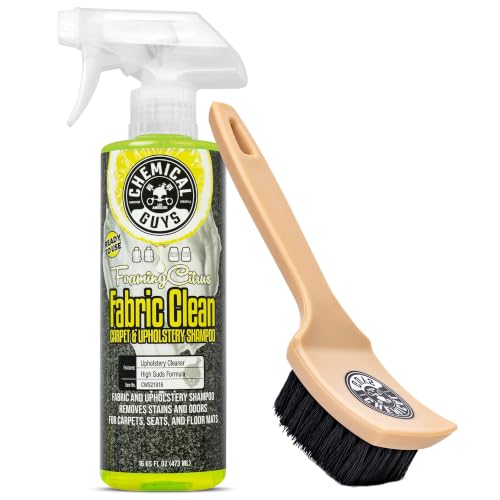
Chemical Guys Citrus Fabric & Carpet Cleaner comes with a small scrub brush, which makes it useful for cloth seats with ground-in dirt. The ready-to-use spray saves time because I do not need to mix a separate solution. Its citrus scent gives the cabin a clean smell after use. I like this kit for drivers who want one bottle and one tool for quick seat work.
Spray lightly, let the cleaner sit for a short time, and work the fabric with the brush. I then blot the area with a clean microfiber towel rather than soaking the cushion. The brush reaches seams and textured cloth well, but it needs a gentle hand on delicate upholstery. As with any interior product, test a hidden area first and follow the seat maker’s care instructions.
Pros:
- Includes a practical scrub brush
- Ready-to-use formula saves mixing time
- Works on cloth seats, carpets, and fabric mats
- Citrus scent helps refresh stale interiors
- Brush helps loosen embedded dirt
- Good choice for small, focused stain jobs
Cons:
- Scrubbing may be too strong for fragile fabric
- Heavy stains may need more than one treatment
- Users must control moisture to avoid over-wetting seats
Chemical Guys Ready-to-Use Citrus Cleaner

This ready-to-use Chemical Guys cleaner is made for simple spray-and-clean jobs. It can help remove common marks from cloth seats, floor carpet, and fabric panels. I find it convenient for routine care because there is no measuring or dilution step. The citrus scent is noticeable, so it suits shoppers who like a fresh-smelling car after detailing.
For best results, I first vacuum loose grit from the seat. I spray the cleaner onto a towel or use a light mist on the fabric, then agitate the spot and blot it dry. A light application works better than flooding the seat foam. This product is a strong daily-care option, but old grease or dye transfer may call for a dedicated stain treatment and repeat cleaning.
Pros:
- Simple ready-to-use design
- Useful for everyday cloth-seat marks
- Also works on carpet and fabric surfaces
- No separate mixing bottle is needed
- Fresh citrus scent improves cabin feel
- Easy fit for quick weekend cleaning
Cons:
- May require repeat passes on old stains
- Scent may be too strong for sensitive users
- Spraying too much can lengthen drying time
CarGuys Interior Cleaner With Towel

CarGuys Interior Car Cleaner is a versatile kit for drivers who clean more than just cloth seats. It is marketed for stains on seats, carpet, upholstery, and leather, and the included microfiber towel adds value. I like having the towel in the box because a clean towel is key to lifting soil without spreading it. The formula fits owners who want one interior cleaner for several cabin surfaces.
I use a small amount first, especially on dark cloth or older upholstery. After gentle rubbing, I turn the towel to a dry side and blot away loosened dirt. The product can handle many food, drink, and road-film marks, but results depend on how long the stain has set. Always check the material type before using it on specialty fabric, suede-like trim, or coated surfaces.
Pros:
- Includes a microfiber towel
- Useful across several interior materials
- Good for seats, carpet, and upholstery
- Convenient all-purpose kit for home garages
- Helps reduce the need for several cleaners
- Suitable for spot cleaning and routine upkeep
Cons:
- Towel quality may vary with repeated washing
- Severe set-in stains may need extra treatment
- Users still need to test hidden areas first
Chemical Guys Total Interior Cleaner
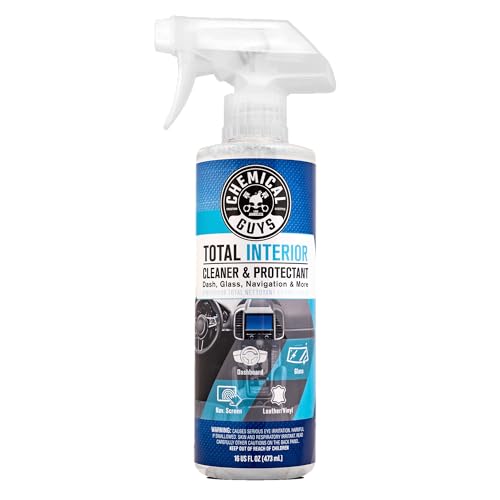
Chemical Guys Total Interior Cleaner is aimed at broad cabin care. It cleans and helps protect many interior surfaces, including fabric, plastic, vinyl, and other trim. I see it as a maintenance product for vehicles that need regular light cleaning rather than one harsh rescue treatment. It is helpful when dust, fingerprints, light grime, and daily use build up across the cabin.
I would use this spray after vacuuming and before applying any separate leather or specialty protectant. A microfiber towel gives better control than a rough shop rag and helps prevent streaks on nearby trim. On cloth seats, use a light mist and avoid making the cushion wet. Its broad use makes it a good choice for families who want to clean the whole interior in one session.
Pros:
- Designed for broad interior maintenance
- Can clean fabric and hard cabin surfaces
- Useful for dust and light daily grime
- Helps reduce product clutter in the garage
- Works well as part of a regular care routine
- Convenient for full-interior detailing days
Cons:
- Not a replacement for a deep extractor
- May not remove old grease in one pass
- Protectant performance can vary by surface
Relentless Drive Carpet and Upholstery Kit

The Relentless Drive cleaner kit focuses on carpet and upholstery, so it has a clear purpose for cloth-seat owners. I like this type of kit for family vehicles where seats and floor carpet often share the same spills. It is suited to spot work on fabric rather than broad dashboard polishing. That focused design can make the cleaning process feel less confusing for new detailers.
Vacuum the area first, then apply enough product to work the stain without soaking the padding below. Gently agitate the fabric and lift the soil with a clean towel. I recommend opening the doors or windows so the upholstery can dry fully. The kit is most useful for normal vehicle messes, while very old stains may require a professional upholstery machine or several careful passes.
Pros:
- Focused on carpet and upholstery care
- Good match for cloth seats and floor carpet
- Useful for family and commuter vehicles
- Supports targeted spot cleaning
- Helps new users follow a simple process
- Can be kept ready for sudden spills
Cons:
- Less suited to hard plastic surfaces
- Drying time depends on how much is applied
- Stubborn stains may still need professional tools
Chemical Guys Foaming Citrus Fabric Cleaner
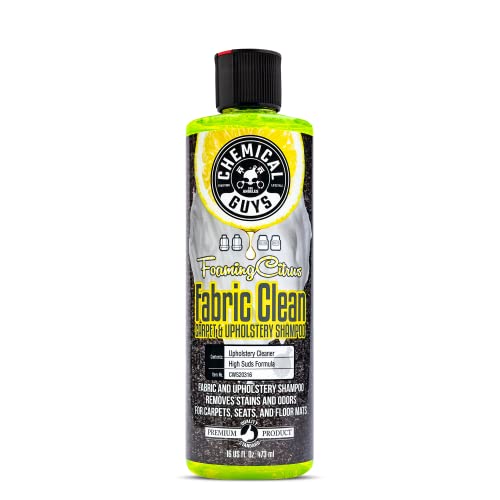
The foaming Chemical Guys cleaner is made for seats, mats, and other fabric surfaces. Foam can be useful because it gives the cleaner body and helps limit the urge to flood the upholstery. I find that feature helpful when cleaning seat bolsters or vertical fabric panels. The citrus scent also gives the cabin a fresh detail-shop feel.
Work the foam into a small section with a soft brush or microfiber towel. Then remove the loosened dirt and leftover product with a clean, slightly damp towel. I prefer working in small sections so I can see how the cloth reacts as it dries. This is a practical option for drivers who want a fabric-focused cleaner with more visible working foam.
Pros:
- Foam helps provide controlled coverage
- Made for fabric seats and mats
- Useful on vertical upholstery areas
- Helps limit excess liquid when used carefully
- Fresh citrus scent suits many users
- Good for regular fabric maintenance
Cons:
- Foam still needs thorough removal
- Heavy scrubbing can affect delicate cloth
- May need repeat work on old drink stains
Chemical Guys Lightning Fast Stain Extractor

Chemical Guys Lightning Fast is the most stain-focused option in this group. It is designed for carpet and upholstery, which makes it a logical pick for cloth seats with food, drink, and tracked-in dirt. I would reach for it when a basic interior wipe-down is not enough. Its purpose is clear: loosen visible fabric stains and help refresh worn-looking upholstery.
For the best result, remove dry debris before spraying and work in a small area. Agitate gently, then blot instead of rubbing the stain deeper into the seat. A second light treatment is often safer than one heavy application. I would also allow plenty of airflow because cloth seats should dry fully before the vehicle returns to normal use.
Pros:
- Designed for visible carpet and upholstery stains
- Good fit for cloth-seat spot treatment
- Useful when a general cleaner lacks strength
- Supports small-area cleaning without full extraction
- Works well with a soft brush and towel
- Practical for family cars and work vehicles
Cons:
- Focused stain care is not full interior detailing
- Old or oily marks may need repeat treatment
- Users must avoid soaking the seat cushion
Chemical Guys Total Interior Kit With Towels

This Chemical Guys kit combines total interior cleaner with three microfiber towels. That makes it useful for people who want a simple starter setup instead of buying towels and spray one at a time. I value the extra towels because using a dirty cloth can move grime from one panel to another. The cleaner is suited to routine work on fabric, trim, and other compatible interior areas.
I would assign one towel to loose dust, one to product removal, and one to final touch-ups. On cloth seats, use a small amount and blot well after agitation. The kit works best when the goal is regular upkeep, light spills, and a cleaner overall cabin. It is less ideal as a stand-alone solution for a deeply set stain that needs hot-water extraction.
Pros:
- Includes three microfiber towels
- Good starter kit for new car owners
- Useful for cloth and other compatible surfaces
- Helps prevent cross-contamination between areas
- Supports regular full-cabin cleaning
- Convenient value for basic detailing needs
Cons:
- Microfiber towels need proper washing and care
- General cleaner may not beat a dedicated stain remover
- Users must confirm surface compatibility before use
My Recommendation
I recommend choosing based on the mess you face most often. A family SUV with juice stains needs a different tool from a lightly used commuter car. The best car interior cleaner for cloth seats should match the fabric, stain type, drying time, and amount of work you plan to do. All eight options can help, but careful application matters as much as the bottle.
| Best for | Why |
|---|---|
| Quick everyday cleaning | Ready-to-use sprays make light dirt and fresh marks easy to treat. |
| Stubborn cloth-seat stains | Fabric-focused stain cleaners offer more targeted cleaning power. |
| Full interior upkeep | Total interior kits cover fabric, trim, and other compatible surfaces. |
How I Choose the Best Car Interior Cleaner for Cloth Seats
I do not judge a seat cleaner by scent alone. A strong fragrance can hide an odor for a short time, but it does not remove the soil causing the smell. I look at cleaning focus, moisture control, ease of use, surface safety, and the tools included in the package. These points matter when a product is used inside a small cabin with limited airflow.
Check the Seat Material First
“Cloth” can describe many materials. Some seats use woven polyester, while others have blends, coated panels, mesh, or suede-like sections. The owner’s manual and seat label should guide product choice. If the manual warns against liquid cleaners, follow that warning instead of trusting a general product claim.
I always test a hidden spot. Apply a small amount, blot it, and let it dry. Check for color change, a dark ring, stiffness, or a rough texture. This small test can prevent a large and costly mistake on the center of the seat.
Look for Controlled Moisture
Too much liquid is one of the most common cleaning errors. Seat foam can hold moisture below the fabric, even when the top looks dry. That moisture may cause a musty smell and can take a long time to leave. The best car interior cleaner for cloth seats should let you work with a light spray, foam, or towel application.
I clean with small amounts and use a dry microfiber towel to lift the loosened soil. I also leave doors open when weather allows. A fan can improve air movement, but never use extreme heat close to fabric, plastic, wiring, or seat electronics.
Match the Cleaner to the Stain
Fresh water-based spills are often easier to remove than old oil or dye marks. Blot a fresh spill quickly. Do not grind it into the weave with a hard brush. For dried marks, loosen the surface soil first, then use a suitable upholstery cleaner in light passes.
Pet stains and smoke odors may need more than a scented spray. The source must be cleaned, and the cabin may need ventilation. If a stain reaches deep into the foam, a home spray may improve the surface but not solve the whole problem. In that case, professional extraction can offer a better result.
Use the Right Tools
A vacuum removes sand, crumbs, hair, and dry grit before liquid cleaning begins. This step matters because wet grit can act like fine sandpaper. A soft upholstery brush helps loosen dirt from the weave. A clean microfiber towel then absorbs the dirty solution.
I keep separate towels for glass, interior trim, and fabric. This simple habit helps stop greasy dashboard residue from reaching cloth seats. Wash microfiber towels without fabric softener, since softener can reduce their ability to absorb.
Think About Scent and Residue
A clean seat should not feel slick. Sticky residue can attract dust and leave a dark patch after repeated use. I prefer a cleaner that rinses or wipes away with little effort. Citrus scents can feel fresh, but shoppers with allergies or scent sensitivity may prefer a mild or unscented option.
Never mix cleaning products. Combining formulas can create unwanted fumes or leave more residue. Use one product at a time, and give the surface a proper wipe before trying another method.
How to Clean Cloth Car Seats Without Damage
Start by removing trash and moving the front seats so you can reach the seams. Vacuum the entire seat, including the gap near the backrest and the crease near the seat belt buckle. Use a soft brush attachment around stitching. This first pass often removes more dirt than expected.
Next, read the label on the cleaner. Spray a hidden section or a towel first. If the fabric looks normal after drying, treat a small visible area. Work from the outside of the mark toward the center to reduce the chance of creating a larger ring.
Agitate with a soft brush or folded towel. Use short, gentle strokes. Hard brushing can rough up fibers and make a clean patch look different from the rest of the seat. After the soil lifts, blot with a dry towel until the area feels only slightly damp.
Let the seat dry with good airflow. Do not sit on it while it is wet. Once dry, vacuum again if the fabric feels stiff or shows loosened particles. This method is simple, but it protects the upholstery better than soaking and scrubbing the full cushion.
Common Mistakes to Avoid
Many seat problems come from using too much cleaner. More spray does not always mean more cleaning. It often means more work, longer drying, and a greater chance of a water ring. Use the smallest amount that gives the product room to work.
Do not use household dish soap unless the vehicle maker approves it. Dish soap may cut grease, but it can also leave a film that attracts dust. Avoid bleach, harsh solvents, and abrasive powders on vehicle upholstery. These products may fade color or weaken fibers.
Do not judge the final result while the seat is still damp. Wet fabric can look darker and uneven. Let it dry completely before deciding whether another pass is needed. If the mark remains after two careful treatments, a professional detailer may be safer than more aggressive home scrubbing.
FAQs Of best car interior cleaner for cloth seats
What is the best car interior cleaner for cloth seats?
The best choice depends on the stain and the seat material. For general care, a ready-to-use fabric cleaner is convenient. For set-in spots, a dedicated upholstery stain cleaner may work better. Always test the product in a hidden area first.
Can I use an interior cleaner on every car seat?
No. Check the owner’s manual and the product label first. Cloth, leather, vinyl, suede-like material, and coated fabric can need different care. Do not use a cloth-seat cleaner on leather unless the label clearly says it is safe.
How do I stop cloth seats from getting water rings?
Use a light amount of cleaner and work in a small area. Blend the edges gently instead of cleaning only the center of a mark. Blot well and let the seat dry with airflow. Over-wetting is a common cause of rings.
Should I vacuum before using a seat cleaner?
Yes. Vacuuming first removes dry grit, crumbs, hair, and dust. It also helps the cleaner reach the fabric instead of turning loose dirt into wet mud. Use a soft brush attachment around seams.
How often should I clean cloth car seats?
Vacuum them weekly or as needed. Spot-clean spills as soon as possible. A deeper clean every few months works for many drivers, but families, pet owners, and rideshare drivers may need a more regular schedule.
Final Verdict: Which Should You Buy?
For most shoppers, Chemical Guys Lightning Fast is the best car interior cleaner for cloth seats when stain removal is the main goal. Choose the Chemical Guys total interior kits for broad cabin care, or the CarGuys kit if you want a towel included.
Use light sprays, gentle tools, and plenty of drying time. The right best car interior cleaner for cloth seats can keep your cabin cleaner, fresher, and easier to maintain.