Check engine light flashing means a serious engine or emissions problem requiring immediate attention.
I’ve spent years diagnosing cars and helping drivers handle dashboard alerts, so I know how stressful a check engine light flashing can feel. This article explains what a check engine light flashing actually means, common causes, what to do right away, how mechanics diagnose it, repair costs, and practical tips you can use today to stay safe and avoid repeat visits.
Understanding the check engine light flashing
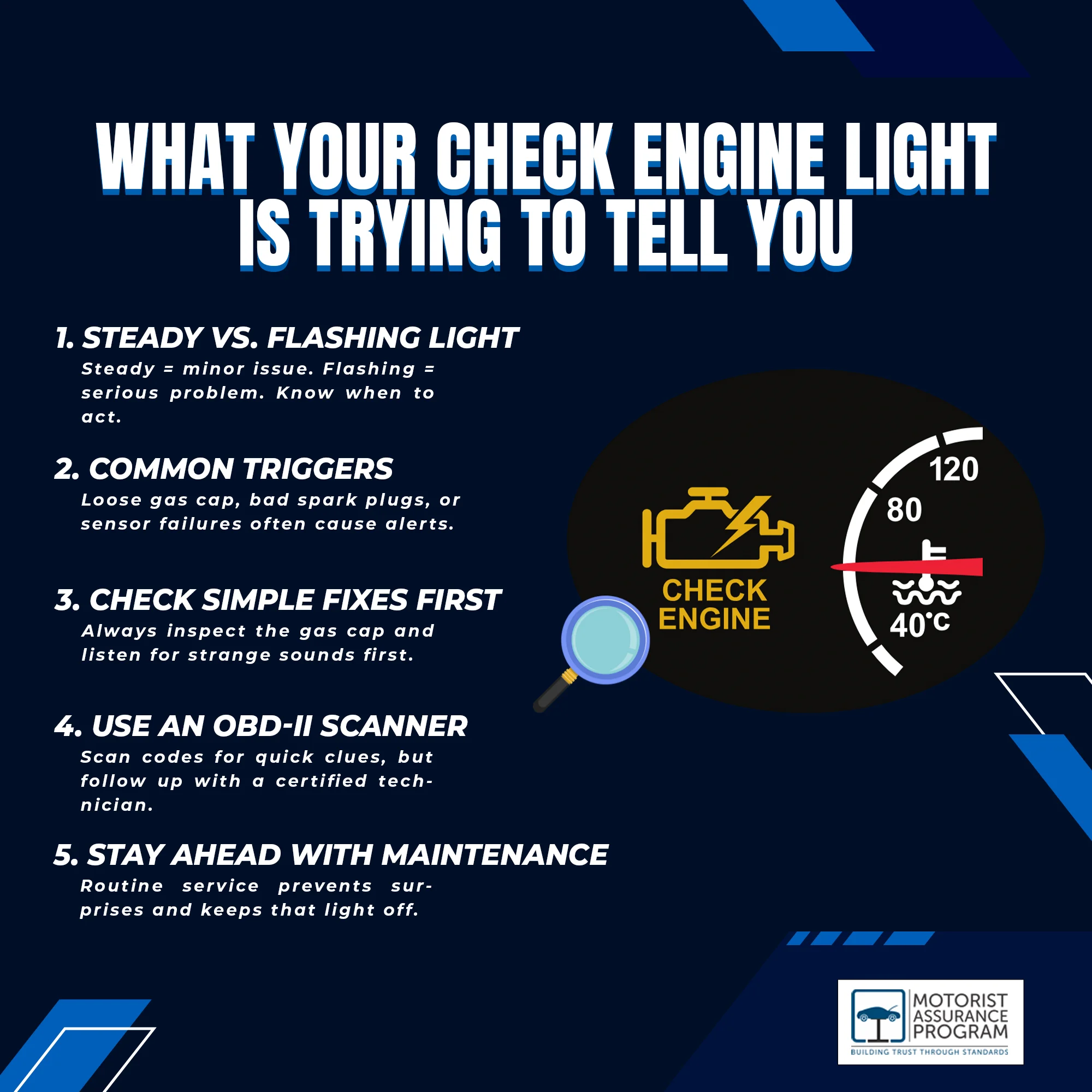
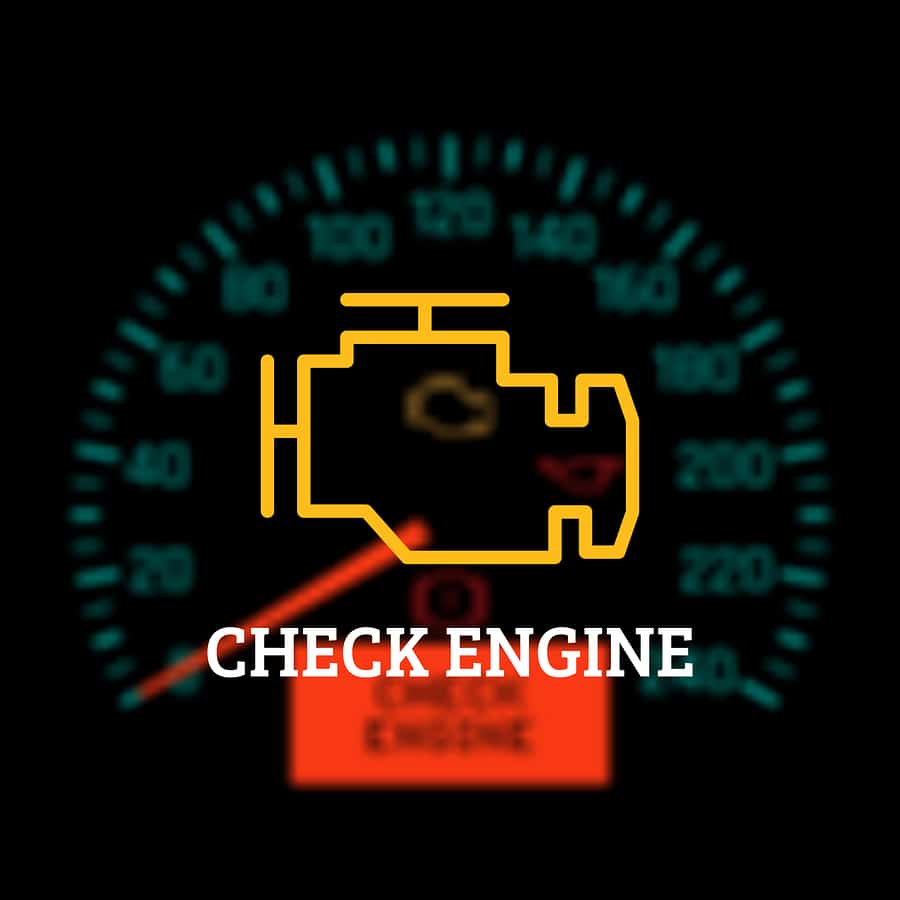
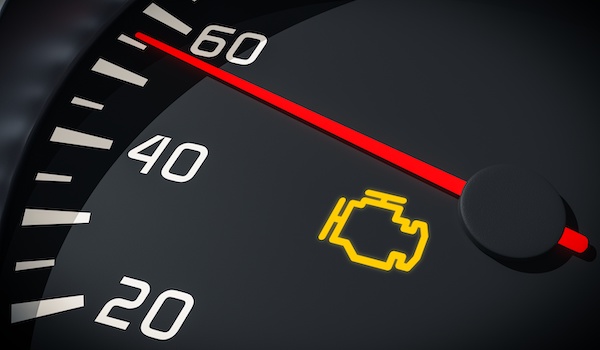
A flashing check engine light is different from a steady one. A steady light usually flags a non-urgent emissions or sensor issue. A check engine light flashing signals an active, often severe problem like an engine misfire that can damage the catalytic converter or other components.
Modern cars use OBD-II systems to monitor engine health. When the system detects a misfire or unsafe condition, it triggers a flashing check engine light and stores diagnostic trouble codes. Reading those codes with a scanner gives a starting point for repair.
A flashing light may also be paired with poor running, rough idling, or loss of power. If the engine stalls or runs badly while the check engine light flashing happens, treat it as an urgent issue. From my shop experience, ignoring a flashing light is one of the fastest ways to turn a small repair into a very expensive one.
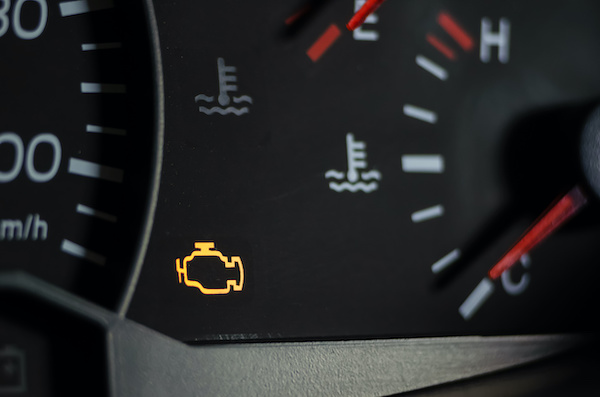
Why might the check engine light flashing happen even if the car seems fine?
Sometimes the ECU detects intermittent misfires or sensor failures that aren’t obvious during a short drive. The fault may worsen over time, so don’t wait to diagnose a flashing light.
Common causes of a flashing check engine light
Here are frequent reasons you’ll see a check engine light flashing and what each usually means.
- Engine misfire
- Faulty spark plugs, ignition coils, or fuel delivery can cause misfires. Misfires burn uncombusted fuel in the exhaust and can overheat and damage the catalytic converter.
- Faulty ignition coil or spark plug
- A weak coil or worn plug creates a misfire on one or more cylinders and triggers the flashing light.
- Bad fuel injector
- A clogged or leaking injector can cause uneven fuel delivery and misfires.
- Vacuum leak or intake issue
- Air leaks change the air-fuel mix and can trigger misfire codes.
- Failing oxygen sensor or MAF sensor
- These sensors control fueling. When they fail, the engine can run poorly and misfire.
- Catalytic converter damage
- A plugged or damaged converter sometimes follows repeated misfires and can set off the flashing indicator.
- Severe emission control malfunction
- Problems in the emission control system that risk pollution or equipment damage can cause a flashing check engine light.
From hands-on repairs, I’ve seen ignition coils and bad spark plugs cause most flashing alerts on older cars. Newer vehicles often have sensor or software-related triggers.
.png)
Is it ever caused by low fuel or a loose gas cap?
Low fuel or a loose gas cap usually cause a steady check engine light, not a flashing one. Flashing lights almost always point to a misfire or engine-run problem.
What to do immediately when the check engine light is flashing
A flashing check engine light is potentially dangerous. Follow these steps to stay safe and limit damage.
- Pull over safely
- Find a safe place to stop as soon as practical. Continuing to drive can harm the catalytic converter.
- Reduce engine load
- Turn off air conditioning and extra electrical accessories to reduce load on the engine.
- Note symptoms
- Record smells, sounds, or behaviors like stalling, rough idle, or loss of power. This helps diagnosis.
- Check for obvious issues
- Look for smoke, overheating, or leaking fluids. If any of these are present, shut off the engine.
- Avoid heavy driving
- If the car seems to limp along, drive slowly to a repair shop if it’s safe. Otherwise, call for a tow.
- Use a basic OBD-II scanner if available
- A simple code reader can tell you if it’s a misfire (P0300 series) or something else. This helps you or a mechanic decide next steps.
I once drove a car with a flashing indicator for two blocks before the catalytic converter on that vehicle overheated. Towing is often the safer, cheaper choice than risking a major repair.
Diagnosing and fixing the check engine light flashing
Diagnosing a flashing check engine light follows a methodical path.
- Read the codes
- Use an OBD-II scanner or have a shop read stored codes. Misfire codes (like P0300, P0301) point to cylinders, while others indicate sensors or systems.
- Inspect ignition and fuel systems
- Check spark plugs, coils, fuel pressure, and injectors. Swap coils or test plugs to isolate a bad component.
- Check sensors and wiring
- Test MAF, oxygen sensors, and related wiring for faults or contamination.
- Evaluate exhaust and catalytic converter
- Excessive unburned fuel from misfires can damage the converter. Checking backpressure and temperatures helps diagnose converter issues.
- Perform live data checks
- Mechanics watch fuel trims, misfire counters, and sensor live data to see when the problem occurs.
- Repair and retest
- Replace faulty parts, clear codes, and test drive. Persistent codes may require deeper diagnostics.
From personal experience, replacing a single ignition coil often fixed a flashing light on older four-cylinder cars. But on some modern vehicles, the issue was a failing fuel injector or a contaminated MAF sensor. Always verify the root cause before replacing expensive parts.
Costs and expected repair times for fixes
Repair costs vary by cause and car model. Here are typical ranges and time estimates.
- Spark plugs
- Cost: $100 to $300. Time: 0.5 to 2 hours.
- Ignition coil
- Cost: $120 to $500 per coil, depending on part and labor. Time: 0.5 to 1.5 hours.
- Fuel injectors
- Cost: $150 to $600 per injector (or more for cleaning). Time: 1 to 3 hours.
- Oxygen or MAF sensor
- Cost: $150 to $400. Time: 0.5 to 1.5 hours.
- Catalytic converter
- Cost: $500 to $2,500 or more depending on vehicle and emissions equipment. Time: 2 to 4 hours.
A simple coil or plug swap can be done the same day. Converter jobs and deep diagnostics may take longer. Expect diagnostic fees in many shops; these cover scan tools and time to reproduce faults.

Preventive maintenance and tips to avoid a flashing check engine light
Preventing a flashing check engine light is mainly about routine care and quick action on small issues.
- Keep up with tune-ups
- Replace plugs, coils, and filters per manufacturer intervals.
- Use quality fuel and parts
- Cheap parts and contaminated fuel increase risk of failures.
- Monitor check engine alerts early
- Address a steady light before it becomes flashing; small fixes are cheaper.
- Clean or replace sensors
- Mass airflow and oxygen sensors can gather deposits and lose accuracy.
- Fix drivability issues fast
- Rough idle, hesitation, or poor fuel economy often precede misfires.
I learned early in my career that preventive maintenance cuts repair bills dramatically. Spending a bit on scheduled service keeps surprises away.
Frequently Asked Questions of check engine light flashing
What does a flashing check engine light mean?
A flashing check engine light means the onboard computer detected a serious condition, most often a misfire. It warns you to stop driving and address the issue quickly to avoid damage.
Can I still drive when the check engine light is flashing?
You should avoid long trips when the check engine light is flashing. If the car runs roughly or overheats, stop driving and call for a tow.
Will disconnecting the battery reset the flashing light?
Disconnecting the battery may clear codes temporarily but won’t fix the underlying problem. A cleared code will likely return if the fault remains.
How do mechanics find the cause of a flashing check engine light?
Mechanics read OBD-II codes, inspect ignition and fuel components, test sensors, and use live data to pinpoint misfires or faults. Proper diagnosis avoids unnecessary part replacements.
Is a catalytic converter always damaged when the check engine light is flashing?
Not always. A flashing light often signals misfires that can lead to converter damage if left unchecked. Early repair of misfires can prevent converter failure.
Conclusion
A check engine light flashing is a clear signal: act now. It usually means a misfire or serious engine problem that can quickly damage the catalytic converter and other parts. Read codes, follow safe immediate steps, and get a proper diagnosis to avoid higher costs later.
Takeaway: Don’t ignore a flashing light—pull over when safe, limit driving, and seek professional diagnosis. If you found this guide helpful, share your experience or ask questions below, and consider subscribing for more car care tips.