Hearing a whining noise when accelerating can be worrying, especially when the sound gets louder as you press the gas pedal. Sometimes the cause is simple, such as a low fluid level or worn belt. In other cases, the noise can point to a transmission, differential, turbocharger, or bearing problem.
The good news is that you can narrow down the source without immediately replacing expensive parts. The key is to pay attention to when the whining starts, how its pitch changes, and whether it follows engine RPM or road speed.
In this guide, I’ll show you the common causes of a whining noise when accelerating, simple ways to diagnose it, possible repairs, warning signs, and when you should stop driving and have the vehicle inspected.
What Causes a Whining Noise When Accelerating?
A car whining when accelerating usually means a rotating component is changing speed or load. The sound may come from the engine bay, transmission, drivetrain, wheels, or an electric drive system.
Do not assume the transmission is automatically bad. Several different parts can create a very similar high-pitched sound. The table below can help you narrow down the likely source.
| Possible Cause | Typical Sound | When It Gets Louder | Other Clues |
|---|---|---|---|
| Transmission | High-pitched whine | Acceleration or gear changes | Hard shifting, slipping, low or damaged fluid |
| Turbocharger | Whine or whistle | Boost and heavy acceleration | Loss of power, boost leak, smoke, oil use |
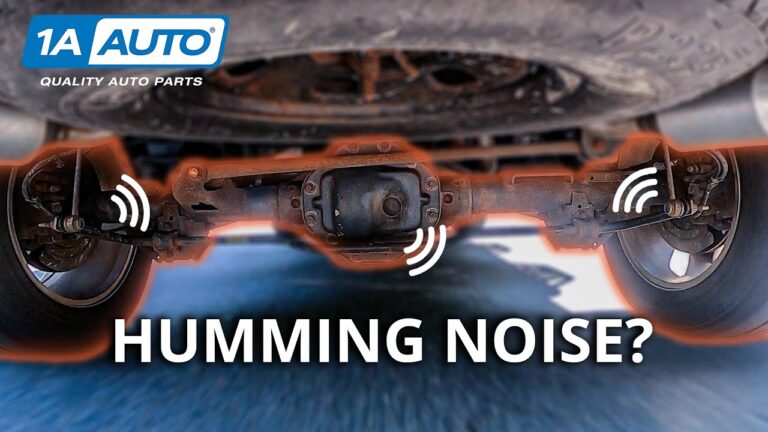
| Differential | Gear-like whine or howl | Vehicle speed or load | Noise may continue while coasting |
| Wheel bearing | Hum, whine, or growl | Higher road speed | Noise may change while turning |
| Power steering pump | Whine or groan | Steering input | Low fluid or steering-related noise |
| Alternator or pulley | High-pitched whine | Engine RPM or electrical load | Belt noise or pulley bearing wear |
| Electric motor or inverter | High-frequency electronic whine | Acceleration | Common in some EVs and hybrids |
1. Transmission Problems
The transmission is one of the first places to investigate when the whining noise changes with engine RPM or gear selection. Low fluid, worn bearings, a transmission pump, or internal gear wear can create a whine.
Check the transmission fluid only according to the procedure specified for your vehicle. Some modern transmissions are sealed and do not have a traditional dipstick. Using the wrong transmission fluid can also create shifting and lubrication problems.
If the whining is accompanied by slipping, delayed gear engagement, harsh shifts, or a burning smell, have the transmission checked instead of simply adding fluid and continuing to drive.
If your vehicle also has shifting problems, see our guide on delayed gear engagement when cold.

2. Turbocharger or Supercharger
A turbocharged engine can naturally make some intake and turbo sounds. However, a new or unusually loud whining noise during acceleration deserves attention.
A damaged turbo, boost leak, loose hose, or worn turbo components can create a high-pitched whine or whistle. Garrett Motion recommends checking the complete turbo system rather than replacing the turbo immediately because leaks and related problems can create similar symptoms.
Look for other symptoms such as reduced boost, poor acceleration, smoke, unusual oil consumption, or a sudden change in the normal turbo sound.
Garrett Motion turbocharger diagnostic guide

3. Differential or Transfer Case
A differential problem can sound very similar to a transmission whine. The important clue is often vehicle speed rather than engine RPM.
Low gear oil, worn bearings, incorrect gear setup, or damaged gears can produce a whining or howling sound. The noise may become more noticeable under acceleration and sometimes change when you lift off the throttle.
On four-wheel-drive and all-wheel-drive vehicles, the transfer case is another possible source. A low fluid level or worn internal components can create humming or whining noises.
4. Wheel Bearing
A worn wheel bearing can produce a humming, growling, or whining sound that becomes louder as the vehicle speed increases. It may also change when you gently turn because the load on the bearing changes.
This is different from many transmission noises because a wheel-bearing sound normally follows road speed. It does not simply rise and fall with engine RPM.
A wheel bearing can also be confused with tire noise. If the sound changes during gentle lane changes or turns, have the wheel and bearing assembly inspected.
You can also read our related guide: car clicking noise when turning.
5. Power Steering Pump
A hydraulic power steering pump can make a whining or groaning noise when the fluid is low, air has entered the system, or the pump is worn.
The easiest clue is steering input. If the noise becomes noticeably louder when you turn the steering wheel, inspect the power steering system rather than assuming the transmission is responsible.
Some newer cars use electric power steering and do not have a hydraulic power steering pump or fluid reservoir, so check your owner’s manual before looking for one.
6. Alternator, Belt, or Accessory Pulley
Engine accessories rotate with the engine. A worn alternator bearing, idler pulley, tensioner, belt, water pump, or another accessory can therefore create a whining noise that follows engine RPM.
A slipping or damaged serpentine belt may produce more of a squeal than a pure whine. A worn pulley bearing can produce a steady high-pitched sound.
Never place your hands, clothing, or tools near a running serpentine belt. If you are not comfortable inspecting the accessory drive, let a mechanic perform the test.
7. Electric Motor or Inverter Noise
EVs and hybrids can produce high-frequency sounds during acceleration because electric motors and power electronics change speed and load.
Some electric drivetrain noise is normal. The important clue is a new, unusually loud, or rapidly changing sound, especially when it comes with warning lights, vibration, reduced power, or other changes in vehicle behavior.
What Does the Whining Sound Tell You?
Before replacing anything, try to determine what the sound follows. This is one of the fastest ways to narrow the problem.
| Noise Pattern | Possible Source | What to Check |
|---|---|---|
| Whine follows engine RPM while parked | Accessory, alternator, belt, pump | Belts, pulleys, accessories |
| Whine appears mainly under acceleration | Transmission, turbo, differential | Fluid, boost system, drivetrain |
| Whine follows road speed | Wheel bearing, differential, tire | Wheel, tire, bearing, drivetrain |
| Noise changes while turning | Wheel bearing or CV-related component | Wheel bearing, CV joint, tire |
| Noise changes when steering | Power steering system | Fluid, pump, hoses |
| Whistle appears with turbo boost | Turbo or intake/boost leak | Hoses, clamps, intercooler, turbo |
How to Diagnose a Whining Noise When Accelerating
You do not need to guess. Start with the easiest observations and move toward more detailed checks.
Step 1: Recreate the Noise
Find a safe, quiet road and pay attention to exactly when the noise begins. Notice whether it happens during light acceleration, hard acceleration, cruising, braking, turning, or when you release the gas pedal.
Try to remember the vehicle speed and approximate engine RPM when the sound appears. Those two details can be very useful to a mechanic.
Step 2: Find Out Whether It Follows RPM or Speed
If the noise rises as engine RPM rises, even when the vehicle is stationary and the test is safe for your vehicle, an engine-driven accessory may be involved.
If the sound only appears while the vehicle is moving and changes mainly with road speed, investigate the wheels, bearings, differential, or other drivetrain components.
Step 3: Check the Fluids
Look for obvious leaks and check fluid levels only when your vehicle’s manufacturer allows a safe owner check.
- Transmission fluid or CVT fluid
- Differential or transfer-case fluid
- Power steering fluid, if equipped
- Engine oil
- Coolant where relevant to the suspected component
Dark, contaminated, burnt-smelling, or low fluid can be a useful clue, but fluid condition alone does not prove that a particular component has failed.
Step 4: Inspect Belts and Pulleys
With the engine switched off and cooled when required, visually inspect the serpentine belt for cracking, damage, contamination, or obvious wear. Look for signs of oil or coolant leaking onto the belt.
Do not reach near moving belts or pulleys while the engine is running. A professional mechanic can use proper diagnostic tools to isolate accessory noise safely.
Step 5: Check for Turbo or Intake Leaks
On a turbocharged engine, inspect accessible intake and boost hoses for loose clamps, damaged rubber, or disconnected connections. A leak can create a whistle or hiss that becomes louder under boost.
Garrett Motion recommends checking hoses, connections, leaks, and the wider turbo system before assuming the turbo itself needs replacement.
Step 6: Use a Mechanic’s Stethoscope Carefully
A mechanic’s stethoscope can help locate an engine-bay noise, but this is not a tool to use casually around moving belts and fans.
If you do not already know how to perform this test safely, leave it to a technician. A wrong diagnosis can lead to replacing an expensive part that was never faulty.

How to Fix a Whining Noise When Accelerating
The correct repair depends entirely on the failed component. There is no single fix for every whining noise.
| Suspected Problem | Possible Repair | DIY or Professional? |
|---|---|---|
| Low transmission fluid | Correct leak and fill with manufacturer-specified fluid | Depends on vehicle |
| Old transmission fluid | Fluid and filter service when recommended | DIY on some vehicles |
| Transmission internal wear | Internal diagnosis, repair, rebuild, or replacement | Professional |
| Turbo or boost leak | Repair hose, clamp, intercooler, or related leak | DIY or professional |
| Turbocharger damage | Turbo repair or replacement | Professional |
| Wheel bearing | Bearing or hub assembly replacement | Usually professional |
| Differential wear | Fluid service or internal gear/bearing repair | Professional for internal work |
| Accessory pulley | Pulley, tensioner, belt, or accessory replacement | DIY or professional |
| Power steering pump | Fluid/leak repair, bleeding, or pump replacement | Usually professional |
Transmission Fluid or Filter Service
If the transmission is low on fluid because of a leak, simply adding fluid is not the complete repair. The leak needs to be found and fixed.
If the fluid is old and the manufacturer recommends service, the correct fluid and filter service may help. However, fresh fluid cannot repair worn gears, bearings, or a damaged transmission pump.
Turbocharger Repair
If diagnosis confirms turbo damage, the turbo may need repair or replacement. But do not replace the turbo just because you hear a whistle. Intake leaks and other problems can produce similar sounds.
Differential or Transfer Case Repair
A low-fluid differential or transfer case may only need the correct fluid and leak repair. If gears or bearings are already damaged, internal repairs can be much more involved.
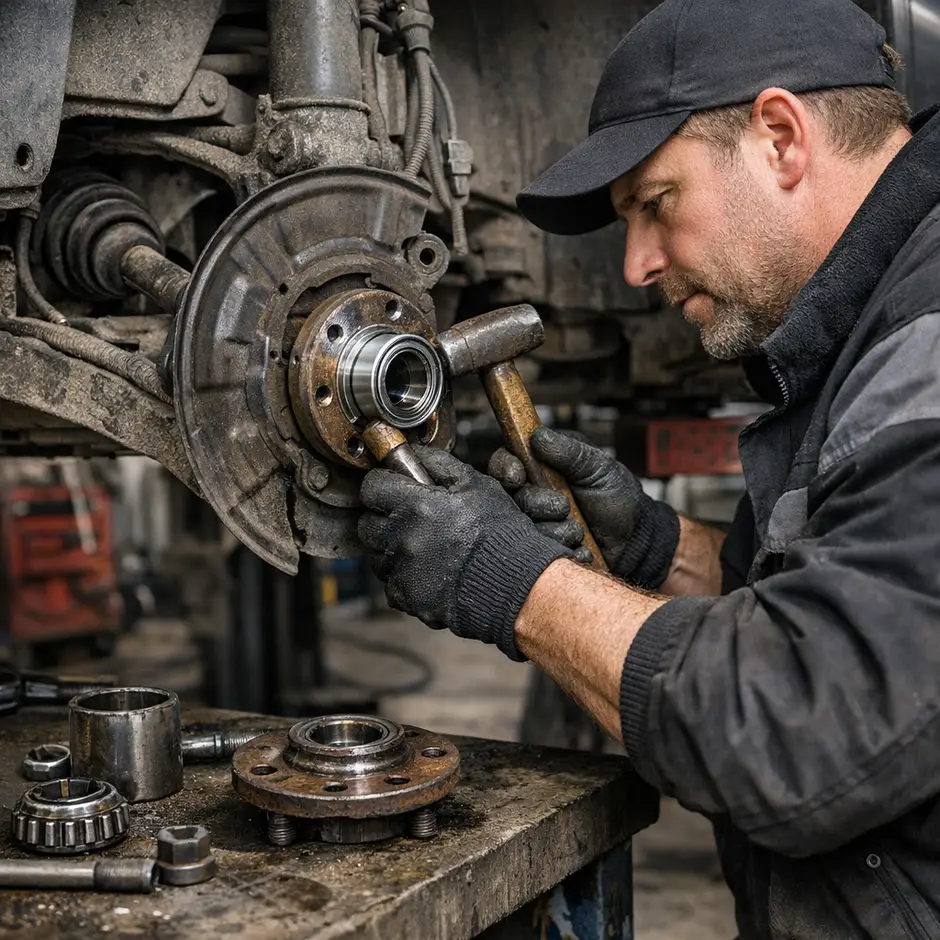
Wheel Bearing Replacement
A damaged wheel bearing normally requires bearing or hub replacement. Some vehicles use bolt-on hub assemblies, while others use pressed-in bearings that require specialized tools.
Current repair references commonly put wheel-bearing replacement in the broad range of roughly $150 to $400 per bearing, but vehicle design, labor rates, and the exact repair can move the final price considerably.
Accessory Belt or Pulley Repair
If the noise comes from the accessory drive, the repair may involve a belt, idler pulley, tensioner, alternator, water pump, or another rotating accessory.
How Much Does It Cost to Fix a Whining Noise?
There is no single repair price because a whining noise is a symptom, not a specific failure. A simple belt or fluid problem can cost much less than a transmission, turbocharger, or differential repair.
| Repair | Typical Cost Range | Repair Difficulty |
|---|---|---|
| Transmission fluid service | About $100–$300 | Low to moderate |
| Wheel bearing | About $150–$400+ per wheel | Moderate |
| Power steering pump | Often several hundred dollars or more | Moderate to advanced |
| Differential service | About $80–$200 for basic service | Low to moderate |
| Differential internal repair | $900–$3,000+ | Advanced |
| Turbocharger replacement | Can reach $1,000–$3,000+ | Advanced |
| Alternator or pulley repair | About $150–$700+ | Moderate |
These are broad U.S. planning ranges, not quotes. Your vehicle, engine, transmission type, parts choice, labor rate, and location can change the final bill. RepairPal, for example, currently lists power-steering pump replacement at an average of about $841–$940 across its estimator data, before taxes and location-specific differences.
Before approving an expensive repair, ask the shop to show you the failed part or explain the diagnostic evidence. A written estimate is also useful when comparing repair options.
Is It Safe to Drive With a Whining Noise When Accelerating?
It depends on the cause. A mild accessory noise may not create an immediate problem, while a failing wheel bearing, transmission, differential, or turbocharger can become more expensive or unsafe if the problem gets worse.
- Grinding or severe mechanical noise
- Sudden loss of power
- Transmission slipping or loss of drive
- Strong burning smells
- Major fluid leaks
- Steering problems
- Strong vibration or wheel play
- Smoke or overheating
- A warning light combined with unusual vehicle behavior
If the vehicle is still drivable but the noise is new, arrange an inspection soon rather than waiting for the sound to become severe.
How to Prevent Whining Noises From Developing
You cannot prevent every mechanical failure, but good maintenance can reduce wear and help you catch problems early.
- Follow the fluid service schedule in your owner’s manual.
- Use only the fluid specification recommended for your vehicle.
- Repair transmission, differential, and power-steering leaks quickly.
- Inspect belts and accessory components during regular service.
- Check tire pressure and inspect tires for uneven wear.
- Pay attention to new sounds instead of waiting for them to become loud.
- Have unusual drivetrain noise checked before taking a long trip.
NHTSA also recommends regular vehicle checks and provides a VIN-based recall lookup for U.S. vehicles. You can check your vehicle for open safety recalls on NHTSA.
Whining Noise When Accelerating vs. Other Car Noises
It helps to describe the sound correctly when you speak with a mechanic. A whine is not the same as a click, hum, grind, squeal, or clunk.
| Sound | Possible Area | Common Clue |
|---|---|---|
| Whining | Transmission, differential, turbo, accessory | Pitch rises with RPM or speed |
| Humming | Wheel bearing or tires | Usually follows road speed |
| Clicking | CV joint or suspension | Often worse while turning |
| Squealing | Belt or brake | May happen during startup or braking |
| Grinding | Brake, bearing, gear, or internal component | Often needs prompt inspection |
| Clunking | Suspension or drivetrain | Often happens over bumps or load changes |
Frequently Asked Questions
Why does my car make a whining noise when accelerating?
The cause can be a transmission, differential, turbocharger, wheel bearing, power steering pump, alternator, belt, pulley, or another rotating component. The most useful clue is whether the sound follows engine RPM or vehicle speed.
Can low transmission fluid cause a whining noise?
Yes. Low or degraded transmission fluid can contribute to noise and transmission problems. However, a whining sound does not prove that fluid level is the cause. Check the vehicle manufacturer’s procedure and correct fluid specification before adding anything.
Can a bad wheel bearing cause a whining noise when accelerating?
Yes. A worn wheel bearing can create a humming, whining, or growling sound that follows road speed. The sound may also change during gentle turns because the load on the bearing changes.
Can a turbo make a whining noise when accelerating?
Yes. Turbocharged engines can produce a whistle or whine under boost. A sudden change in turbo sound, especially with reduced power, smoke, oil consumption, or other symptoms, should be inspected. A boost or intake leak can also create similar sounds.
Why does my car whine only when I press the gas?
A noise that appears mainly under acceleration may be related to load on the transmission, differential, turbocharger, or engine-driven accessories. Compare the sound during acceleration, steady cruising, and coasting to narrow the source.
Why does my car whine at high speed but not when parked?
If the noise only appears while moving, wheel bearings, tires, differential components, and other drivetrain parts become more likely. A parked engine test cannot reproduce a problem that depends on wheel speed.
Can changing transmission fluid stop a whining noise?
It can help if low or degraded fluid is contributing to the noise and no internal damage has occurred. It will not repair worn gears, bearings, or a damaged transmission pump.
Is a whining noise when accelerating dangerous?
Sometimes. The risk depends on the failed component. A new whining sound should be investigated, especially when it comes with vibration, fluid leakage, slipping, steering changes, warning lights, grinding, or loss of power.
How can I tell if the whining noise is from the engine or transmission?
Start by checking whether the sound follows engine RPM or vehicle speed. If it can be reproduced with engine RPM while stationary, an engine-driven accessory becomes more likely. If it only happens while moving and follows road speed or gear load, investigate the drivetrain and wheels.
Final Thoughts
A whining noise when accelerating should not be ignored, but it also does not automatically mean you need a new transmission. The same sound can come from several different parts.
Start by identifying whether the noise follows engine RPM, vehicle speed, steering input, or acceleration load. Then check the simple things first, such as visible leaks, fluid condition, belts, and accessible hoses.
If the noise is getting louder, comes with vibration or slipping, or you cannot identify the source, have the vehicle inspected. Finding a small problem early can prevent it from turning into a much larger repair.