A car battery has a case, cells, plates, electrolyte, separators, terminals, vents, and internal connectors.
Understanding the parts of a car battery helps you spot damage, choose the right replacement, and avoid unsafe repairs. Each part has a clear job, much like the organs in a small electrical machine. This guide explains how those parts work together, how battery designs differ, and what to check during basic maintenance.

What Does a Car Battery Do?
A car battery stores chemical energy and changes it into electrical energy. When you turn the key or press the start button, the battery sends a strong current to the starter motor. The starter then turns the engine until it can run on its own.
The battery also powers electrical systems when the engine is off. These systems may include the lights, radio, alarm, power locks, and computer memory. Once the engine starts, the alternator recharges the battery and supplies power to the vehicle.
Most gasoline and diesel cars use a 12 volt battery. A fully charged battery often measures about 12.6 volts at rest, although temperature, age, and battery design can change this reading.
The main parts of a car battery work as one system:
• The case holds the internal parts and electrolyte.
• The cells create electrical voltage.
• The plates store and release electrical energy.
• The electrolyte carries ions between the plates.
• The separators prevent short circuits.
• The terminals connect the battery to the vehicle.
• The vents help control gas and pressure.
A weak part can affect the whole battery. For example, dirty terminals can restrict current even when the battery itself is healthy.
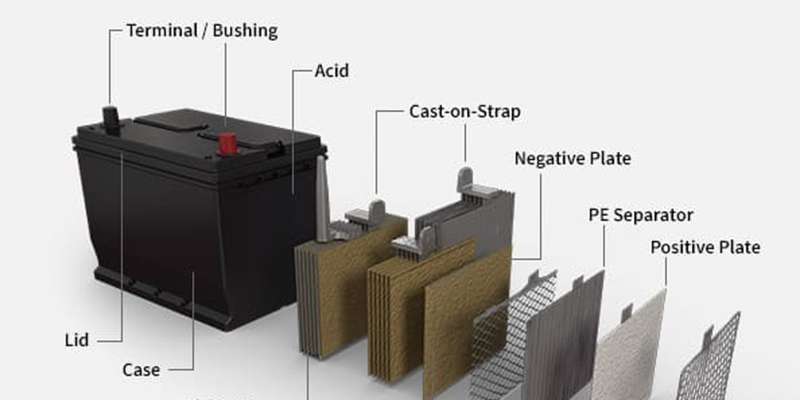
Main Parts of a Car Battery
The parts of a car battery may look simple from the outside, but the inside contains several carefully designed components. Lead acid batteries have been refined for more than a century, and each piece supports safe chemical and electrical activity.
Battery Case
The battery case is the strong plastic shell around the battery. It holds the cells, plates, separators, and electrolyte in fixed positions.
Modern cases usually use polypropylene or a similar impact resistant plastic. The material must resist acid, heat, vibration, and engine bay chemicals.
The case also includes a space below the plates. This area collects sediment that falls from the plates during normal use. Without this space, the sediment could touch the plates and create an internal short circuit.
Look for these case problems:
• Cracks or splits
• Bulging sides
• Leaking fluid
• Melted plastic near a terminal
• Heavy swelling caused by heat or overcharging
A cracked or swollen case is not safe to repair. Replace the battery and clean any acid residue with proper safety equipment.
Battery Cover
The cover seals the top of the battery. It may contain filler caps, vent openings, terminal posts, and channels that direct gas away from the battery.
On older flooded batteries, removable caps allow access to the electrolyte. Many newer batteries use a sealed cover and do not need regular water checks.
The cover must stay secure. A loose cover can allow electrolyte to escape and may let dirt enter the cells.
Battery Cells
A typical 12 volt lead acid battery contains six cells. Each cell produces about 2.1 volts when fully charged, giving the battery a total resting voltage near 12.6 volts.
The cells are separated inside the case but connected in series. This means the voltage from each cell adds to the next one.
A simple way to picture the cells is to imagine six small cups connected in a line. Each cup adds its electrical pressure to the next cup.
A failed cell can reduce a 12 volt battery to about 10.5 volts under certain conditions. The vehicle may crank slowly or fail to start, even if the battery lights still appear bright.
Positive and Negative Plates
The plates are central parts of a car battery. They hold the active materials that react with the electrolyte and create electrical energy.
Each cell contains positive and negative plates arranged in alternating groups. The positive plates use lead dioxide as their active material. The negative plates use porous, sponge like lead.
The battery has more than one plate in each cell because greater plate surface creates more chemical reaction. More surface area allows the battery to deliver high current for engine starting.
The plates are not designed to touch. A direct connection between positive and negative plates would cause a short circuit.
Plate Grids
Inside each plate is a metal grid. The grid supports the active material and carries electrical current through the plate.
Traditional grids use lead mixed with small amounts of other metals. These additions improve strength, reduce corrosion, and help the battery tolerate vibration.
Over time, the positive grid can corrode. This corrosion may cause the active material to lose contact with the grid. The result is lower capacity and a battery that may fail without much warning.
Active Material
Active material is the chemical material attached to the plate grids. It takes part in the charging and discharging reaction.
When the battery discharges, the active material changes into lead sulfate. Charging changes much of it back into its original form.
Repeated deep discharges can make lead sulfate form hard crystals. This process, called sulfation, can reduce the battery’s ability to accept a charge and deliver starting power.
Separators
Separators are thin, porous sheets placed between the positive and negative plates. They allow ions to move through the electrolyte but stop the plates from touching.
Many separators use materials such as polyethylene, fiberglass, or other acid resistant substances. Their design affects battery life, charging speed, and resistance to vibration.
A damaged separator can cause an internal short. This may lead to a low voltage reading, rapid self discharge, or a battery that becomes hot during charging.
Electrolyte
The electrolyte is a mixture of sulfuric acid and water in a flooded lead acid battery. It allows ions to move between the positive and negative plates.
The electrolyte is not simply “battery water.” It is a strong chemical solution and can burn skin, damage clothing, and harm metal surfaces.
During discharge, sulfuric acid reacts with the plates, and the electrolyte becomes weaker. During charging, the acid concentration rises again as the battery returns to a charged state.
Never add tap water to a battery. Minerals in tap water can damage the internal chemistry. If a serviceable battery needs fluid, use distilled water and follow the battery maker’s instructions.
Cell Connectors and Straps
Cell connectors, also called intercell connectors, join the cells in series. They carry current from one cell to the next.
These connectors may be visible on some older battery designs, but they are often hidden inside modern sealed batteries. A damaged connector can cause a sudden loss of voltage or an intermittent starting problem.
Internal straps also connect plate groups to the battery terminals. They must handle very high current during engine cranking.

Battery Terminals and External Connections
The terminals are the connection points between the parts of a car battery and the vehicle’s electrical system. Most vehicles use a positive terminal and a negative terminal.
Positive Terminal
The positive terminal usually has a plus sign and may have a red cover. It sends current from the battery to the starter, fuse box, and other electrical circuits.
The positive terminal is often larger than the negative terminal. Some batteries use different post shapes or terminal positions, so a replacement must match the vehicle.
Negative Terminal
The negative terminal usually has a minus sign. It connects to the vehicle body and engine through a ground cable.
The metal body acts as part of the return path for electrical current. This design reduces the amount of cable needed in the vehicle.
A loose negative connection can cause strange symptoms. You may see flickering lights, slow cranking, warning messages, or electrical accessories that stop working.
Battery Posts
Battery posts are the round metal points where cable clamps attach. Standard top post batteries place the posts on the upper surface.
Side post batteries use threaded connections on the side of the case. Some vehicles require special side post bolts and cable ends.
Always check terminal position, post type, group size, and reserve capacity before buying a replacement. Physical fit alone does not guarantee electrical compatibility.
Terminal Clamps
Terminal clamps connect the vehicle cables to the battery posts. They must be clean and tight.
A clamp can look secure but still have a poor electrical connection if corrosion sits between the clamp and post. A voltage drop test can reveal this problem better than a visual inspection.
When removing a battery, disconnect the negative cable first. When installing one, connect the positive cable first and the negative cable last. This order reduces the chance of an accidental short to the vehicle body.
Hold Down Bracket
The hold down bracket is not an internal part, but it is important for battery safety. It keeps the battery from moving during hard stops, turns, and vibration.
A battery that shifts can damage its case, terminals, cables, and internal plates. Excess movement can also cause acid leaks.
Make sure the bracket is firm but not so tight that it crushes the case. A damaged bracket should be replaced rather than ignored.
Vents, Caps, and Gas Control
Charging a lead acid battery can create hydrogen and oxygen gases. Hydrogen is highly flammable, so battery designs include vents or gas control systems.
Vent Caps
Flooded batteries may have removable vent caps over the cells. These caps let gas escape while helping reduce fluid loss.
Some caps include flame arresters. These small features help prevent an outside spark from traveling into the battery.
Do not remove vent caps while a battery is charging unless the manufacturer gives clear instructions. Keep sparks, cigarettes, and open flames away from every lead acid battery.
Vent System
The vent system guides gases away from the battery. Some batteries use a single vent port with a tube that directs gas outside the vehicle.
The vent tube matters in trunks, cabins, and enclosed compartments. Installing a battery without the correct vent connection can allow harmful gas to build up inside the vehicle.
Valve Regulated Design
Absorbed glass mat and gel batteries are valve regulated lead acid batteries. They use one way valves to control internal pressure.
These batteries are often called sealed, but that does not mean they are completely gas free. They still need proper ventilation and correct charging.
A valve regulated battery should not be opened or refilled. Its internal pressure system depends on a sealed design.
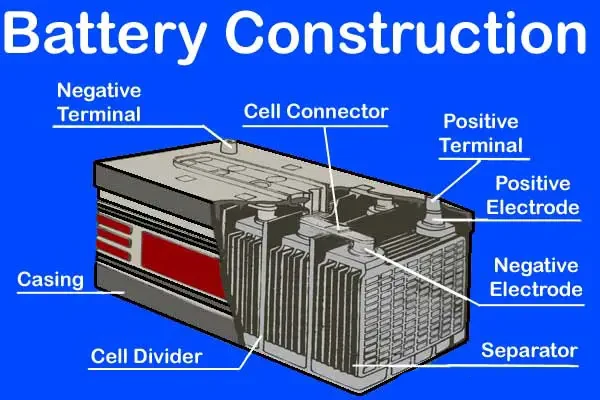
Flooded, AGM, and Gel Battery Parts
The basic parts of a car battery are similar across lead acid designs, but the electrolyte and separators can differ.
Flooded Lead Acid Batteries
Flooded batteries contain liquid electrolyte that surrounds the plates. They are common, affordable, and available in many sizes.
Some flooded batteries are serviceable. Others are labeled maintenance free and use a sealed cover that limits water loss.
Benefits include:
• Lower purchase cost
• Wide availability
• Good starting power
• Easy replacement for many older vehicles
Limitations include:
• Greater sensitivity to vibration
• Possible water loss
• Risk of acid spills
• Lower performance in some deep cycle uses
AGM Batteries
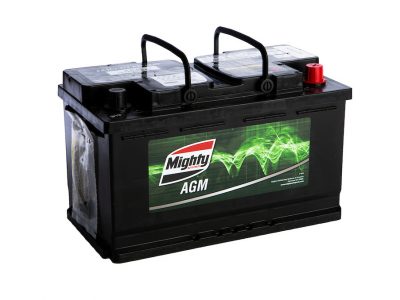
AGM stands for absorbed glass mat. In an AGM battery, fiberglass mats hold the electrolyte close to the plates.
The glass mat acts like a sponge. It keeps the electrolyte in place and helps prevent free liquid from moving inside the case.
AGM batteries often suit vehicles with start stop systems, heavy electrical loads, or strong vibration. They can also provide good starting power in cold weather.
However, AGM batteries usually cost more. They also require a compatible charging system and the correct replacement settings in many newer vehicles.
Gel Batteries
Gel batteries use silica to turn the electrolyte into a thick gel. The gel does not flow like liquid acid.
Gel designs can work well in some deep cycle applications. They are less common as original equipment in regular passenger cars.
Using the wrong charger can damage a gel battery. Always confirm the battery type before selecting a charger.
Lithium Auxiliary Batteries
Some modern vehicles use lithium batteries for auxiliary systems. These batteries do not contain the same parts of a car battery as a standard lead acid unit.
A lithium battery may include cells, a battery management system, bus bars, sensors, and protective circuits. It must use the correct charger and safety controls.
Do not replace a factory lead acid battery with a lithium battery unless the vehicle maker approves the change.
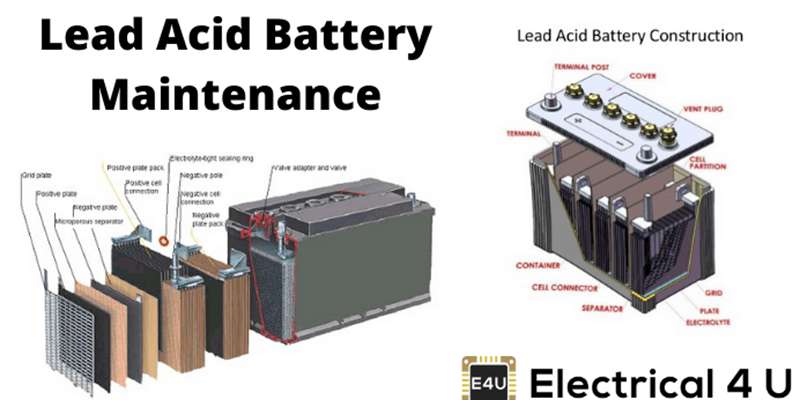
How the Parts of a Car Battery Work Together
The parts of a car battery follow a simple cycle of chemical change.
When you start the car, the negative plates release electrons. The electrons travel through the battery cable to the starter motor. They then return through the vehicle ground and negative cable.
Inside the battery, ions move through the electrolyte and separators. This chemical action supports the flow of electrons through the external circuit.
While the alternator runs, it sends current back into the battery. The charging current reverses the chemical reaction and restores much of the battery’s stored energy.
This process is not perfectly efficient. Heat, plate corrosion, sulfation, vibration, and repeated deep discharge slowly reduce battery capacity.
A battery may still show a normal voltage but have little starting power. This is why a proper load test or conductance test can provide more useful information than voltage alone.

Common Problems With Battery Parts
Learning the parts of a car battery makes diagnosis easier. Different symptoms often point to different areas.
Corroded Terminals
White, blue, or green deposits around the terminals can block current flow. Corrosion often forms when acid vapor reacts with the metal connection.
Turn off the vehicle and wear eye protection before cleaning. Use a battery terminal brush and a suitable cleaning solution. Keep the mixture away from painted surfaces and electrical connectors.
Sulfated Plates
Sulfation often occurs when a battery stays partly discharged for a long time. It can also follow repeated deep discharges.
A sulfated battery may charge quickly but lose power quickly. Some chargers offer a desulfation mode, but this feature cannot restore every damaged battery.
Corroded Grids
Grid corrosion usually develops with age, heat, overcharging, or poor charging control. It can reduce the connection between the active material and the internal grid.
This problem is inside the battery and cannot be repaired safely at home.
Shorted Cell
A shorted cell can cause a battery to show a much lower voltage than expected. The battery may also drain overnight or fail during cold weather.
A professional battery tester can confirm the issue. Replacement is normally the practical solution.
Low Electrolyte Level
Low fluid can expose the plates in a flooded battery. Exposed plates may dry out, heat up, and suffer permanent damage.
Only serviceable flooded batteries should receive distilled water. Never open or refill AGM or gel batteries.
Cracked Case
A cracked case can leak acid and allow contamination inside. It may result from impact, freezing, vibration, or overcharging.
Do not tape or glue a damaged battery. Place it in a safe position and arrange recycling through an approved battery collection point.
Loose Internal Connection
A damaged cell strap or internal connection can cause an intermittent failure. The car may start one moment and lose all power the next.
Because the connection is sealed inside the case, internal repair is not a safe consumer task.

How to Inspect the Parts of a Car Battery
A basic inspection can reveal many problems before the car leaves you stranded. Work in a well ventilated area and wear safety glasses and gloves.
Follow these steps:
-
Turn off the engine and all electrical accessories.
-
Check the case for cracks, swelling, leaks, or melted areas.
-
Confirm that the battery is held firmly by its bracket.
-
Inspect the positive and negative cables for cuts or loose connections.
-
Look for corrosion around both terminals.
-
Check the vent tube if the battery uses one.
-
Read the battery label for type, group size, date code, and ratings.
-
Measure resting voltage only if you have a safe, accurate multimeter.
A healthy, fully charged lead acid battery often reads near 12.6 volts after resting. A reading near 12.2 volts suggests partial discharge, while a much lower reading may indicate deep discharge or a weak cell.
Voltage is only one clue. A battery can show a fair resting voltage and still fail a load test. If starting is slow, have the battery and charging system tested together.
Safe Care and Maintenance Tips
Good care can extend the useful life of the parts of a car battery. It can also prevent avoidable electrical problems.
• Keep the terminals clean and tight.
• Make sure the battery hold down is secure.
• Avoid leaving lights or accessories on when the engine is off.
• Drive the vehicle long enough for the alternator to replace starting energy.
• Test the battery before extreme winter or summer weather.
• Use the correct charger for flooded, AGM, or gel batteries.
• Do not place metal tools across the terminals.
• Keep flames and sparks away from the battery.
• Use eye protection when cleaning corrosion.
• Recycle old batteries through an approved program.
In my experience with battery checks, the most common mistake is replacing the battery before testing the cable connections. A clean battery with a loose ground cable can act like a dead battery. Checking the terminals and ground path first can save time and money.
Another lesson is to avoid judging a battery by its age alone. A three year old battery may fail in harsh heat, while a carefully maintained five year old battery may still work well. Age matters, but test results and visible condition matter more.
Choosing a Replacement Battery
The correct replacement must match more than the physical size. Compare the key ratings and design features before buying.
Check these details:
• Battery group size
• Positive terminal position
• Cold cranking amps
• Reserve capacity
• Battery chemistry
• AGM or flooded design
• Manufacturer charging requirements
• Vehicle start stop compatibility
Cold cranking amps, or CCA, describe the current a battery can deliver at a low temperature. Reserve capacity estimates how long the battery can support a load if the alternator stops working.
A higher CCA rating is not always harmful, but the battery must fit correctly and suit the vehicle’s charging system. A battery that is too small may struggle, while an unsuitable high performance design may cost more without providing a useful benefit.
Many modern cars need battery registration after replacement. This process tells the vehicle computer that a new battery is installed. Without it, the charging system may use the wrong strategy and shorten battery life.
Check the owner’s manual or ask a qualified technician when the vehicle uses battery monitoring sensors, start stop technology, or energy management software.
When to Replace a Car Battery
No single symptom proves that a battery needs replacement. Several signs together provide a stronger answer.
Watch for:
• Slow engine cranking
• Clicking when starting
• Dim lights during cranking
• Repeated jump starts
• A swollen case
• Visible leaks
• Corroded or damaged terminals
• Battery warning messages
• Failure during cold mornings
A battery may fail suddenly because a cell or internal connection can break without much warning. If the battery is older and the car has begun cranking slowly, test it soon.
Do not confuse a weak battery with a charging problem. A failing alternator, loose belt, damaged cable, or parasitic electrical drain can also cause repeated starting trouble.
A complete diagnosis should include:
-
Battery voltage testing
-
Battery load or conductance testing
-
Alternator output testing
-
Cable voltage drop testing
-
Parasitic drain testing when needed
This wider check helps prevent a new battery from being damaged by another fault.
Frequently Asked Questions About Parts of a Car Battery
What are the main parts of a car battery?
The main parts of a car battery include the case, cover, cells, positive and negative plates, electrolyte, separators, grids, cell connectors, terminals, and vents. Together, these parts store energy and deliver current to the vehicle.
How many cells are inside a 12 volt car battery?
Most 12 volt lead acid batteries contain six cells. Each cell produces about 2.1 volts when fully charged, creating a total resting voltage near 12.6 volts.
What is the liquid inside a car battery?
The liquid in a flooded lead acid battery is an electrolyte made from sulfuric acid and water. It is corrosive, so you should wear eye protection and gloves when working near it.
What do the separators do in a car battery?
Separators keep the positive and negative plates from touching. They still allow ions to move through the electrolyte, which lets the battery produce electrical current.
Can you replace the parts inside a car battery?
Most car batteries are sealed units and should not be opened or repaired. Internal damage, such as a shorted cell or broken connector, usually requires battery replacement and proper recycling.
What causes corrosion on battery terminals?
Terminal corrosion often forms when acid vapor, moisture, and metal react around the connection. A loose clamp or overcharging problem can make corrosion worse.
Are AGM battery parts different from flooded battery parts?
AGM batteries use fiberglass mats to hold the electrolyte, while flooded batteries contain free liquid electrolyte. Both designs use cells, plates, grids, separators, terminals, and a case, but their internal construction and charging needs differ.
[CodeImg is intentionally omitted from the FAQ section.]
Conclusion
The parts of a car battery work together to store chemical energy, create voltage, and deliver the high current needed to start an engine. The case, cells, plates, electrolyte, separators, terminals, connectors, and vents each protect or support that process.
Knowing the parts of a car battery helps you spot corrosion, leaks, swelling, loose connections, and charging problems early. It also helps you choose the right replacement, especially when a vehicle uses AGM technology or battery monitoring software.
Take a few minutes to inspect your battery safely, test it before extreme weather, and check the charging system when problems appear. For more practical vehicle care tips, explore related maintenance guides or share your battery questions in the comments.