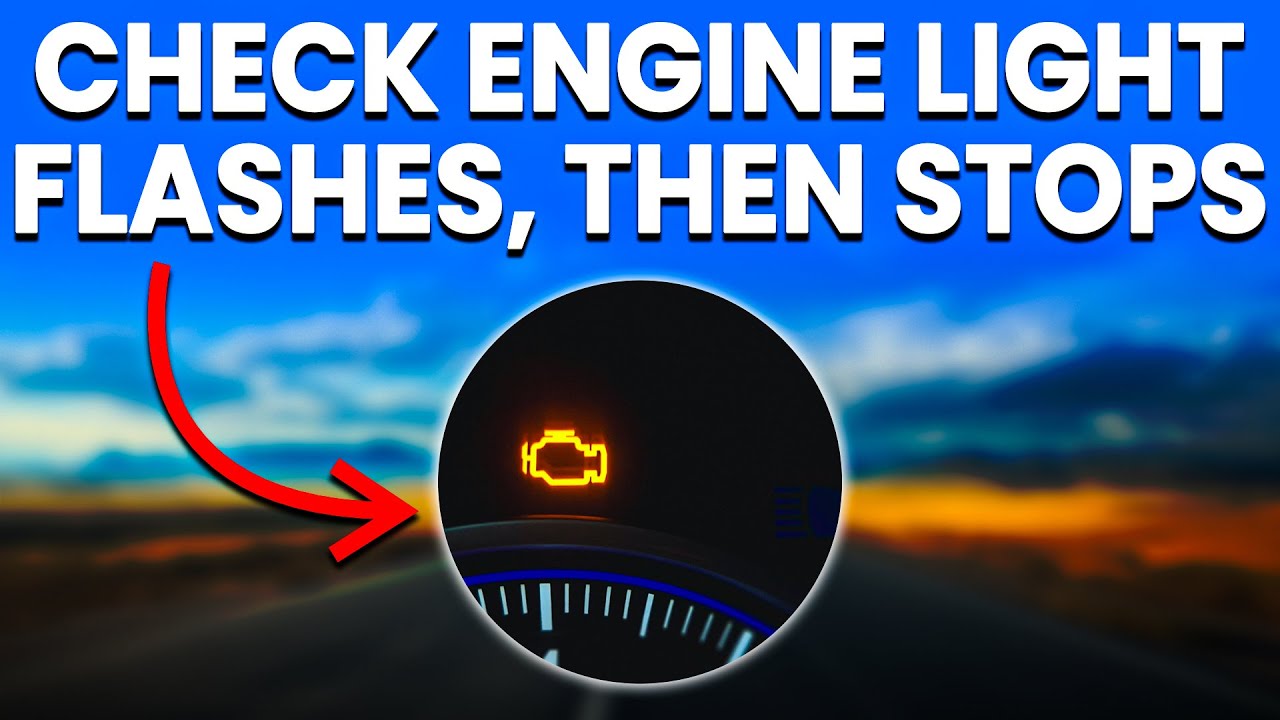
A flashing check engine light that then stops usually points to an intermittent misfire or sensor hiccup.
I’ve spent years fixing cars and explaining odd dashboard warnings to worried drivers. This article breaks down why a check engine light flashing then stops, how to diagnose it, what to do right away, and when it’s truly urgent. You’ll get clear steps, real-world tips from my shop experience, and plain answers so you can decide what to do next.

What does check engine light flashing then stops mean?
A check engine light flashing then stops means the car logged a momentary fault. Often the fault was a misfire or a sensor that briefly went out of range. The light may blink while the engine computer detects a severe event and then go steady or off once the event stops. The pattern tells you the problem might be intermittent rather than constant.

Common causes of check engine light flashing then stops
Many issues can cause the check engine light flashing then stops. Common causes include:
- Intermittent ignition misfire. Worn spark plugs, bad coils, or weak fuel delivery can cause a brief misfire.
- Loose or damaged sensors. A loose connector on a mass air flow or oxygen sensor can cause a brief spike.
- Fuel quality or contamination. Bad gas can cause rough running and trigger a flash.
- Vacuum leaks that open and close. Hoses can pop off at certain RPMs and then reseat.
- Electrical glitches. Corrosion or a weak battery can make sensors report false faults.
From my shop experience, intermittent misfires are the top culprit. I’ve chased loose coil connectors and tiny vacuum leaks that only show up under certain loads. Those issues can make the check engine light flashing then stops very annoying but fixable.

Is it safe to drive when the check engine light flashing then stops?
Short answer: sometimes. If the check engine light flashing then stops because of a mild misfire, you can usually drive slowly to a shop. If the flash happened while the car ran rough, stalled, or lost power, stop driving. A flashing check engine light often signals an active misfire. Misfires can damage the catalytic converter quickly. If you feel hesitation, noise, or loss of power, pull over and get help.
Immediate steps when the check engine light flashing then stops
Take these steps right away when you see a check engine light flashing then stops:
- Slow down and reduce load on the engine. Lower speed and avoid heavy acceleration.
- Check for obvious issues. Smell for fuel, look for smoke, and check gauges for overheating.
- Note driving conditions. Write down when the flash happened, speed, and weather.
- Use a phone app or code reader if you have one. A basic code reader can show stored trouble codes.
- Tow if needed. If the car shows severe symptoms, get it towed to avoid more damage.
In one job, I had a car where the check engine light flashing then stops only when towing a trailer. We found a worn coil pack that failed under load. Noticing the conditions saved the catalytic converter and a larger bill.

How mechanics diagnose a check engine light flashing then stops
Repair shops follow a clear process when the check engine light flashing then stops appears:
- Read stored and pending codes with an OBD-II scanner. Pending codes often explain intermittent events.
- Look at live data. Technicians check misfire counts, fuel trims, and sensor values while driving.
- Recreate the symptom. Test drives under similar load and speed help find the trigger.
- Inspect common parts. Plugs, coils, fuel injectors, and vacuum hoses get inspected and tested.
- Perform targeted tests. Compression tests and fuel pressure checks are used when needed.
A pending code is a key clue. I count on pending and freeze-frame data to see engine state when the light flashed. That data shortens diagnosis time.
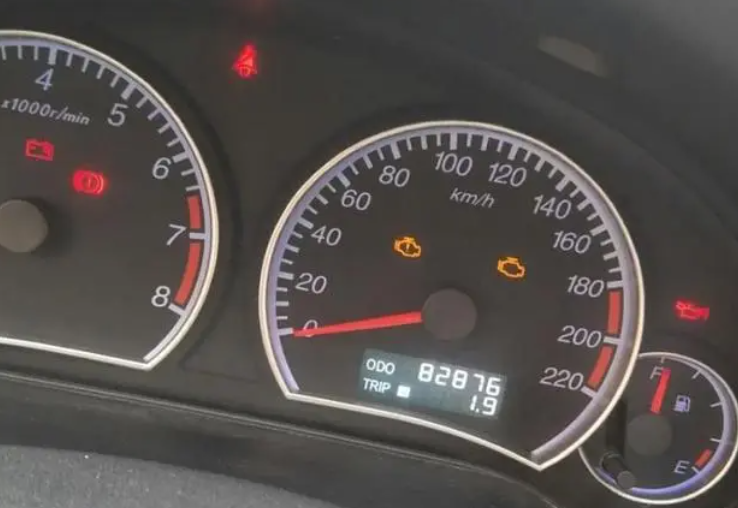
DIY checks and tools for check engine light flashing then stops
If you want to check things yourself, start simple and stay safe:
- Tool: inexpensive OBD-II scanner. Reads stored and pending codes quickly.
- Tool: good flashlight. Helps inspect connectors and hoses.
- Inspect spark plugs and wires. Look for cracks or heavy soot.
- Check battery and ground connections. Clean corroded terminals and grounds.
- Listen and feel for changes. Note rough idle, surging, or popping under acceleration.
I once found a loose vacuum hose tied down by a zip tie as a quick DIY fix. Simple checks often save time and money before a shop visit.

Preventive maintenance to avoid a check engine light flashing then stops
Good maintenance lowers the chance that your check engine light flashing then stops will occur:
- Replace spark plugs at recommended intervals to avoid misfires.
- Change air and fuel filters to keep sensors reading correctly.
- Use quality fuel and avoid old gas in seasonal cars.
- Inspect wiring and connectors during routine service.
- Keep the cooling system and battery in good shape to prevent electrical surprises.
I recommend a quick visual check of hoses and wiring every oil change. Small problems show up before they cause a flashing light.

Cost estimates and common repairs for check engine light flashing then stops
Costs vary by cause and car. Typical ranges include:
- Spark plugs and ignition coils. Expect parts and labor from low to moderate cost.
- Sensor replacement. Oxygen or MAP sensors are usually mid-range cost.
- Fuel system work. Cleaning or replacing injectors costs more.
- Catalytic converter repair if damaged. This is expensive and can be avoided by addressing misfires early.
Fixing the root cause early often prevents expensive downstream damage. I’ve saved customers big bills by addressing intermittent misfires quickly.
When to seek emergency help for check engine light flashing then stops
Get emergency help if you see any of these:
- Severe loss of power, loud backfire, or repeated stalling.
- Smoke or strong fuel smell. Those can point to dangerous conditions.
- Rapidly rising temperature or odd noises from the engine.
- Multiple warning lights lit at once, like ABS or oil pressure.
If the check engine light flashing then stops but the car runs fine, you can often wait for a scheduled repair. If symptoms are severe, don’t risk driving.
Frequently Asked Questions of check engine light flashing then stops
Why does my check engine light flash then go off?
A brief flash then off usually means the engine computer detected a momentary problem, like an intermittent misfire. The system stores a pending code for diagnosis.
Will a flashing check engine light damage my car?
Yes, if a flashing light signals a misfire, it can damage the catalytic converter quickly. Drive carefully and have the car checked soon.
Can I clear the codes myself when the check engine light flashes then stops?
You can clear codes with an OBD-II reader, but clearing without fixing the issue may hide intermittent faults. It’s better to read and record codes before clearing.
How long can I safely drive after the check engine light flashes then stops?
If the car runs normally, you can drive to a shop. If you notice rough running, power loss, or smells, stop and seek help immediately.
Do pending codes help find why the check engine light flashed then stopped?
Yes. Pending and freeze-frame data show the engine state when the light flashed. That data is often the fastest path to a fix.
Conclusion
You can think of a check engine light flashing then stops as the car’s way of telling you something odd happened. Many causes are simple and fixable. Start with basic checks, note driving conditions, and read pending codes. Act early to avoid bigger damage and higher costs. If you’re unsure, get a trusted mechanic to inspect the car and review live data.
Take action now: if your car has shown a check engine light flashing then stops, record the conditions and scan for codes. Share your findings with a mechanic or comment below to get advice.