The best overland tire repair kit combines strong tools, reliable plugs, and compact storage for remote travel.
A sharp rock, thorn, or screw can turn a great trail day into a long walk. I have seen how fast a tubeless tire can lose air when a vehicle leaves the pavement. A good repair kit helps you seal many tread punctures without removing the wheel. It can save time, protect your trip, and get you back to a safe place. The kits below suit trucks, SUVs, Jeeps, motorcycles, ATVs, trailers, and other overland vehicles. I compare tool strength, plug quality, kit size, ease of use, and value.
Overland Vehicle Systems 53-Piece Tire Kit

The Overland Vehicle Systems 53-piece kit is a broad repair system for drivers who carry more than one type of vehicle. Its tool set supports cars, trucks, SUVs, motorcycles, ATVs, trailers, RVs, and other tubeless applications. The large piece count gives you spare plugs and several small tools for common roadside jobs. For a long trip, that extra range feels like a small toolbox instead of a single-use kit.
I like this kit for full-size overland rigs because it offers room to work around a damaged tread. The tools help you clean the puncture, prepare the rubber, and insert a repair plug before airing the tire again. Still, a plug is for a tread puncture, not a sidewall cut or badly damaged casing. Follow tire industry guidance and have a professional inspect a repaired tire before normal highway use.
Pros:
- Large 53-piece assortment for many repair needs
- Works with cars, trucks, SUVs, motorcycles, and ATVs
- Useful for shared vehicle and family gear kits
- Includes spare materials for repeated puncture repairs
- Good fit for RVs, trailers, and full-size overland builds
- Helps reduce the need to remove the wheel on a tread puncture
Cons:
- Larger than a minimalist motorcycle repair kit
- Some users may not need every included piece
- Still requires an air compressor or tire inflator
AUTOWN 68-Piece Heavy-Duty Tire Plug Kit

The AUTOWN 68-piece flat tire repair kit targets drivers who want a full roadside setup. Its heavy-duty design includes the core tools needed to locate, prepare, and plug a puncture in a tubeless tire. The high piece count also gives you extra supplies for more than one repair. That matters when you travel on rough roads where sharp gravel, nails, and trail debris are common.
This kit makes sense for a truck camper, Jeep, SUV, or work vehicle that spends time far from a tire shop. The included tools can help you make a temporary tread repair without taking the tire off the vehicle. I would pair it with a quality compressor, pressure gauge, valve-core tool, gloves, and a plug kit light. Its main appeal is broad coverage, though the larger case may take more room than a basic emergency pouch.
Pros:
- Very complete 68-piece roadside repair assortment
- Heavy-duty tools suit truck and SUV use
- Extra plugs help support multiple puncture repairs
- Useful for overlanding, work trucks, and travel trailers
- Can repair many tread punctures without wheel removal
- Offers good value for drivers building a full recovery kit
Cons:
- May feel excessive for short city trips
- Bulkier than small 16-piece emergency kits
- Plugs do not fix sidewall damage or rim failure
Rhino USA 86-Piece Heavy-Duty Tire Repair Kit

The Rhino USA 86-piece kit is the most extensive option in this group by piece count. It is built for people who want a large supply of repair plugs and supporting tools in one package. A kit this broad can serve a family fleet, a trail group, or an overland vehicle that travels for weeks. It also gives you more flexibility when a puncture does not sit in an easy position.
I see the Rhino USA kit as a strong choice for prepared travelers who dislike running out of consumables. It can handle the basic process of reaming a hole and inserting a plug, but you still need patience and firm hand pressure. Before you leave, inspect the tools and practice on an old tire if possible. The National Highway Traffic Safety Administration advises drivers to treat tire damage seriously, and a plug should never replace a proper inspection when damage is severe.
Pros:
- Largest 86-piece package in this comparison
- Excellent supply of plugs and repair accessories
- Good choice for group trips and multiple vehicles
- Supports repeated repairs during long remote journeys
- Heavy-duty layout fits serious roadside preparation
- Useful for trucks, SUVs, Jeeps, and other tubeless tires
Cons:
- Large size may not suit compact gear storage
- More pieces can make inventory harder to manage
- Does not include the air needed to refill a tire
Overland Vehicle Systems Screw Plug Kit

The Overland Vehicle Systems screw plug kit takes a different approach from a standard rope-plug tool. It uses silicone seal plug screws designed for a quick emergency repair. The screw format may appeal to drivers who want a simple process with fewer loose tools. Its universal positioning also makes it suitable for trucks, SUVs, Jeeps, ATVs, motorcycles, and other off-road vehicles.
This is an attractive option when storage space matters and speed is your main goal. You still need to find the puncture, remove the object, and make sure the damaged area can accept the repair. I would carry this kit as a backup rather than my only tire solution on a long expedition. Pair it with an inflator, a pressure gauge, and a second repair method for better trail resilience.
Pros:
- Quick screw-in design for emergency tread repairs
- Compact concept for overland storage boxes
- Does not require full wheel or tire removal
- Suitable for trucks, SUVs, Jeeps, motorcycles, and ATVs
- Simple format may help new users work with less mess
- Good backup kit for remote trail travel
Cons:
- Not intended for sidewall cuts or bead damage
- May not replace a full reaming and plugging kit
- Users should confirm the seal before driving far
AUTOWN 31-Piece Professional Plug Kit

The AUTOWN 31-piece kit keeps the focus on the basic tools needed to plug a flat tire. It avoids the overwhelming size of an 80-piece kit while still offering more than a tiny emergency set. That balance works well for a daily driver, Jeep owner, or overlander who wants a focused repair pouch. The tool count should cover the common steps for a tubeless tread puncture.
I would choose this kit when I want useful gear without filling a drawer or cargo bin. It is easier to check before a trip, and its smaller format should fit beside a compressor or recovery strap. As with every plug kit, preparation matters more than piece count. Clean the puncture channel, insert the plug fully, inflate the tire, and check for leaks before continuing down the trail.
Pros:
- Focused 31-piece design avoids unnecessary bulk
- Good balance between completeness and easy storage
- Suitable for SUVs, Jeeps, cars, and light trucks
- Useful for daily driving and weekend overland trips
- Simple kit layout can help first-time users
- Leaves cargo space for an inflator and other recovery tools
Cons:
- Fewer spare materials than 68- and 86-piece kits
- May be less suitable for group expeditions
- Needs separate gloves, gauge, and air compressor
MetFun 40-Piece Screw-In Tire Plug Kit
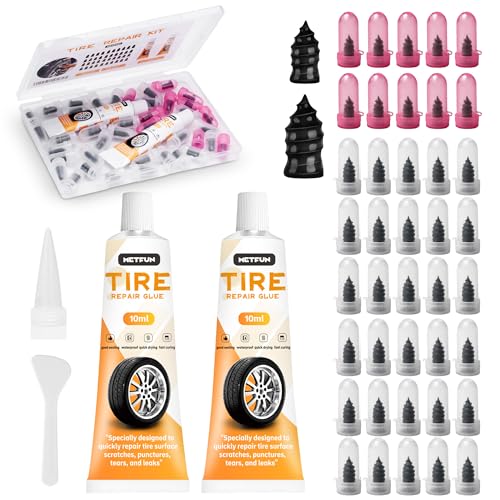
The MetFun 40-piece kit uses a quick-fix screw-in plug design and includes two tubes of sealant glue. This setup aims to give drivers a fast way to close a small tread puncture during an emergency. The screw plugs may be easier to understand than a traditional insertion tool for some new users. Its moderate size makes it practical for cars, SUVs, light trucks, and recreational vehicles.
I like the extra sealant because it can support a tighter repair when used as directed. However, sealant can become messy, and users should follow the product instructions closely. This kit works best as a compact backup beside a tire inflator and pressure gauge. I would not treat it as a cure for a split tread, damaged bead, large hole, or sidewall injury.
Pros:
- Includes 40 pieces for a useful middle-ground setup
- Screw-in plugs support a quick emergency repair
- Two sealant tubes add another sealing option
- Compact enough for many vehicle storage areas
- Useful for drivers who prefer a simple repair process
- Good backup for road trips and light off-road travel
Cons:
- Sealant may create extra cleanup after use
- Not suited to major tire or sidewall damage
- Needs careful storage to prevent sealant leaks
Grand Pitstop Tubeless Tire Gun Kit

The Grand Pitstop kit uses a tire gun and mushroom-style plugs rather than a basic rope plug. Mushroom plugs can provide a different sealing approach because the plug head sits inside the tire while the stem fills the puncture path. The set is made for cars, motorcycles, ATVs, trucks, and tractors. Its 15 included plugs keep the package focused and easy to carry.
This kit may suit drivers who want a more specialized repair tool for tubeless tires. The gun design can help control plug placement, though it may require a little practice before a real trail emergency. I would test the tool on scrap rubber and keep the instructions in the vehicle. It is a smart specialty choice, but a traditional rope plug kit may feel more familiar to most first-time users.
Pros:
- Mushroom plugs offer a distinct tubeless repair method
- Tire gun design can improve plug placement control
- Works with cars, trucks, motorcycles, ATVs, and tractors
- Compact 15-plug package suits focused emergency storage
- Useful for users seeking an alternative to rope plugs
- Can support repairs without removing the tire
Cons:
- Requires practice to use the gun with confidence
- Only includes 15 plugs, fewer than large kits
- Not a solution for sidewall or structural tire damage
ETENWOLF 16-Piece Heavy-Duty Tire Plug Kit

The ETENWOLF 16-piece kit is the small and simple choice in this review. It focuses on the essential parts for repairing a common tubeless tread puncture. A compact kit like this takes little room in a glove box, motorcycle pannier, or side compartment. It makes a practical backup for drivers who already carry a compressor and basic tire tools.
I would pack this set for a short overland trip, a commuter vehicle, or a motorcycle where every inch matters. The lower piece count means less clutter and faster gear checks before departure. It also means you have fewer spare plugs if several tires suffer damage. For serious remote travel, I would add a second plug supply and a dependable air source.
Pros:
- Compact 16-piece design saves valuable storage space
- Easy to carry in a motorcycle or small vehicle
- Provides the basic tools for a tread plug repair
- Good backup for daily drivers and weekend travelers
- Simple inventory makes pre-trip checks quick
- Pairs well with a compact compressor and pressure gauge
Cons:
- Limited spare plugs for long expeditions
- Less complete than larger 31-, 68-, and 86-piece kits
- May not satisfy group travel or fleet needs
My Recommendation
After comparing these options, I would choose the Rhino USA 86-piece kit for a long overland trip with several vehicles or limited access to help. It offers the most supplies and gives you room for repeated repairs. For a better balance of size and coverage, the AUTOWN 31-piece kit is easier to store and simple to manage. The Overland Vehicle Systems 53-piece kit is also a strong all-around choice for trucks, SUVs, RVs, and mixed vehicle groups.
The best overland tire repair kit depends on your vehicle, trip length, and storage space. Large kits suit remote expeditions, while compact kits work well for motorcycles and short trips. Screw plug kits make useful backups, but I prefer carrying a standard plug tool, spare plugs, an air compressor, and a pressure gauge together. No kit can safely repair every type of tire damage.
| Best for | Why |
|---|---|
| Long remote expeditions | The Rhino USA 86-piece kit offers the largest supply and broadest range of repair parts. |
| Balanced truck and SUV travel | The Overland Vehicle Systems 53-piece kit gives strong coverage without the largest piece count. |
| Compact everyday emergency gear | The ETENWOLF 16-piece kit takes little space and covers common tread punctures. |
What to Look for in the Best Overland Tire Repair Kit
Choosing a tire repair kit is not only about counting the pieces. I first check whether the kit matches the tire type on the vehicle. Most plug kits in this category work with tubeless tires and tread punctures. They do not repair a cut sidewall, a separated belt, a cracked wheel, or a damaged bead.
I also check the strength of the insertion handle and reamer. A weak tool can bend when you work on a thick truck tire. Good handles give you a firm grip, since plugging a puncture often takes more force than new users expect. A kit should also include enough plugs for your trip, not just one repair.
Storage matters on an overland vehicle. A large kit offers more supplies, but it can compete with recovery boards, tools, food, and camping gear. A small kit saves space but may leave you short after two punctures. I suggest matching the kit size to the number of people and vehicles in your travel group.
Do not forget the air source. A tire plug does not inflate a tire. Carry a 12-volt compressor or portable inflator that can handle your tire size, plus a pressure gauge and valve-core tool. I also pack gloves, pliers, a flashlight, eye protection, and a small bag for dirty tools.
How to Use an Overland Tire Plug Kit
First, move the vehicle to a safe place away from traffic, loose edges, and unstable ground. Turn off the engine, set the parking brake, and use wheel chocks when needed. Find the leak with soapy water or by listening for escaping air. Mark the puncture before removing the nail, screw, or sharp object.
Next, follow the instructions for your repair kit. A traditional plug process often uses a reamer to clean and shape the hole, followed by an insertion tool to push in the sticky plug. A screw kit uses a different method, so do not force one style of plug into another tool. Work slowly and keep your hands clear of sharp objects.
Inflate the tire to the vehicle maker’s recommended pressure. Use soapy water around the repair and watch for new bubbles. If air still escapes, do not assume the repair is safe. Add a proper second repair only if the kit instructions allow it, and seek professional help as soon as possible.
After a temporary plug repair, drive slowly and monitor tire pressure. Avoid high speed, heavy loads, and long highway travel until a tire professional inspects the tire. The Tire Industry Association and other tire safety experts stress that repair location and internal damage affect whether a tire can be safely repaired. A plug is a trail tool, not permission to ignore tire safety.
Why Tire Pressure Matters During Overland Travel
Tire pressure affects traction, heat, handling, and puncture risk. Many off-road drivers lower pressure for better grip on rocks or sand, but low pressure also increases sidewall flex and can unseat a bead. The right pressure depends on the tire, vehicle weight, terrain, speed, and load. Use the tire maker’s guidance and learn how your vehicle behaves before a remote trip.
Check pressure when the tires are cool. A hot tire will show a higher reading after driving, so do not release air based only on a hot reading. I prefer checking every morning on a long trip and after difficult terrain. A tire pressure monitoring system can help, but I still carry a manual gauge.
The best overland tire repair kit cannot prevent every flat. Careful tire inspection can reduce the chance of one. Look for cuts, bulges, exposed cords, trapped stones, and objects in the tread before leaving camp. Remove harmless debris only when you know it is not sealing a puncture.
Traditional Plugs Versus Screw Plugs
Traditional rope plugs use a reamer and a forked insertion tool. They are familiar, affordable, and easy to replace. Many large kits include dozens of rope plugs, which makes them useful for group trips. The main drawback is that they require firm pressure and a little practice.
Screw plugs use a threaded or screw-in design. They can feel quick and direct, especially when the puncture is easy to reach. Some kits include sealant, which may help close the repair but can create a mess. I still inspect the repair closely and carry a second method when traveling far from help.
Mushroom plugs use a special gun or insertion tool. They aim to seal the puncture from inside and outside the tire. This design may appeal to experienced users who want a specialty system. However, it may take longer to learn than a common rope plug kit.
How I Compare Overland Tire Repair Kits
I compare kits by more than their marketing claims. First, I look at the tool layout and whether a user can understand the repair steps under stress. I check the number of plugs, the likely storage needs, and whether the kit fits the tire sizes used by trucks and SUVs. I also consider how easily a traveler can replace used supplies.
Next, I consider the type of travel. A commuter needs a small kit that can get the car away from a roadside hazard. A remote overlander needs redundancy, spare plugs, strong tools, and a plan for air. A motorcycle traveler may value size and weight more than a large piece count.
I also separate emergency usefulness from permanent repair claims. A plug can help you regain mobility after a tread puncture, but it cannot restore a tire with major structural damage. This distinction is important for safety and makes a review more useful than simply calling a kit “heavy duty.”
Common Mistakes to Avoid
One common mistake is pulling out the puncturing object before preparing the repair. If you remove it too soon, the tire may lose air before you are ready. Another mistake is skipping the leak test after inserting the plug. A repair that looks fine can still leak around its edges.
Some drivers carry a plug kit but no compressor. That leaves the repair unfinished. Others carry a compressor but no pressure gauge, so they cannot confirm the final pressure. I recommend building a complete tire kit instead of buying one tool and assuming it covers the whole job.
Do not use a plug to repair a sidewall. Do not drive on a tire with a large cut, bulge, exposed cord, or damaged bead. Do not crawl beneath a vehicle supported only by a jack. When conditions are unsafe, call for assistance and protect yourself first.
Best Overland Tire Repair Kit for Different Users
For a full-size truck, I favor a larger kit such as the Rhino USA 86-piece or AUTOWN 68-piece model. These kits provide more spare supplies and better fit a vehicle with generous cargo space. They are also useful when several people share one repair kit on a group trip.
For a Jeep or SUV owner who wants balanced storage, the Overland Vehicle Systems 53-piece kit is a practical pick. It covers many vehicle types and gives more flexibility than a minimalist pouch. The AUTOWN 31-piece kit is a better match for someone who wants the main tools without a large case.
For a motorcycle or compact car, I would look at the ETENWOLF 16-piece kit. It takes less space and can work well when paired with a small inflator. The Grand Pitstop kit suits an experienced user who prefers mushroom plugs, while the screw-in kits make useful backup options for fast emergency work.
FAQs Of best overland tire repair kit
Can a tire plug permanently repair an overland tire?
A plug is usually an emergency repair for a tread puncture. A tire professional should inspect the tire and decide whether an internal patch-and-plug repair is safe. Never use a plug on a sidewall cut, bead problem, or major casing damage.
Does every tire repair kit include an air compressor?
No. Most tire repair kits include plugs and hand tools, but not an air compressor. Carry a suitable compressor, pressure gauge, and valve tool with the best overland tire repair kit you select.
How many tire plugs should I carry for overlanding?
For a short trip, a compact kit with several spare plugs may be enough. For remote travel or a group convoy, carry a larger kit with extra plugs. Sharp terrain can damage more than one tire, so redundancy is wise.
Are screw-in tire plugs better than rope plugs?
Neither style is best for every user. Screw plugs can feel quick, while rope plugs are widely understood and easy to replace. Choose the system you can use correctly, and practice before a remote trip.
What else should I pack with a tire repair kit?
Pack a compressor, gauge, pliers, gloves, flashlight, valve-core tool, soapy water, spare valve cores, and eye protection. A jack and wheel chocks may also help with inspection and safe vehicle positioning.
Final Verdict: Which Should You Buy?
The Rhino USA 86-piece kit is my top pick for long, remote trips because it offers the most supplies. The Overland Vehicle Systems 53-piece kit is the best balanced choice for many trucks and SUVs.
The best overland tire repair kit works best with a compressor, gauge, and safe repair habits. Choose the size that fits your vehicle, route, and cargo space.