The best OBD2 scanner for Japanese cars is the ANCEL JP700 for simple, focused JDM diagnostics.
A warning light can appear just before a road trip, inspection, or busy workday. Many Japanese cars also use different systems than a basic code reader can access. I tested the key features, coverage, ease of use, and value of the top options below. This guide helps you find the best OBD2 scanner for Japanese cars, whether you drive a Toyota, Honda, Nissan, Mazda, Subaru, or another Asian-market vehicle.
See the differences between my top picks at a glance.
| Scanner | Best For | Main Coverage | Connection | CTA |
|---|---|---|---|---|
| ANCEL JP700 | JDM code reading | Engine, JOBD, live data | Wired | View on Amazon |
| iCarsoft TYT V1.0 | Toyota and related makes | All-system scans, service resets | Wired | View on Amazon |
| FOXWELL NT604 Elite | ABS and SRS checks | Engine, ABS, SRS, transmission | Wired | View on Amazon |
| iCarsoft JP V4.0 | Advanced home diagnosis | All systems, active tests, services | Wired | View on Amazon |
| Bluetooth 5.4 Scanner | Phone-based scanning | Engine codes, live data | Bluetooth | View on Amazon |
| Innova 5210 | DIY owners | Engine, battery, oil reset | Bluetooth compatible | View on Amazon |
| MOTOPOWER MP69033 | Low-cost code reading | OBD2 engine faults | Wired | View on Amazon |
| BlueDriver | Smartphone reports | Engine, ABS, SRS, TPMS | Bluetooth | View on Amazon |
ANCEL JP700 JOBD Scanner

The ANCEL JP700 is built for drivers who want a direct tool for Japanese cars. It supports JOBD-style diagnosis and targets common makes such as Toyota, Honda, Nissan, Mazda, and Subaru. Its wired design starts quickly and does not depend on a phone, app, or wireless signal. For a check-engine light, that simple approach works well.
This scanner also displays live data, so I can watch engine readings while the car runs. It can read and clear suitable fault codes, but clearing a code does not repair the cause. Coverage can vary by year, engine, and market, so I would check the vehicle list before buying. Still, it is one of the most focused choices for JDM owners.
Pros:
- Designed around Japanese vehicle diagnosis
- Supports JOBD functions on compatible cars
- Wired connection avoids pairing problems
- Shows useful live engine data
- Simple controls suit first-time users
- Works with several major Japanese brands
Cons:
- May not access every body or safety module
- Vehicle coverage depends on model year and market
- Not the best choice for advanced bidirectional tests
What Amazon Buyers Are Saying
Buyer feedback commonly values the clear display, simple operation, and focus on Japanese vehicles. Many owners like having a dedicated wired reader instead of using a phone. Some buyers note that results depend on the exact car and that the tool is more limited than a full professional scan platform. I would treat the vehicle list as essential before purchase.
My Recommendation
I recommend the JP700 for a Toyota, Honda, Nissan, Mazda, or Subaru owner who mainly needs engine codes and live data. It offers strong value when its JOBD coverage matches the car. It is my top focused pick, but not my choice for deep module coding.
iCarsoft TYT V1.0 All-System Scanner

The iCarsoft TYT V1.0 targets many Toyota, Nissan, Honda, Hyundai, and Kia vehicles. Unlike a basic engine reader, it is made for wider system scans on supported models. That can include areas such as the engine, transmission, airbag, and other control units. The exact functions still depend on the car.
Service tools add extra value for owners who perform routine work at home. The listing highlights oil reset and SAS calibration functions, plus AutoVIN and lifetime update support. I like the clear focus on maintenance and system access. Buyers should confirm the supported chassis and service functions before expecting dealer-level coverage.
Pros:
- Broad Asian vehicle focus
- Designed for more than engine codes
- Includes service functions on supported vehicles
- AutoVIN can reduce manual setup
- Lifetime update claim adds long-term value
- Useful for serious DIY maintenance
Cons:
- Coverage is not identical across all brands
- Advanced services may require model-specific support
- May feel complex for a basic warning light
What Amazon Buyers Are Saying
Customer comments often focus on the wider system access and the value of service functions. Buyers who work on Toyota and related vehicles tend to appreciate having more information than a simple code reader provides. Some reviews mention a learning curve and the need to check compatibility closely. That is normal for multi-system tools with model-specific functions.
My Recommendation
This is a strong choice for a Toyota or other listed Asian vehicle when you want more than powertrain codes. I would choose it over the JP700 for service resets and wider scans, but only after checking the exact model list. It is a good mid-level tool for an active home mechanic.
FOXWELL NT604 Elite OBD2 Scanner

The FOXWELL NT604 Elite suits drivers who want to inspect major safety systems. It reads engine, ABS, SRS, and transmission codes on supported vehicles. That wider coverage matters when the dashboard shows an airbag or brake warning, not just a check-engine light. The handheld screen keeps the process simple and avoids phone distractions.
Live data helps with basic fault checks and can show whether readings change as the vehicle runs. This tool fits Japanese cars when the exact model appears in its coverage list. It also supports cars and trucks, which makes it useful in a mixed household. I would not confuse it with a full dealer scan tool, but it offers useful breadth for home diagnosis.
Pros:
- Reads several important vehicle systems
- Includes ABS and SRS support on compatible vehicles
- Dedicated handheld design
- Live data aids basic troubleshooting
- Useful for cars and light trucks
- Good step up from an engine-only reader
Cons:
- Coverage varies by vehicle and system
- Does not guarantee every service reset
- Updates and functions should be checked before purchase
What Amazon Buyers Are Saying
Amazon buyer patterns often praise the number of systems the scanner can inspect and the value compared with a shop visit. Some users find the menus easy after a short setup period. Others point out that a function shown in the general product description may not work on every model. That feedback reinforces the need to verify coverage first.
My Recommendation
I recommend the NT604 Elite for owners who want ABS and SRS access without moving to a high-cost professional platform. It is more versatile than a basic Japanese engine scanner. For a warning light in one specific module, confirm compatibility before ordering.
iCarsoft JP V4.0 Bidirectional Tool

The iCarsoft JP V4.0 is the most advanced Japanese and Korean vehicle tool in this group. It offers all-system scanning, active tests, and many service functions on supported vehicles. Bidirectional control means the scanner can request certain components to operate, rather than only reading stored data. That feature can speed up a fault check, but it requires care.
The tool also lists battery registration and CAN-FD support. These features can matter on newer vehicles, yet coverage remains model specific. I like the wired format because it gives stable communication during a test. This is a better fit for an experienced DIY mechanic than for someone who only wants to clear one engine code.
Pros:
- Strong focus on Japanese and Korean vehicles
- All-system scan capability on supported cars
- Bidirectional active tests add diagnostic depth
- Includes many service functions
- Battery registration support is useful on compatible models
- CAN-FD support helps with newer platforms
Cons:
- Costs more than a basic code reader
- Active tests require careful use
- Exact functions vary by brand, year, and model
What Amazon Buyers Are Saying
Buyer discussions around advanced scanners often praise deeper access and the ability to test systems at home. Users also tend to value free updates when those updates keep vehicle coverage current. The main concern is complexity. Some owners need time to learn the menus and confirm which tests fit their vehicle. I would buy it for planned diagnostic work, not casual code reading.
My Recommendation
This is my pick for the most capable home mechanic. It can justify the higher price when you need active tests, all-system scans, or battery service. It is not the best value for a simple check-engine light, but it is one of the strongest advanced choices here.
Bluetooth 5.4 OBD2 Scanner
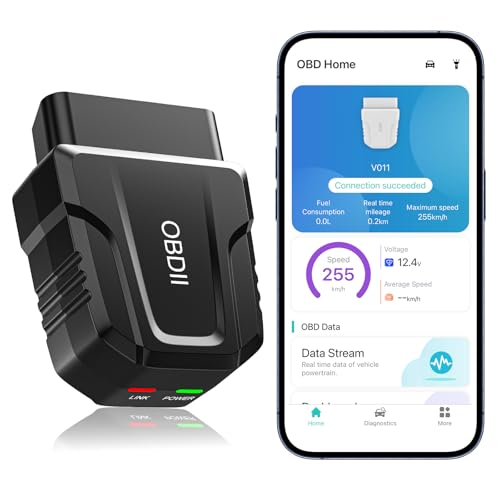
This compact Bluetooth scanner is made for drivers who prefer an iPhone or Android phone. It uses Bluetooth 5.4 and works with its exclusive app for code reading, live data, error clearing, and performance checks. A phone screen can make graphs and data easier to view than a small handheld display. It also takes little storage space in the glove box.
Wireless tools add convenience, but the app becomes part of the buying decision. I would check phone support, permissions, and app quality before relying on it. This scanner is mainly suited to standard engine diagnostics unless the listing confirms more. It is a practical choice for quick checks on a compatible Japanese car.
Pros:
- Small and easy to carry
- Bluetooth connection reduces cable clutter
- Works with iOS and Android devices
- Phone display can show useful live data
- Supports code clearing and performance checks
- Convenient for occasional DIY checks
Cons:
- Requires a compatible phone and app
- May focus mainly on standard OBD2 engine data
- Wireless setup can be less direct than a wired reader
What Amazon Buyers Are Saying
Common buyer comments for this style of scanner highlight its small size and easy phone-based display. Users often like viewing live data on a larger screen. Complaints tend to center on app setup, phone pairing, or the limits of standard OBD2 access. I would not buy it for ABS, airbag, or coding work unless the product information confirms those features.
My Recommendation
Choose this scanner if convenience matters most and you mainly need engine codes. It is a good low-clutter option for a modern phone user. For deeper Japanese vehicle coverage, a dedicated wired scan tool remains safer.
Innova 5210 OBD2 Scanner

The Innova 5210 is a friendly choice for general DIY work. It reads engine codes, displays live data, tests batteries, and supports an oil reset function on suitable vehicles. Its design targets most vehicles, including many Japanese models sold in the United States. The wide vehicle focus makes it useful if your household has more than one brand.
Its connection with a repair app can add help when you want guidance after reading a code. Still, a code points to a system, not always a failed part. I like the battery test because it can help separate a weak battery from another starting issue. Check the exact oil reset and vehicle functions before purchase.
Pros:
- Good fit for everyday DIY maintenance
- Includes live data and battery testing
- Oil reset support adds practical value
- Works across many vehicle brands
- Useful companion repair app
- Simple enough for new users
Cons:
- Not a dedicated JDM diagnostic platform
- Advanced module access may be limited
- Some functions depend on vehicle compatibility
What Amazon Buyers Are Saying
Buyers often like the clear layout, battery test, and extra repair information. Many see it as a useful home tool for regular maintenance. Some users want deeper access to ABS, SRS, or manufacturer systems than this class provides. That makes it a better general reader than a specialist Japanese scan tool.
My Recommendation
I recommend the Innova 5210 for a household tool that handles common engine and maintenance tasks. It is not my first choice for a JDM-only vehicle, but it offers good all-around value. Pick it when battery testing and broad vehicle support matter.
MOTOPOWER MP69033 Code Reader

The MOTOPOWER MP69033 is a simple, low-cost OBD2 code reader. It supports OBD II protocol vehicles from 1996 onward, which covers many Japanese cars sold in the United States. It reads engine fault codes and can clear suitable codes after a repair. The bright yellow body is easy to spot in a tool drawer.
This tool does not try to replace a full diagnostic platform. It is best for checking a check-engine light before deciding whether to visit a shop. The wired design needs no battery or app. I would choose it for basic engine data, not airbag, ABS, transmission, or manufacturer-specific service work.
Pros:
- Affordable entry point
- Simple plug-in operation
- Supports common OBD2 vehicles
- Reads and clears suitable engine codes
- No phone, battery, or subscription needed
- Compact and easy to store
Cons:
- Limited mainly to standard engine diagnostics
- Does not offer advanced Japanese system access
- Small screen may show less data at once
What Amazon Buyers Are Saying
Customer feedback commonly values the low price and quick access to check-engine codes. Buyers like that the reader works without an app or account. The most common limitation is its basic scope. People who expect ABS, airbag, or detailed live data may need a more capable scanner.
My Recommendation
The MP69033 is worth buying when you need a basic code reader at a low cost. It can help you make a better repair decision, but it is not the best OBD2 scanner for Japanese cars when you need JOBD or all-system access. It is a sensible backup tool.
BlueDriver Bluetooth OBD2 Scanner

BlueDriver is a well-known Bluetooth scanner for drivers who want guided reports on a phone. It supports iPhone and Android devices and does not require a subscription for its core app experience. The product lists engine, ABS, SRS, and TPMS coverage, though access depends on the vehicle. Its repair reports can make code results easier to understand.
The wireless design feels neat in daily use. I can leave the adapter in place and view data from the driver seat, but I would remove it when the car sits for long periods unless the manufacturer says otherwise. BlueDriver is stronger than a basic generic adapter when its enhanced vehicle coverage applies. It still cannot promise every Japanese manufacturer function.
Pros:
- Works with iPhone and Android
- No subscription for the stated core use
- Repair reports add useful context
- Lists ABS, SRS, and TPMS access on supported vehicles
- Good live data presentation
- Small wireless design
Cons:
- Enhanced features vary by vehicle
- Requires a phone and app
- Not a replacement for advanced coding equipment
What Amazon Buyers Are Saying
Buyer feedback often praises the repair reports, simple app, and access to more than basic engine codes. Many users like the way the app explains possible causes. Some comments mention that coverage differs between vehicles and that wireless setup can take a little work. I consider those normal trade-offs for a phone-based scanner.
My Recommendation
BlueDriver is a strong choice for a phone user who wants clear reports and broader coverage than a cheap adapter. It may be the best OBD2 scanner for Japanese cars for app-focused buyers, but the ANCEL JP700 remains more direct for JDM-specific wired diagnosis. Check your car before ordering.
How to Choose the Best OBD2 Scanner for Japanese Cars
Choosing the best OBD2 scanner for Japanese cars takes more than checking the word “OBD2” on a box. The right tool must match the car, the fault, and your skill level. Start with these practical points.
1. Check JOBD and Vehicle Coverage
Many Japanese vehicles use standard OBD2 when sold in the United States. Some JDM imports use JOBD or manufacturer-specific systems. A low-cost generic reader may not communicate with every imported model. Check the scanner maker’s list by year, engine, market, and model.
Do not assume that a Toyota scanner works on every Toyota. A tool may read the engine but not the airbag, ABS, hybrid, or transmission module. Compatibility matters more than a long feature list.
2. Match the Scan Depth to Your Repairs
For a check-engine light, a basic reader may be enough. Live data helps when you want to watch sensor values and fuel readings. If the warning involves brakes or airbags, choose a scanner that lists ABS and SRS access for your exact car.
Advanced owners may need active tests, battery registration, steering-angle calibration, or service resets. Bidirectional control can test certain parts, but use it with care. Never clear a safety code and assume the fault has gone away.
3. Compare Connection, Updates, and Value
Wired scanners start quickly and do not need a phone. Bluetooth scanners offer better screens and easy reports, but they depend on an app and phone connection. Pick the style you will use without stress.
Also check update rules. Some tools include free updates, while others may charge later. Consider the total value, not only the purchase price. A slightly higher-cost scanner can save money if it reaches the system you need and gives useful data.
Final Verdict: Which Should You Buy?
For focused JDM engine diagnosis, I recommend the ANCEL JP700. It is simple, affordable, and well matched to many Japanese brands. For advanced work, the iCarsoft JP V4.0 is the stronger upgrade.
The best OBD2 scanner for Japanese cars depends on your model and repair goal. Confirm coverage before buying, then use any code as a starting point—not a final diagnosis.
FAQs Of best OBD2 scanner for Japanese cars
What is the best OBD2 scanner for Japanese cars?
The ANCEL JP700 is my top focused pick for many Toyota, Honda, Nissan, Mazda, and Subaru vehicles. Confirm JOBD and model-year support first.
Can a standard OBD2 scanner work on a JDM import?
Sometimes. JDM imports may use JOBD or brand-specific systems, so a generic OBD2 reader may not access every module.
Can these scanners read ABS and airbag codes?
Only selected models can do this. The FOXWELL NT604 Elite, iCarsoft tools, and BlueDriver list broader system access, but coverage depends on the vehicle.
Should I choose a wired or Bluetooth scanner?
Choose wired for fast, direct use without an app. Choose Bluetooth if you prefer phone reports, graphs, and wireless convenience.
Will clearing a code fix my Japanese car?
No. Clearing only removes stored information for a time. You must repair the cause before the warning stays off.