The JACO ElitePro is the best digital motorcycle tire pressure gauge for fast, clear, and dependable readings.
A low tire can make a smooth ride feel heavy, while an overfilled tire can reduce grip and comfort. I have found that checking pressure before a ride takes only a minute, but it can protect the tires, improve handling, and support better fuel use. The best digital motorcycle tire pressure gauge should read quickly, fit small motorcycle valves, work in low light, and stay easy to use with gloves nearby. The models below cover daily riders, touring bikes, garage use, and riders who also check cars, trucks, RVs, or bicycles.
JACO ElitePro Digital Gauge, 100 PSI

The JACO ElitePro 100 PSI is a strong fit for riders who want a simple tool with a focused pressure range. Its digital display makes the reading easy to see, and the compact body stores well in a motorcycle tail bag or garage drawer. A 100 PSI maximum is more than enough for most motorcycle tires, scooters, and commuter bikes. I like this range because it keeps the gauge centered on the pressures riders use most.
The gauge is designed for quick checks before a ride. Its hose and chuck help reach valve stems that sit behind brake discs or tight wheel parts. The display removes much of the guesswork found with old pencil gauges. As with any pressure tool, I suggest checking the valve connection fully and comparing the reading with the motorcycle maker’s cold-tire pressure label or manual.
Pros:
- Clear digital readout for quick checks
- 100 PSI range suits most motorcycles
- Compact size fits a travel kit
- Flexible hose helps reach awkward valves
- Useful for riders who value simple controls
Cons:
- Lower maximum range than heavy-duty truck gauges
- May need fresh batteries after long storage
- Not a full tire inflator by itself
My Recommendation
I recommend the JACO ElitePro 100 PSI to daily motorcycle riders, scooter owners, and weekend travelers. It gives the focused range most bikes need without adding a bulky body to the tool kit. For riders searching for the best digital motorcycle tire pressure gauge for normal road use, this model offers a good mix of clarity, portability, and practical control. Its value is especially strong when you want a dedicated pressure checker rather than a large workshop inflator.
| Best for | Why |
|---|---|
| Daily motorcycle riders | Fast checks and a useful 100 PSI range |
| Scooter owners | Small size and simple digital display |
| Travel tool kits | Easy to carry before long rides |
AstroAI Digital Gauge, 150 PSI
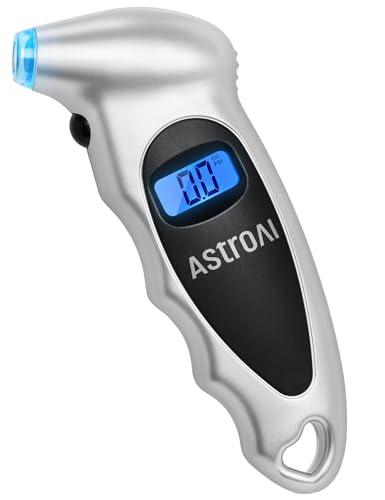
The AstroAI 150 PSI digital gauge is a flexible choice for a motorcycle garage that also serves a car or light truck. Its listed accuracy of plus or minus 1 PSI gives riders a useful level of confidence for routine pressure checks. The screen is easy to read, and the controls keep the process simple. I see this as a practical all-around gauge for homes with more than one type of vehicle.
A motorcycle does not need a 150 PSI range, but the extra headroom can help if you also work on trailers or other vehicles. The gauge is still useful for low motorcycle pressures because a digital tool can show small changes more clearly than a worn analog dial. Always measure when the tires are cold for the most useful comparison. The correct pressure remains the value listed by the motorcycle maker, not the maximum number printed on the tire sidewall.
Pros:
- 150 PSI range supports many vehicles
- Listed plus-or-minus 1 PSI accuracy
- Easy digital screen for quick viewing
- Good choice for home garages
- Works well as a shared car and motorcycle tool
Cons:
- Larger range may be more than a motorcycle needs
- Compact display can be harder to see in bright sun
- Requires battery care during storage
My Recommendation
This AstroAI model suits riders who want one gauge for a motorcycle, car, truck, and bicycle. It is a smart pick for families with several vehicles because the 150 PSI capacity adds useful flexibility. I would call it one of the best digital motorcycle tire pressure gauge options for mixed vehicle use, not only for a single bike. It also makes a sensible first gauge for a new rider building a basic maintenance kit.
| Best for | Why |
|---|---|
| Mixed vehicle homes | 150 PSI range covers many common tires |
| New riders | Simple controls and easy digital readings |
| Garage maintenance | Useful for bikes, cars, and light trucks |
JACO ElitePro Digital Gauge, 200 PSI

The 200 PSI JACO ElitePro gives riders a wider working range while keeping the familiar benefits of a digital display. It can handle normal motorcycle pressure checks with plenty of room left for other tires. The unit is helpful when a rider wants one durable gauge for a motorcycle, car, RV, or workshop task. Its design focuses on pressure measurement rather than adding unnecessary features.
I find a higher range useful for riders who maintain more than one vehicle. The flexible connection can make it easier to reach valve stems in crowded motorcycle wheels. A wide range does not mean you should inflate a motorcycle tire to a higher pressure; follow the cold pressure in the owner’s manual. Used correctly, this gauge can become a dependable part of a pre-ride routine.
Pros:
- 200 PSI range offers broad vehicle coverage
- Digital screen gives quick readings
- Useful for motorcycles and larger vehicles
- Hose design helps with difficult valve access
- Strong option for regular garage use
Cons:
- More range than most motorcycle owners require
- May take more room than a pen-style gauge
- Battery replacement is part of normal upkeep
My Recommendation
I recommend this JACO model for riders who want a robust, multi-use tool. It is a strong choice for touring households, powersports owners, and anyone who checks several vehicles each month. Among the best digital motorcycle tire pressure gauge choices, it stands out when range and workshop versatility matter more than the smallest possible size. It offers good long-term value for a rider who wants one gauge to cover many jobs.
| Best for | Why |
|---|---|
| Multi-vehicle owners | 200 PSI range handles varied tire types |
| Touring households | Useful for bikes, cars, and RVs |
| Home workshops | Flexible hose and broad pressure capacity |
ETENWOLF T600 Digital Gauge

The ETENWOLF T600 is built for riders who prefer a heavy-duty gauge with a rubber hose. Its 250 PSI range gives it room for motorcycles, cars, trucks, RVs, and many workshop tasks. The orange finish also makes the tool easier to spot in a crowded toolbox. For a rider who wants a substantial hand tool instead of a tiny pocket gauge, this model has clear appeal.
The rubber hose can improve comfort when the valve sits at an awkward angle. That matters on motorcycles with narrow clearances or large brake components near the stem. The high maximum reading is not needed for normal bike pressure, but it gives the T600 broad use outside powersports. I would keep it in a home garage or service bag rather than a very small emergency pouch.
Pros:
- 250 PSI range supports heavy-duty use
- Rubber hose improves reach and handling
- Bright orange body is easy to find
- Useful for motorcycles, trucks, and RVs
- Good fit for frequent garage checks
Cons:
- Bulkier than compact motorcycle-only gauges
- High pressure range may be unnecessary for most bikes
- Less convenient for a small tail bag
My Recommendation
The T600 is best for riders who maintain several vehicles or want a tough garage gauge. It makes sense for an adventure rider with an RV, a family with trucks, or a home mechanic who needs extra range. It may not be the best digital motorcycle tire pressure gauge for a minimalist commuter, but it is a strong choice when reach and durability matter. Its overall value is highest when the tool will serve more than one vehicle class.
| Best for | Why |
|---|---|
| Home garages | Large range and sturdy hose design |
| Adventure riders | Useful for bikes, trucks, and RVs |
| Heavy-duty tasks | 250 PSI capacity adds flexibility |
ETENWOLF T300 Digital Gauge

The ETENWOLF T300 offers a 200 PSI range for riders who want broad coverage without moving to a very large workshop gauge. It is listed for cars, RVs, trucks, and bikes, so it can serve as a shared household tool. The digital readout makes pressure checks easy to repeat from one tire to the next. Its main strength is versatility.
For motorcycle use, I would pair this gauge with a small compressor or hand pump. The gauge tells you where the pressure stands, while the pump makes the correction. This two-step approach works well during travel and helps avoid relying on uncertain gas station gauges. The T300 is most useful when you want a tool that can move between the motorcycle and the family vehicle.
Pros:
- 200 PSI maximum suits many vehicles
- Digital display supports repeatable checks
- Works for bikes, cars, trucks, and RVs
- Good value as a shared household tool
- Useful for planned maintenance and travel
Cons:
- May feel larger than a bike-only gauge
- Does not replace an air pump
- Extra range may not benefit every rider
My Recommendation
I suggest the T300 for households that need one pressure gauge for several vehicles. It is also a good pick for riders who carry a pump and want a separate digital checker. If your goal is the best digital motorcycle tire pressure gauge for flexible home use, this model deserves attention because it covers a wide set of tires. It offers practical value without forcing a motorcycle owner to buy separate tools for every vehicle.
| Best for | Why |
|---|---|
| Families with several vehicles | One gauge serves bikes, cars, and RVs |
| Travel maintenance | Pairs well with a portable air pump |
| Budget-minded owners | Broad use from one basic tool |
AstroAI Heavy-Duty Digital Gauge

This heavy-duty AstroAI gauge offers a 0-to-230 PSI range. That makes it suitable for riders who also maintain trucks, trailers, RVs, or other demanding applications. The body is made for regular garage work, where a tool may see more use than a small emergency gauge. It gives motorcycle owners a clear digital reading without limiting them to motorcycle tires.
I like this type of gauge for a workshop because the broad range leaves room for future tasks. Still, riders should not confuse a high gauge limit with a recommended motorcycle setting. Motorcycle tire pressure often sits far below the tool’s maximum, so careful reading and correct unit selection remain important. A good habit is to check both tires before every longer ride and inspect for cuts, nails, or uneven wear.
Pros:
- 230 PSI range supports heavy-duty vehicles
- Strong fit for regular garage use
- Clear digital measurement
- Useful beyond motorcycle maintenance
- Good choice for owners of trucks and trailers
Cons:
- Heavier than a compact travel gauge
- More capacity than most motorcycles need
- May be less convenient for quick roadside checks
My Recommendation
This AstroAI heavy-duty model is best for a rider with a serious home garage. It is a sensible choice when motorcycles share space with trucks, trailers, or RVs. I would not choose it only for a lightweight commuter kit, but it can be the best digital motorcycle tire pressure gauge for broad workshop duties. Its value comes from its range and sturdy purpose, not from being the smallest tool available.
| Best for | Why |
|---|---|
| Truck owners | 230 PSI capacity covers larger tire needs |
| Workshop use | Designed for repeated garage checks |
| Trailer and RV owners | One tool handles many pressure ranges |
ETENWOLF T300 Digital Gauge, 200 PSI

This T300 listing is another 200 PSI version aimed at cars, RVs, trucks, and bikes. It gives a rider the benefit of a wide range in a tool that remains focused on pressure checks. The digital design helps reduce eye strain compared with a small analog needle. It is a useful choice for an owner who wants a broad-use gauge at home and on the road.
The most important feature for motorcycle use is not the maximum pressure. It is the ability to connect securely, read the display, and repeat the check without confusion. I recommend testing the gauge on a known tire or comparing it with a trusted gauge when first putting it into service. This simple step helps you learn how the tool behaves before depending on it during a trip.
Pros:
- 200 PSI range offers wide coverage
- Digital screen is simple to read
- Suitable for bikes and larger vehicles
- Useful for home and travel maintenance
- Good option for riders who want one shared gauge
Cons:
- Not as small as a dedicated motorcycle gauge
- Needs a separate pump for inflation
- High range is unnecessary for basic bike checks
My Recommendation
I recommend this T300 version to riders who want a flexible pressure tool for a mixed vehicle collection. It works well for planned checks, road trips, and basic garage care. For someone comparing the best digital motorcycle tire pressure gauge models, this option is attractive because it can also serve the family car or RV. Check the included specifications before purchase so the selected listing matches your preferred connector and display features.
| Best for | Why |
|---|---|
| Mixed vehicle owners | 200 PSI range supports varied tires |
| Road trip riders | Useful for regular travel checks |
| Home maintenance | Simple digital tool for repeat readings |
DigitPro Digital Gauge With Inflator
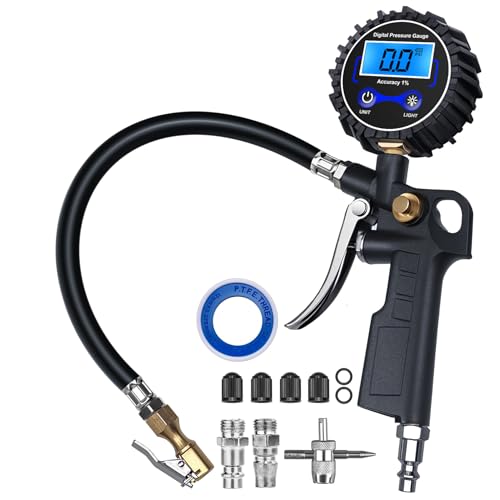
The DigitPro combines pressure measurement with an inflator, which can make tire care more efficient. Its listed range runs from 3 to 250 PSI, giving it broad use across motorcycles and larger vehicles. Instead of checking with one tool and inflating with another, a rider can handle both steps from one hand tool when connected to a suitable air source. This design fits a home garage better than a tiny emergency pouch.
The built-in inflator is useful when you make small pressure corrections rather than full tire fills. I still recommend adding air in short bursts and checking the reading often. Motorcycle tires respond to small changes, so slow adjustments help prevent overfilling. The gauge should be used with the motorcycle maker’s cold-pressure specification, and the air source must match the tool’s connection needs.
Pros:
- Combines checking and inflating functions
- 250 PSI range supports many vehicles
- Helpful for home garage maintenance
- Reduces the need to switch between tools
- Good for precise small pressure adjustments
Cons:
- Bulkier than a pressure-only gauge
- Needs a compatible air compressor or source
- Less convenient for a small motorcycle travel kit
My Recommendation
The DigitPro is best for riders who want a gauge and inflator in one package. It is especially useful for home mechanics who already own an air compressor. I would choose it as the best digital motorcycle tire pressure gauge with inflation capability, rather than as the lightest roadside tool. Its combined design can save time and space in a garage, and it offers strong value for regular tire service.
| Best for | Why |
|---|---|
| Home mechanics | Measures and adjusts pressure in one process |
| Frequent tire care | Supports small, controlled corrections |
| Multi-vehicle garages | 250 PSI range covers many applications |
HYVOHEX Digital Tire Pressure Gauge

The HYVOHEX digital gauge offers a 200 PSI range for cars, RVs, trucks, bikes, and motorcycles. Its broad application list makes it a practical choice for a shared vehicle garage. A digital screen helps riders make quick readings without trying to judge a tiny analog needle. The design is aimed at useful function rather than complicated setup.
For motorcycle owners, the key task is to make a repeatable cold-tire check. I suggest checking both tires on level ground and keeping a note of the readings if one tire loses pressure more often than the other. A gauge cannot diagnose every tire problem, but a changing reading may warn you about a slow leak. This model can support that basic maintenance habit at a reasonable level of convenience.
Pros:
- 200 PSI range serves many vehicle types
- Digital display supports quick readings
- Useful for motorcycles and bicycles
- Suitable for home garage storage
- Helpful for tracking pressure changes over time
Cons:
- Broad range may be excessive for bike-only users
- Requires battery care during long storage
- May not fit a minimalist riding kit as easily
My Recommendation
The HYVOHEX is a good match for a practical rider who wants one gauge for several tire types. It is not built around motorcycle use alone, but that wider role can be useful in a busy home. I would consider it among the best digital motorcycle tire pressure gauge options for basic, multi-vehicle maintenance. Its best value appears when you use it often instead of leaving it in a drawer.
| Best for | Why |
|---|---|
| Bike and car owners | One 200 PSI gauge covers both |
| Routine home checks | Simple digital operation saves time |
| Pressure tracking | Useful for comparing readings over time |
Rhino USA Digital Gauge
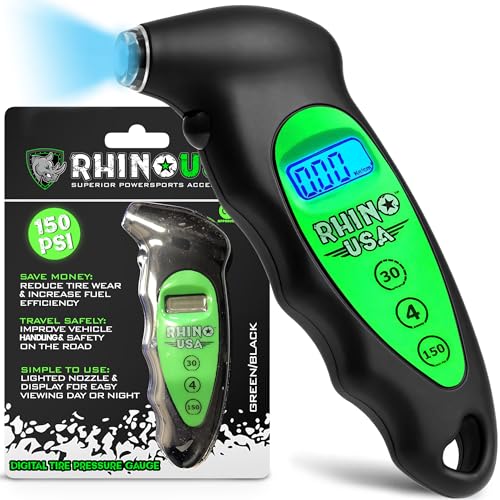
The Rhino USA digital gauge offers a 150 PSI range and a backlit LCD display. That backlight can be helpful when a rider checks pressure early in the morning, in a dim garage, or beside a roadside repair kit. The range is more than enough for most motorcycles and still works for many cars and light trucks. It is a straightforward tool for riders who value visibility.
A bright display is not just a comfort feature. Clear numbers can help prevent mistakes when the tire valve sits low or the light changes. I recommend holding the gauge steady and waiting for the reading to settle before adding or removing air. The gauge is best used as part of a wider tire inspection that includes tread depth, sidewall condition, and signs of damage.
Pros:
- Backlit LCD helps in low light
- 150 PSI range suits motorcycles and cars
- Easy digital readout for quick checks
- Useful for garage or roadside use
- Good choice for riders who need better display visibility
Cons:
- Backlight depends on battery power
- Not designed as a full inflator
- May be larger than a simple pencil gauge
My Recommendation
I recommend the Rhino USA gauge to riders who often check pressure in poor light. The backlit display gives it a useful edge for early starts, evening rides, and dark garages. If you are choosing the best digital motorcycle tire pressure gauge for screen visibility, this model deserves a close look. It provides practical everyday value without requiring a large 200 or 250 PSI workshop body.
| Best for | Why |
|---|---|
| Night and early riders | Backlit LCD improves screen visibility |
| Roadside kits | 150 PSI range covers common bike needs |
| Home users | Simple readings for regular checks |
How to Choose the Best Digital Motorcycle Tire Pressure Gauge
Choosing a gauge becomes easier when you focus on how you ride. A commuter may want a small tool with a clear screen, while a touring rider may prefer a gauge that also works on a car or RV. A home mechanic may choose an inflator model to save time. The best digital motorcycle tire pressure gauge is the one that matches your valves, storage space, and normal pressure checks.
Check the Pressure Range
Most motorcycle owners do not need a 250 PSI gauge. A 100 or 150 PSI model usually gives plenty of room for motorcycle tires. A higher range makes sense when the same gauge will serve trucks, trailers, RVs, or workshop equipment. Do not use the maximum gauge range as your tire target. Always use the motorcycle manufacturer’s cold-tire pressure recommendation.
Look for a Clear Display
A readable LCD can prevent errors. Large numbers help when the valve sits behind a disc or when you wear gloves. A backlit display helps in a dark garage or before sunrise. Some screens can be harder to see in direct sunlight, so viewing angle still matters. If possible, keep the gauge close to eye level while you check pressure.
Consider the Valve Connection
Motorcycle wheels can have tight valve locations. A flexible hose or angled chuck may make the job much easier. The connection should seal without forcing the valve stem sideways. A poor seal can cause air loss and create a false reading. If your bike uses an unusual valve setup, confirm compatibility before ordering.
Think About Size and Storage
A small gauge fits a tail bag, pannier, or under-seat storage area. A heavy-duty model may feel better in a workshop but take more room on a ride. I prefer a compact pressure-only gauge for emergency travel and a larger inflator gauge for home use. You do not need one tool to handle every situation.
Accuracy Matters More Than Extra Features
A digital gauge should give consistent readings when you repeat the same check. A claimed accuracy number is useful, but proper use matters too. Check cold tires, press the chuck on straight, and avoid measuring right after a long ride. Heat raises pressure, so a hot reading may not match the cold setting recommended by the manufacturer.
Gauge Care Tips
- Store the gauge away from rain and extreme heat.
- Remove the battery if the tool will sit unused for a long time.
- Keep the chuck clean and free from dirt.
- Do not drop the gauge onto concrete.
- Compare readings with a trusted gauge from time to time.
- Inspect motorcycle tires for damage during every pressure check.
How I Evaluate Motorcycle Tire Pressure Gauges
I look at more than the number printed on the package. I consider display clarity, valve access, range, portability, and the way each tool fits a real riding routine. A gauge may have a high PSI limit, but that does not make it better for a motorcycle. Practical use matters more than a long feature list.
I also separate a pressure gauge from an inflator. A gauge measures pressure, while an inflator adds air when connected to a pump or compressor. Some products combine both jobs, which can save time in a garage. For roadside use, a compact gauge and a small electric pump may be easier to carry than a large inflator tool.
Safety guidance from transportation and tire-care experts consistently supports regular pressure checks and following the vehicle maker’s recommended cold pressure. Correct pressure can support handling, tire life, and fuel economy. It cannot fix worn tread, a damaged sidewall, or a slow leak. Think of the gauge as a small warning light that helps you find trouble early.
FAQs Of best digital motorcycle tire pressure gauge
What PSI range do I need for a motorcycle?
A 100 PSI gauge is enough for many motorcycles. A 150 PSI model adds useful flexibility for cars and light trucks. Choose 200 PSI or more when you also maintain RVs, trucks, trailers, or other high-pressure tires.
Should I check motorcycle tire pressure when hot or cold?
Check pressure when the tires are cold. Heat from riding increases air pressure and can make the reading higher. Follow the pressure listed in the motorcycle owner’s manual or on the manufacturer’s information label.
Is a digital gauge better than an analog gauge?
A digital gauge often gives an easier-to-read number, especially for small pressure changes. An analog gauge does not need batteries and can last for years. The best choice depends on display preference, care, and how often you check pressure.
Can I use a car tire gauge on a motorcycle?
Yes, if the gauge fits the motorcycle valve and reads the needed pressure range. A car gauge may be larger near a motorcycle wheel, so a flexible hose or angled connector can help. Always make sure the connection seals correctly.
How often should I check motorcycle tire pressure?
Check it before long rides and at regular intervals during normal use. Many riders check both tires before every ride because the process takes little time. Also check after a tire repair, a long period of storage, or a noticeable change in handling.
Final Verdict: Which Should You Buy?
The JACO ElitePro 100 PSI is my top pick for most riders. It is compact, clear, and focused on the pressure range motorcycles commonly use. For garage work, the DigitPro inflator or ETENWOLF T600 offers more flexibility.
The best digital motorcycle tire pressure gauge is the one you will use often and correctly. Check cold tires, follow the maker’s pressure guide, and inspect for damage before every important ride.