The best OBD2 scanner for home use is an easy code reader that offers live data, clear results, and broad vehicle support.
A warning light can appear just before work, a road trip, or a vehicle sale. Many drivers then face a costly repair-shop visit just to learn why the light came on. A home OBD2 scanner helps you read the fault code, check emissions readiness, and decide what to do next. I reviewed these scanners for ease of use, useful features, vehicle coverage, and value. My top picks include simple corded tools, Bluetooth adapters, and advanced bidirectional scanners for home mechanics.
See the differences between my top picks at a glance.
Easy-to-Use 2.8-Inch OBD2 Scanner

This compact corded scanner is built for drivers who want a clear answer without using a phone app. Its 2.8-inch color screen makes menus and fault codes easier to read than tiny monochrome displays. It can read and clear diagnostic trouble codes, show live data, and check I/M readiness. Those are the main functions most home users need.
The direct cable connection also keeps setup simple. Plug it into the vehicle’s OBD2 port, turn on the ignition, and follow the on-screen steps. The listed coverage targets most cars from 1996 onward, but exact support can vary by model and region. I like this tool as a first scanner for a family garage.
Pros:
- Color screen is easy for beginners to read
- Reads and clears engine trouble codes
- Displays useful live data
- Checks emissions readiness monitors
- No phone, app, or wireless setup is needed
- Compact size fits well in a glove box
Cons:
- Primarily focuses on standard engine diagnostics
- Corded use offers less freedom than Bluetooth
- Vehicle coverage should be checked before purchase
What Amazon Buyers Are Saying
Buyer feedback for simple scanners like this often centers on quick setup, readable screens, and useful check-engine-light information. Users who want basic code reading tend to value the plug-in design. The common limitation is also clear: a basic OBD2 reader does not replace a professional tool for air-bag, ABS, body, or manufacturer-specific faults. Check current reviews for updated comments about your vehicle model.
My Recommendation
I recommend this scanner for first-time users, used-car owners, and drivers who want a practical tool at home. It offers the key functions without adding app costs or a steep learning curve. It is a strong choice for the best OBD2 scanner for home use when simplicity matters most.
OBDLink MX+ Bluetooth Scanner

The OBDLink MX+ takes a different approach. It sends vehicle data to a compatible iPhone, Android phone, or Windows device through Bluetooth. This design is useful for drivers who want graphs, dashboards, and more data than a small handheld screen can show. It works with compatible diagnostic apps, so your phone becomes the display.
App-based scanning gives you room to monitor items such as engine speed, coolant temperature, fuel trims, and other supported readings. The final experience depends on the app you choose and the vehicle protocol. I would pick this adapter for a user who enjoys learning from data. It is less ideal for someone who wants a tool that works without a phone.
Pros:
- Works with iPhone, Android, and Windows devices as listed
- Large phone screens make data easier to study
- Supports live data through compatible apps
- Useful for custom dashboards and data logs
- Small adapter is easy to store
- Good fit for tech-minded home mechanics
Cons:
- Requires a compatible phone or computer
- App quality and features can vary
- Wireless setup may take more time than a corded reader
What Amazon Buyers Are Saying
Customer discussions around the MX+ commonly focus on connection quality, app choice, and the amount of data available. Many buyers choose it because a phone provides a better view than a basic scanner. Some users may find app permissions, pairing, or software selection less direct than expected. I suggest reading current buyer comments that mention your operating system before ordering.
My Recommendation
This is a smart buy for app users who want more live data and a flexible display. It is not my first choice for a simple code check, but it can be more useful for regular monitoring. Choose it when Bluetooth access and data detail matter more than plug-and-play simplicity.
CrysGuard V519 Professional Scanner

The CrysGuard V519 aims to give home mechanics more information than a basic code reader. Its listed tools include live data, battery testing, I/M readiness checks, and a large DTC library. The 2026-updated listing also presents it as a CAN code reader for vehicles after 1996. These features can help you move from “what is the code?” to “what should I inspect next?”
A corded design keeps the process direct and avoids pairing issues. The battery test is useful when a car has slow cranking, dim lights, or repeated starting trouble. Still, a battery reading does not prove that the alternator, starter, or wiring is good. I see this scanner as a balanced choice for a household with several vehicles.
Pros:
- Combines code reading with battery testing
- Shows live vehicle data
- Includes I/M readiness information
- Offers a large stated DTC library
- Supports common CAN-based diagnostics
- Useful for pre-smog checks and basic fault work
Cons:
- May offer more menus than a new user needs
- Basic engine diagnostics do not cover every vehicle module
- Always confirm support for your exact make and model
What Amazon Buyers Are Saying
Feedback on feature-rich corded readers often praises the mix of live data, code lookup, and readiness checks. Buyers tend to like having several functions in one handheld device. The usual concern is that advanced menu names can take time to understand. I recommend starting with code reading and live data before using any reset function.
My Recommendation
The CrysGuard V519 is worth considering for a home garage that wants more than a warning-light reader. Its battery test and readiness functions add real value. It earns a strong rating for broad home use, provided you understand that it is not a full dealer-level scan tool.
ANCEL Bluetooth Pro Scan Tool

The ANCEL Bluetooth scanner targets serious DIY users. Its listing includes all-system scanning, bidirectional tests, ABS reset, injector coding, live data, and oil reset functions. Bidirectional control means the tool may send a command to a supported vehicle system, such as activating a component for a test. That is much more advanced than simply reading a code.
Because it uses Bluetooth and Wi-Fi features, setup and software support deserve attention. Reset and coding features can vary by vehicle, engine, year, and app plan. I would not buy it only because a listing shows a long feature list. I would first confirm coverage for the exact car and task you plan to perform.
Pros:
- Offers all-system scanning on supported vehicles
- Includes bidirectional diagnostic functions
- Lists ABS reset and oil reset tools
- Supports live data viewing
- May help with injector coding on supported models
- Strong option for experienced DIY mechanics
Cons:
- Advanced functions depend on vehicle coverage
- Software and connection setup may take time
- Not the best fit for a basic check-engine-light user
What Amazon Buyers Are Saying
Buyers who select advanced Bluetooth scan tools often praise the number of systems and service functions available. They also tend to discuss app setup, update access, and whether a specific reset works on their vehicle. That pattern matters because “all systems” does not mean every function works on every car. Read current feedback with your exact vehicle in mind.
My Recommendation
I recommend the ANCEL for a skilled home mechanic who wants deeper tests than a standard reader can provide. It can save time when its functions match the car. For a new user, a simpler corded scanner may offer better value and fewer setup steps.
Basic Bluetooth OBD2 Code Reader

This small Bluetooth adapter is designed for low-cost engine diagnostics through a phone, tablet, or computer. The listing names support for iOS, Android, and Windows, along with apps such as Torque, OBD Fusion, and Car Scanner. That makes it attractive to users who already have a preferred app. It can turn a phone into a useful dashboard and code reader.
The main benefit is flexibility. You can select an app with the layout and data views you prefer. The trade-off is that the adapter alone does not provide a built-in display or instructions. Connection type, app permissions, and phone compatibility all affect the experience.
Pros:
- Compact and easy to keep in the car
- Works with listed phone and computer platforms
- Compatible with several popular diagnostic apps
- Useful for basic engine codes and live data
- Usually a budget-friendly way to begin scanning
- Phone screen can show custom gauges
Cons:
- Requires separate app setup
- No built-in screen or physical diagnostic guide
- Advanced vehicle functions are generally limited
What Amazon Buyers Are Saying
Common buyer themes for budget Bluetooth readers include easy access to engine data and good value when the connection works as expected. Some users report that the app they choose matters as much as the adapter. Others may need help with pairing or permissions. Check recent reviews for your phone type, since mobile operating systems can change over time.
My Recommendation
This is a reasonable entry point for a tech-comfortable driver who wants basic code access at a low cost. I would not choose it for service resets or deep module diagnosis. It is best when you already know which app you want to use.
BluSon YM319 OBD2 Scanner

The BluSon YM319 is a corded tool for standard OBDII vehicles since 1996. Its feature list includes a battery tester, live data, freeze-frame information, DTC lookup, I/M readiness, and cloud printing. Freeze-frame data can show what the vehicle recorded when a fault occurred. That clue may help you inspect a problem with more context.
This scanner suits people who prefer a dedicated tool over a phone app. The battery test adds value for cars with starting concerns, while readiness checks help before an emissions test. Like all readers in this class, it should not be treated as a complete diagnosis by itself. Use the code as a starting point, not as proof that one part needs replacement.
Pros:
- Includes a battery testing function
- Reads freeze-frame information
- Offers live data and DTC lookup
- Checks I/M readiness status
- Works without a smartphone
- Portable design fits home and roadside use
Cons:
- Not designed for every non-engine vehicle module
- Some users may not need cloud printing
- Confirm connector and vehicle support before use
What Amazon Buyers Are Saying
Feedback for this type of reader often values its dedicated screen and extra battery features. Buyers who want freeze-frame data may also find it more useful than a very basic code reader. The main limitation is the learning curve around interpreting data. A code lookup can explain a fault area, but it cannot replace testing with a meter or repair manual.
My Recommendation
The BluSon YM319 is a good middle-ground option for home users who want battery checks and freeze-frame data. It gives more information than a simple code reader while keeping a direct corded workflow. I would shortlist it for regular household maintenance.
Thinkdiag2 Bidirectional Diagnostic Scanner
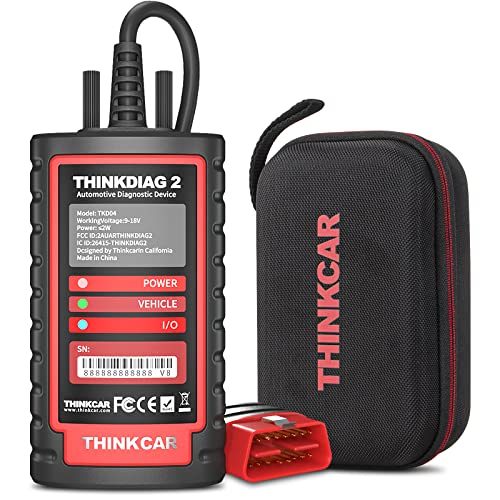
The Thinkdiag2 is one of the most advanced choices in this group. Its listing highlights all-system bidirectional diagnosis, CAN-FD support, AutoVIN, more than 15 reset functions, ECU codes, active tests, and one year of updates. Active tests let a supported vehicle respond to commands from the scan tool. That can help a mechanic test a system without guessing.
This power comes with responsibility. You need to understand the function before activating a component, and coverage can differ by brand and model. The app-based design also means that updates and software access matter. I would choose this scanner for an experienced DIY user who works on newer vehicles or wants professional-style capabilities at home.
Pros:
- Supports bidirectional and active tests on compatible vehicles
- Includes CAN-FD protocol support as listed
- Offers more than 15 reset functions
- Includes AutoVIN for supported vehicles
- Designed for all-system diagnostics
- One year of updates is included in the listing
Cons:
- Advanced functions require careful use
- App access and update terms need review
- Coverage varies across makes, models, and systems
What Amazon Buyers Are Saying
Buyers of advanced diagnostic tools often like the active tests, broad menu, and ability to scan systems beyond the engine. They also tend to discuss updates and coverage in detail. Some users may find the software less simple than a basic reader. Before purchase, I suggest checking current feedback for the vehicle brand you plan to service.
My Recommendation
The Thinkdiag2 is a strong choice for an advanced home mechanic. It can be excessive for someone who only wants to clear a check-engine code, but its deeper functions give it long-term value. Buy it only after confirming that its software supports your planned repairs.
OBD2 Scanner with Battery Tester
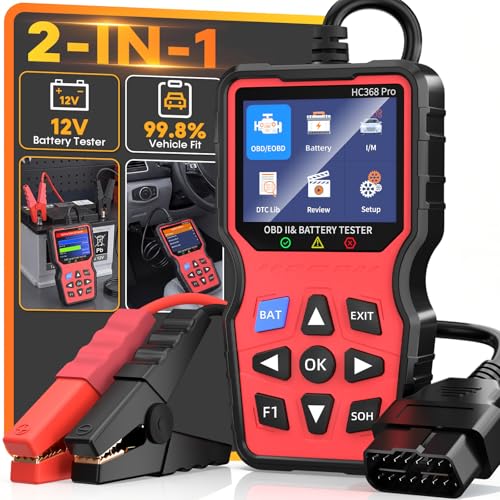
This easy-to-use scanner combines standard engine code work with a battery health check. It is aimed at drivers who want fast diagnosis without learning a complex software system. The listing highlights code reading, code clearing, broad vehicle support, and battery testing. Those functions cover two common reasons people buy a home scan tool.
The compact corded design also makes it easy to lend to a family member or keep in a toolbox. I like the focus on practical tasks rather than a long list of advanced menus. Still, battery health is only one part of a starting system diagnosis. If a problem returns, inspect the related wiring and parts instead of clearing the light again.
Pros:
- Simple design suits new users
- Reads and clears engine codes
- Includes a battery health check
- Designed for quick diagnosis
- Portable for home or roadside use
- Offers good value for basic maintenance
Cons:
- Advanced module scans are not the main focus
- Battery results need proper test conditions
- Check exact vehicle coverage before ordering
What Amazon Buyers Are Saying
Buyers looking for value often praise simple controls, fast code checks, and the added battery function. This type of tool appeals to people who do not want a subscription or phone connection. The most likely complaint is limited depth when a fault involves ABS, air bags, or body electronics. That limitation is normal for basic engine-focused scanners.
My Recommendation
I recommend this model for a budget-minded driver who wants two useful home tools in one. It is not a replacement for an all-system scanner, but it can reduce needless trips for basic warning-light checks. It offers a practical balance for occasional DIY use.
How to Choose the Best OBD2 Scanner for Home Use
Choosing the best OBD2 scanner for home use starts with your actual repair needs. A basic reader can handle a check-engine light. A professional-style tool may scan ABS, air bags, transmission, and body systems. The right choice should match your vehicle, skill level, and budget.
1. Match the Scanner to Your Vehicle
Most vehicles sold in the United States from the 1996 model year use OBD2 for emissions diagnosis. That does not mean every scanner works with every function. A tool may read engine codes but fail to access ABS or manufacturer-specific systems. Check the year, make, model, engine, and desired function before buying.
Newer vehicles may also use newer communication protocols. CAN-FD support can matter for some recent models. If you own more than one car, check each vehicle instead of assuming that one scanner will cover all of them. This step prevents many buying mistakes.
2. Choose the Right Diagnostic Depth
Think about what you will do at home. If you only need to read a check-engine light, choose a corded reader with a clear screen. Live data helps when you want to watch sensor readings while the engine runs. Freeze-frame data shows the conditions linked to a stored fault.
All-system scanning and bidirectional control serve a different user. These tools can test more modules and activate supported parts. They may also offer oil, ABS, battery, or injector functions. Such features can save time, but they need more study. Do not pay for advanced tools that you will never use.
3. Compare Setup, Updates, and Long-Term Value
A corded scanner starts fast and does not need a phone. A Bluetooth adapter offers a larger display and flexible apps. Decide which workflow feels easier for you. Also check whether the app needs payment, whether updates expire, and whether the tool includes the functions you want.
Read the manual before clearing codes. Clearing a code can erase useful freeze-frame data and does not fix the cause. Use the scanner as a guide. For safety systems, complex electrical faults, or codes that return, seek a trained technician. A good home tool saves money by improving your first decision, not by replacing every repair skill.
Final Verdict: Which Should You Buy?
For most drivers, the easy-to-use 2.8-inch corded model is the best OBD2 scanner for home use. It has a clear screen, simple controls, live data, and readiness checks. Choose Thinkdiag2 or ANCEL if you need advanced system tests.
The best OBD2 scanner for home use should fit your car and your skill level. Check coverage first, then use codes as a repair starting point.
FAQs Of best obd2 scanner for home use
What is the best OBD2 scanner for home use?
The easy-to-use 2.8-inch corded scanner is the best general choice for most home users. It offers code reading, code clearing, live data, and I/M readiness checks.
Can an OBD2 scanner clear a check-engine light?
Many scanners can clear engine trouble codes. The light may return if the fault remains, so clearing the code does not repair the vehicle.
Will an OBD2 scanner work with every car?
Most U.S. cars from 1996 onward support standard OBD2 engine diagnosis. Coverage for ABS, air bags, resets, and other systems varies by vehicle.
Is a Bluetooth OBD2 scanner better than a corded scanner?
Bluetooth models are better for phone dashboards and detailed live data. Corded models are often easier for quick checks because they need no app or pairing.
Can an OBD2 scanner diagnose ABS and air-bag faults?
Only scanners with supported all-system access can read those modules. A basic engine code reader usually cannot diagnose ABS or air-bag systems.
Should I clear a code after reading it?
Clear a code only after recording it and checking the cause. Clearing it too soon may remove useful freeze-frame information and hide an active fault.