Introduction
In most cases, you should not use Meguiar’s Quik Detailer as a general interior cleaner. Meguiar’s standard Quik Detailer is made mainly for removing light dust, fingerprints, and fresh water spots from exterior automotive paint. It may work on some smooth, hard interior surfaces, but it is not the best or safest choice for dashboards, leather seats, steering wheels, touchscreens, or textured vinyl.
For cars and trucks in the United States, the safest approach is simple: use the product only on surfaces listed on its label. For regular interior care, choose a cleaner made for automotive interiors.

What Is Meguiar’s Quik Detailer Made For?
Meguiar’s Quik Detailer is a spray-and-wipe product designed for light exterior cleaning between full car washes. It helps remove light dust, fingerprints, and mild surface dirt without a hose or bucket.
The product is generally intended for surfaces such as:
- Automotive paint
- Clear coat
- Chrome
- Exterior plastic
- Some smooth exterior trim
- Glass, when the product label permits it
The word “detailer” can cause confusion. It does not mean that the product is suitable for every part of a vehicle. “Detailer” usually describes a quick maintenance product for a specific group of surfaces.
Meguiar’s also sells products made for interiors, such as interior detailers and cleaners. Those formulas may have different cleaning agents, finish levels, and surface instructions. Always check the exact bottle because product names and directions can vary between Meguiar’s formulas sold in the United States.
Can You Use Meguiar’s Quik Detailer on Interior Surfaces?
You can use a small amount on some smooth, hard, nonporous interior trim, but it is not the preferred product for most interior surfaces.
The main concern is not usually severe damage from one light application. The bigger concerns are residue, glare, slipperiness, poor cleaning, and incompatibility with delicate materials.
| Interior surface | Recommended? | Reason |
|---|---|---|
| Hard glossy plastic trim | Limited use | May leave a film or streaks |
| Smooth coated plastic | Limited use | Test first in a hidden area |
| Textured dashboard plastic | No | May collect residue in the texture |
| Vinyl dashboard | Not preferred | Use an interior-safe cleaner |
| Leather seats | No | Use a leather cleaner made for finished leather |
| Suede or microsuede | No | Liquids can stain or change the texture |
| Fabric seats | No | It is not a fabric cleaner |
| Touchscreens | No | Use the screen maker’s cleaning guidance |
| Steering wheel | No | Residue may reduce grip |
| Pedals and floor mats | No | Slippery residue creates a safety risk |
| Interior glass | Not preferred | Use a glass cleaner for fewer streaks |
The safest rule is this: if the surface affects grip, visibility, or vehicle control, do not use Quik Detailer on it.

Why Exterior Detailer Is Different From Interior Detailer
Exterior and interior surfaces face different problems. Exterior paint needs help with dust, water marks, and light surface contamination. Interior materials need careful cleaning without creating glare, slickness, or a greasy feel.
An interior cleaner is usually designed with surfaces such as plastic, vinyl, rubber, and finished leather in mind. It may also leave a low-gloss finish so the dashboard does not reflect bright light into the driver’s eyes.
A Quik Detailer product may leave behind lubricants or gloss agents that are useful on exterior paint. On a dashboard, those ingredients can create:
- A shiny or oily appearance
- Smears that return after wiping
- Dust that sticks to the surface
- A slippery steering wheel
- Glare on the dashboard or instrument area
- Residue in textured plastic
This does not mean every interior surface will react badly. It means the product was not designed to solve the main interior-care problem.
Product chemistry also changes from one formula to another. Meguiar’s Quik Detailer, Ultimate Quik Detailer, and interior detailer products should not be treated as identical. Read the label for the exact product in your hand.
How to Test Meguiar’s Quik Detailer on Hard Interior Trim
If you have already used the product or need to clean a small piece of smooth hard trim, test it carefully first.
Step 1: Read the bottle
Check whether the label lists interior use. If the label does not mention interior surfaces, treat interior use as unapproved.
Do not rely only on the product name. Follow the directions for the exact Meguiar’s formula and size.
Step 2: Clean loose dust first
Use a dry, clean microfiber towel to remove loose dust. Rubbing grit across plastic can cause fine scratches, especially on glossy trim.
Step 3: Test a hidden spot
Choose an area under the dash or behind a trim edge. Spray the product onto the towel, not directly onto the interior.
Use a very small amount. Wipe one short section, then check the surface under normal light.
Step 4: Look for problems
Wait several minutes and check for:
- Streaks
- Greasy spots
- Color change
- Increased shine
- Tacky or sticky feel
- White residue
- Uneven finish
- Odor that remains
If any problem appears, stop using the product on that material.
Step 5: Buff with a second towel
Use a clean, dry microfiber towel to remove any remaining film. The surface should feel dry and even, not slick.
Never apply it to the steering wheel, pedals, gear selector, seat controls, or other parts that must remain easy to grip.
Better Products for Cleaning a Car Interior
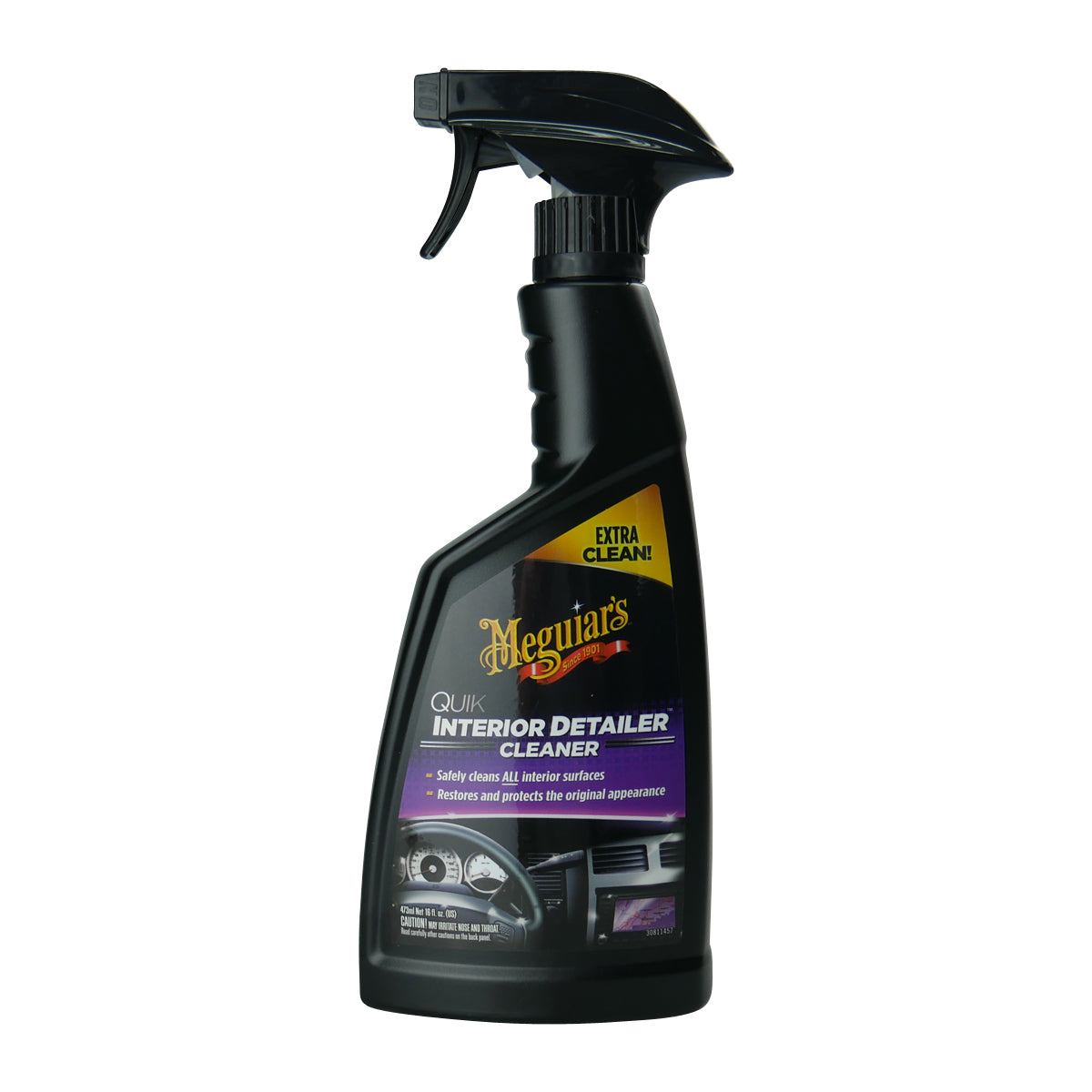
For routine interior care, use a product that matches the material.
Plastic and vinyl
Use an automotive interior cleaner labeled for plastic and vinyl. Spray it onto a microfiber towel or soft brush instead of directly onto the dashboard.
A low-gloss or natural-finish product is often better for the dashboard. It can reduce glare and leave less residue than a high-shine dressing.
Leather
Use a leather cleaner made for finished automotive leather. Modern car seats may have protective coatings, so avoid harsh household cleaners, strong solvents, and products that leave the seat slippery.
A leather conditioner may be useful for some leather systems, but it should not be assumed to suit every coated seat.
Touchscreens and displays
Use the vehicle manufacturer’s instructions. Many screens need only a clean, dry microfiber cloth or a lightly damp cloth.
Do not spray any cleaner directly onto a screen. Avoid ammonia, abrasive products, paper towels, and excess liquid near screen edges or buttons.
Fabric and carpet
Use a fabric or carpet cleaner when the goal is to remove stains or embedded dirt. Quik Detailer is not made to extract soil from cloth.
Test fabric products in a hidden spot first. Some cleaners can change the color or leave a visible ring.
Interior glass
Use a streak-free automotive glass cleaner. Spray it onto the towel rather than onto the glass when working near the dashboard, speakers, electronics, or vents.
What to Do If You Already Used It Inside
If you used Meguiar’s Quik Detailer on a hard interior surface and the surface looks normal, there may be no immediate problem. Wipe the area with a clean, slightly damp microfiber towel, then dry it with a second towel.
If the surface feels slippery, repeat the wipe with clean water on the towel. Do not soak the dashboard or allow liquid to run into switches, vents, speakers, or electronic parts.
If you used it on the steering wheel, gear selector, pedals, or another control surface, clean that area before driving. A dry-feeling surface is essential for safe control.
If you notice discoloration, swelling, peeling, or a change in texture, stop cleaning and consult the vehicle manufacturer or a professional automotive detailer. Do not use stronger chemicals to “fix” the first product unless the material maker approves them.
Common Mistakes to Avoid
Spraying directly onto the dashboard
Direct spraying can send liquid into vents, seams, gauges, switches, and electronic components. Spray onto a towel instead.
Using too much product
More product does not mean more cleaning. Excess liquid increases streaks and residue. Start with a small amount.
Applying it to leather or suede
Leather and suede need material-specific care. A general exterior detailer may not clean or protect them correctly.
Using it on a steering wheel
A glossy or slick steering wheel can reduce grip. Keep the wheel clean and dry.
Cleaning a hot interior
A hot dashboard can dry product too quickly and create streaks. Park in the shade and let the surface cool first.
Using a dirty towel
A towel that contains grit, wax, or old dressing can spread dirt and create scratches. Use a clean microfiber towel.
Assuming “safe on plastic” means “safe on all plastic”
Plastic varies widely. A smooth exterior trim piece, soft-touch dashboard, clear instrument lens, and touchscreen may all react differently.

Meguiar’s Quik Detailer vs. Interior Detailer
The better choice depends on the surface and the task.
| Product type | Best use | Main advantage | Main limitation |
|---|---|---|---|
| Exterior Quik Detailer | Light dust and fingerprints on exterior paint | Quick maintenance between washes | Not a general interior cleaner |
| Interior detailer | Light cleaning of plastic and vinyl | Designed for cabin materials | May not remove heavy stains |
| Leather cleaner | Finished leather seats and trim | Matches leather-care needs | Not for fabric or screens |
| Glass cleaner | Interior windows and mirrors | Helps reduce streaks | Not for dashboards or leather |
| Fabric cleaner | Cloth seats and carpets | Targets fabric soil and stains | Requires careful drying and testing |
For one product that stays in the car, an interior detailer is usually more useful for cabin surfaces. Keep an exterior Quik Detailer for painted panels and other approved exterior areas.
Frequently Asked Questions
Can Meguiar’s Quik Detailer remove dust from a dashboard?
It may remove light dust from some smooth, hard plastic, but it is not the best choice. A dry microfiber towel or an interior-safe cleaner is usually more suitable.
Can you use Meguiar’s Quik Detailer on leather seats?
It is not recommended unless the exact product label specifically approves leather. Use a cleaner made for automotive leather instead.
Can you use it on a car’s touch screen?
No. Use the screen and vehicle manufacturer’s cleaning instructions. Do not spray Quik Detailer directly onto a touchscreen.
Can Quik Detailer make a dashboard shiny?
It may change the surface appearance or leave a film. If the product leaves gloss, that can create glare. A low-sheen interior product is a better option.
Is Meguiar’s Interior Detailer safe for every interior material?
Not automatically. Check its label and test it first. Interior detailers are generally made for common plastic, vinyl, and related surfaces, but they may not suit suede, unfinished leather, delicate coatings, or every type of display.
Final Recommendation
Meguiar’s Quik Detailer is mainly an exterior product. You may use a small amount on limited, smooth, hard interior trim after a hidden-spot test, but it should not be your standard dashboard or cabin cleaner.
For the safest result:
- Use an interior cleaner on plastic and vinyl.
- Use a leather product on leather.
- Use a glass cleaner on windows.
- Use a fabric cleaner on cloth and carpet.
- Keep cleaner off steering wheels, pedals, screens, and electronic openings unless the product is specifically approved for them.
The label on the exact Meguiar’s bottle remains the final guide. Product formulas and directions can change, so check the current U.S. packaging before applying any cleaner to an unfamiliar surface.