Compounding and Polishing a Car: Complete Guide to Restoring Paint Shine
Compounding and polishing a car removes paint imperfections by carefully refining the clear coat surface. Compounding cuts away heavier defects, while polishing smooths the finish and restores gloss before applying protection.
In the United States, many vehicle owners use compounding and polishing as part of paint correction to restore cars affected by road debris, automatic car washes, oxidation, swirl marks, and environmental damage. The process is common among DIY detailers and professional automotive detailers because it can improve the appearance of a vehicle without repainting when the paint has enough clear coat remaining.
Car compounding and polishing requires controlled abrasion. A compound contains more aggressive abrasive particles designed to level defects, while a polish uses finer abrasives to refine the surface. The correct approach depends on the paint condition, defect depth, vehicle finish, and the tools being used.
Source: Bing
What Is Compounding and Polishing a Car?
Compounding and polishing a car is a paint correction process that improves the surface condition of automotive paint. The process works by using abrasive products to remove or reduce visible imperfections in the clear coat layer.
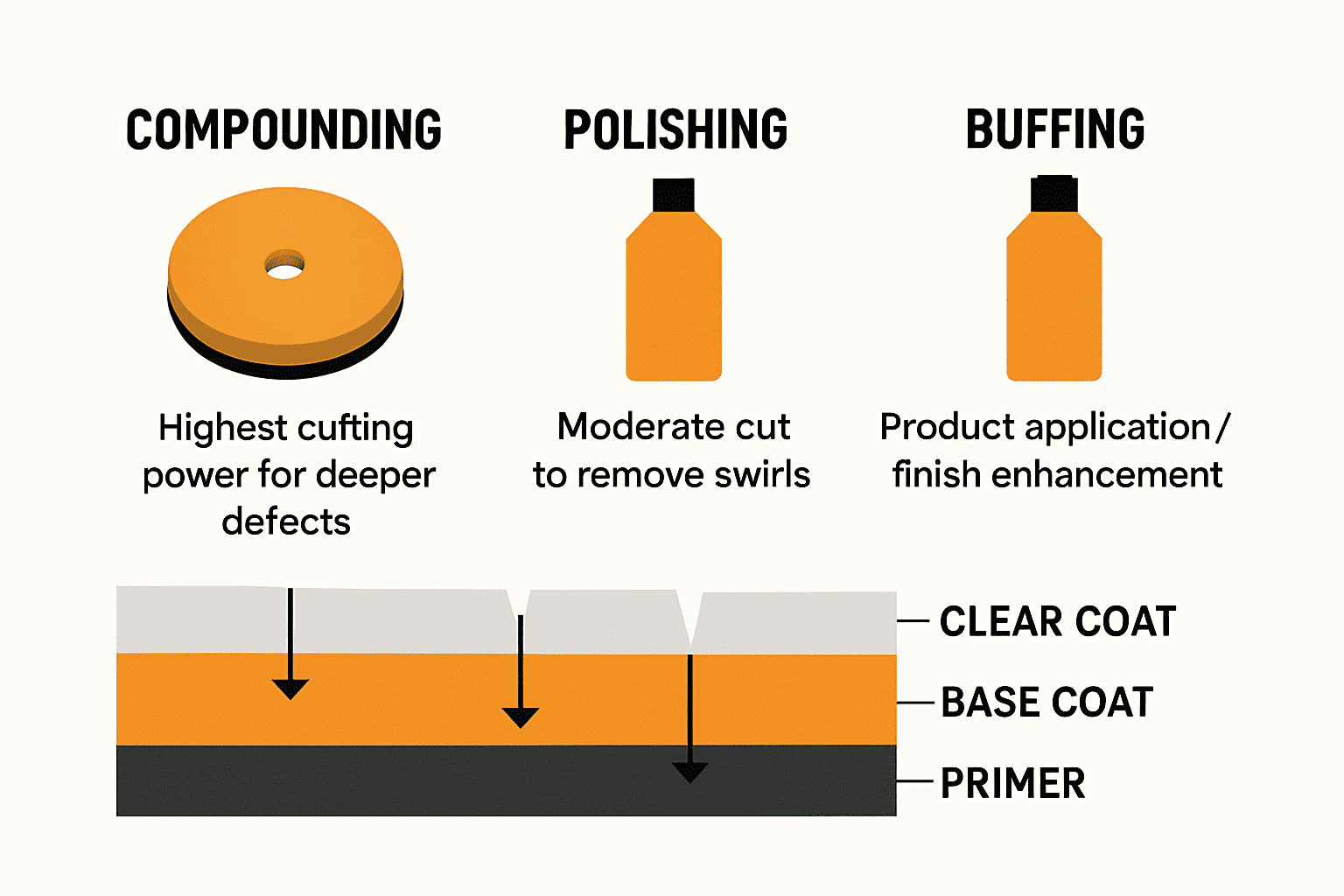
A car’s painted surface usually contains a color coat protected by a transparent clear coat. Defects such as swirl marks, light scratches, oxidation, and water spots often exist in this clear coat. Compounding and polishing refine the upper surface instead of simply covering defects with wax or sealants.
Source: Bing
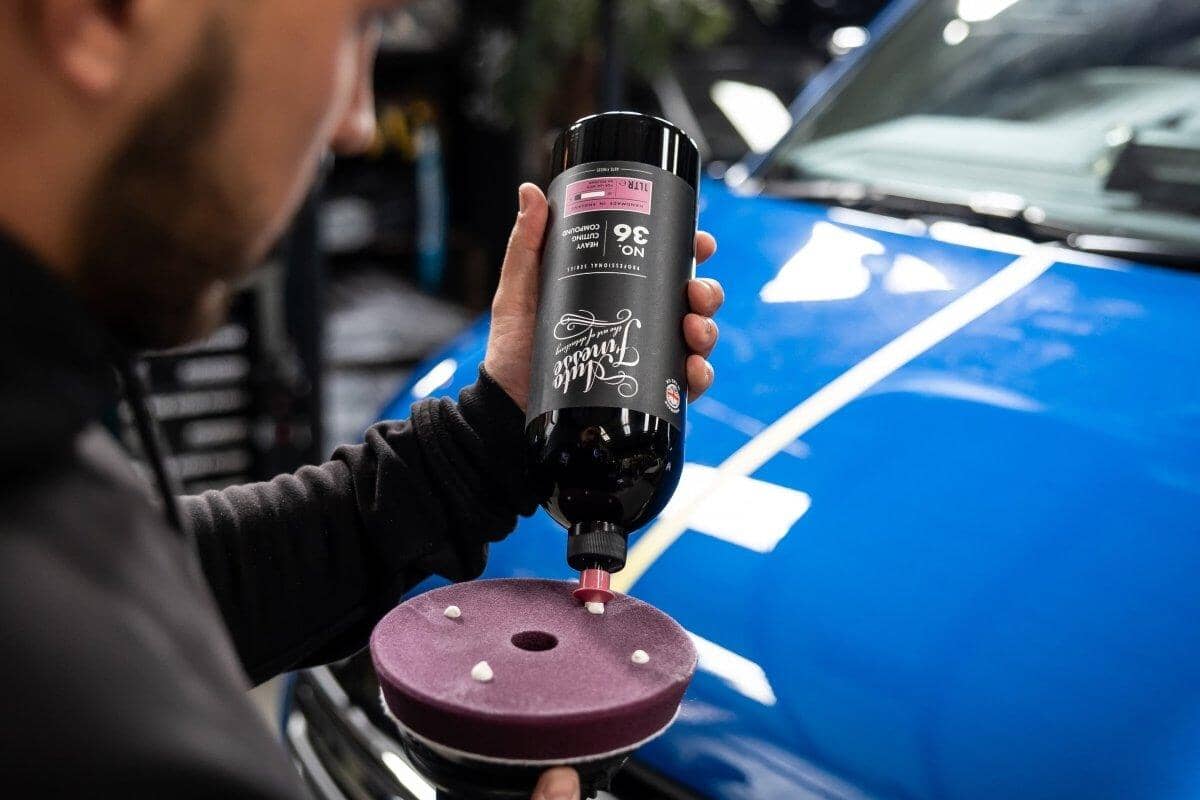
Car compound
A more aggressive abrasive product used to remove deeper defects, oxidation, and noticeable paint imperfections.
Car polish
A finer abrasive product used after compounding to improve smoothness, clarity, and gloss.
Paint protection
A final wax, sealant, or coating can help protect the corrected surface from future contamination.
Compounding vs Polishing: Understanding the Difference
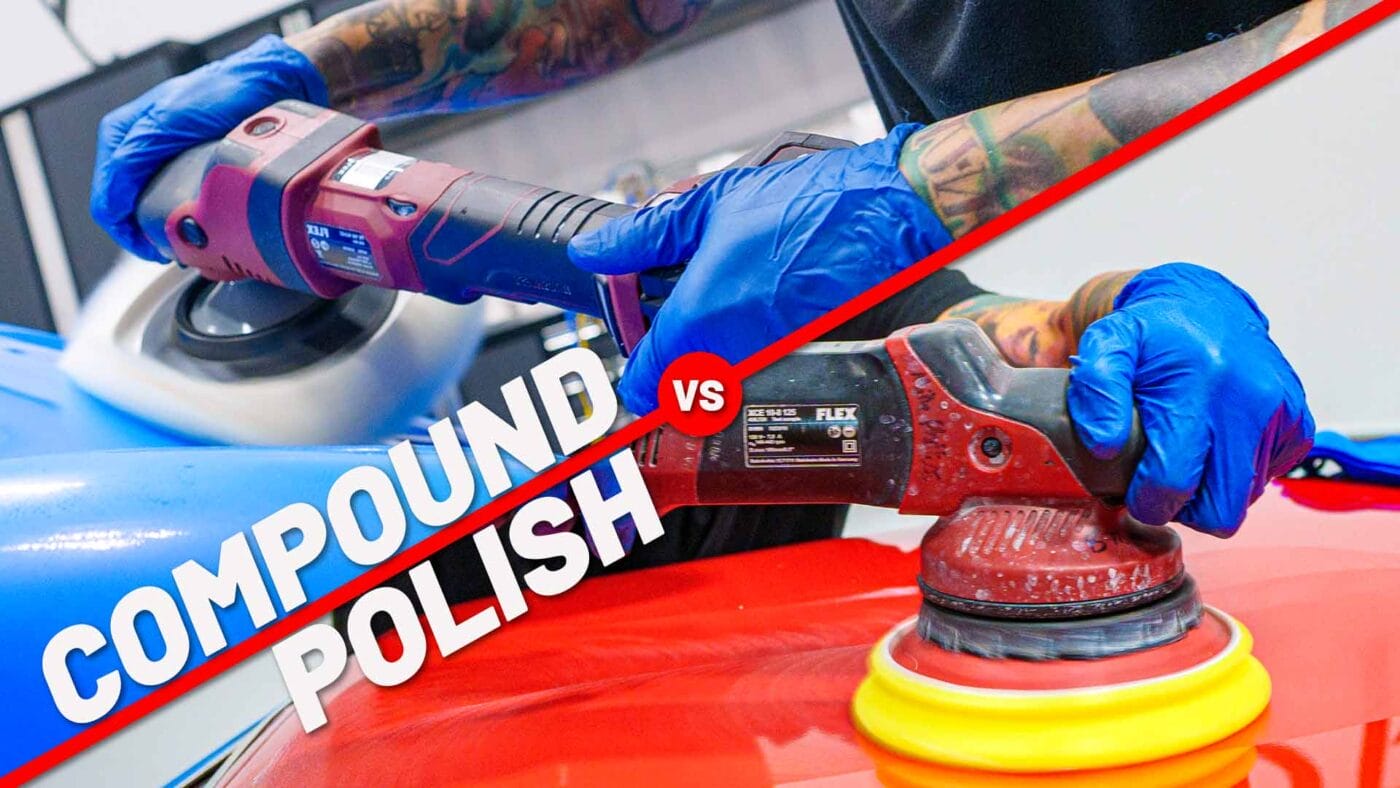
The main difference between compounding and polishing is the amount of paint correction they provide. Compound removes more material and is used for stronger correction, while polish removes smaller imperfections and improves the final appearance.
Use compound when
The paint has oxidation, deeper scratches, heavy swirl marks, or a rough finish.
Use polish when
The paint mainly needs gloss enhancement, light defect removal, or final refinement.
Tools and Supplies Needed Before Starting
Before compounding and polishing a car, prepare the correct equipment. Using unsuitable tools or skipping preparation can create additional scratches, uneven results, or unnecessary clear coat removal.
The safest approach is to start with the least aggressive method that can achieve the desired improvement. A test section on a small area helps determine whether the chosen compound, pad, and technique are appropriate.
Source: Bing
Vehicle washing supplies
Use automotive-safe shampoo, microfiber towels, and drying tools to remove dirt before correction.
Clay bar or surface preparation products
These help remove bonded contaminants that washing alone may not remove.
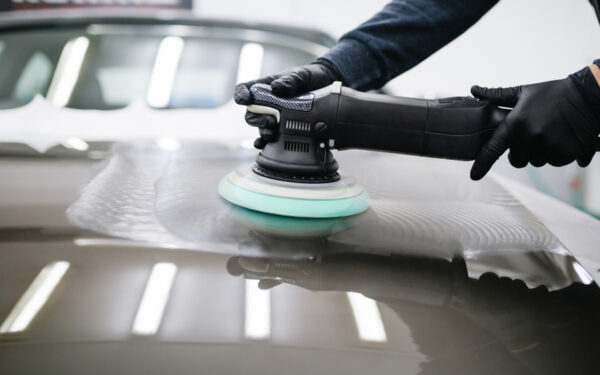
Polishing machine or applicator
A dual-action polisher is commonly used because it provides correction ability with less risk than many rotary polishing techniques.
Polishing pads
Different pad materials provide different levels of cutting and finishing ability.
How to Compound and Polish a Car Step by Step
A successful paint correction process depends on preparation, controlled product use, and careful inspection between stages. Do not rush from heavy cutting directly to polishing without checking the paint response.
Source: Bing
Step 1: Wash and dry the vehicle
Remove dirt, dust, and contaminants so they do not create additional scratches during polishing.
Step 2: Inspect the paint
Identify scratches, swirl marks, oxidation, and areas that may require professional repair.
Step 3: Test a small section
Apply your chosen compound and pad combination to confirm the correction level before treating the entire vehicle.
Step 4: Compound damaged areas
Work slowly with controlled pressure and speed to reduce defects without excessive clear coat removal.
Step 5: Polish the surface
Use a finer polish to remove haze from compounding and improve paint clarity.
Step 6: Protect the paint
Apply a suitable protective product after correction to preserve the finish.
How to Know When the Paint Correction Is Working
Successful correction usually appears as improved reflection, reduced visible defects, and a smoother paint surface. Inspect the area under strong lighting because some defects can remain hidden under normal conditions.
Positive signs
Clearer reflections, fewer swirl marks, improved gloss, and a smoother surface.
Warning signs
Excessive heat, paint discoloration, new marks, or uneven finish indicate the process needs adjustment.
Choosing the Right Method for Different Paint Conditions
The correct compounding and polishing approach depends on paint condition, defect severity, and the desired result. More aggressive correction is not always better because every polishing pass removes some clear coat.
Source: Bing
Light swirl marks
A finishing polish or light correction product may be enough.
Moderate defects
A medium compound followed by polish may provide better improvement.
Deep scratches
Some scratches may extend beyond the clear coat and require professional repair instead of polishing.
When You Should Not Compound a Car
Avoid aggressive compounding when paint damage is too severe or when the clear coat is already compromised. Areas with peeling paint, exposed metal, or deep damage often require paint repair rather than correction.
Paint failure
Clear coat peeling or flaking cannot be fixed with compound.
Very thin paint
Repeated correction may increase the risk of damaging the finish.
Common Mistakes When Compounding and Polishing a Car
Many poor results happen because of preparation mistakes, excessive pressure, or choosing a product that is too aggressive. Understanding common problems helps protect the vehicle finish.
Source: Bing
Skipping the wash stage
Polishing a dirty surface can trap contaminants between the pad and paint.
Using too much compound
Excess product can reduce polishing effectiveness and create unnecessary cleanup.
Applying too much pressure
Heavy pressure can create excess heat and uneven correction.
Ignoring paint inspection
Not every defect can be safely removed by polishing.
Frequently Asked Questions
Q
Can compounding remove all scratches from a car?
No. Compounding can reduce many surface scratches and defects in the clear coat, but deep scratches that reach the color coat or metal usually require professional repair.
Q
Should I compound or polish my car first?
If the paint has significant defects, compounding is usually performed before polishing. If the paint only has minor imperfections, polishing alone may be sufficient.
Q
How often should a car be compounded and polished?
There is no universal schedule because polishing removes a small amount of clear coat. The process should be performed only when needed based on paint condition.
Q
Can beginners compound and polish a car at home?
Yes, beginners can perform light correction with proper preparation and a cautious approach. Practicing on a small area first helps reduce mistakes.
Q
What should I do after polishing my car?
After polishing, protect the finish with a suitable wax, sealant, or coating product and maintain it with proper washing techniques.
✦ Wrapping Up
Conclusion
Compounding and polishing a car is an effective way to improve paint appearance when performed correctly. The process depends on understanding the difference between cutting and refining, choosing suitable products, and removing only the amount of clear coat necessary.
For most vehicle owners, careful preparation and a gradual approach produce safer results than aggressive correction. Inspect the paint condition first and choose the least aggressive method that achieves the desired improvement.
💡 Key Takeaway
Start with a clean vehicle, test a small area, use the least aggressive correction method, and protect the paint after polishing.
Tyron Torres is an automotive diagnostics writer and hands-on vehicle maintenance enthusiast with years of experience troubleshooting brake systems, suspension issues, and everyday car performance problems. He specializes in breaking down complex mechanical issues into simple, practical guides that drivers can use to quickly identify and fix common vehicle faults.
Learn what a tire pressure monitoring system malfunction means, why it happens, common causes, warning signs, and practical steps to diagnose and fix TPMS problems safely.
Learn how to cut and polish a car safely with this step-by-step guide. Understand paint correction, tools, techniques, mistakes to avoid, and how to achieve a smooth glossy finish.