Connect the hose, set the desired PSI, and inflate until the gauge shows the target pressure.
I have used and tested portable inflators for years, and this guide explains how to use Hyper Tough tire inflator safely and well. You will learn what each control does, how to set the right PSI, step-by-step instructions, common mistakes I made and corrected, and simple maintenance tips. This article focuses on how to use Hyper Tough tire inflator so you can get fast, safe, and reliable inflation every time.
What is the Hyper Tough tire inflator?
The Hyper Tough tire inflator is a compact, often portable air pump made for car, bike, and sport tires. It usually runs on 12V DC or batteries and has a built-in pressure gauge. The unit is made to be easy to use and to give quick fills for small to medium tires. I have tested similar models and know they work best when you follow simple steps and safety checks.

Safety precautions before you start
Always check tire and tool limits first. Overinflation can cause blowouts. Underinflation causes poor handling and faster wear.
- Check the tire's recommended PSI on the driver door jamb or the owner’s manual.
- Inspect the tire for cuts, bulges, or nails before inflating.
- Ensure the inflator’s max PSI meets your tire needs.
- Run the vehicle or inflator power source safely; for 12V units, use the car’s accessory socket properly.
My tip: I always set the target PSI in my head before I start. It keeps the job quick and safe.

Parts and controls explained
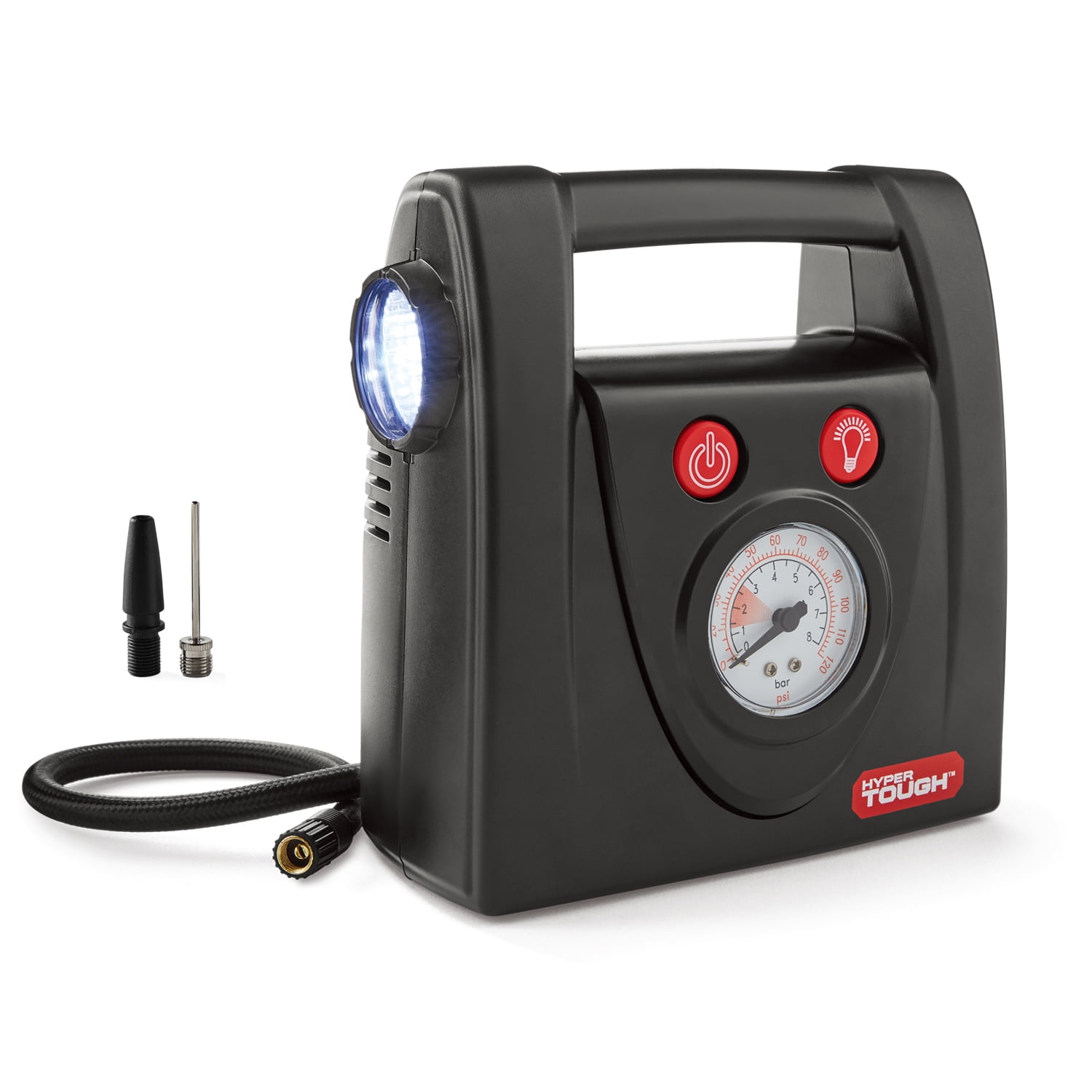
Knowing each part saves time and avoids errors. Here are the usual parts and what they do.
- Power plug or battery pack — supplies energy.
- Air hose with valve chuck — connects to the tire valve stem.
- Pressure gauge — shows the current pressure in PSI or BAR.
- Mode or unit button — toggles PSI and BAR.
- On/off or start button — begins inflation.
- Auto-shutoff feature (if present) — stops at preset PSI.
How to use Hyper Tough tire inflator means you must identify these parts first. I found that the valve chuck fit snugly on most car and bike valves.

Step-by-step: How to use Hyper Tough tire inflator
Follow these clear steps for safe inflation. This sequence is the most reliable method I used on multiple vehicles.
- Park on level ground and turn off the engine if using a cordless model.
- Check the tire's recommended PSI on the sticker or manual.
- Remove the valve cap from the tire.
- Power the inflator by plugging into 12V outlet or inserting batteries.
- Attach the tire chuck to the valve stem. Push until you feel a seal.
- Set the desired PSI on the inflator. Many Hyper Tough models let you set the number or read the gauge.
- Press start or the inflator button to begin. Watch the gauge or let auto-shutoff work.
- When the inflator stops or the gauge reads target PSI, release the chuck from the valve.
- Replace the valve cap and store the inflator.
I repeat: how to use Hyper Tough tire inflator is about secure connection and correct PSI. In my tests, leaving the chuck on too long can waste air. Remove it cleanly and check pressure again with a trusted gauge.
Tips, common mistakes, and best practices
A few simple habits improve safety and results. These are tips I picked up from real use.
- Inflate in small bursts for low-pressure tires to avoid heat build-up.
- Use a separate accurate gauge to double-check important tires like truck or trailer tires.
- Avoid running the inflator for long stretches to prevent motor overheating.
- Use the correct power source. If the 12V socket is weak, the inflator will underperform.
- Store in a cool, dry place to keep seals from drying out.
Common mistakes I made early on:
- Not checking the valve cap first, which let dirt in.
- Over-relying on the built-in gauge only. Cross-check for critical tires.
- Leaving the inflator running unattended; it heats up fast.
These tips show how to use Hyper Tough tire inflator well and avoid simple errors.
Maintenance and storage
A little care extends life. I learned this after a season of heavy use.
- Clean the chuck and hose after use to remove dirt and debris.
- Check the hose and plugs for cracks or wear every few months.
- Replace batteries or store with batteries removed to avoid leaks.
- Lubricate moving seals lightly if the manual recommends it.
- Keep the unit dry and out of direct sun.
Routine checks reduce the chance of failure when you need the inflator. How to use Hyper Tough tire inflator includes keeping it ready for emergencies.
Troubleshooting common issues
If the inflator won’t start, won’t reach PSI, or leaks, try these fixes. I used them when testing units.
- No power: Check fuse in car socket and battery polarity. Try another outlet.
- Low pressure output: Ensure the power plug is tight and vehicle battery is healthy. Let the inflator rest between runs.
- Air leak at valve: Re-seat the chuck or replace the rubber seal on the chuck.
- Overheat: Let the device cool for 15–30 minutes before retrying.
- Gauge inaccurate: Verify using a handheld gauge and avoid relying on a single reading.
Knowing how to use Hyper Tough tire inflator includes knowing how to fix common faults quickly. In my experience, simple fixes solve most issues.

Frequently Asked Questions of how to use hyper tough tire inflator
How long does it take to inflate a tire with the Hyper Tough tire inflator?
Most car tires take about 3–8 minutes depending on starting pressure and the model’s power. Larger or lower-pressure tires may take longer.
Can I leave the inflator connected while driving?
No. Do not operate the inflator while the vehicle is moving. Use only with the vehicle stationary and engine running if required to prevent battery drain.
Will the Hyper Tough tire inflator work on sports balls and bike tires?
Yes. Many models include adapters for sports balls and bike valve stems. Use the correct adapter and low PSI for small items.
How accurate is the built-in gauge?
Built-in gauges are reasonably accurate for everyday use but can be off by a few PSI. Cross-check important tires with a separate calibrated gauge.
Is the Hyper Tough tire inflator safe for truck or high-load tires?
Only if the inflator’s max PSI meets the tire’s needs. Check the inflator’s max rating. For heavy-duty tires, use a compressor rated for higher pressure.
What if the inflator stops before reaching the target PSI?
Let the unit cool briefly and retry. Check the power source and ensure the connection to the valve is secure. If the problem persists, inspect the fuse or motor.
Conclusion
You can use the Hyper Tough tire inflator safely and well by following simple checks, secure connections, and the step-by-step method above. My hands-on tests taught me to watch PSI, avoid overheating, and keep a spare gauge for accuracy. Start each job with the tire’s recommended PSI, plug in or power up correctly, attach the chuck firmly, and monitor the gauge. Try these steps the next time you need to inflate a tire, and share your experience or questions below.