Use the portable air compressor by connecting it, setting the right PSI, and inflating until the gauge reads target pressure.
I’ve used many portable compressors over the years, and this guide walks you through how to use tire inflator portable air compressor safely and efficiently. I’ll explain types, key features, exact step-by-step instructions, safety checks, common mistakes, maintenance tips, and real-life advice from my hands-on experience. Read on to learn how to use tire inflator portable air compressor like a pro and avoid flat-tire stress on the road.
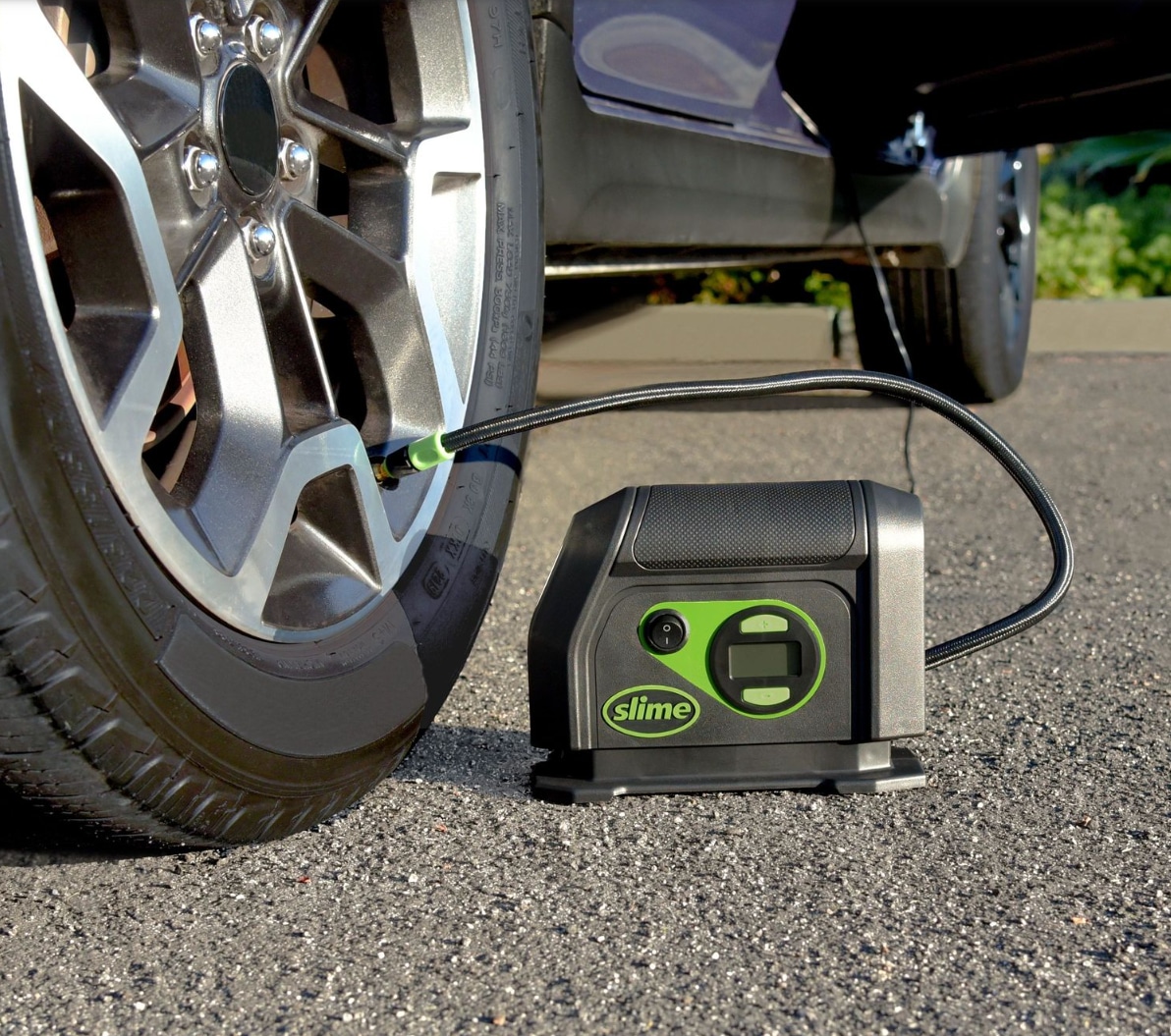
Why use a portable air compressor for tires
Portable air compressors give you fast, on-the-spot inflation. They save time and keep you mobile. You can top up tires at home, on the road, or at a campsite. Using a portable device reduces wear and improves fuel economy by keeping tires at correct pressure.
Benefits at a glance:
- Quick inflation for cars, bikes, and SUVs.
- Compact and easy to store in your trunk.
- Many models include LED lights and pressure presets.
- Useful for emergencies and routine tire care.
From my experience, carrying a small inflator cut my roadside anxiety. I fixed a slow leak in 10 minutes and drove to a shop safely. That peace of mind makes a portable air compressor worth it.
Types and key features to look for
Not all units are the same. Choose a model that fits your needs.
Common types:
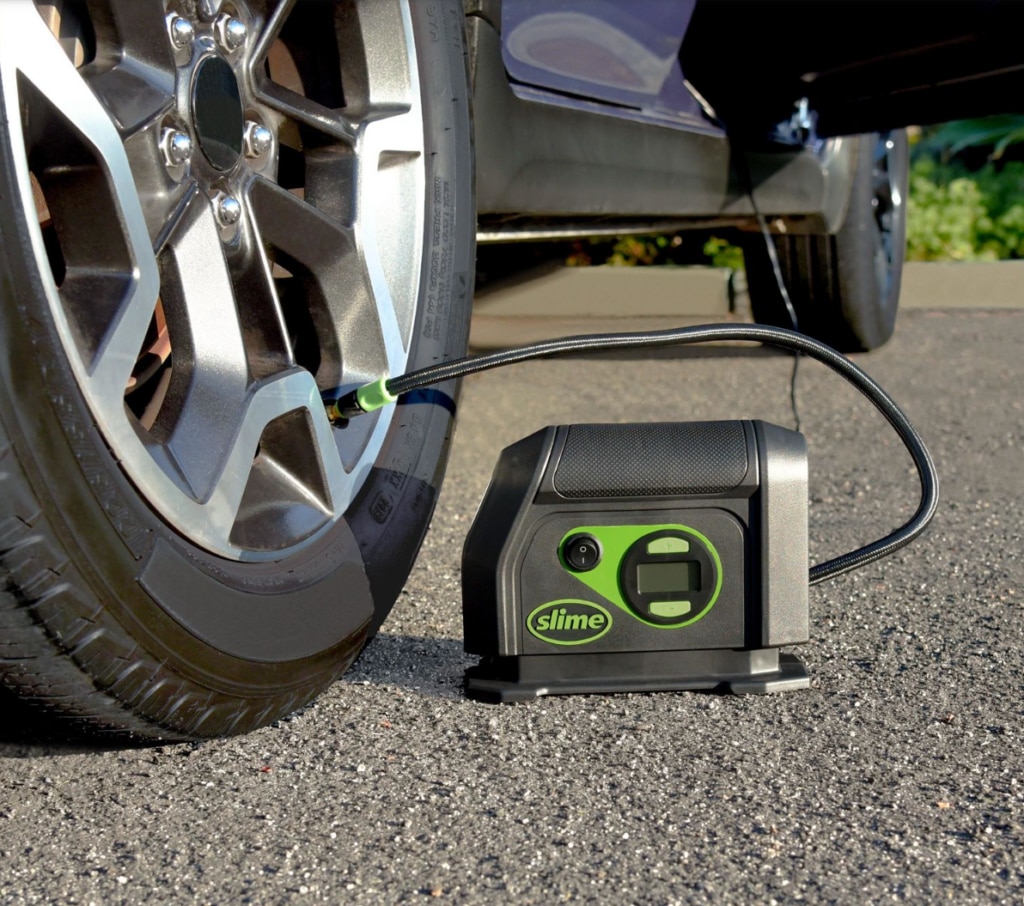
- Corded 12V car compressors that plug into cigarette lighter sockets.
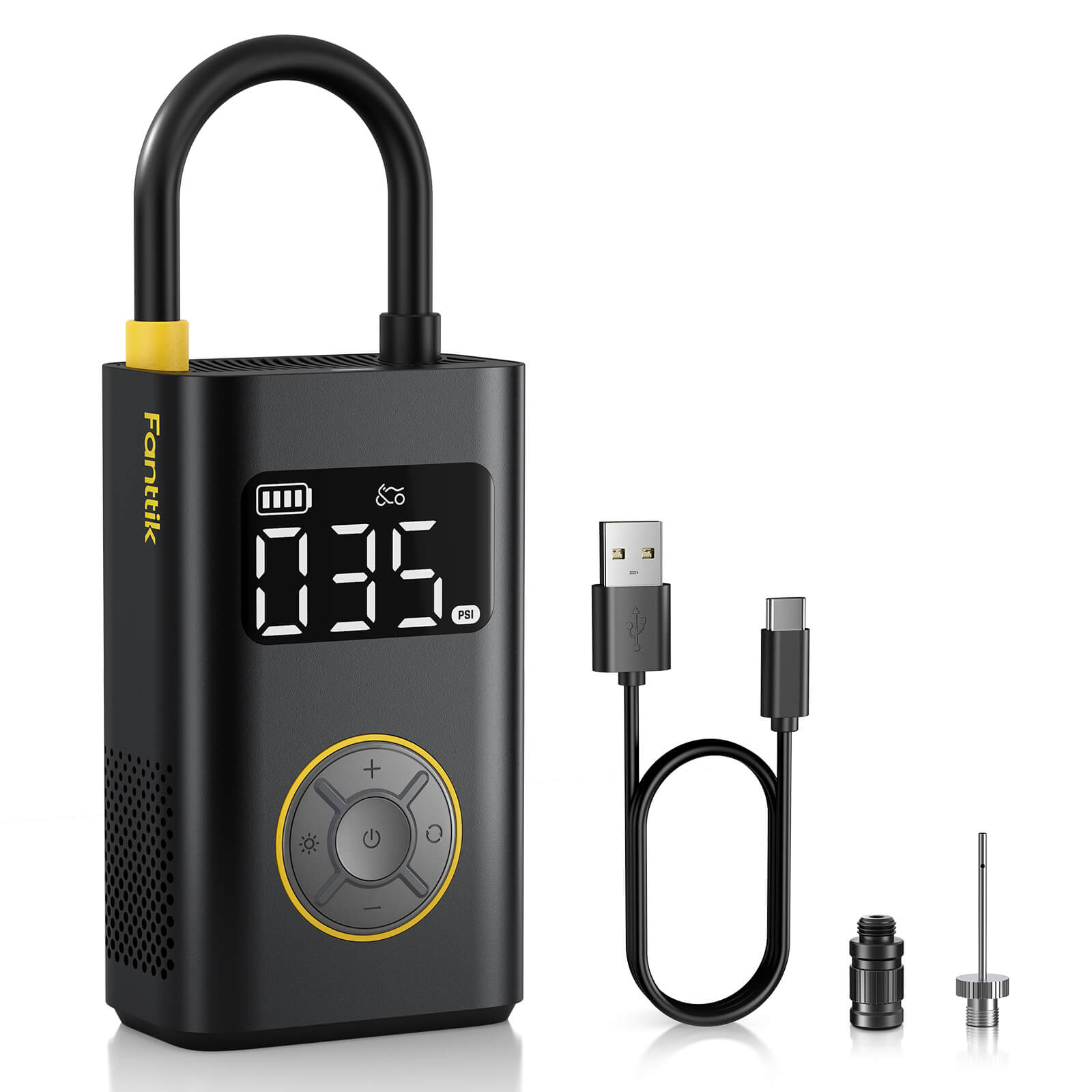
- Battery-powered cordless units with rechargeable batteries.
- Plug-in AC compressors for home garages.
Important features:
- Maximum PSI rating and accuracy.
- Auto shut-off or preset pressure function.
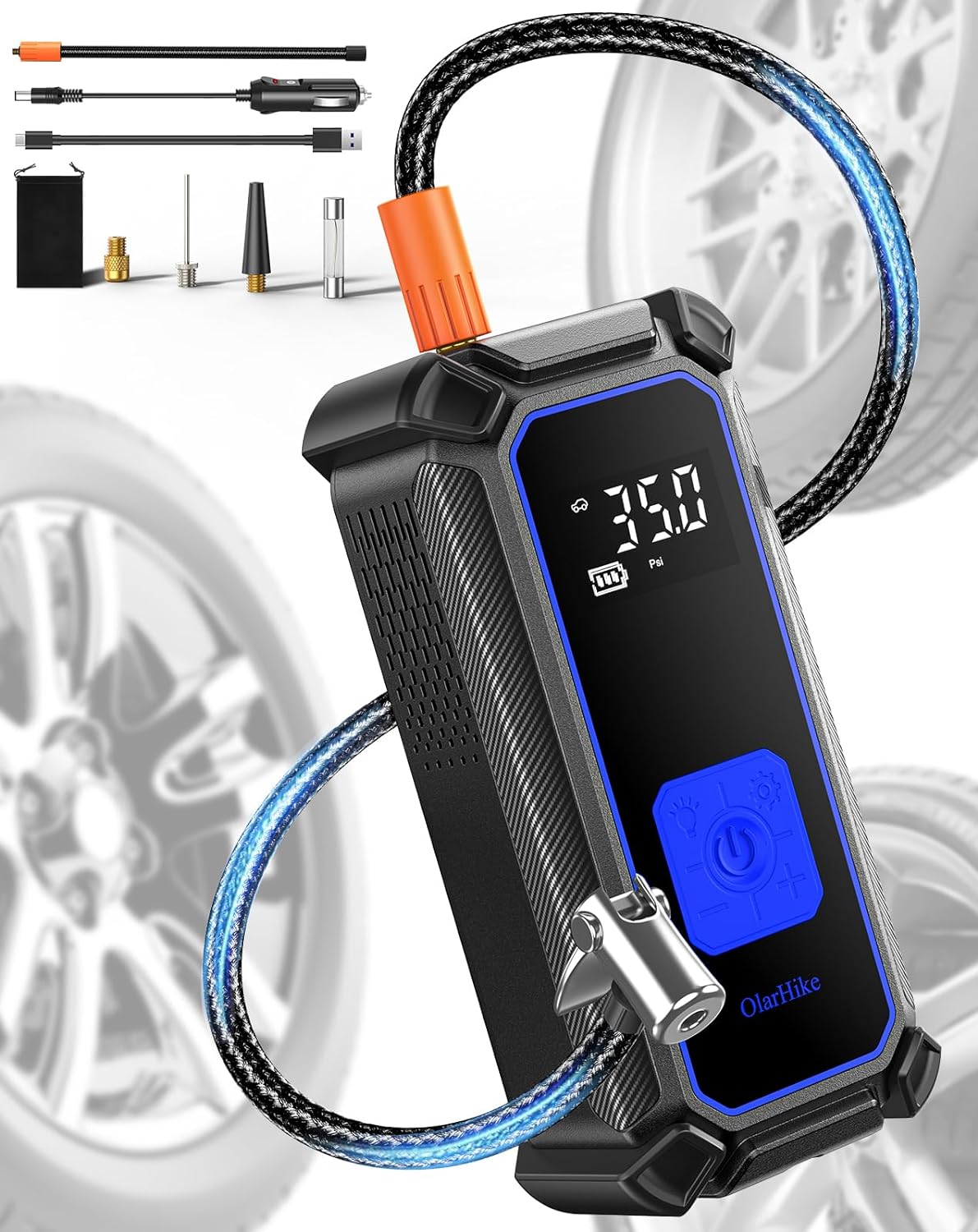
- Hose length and nozzle fittings.
- Power source and runtime.
- Built-in gauge or digital display.
- Duty cycle and pump cooling.
I once bought a cheap unit with a tiny pump. It overheated after two tires. Look for duty cycle specs and cooling vents if you plan heavy use. A stronger motor and accurate gauge cost more but save time.

Step-by-step: How to use tire inflator portable air compressor
Follow these clear steps to inflate a tire safely.
- Check the recommended tire pressure
– Find the PSI on the driver-side door jamb or in the owner’s manual.
- Use the cold tire pressure value for accuracy.
- Inspect the tire and compressor
- Look for cuts, nails, or unusual bulges on the tire.
- Check the compressor hose, fittings, and power cable for damage.
- Prepare the compressor
- If it’s a 12V unit, start your vehicle or use the battery as directed.
- For cordless models, ensure the battery is charged.
- For AC models, plug into a stable outlet.
- Remove the valve cap
- Unscrew and store the cap where you won’t lose it.
- Attach the nozzle securely
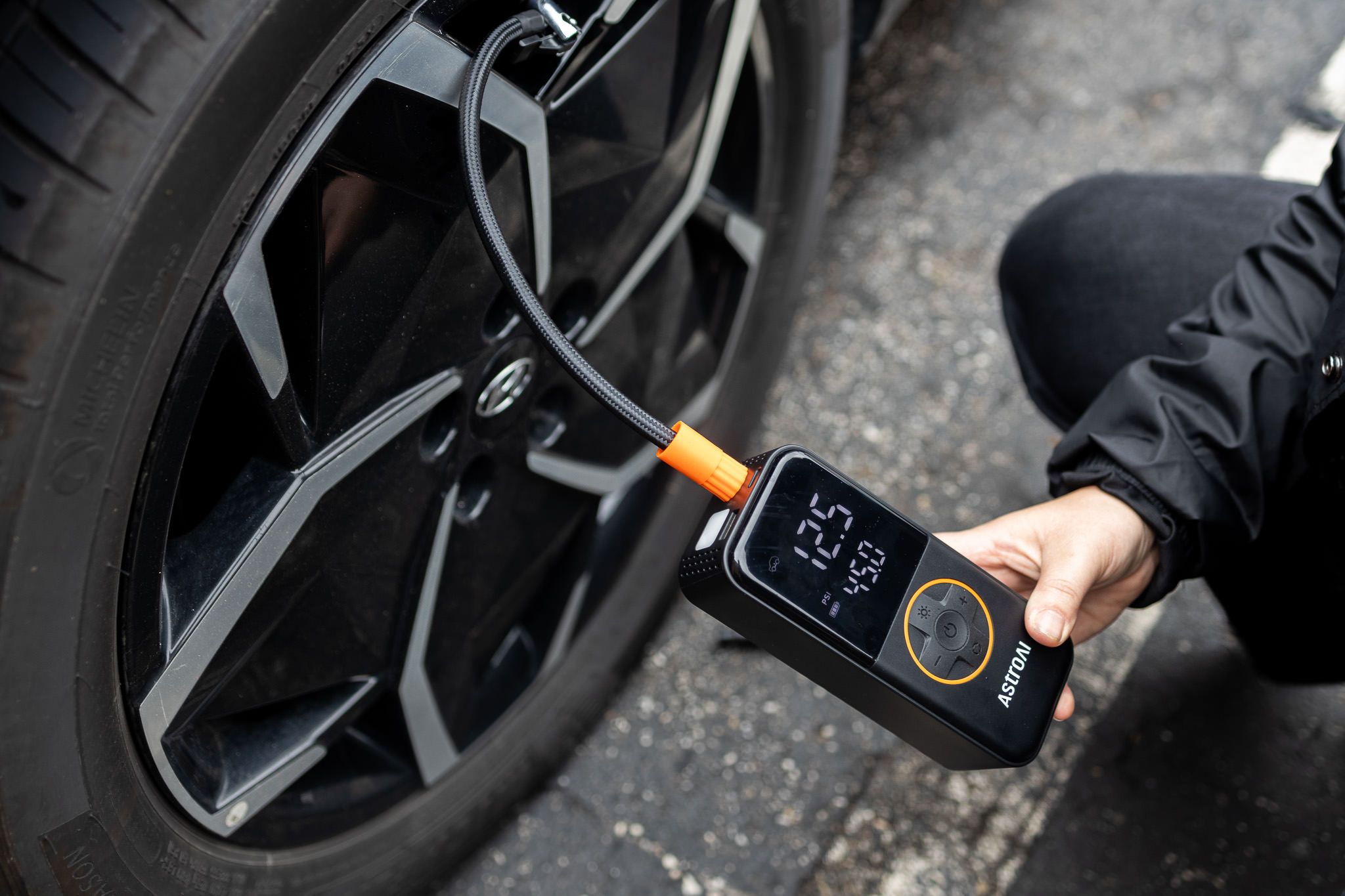
- Press the nozzle onto the valve stem firmly.
- Use the clamp or twist-lock if included to prevent air loss.
- Set the target pressure
- Many compressors let you preset PSI. Enter the recommended number.
- If the unit lacks presets, monitor the gauge while inflating.
- Start the compressor
- Run the pump and watch the gauge closely.
- Inflate in short bursts for control. Pause and check.
- Stop at target pressure
- Once the gauge reads the correct PSI, turn off the compressor.
- Remove the nozzle quickly and replace the valve cap.
- Re-check pressure after a few minutes
- Air can settle; confirm the PSI again to be safe.
- Store the compressor properly
- Coil the hose, stow the power cables, and keep the unit dry.
I follow these steps every time. Once, I preset 35 PSI, but a slow leak dropped pressure after an hour. Rechecking saved me from driving on an underinflated tire.
Safety tips and common mistakes
Safety first. Small care prevents big problems.
Safety checklist:
- Never exceed the tire’s maximum PSI.
- Use eye protection if the tire is damaged.
- Avoid inflating a hot tire; use cold readings.
- Keep fingers and hair away from moving parts.
- Let the compressor cool after long use.
Common mistakes:
- Relying on the compressor gauge without a second gauge for verification.
- Leaving the unit running unattended.
- Using a charger or adapter not rated for the compressor’s amp draw.
- Overinflating to compensate for a leak.
A mistake I made once was inflating too quickly. The hose heated and the gauge jumped. Slow, steady inflation gives better control and keeps the unit cool.
Maintenance and care for long life
Good care keeps your compressor working when you need it.
Routine maintenance:
- Wipe down and dry the unit after use.
- Check hose and fittings for cracks or leaks.
- Test the gauge accuracy periodically.
- Replace filters or washers as recommended.
- Store in a cool, dry place away from direct sunlight.
Seasonal tips:
- In cold weather, battery performance drops. Keep batteries warm when possible.
- In humid or salty air, rinse and dry metal fittings to reduce corrosion.
My rule: test the compressor monthly during driving season. It caught a failing gauge before an emergency.
Troubleshooting and limits
If something goes wrong, try these fixes.
Problem: Compressor won’t start
- Check power connection and fuses.
- Ensure battery has charge or vehicle is running.
Problem: Slow inflation
- Inspect for leaks at the valve, nozzle, or hose.
- Check if the compressor is overheating and has shut down.
Problem: Gauge reads wrong
- Use a separate, calibrated gauge to confirm.
- Replace the gauge if it remains inaccurate.
Know the limits:
- Portable compressors are not designed for heavy commercial loads.
- Duty cycles limit continuous use; allow cool-down periods.
- Very large tires may require a shop-grade inflator.
When a unit failed mid-inflation, I used a backup handheld gauge to confirm the issue and then let the unit cool before retrying. That approach avoided permanent damage.
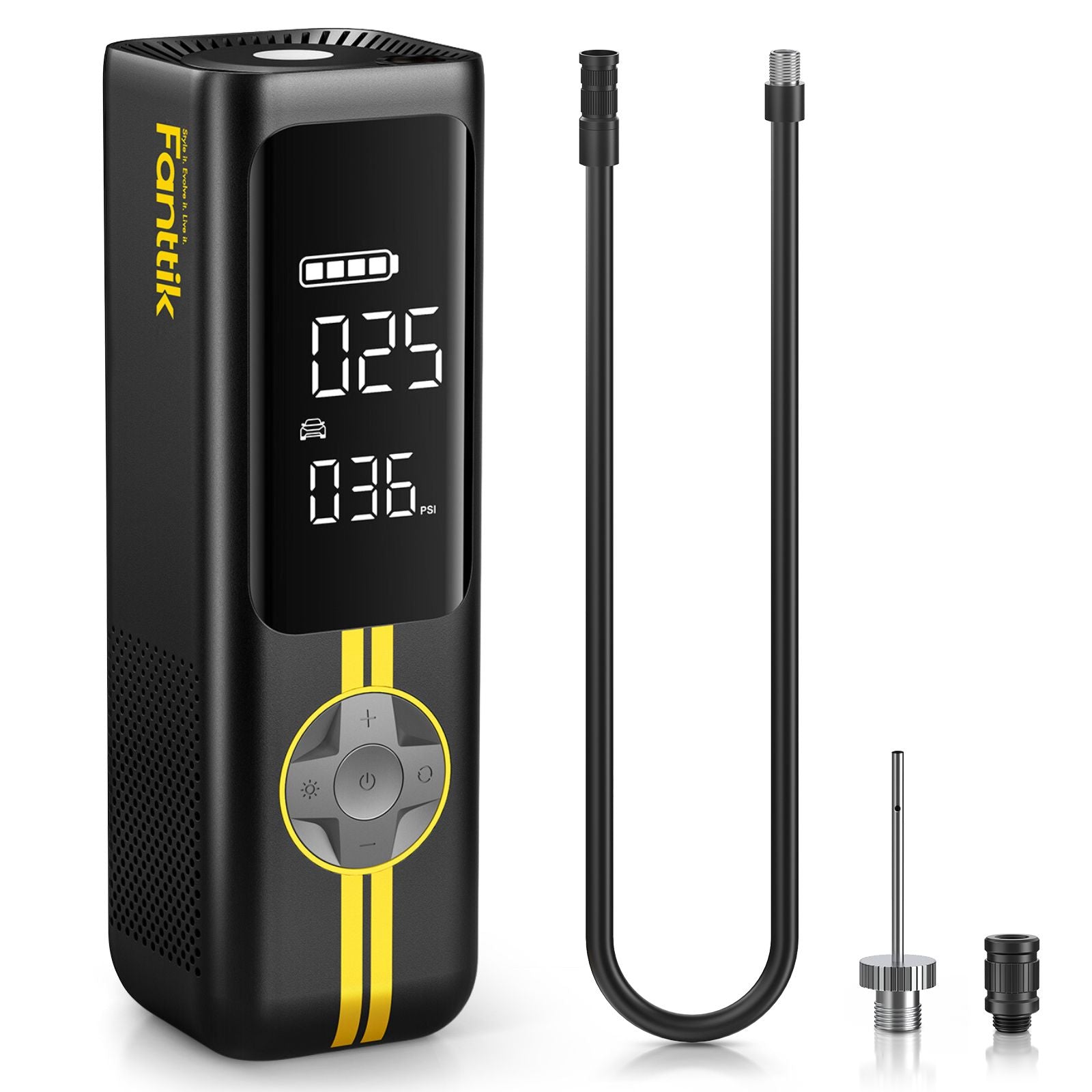
Frequently Asked Questions of how to use tire inflator portable air compressor
How long does it take to inflate a tire with a portable compressor?
It depends on the compressor’s PSI and tire size. Most small compressors take 5 to 15 minutes per car tire from low pressure.
Can I leave the compressor running while I go inside?
No. Never leave a portable air compressor unattended. Overheating and overinflation risks rise when left alone.
How accurate are built-in pressure gauges?
Built-in gauges vary. Many are accurate within a few PSI. For best accuracy, cross-check with a quality handheld gauge.
Will a portable compressor damage my tire?
Not if used correctly. Damage occurs from overinflation, using the wrong nozzle, or inflating a damaged tire. Follow the recommended PSI.
Can I use a compressor to inflate other items like bike tires or sports balls?
Yes. Most units include adapters for bikes and balls. Use the correct nozzle and lower PSI settings for smaller items.
Conclusion
You now have clear, hands-on steps for how to use tire inflator portable air compressor safely and well. Keep the right PSI, use the correct nozzle, and follow safety and maintenance steps to extend the life of both your tires and your compressor. Try these tips on your next trip and keep a compact inflator in your trunk for peace of mind. Share your experiences, ask a question below, or subscribe for more practical car-care guides.