
Check voltage, perform a load test, and inspect for corrosion to know your car battery's health.
I’ve spent years working on cars and teaching basic auto care, so I know exactly how to check car battery health in simple, reliable steps. This guide walks you through quick checks, proper tests, and practical maintenance so you can diagnose battery problems with confidence and avoid being stranded.

Why checking your battery matters
A healthy battery keeps your car starting and electronics running. How to check car battery health matters because early detection saves time and money. A failing battery can cause no-starts, dim lights, and stress on the charging system.
- Prevent unexpected breakdowns.
- Improve fuel economy by reducing alternator load.
- Protect sensitive electronics from voltage drops.

Tools you need to check car battery health
Before you start, gather a few simple tools. Many checks are safe for beginners when you follow basic safety steps.
- Multimeter set to DC volts.
- Battery load tester or a handheld conductance tester.
- Safety gloves and eye protection.
- Wire brush and battery terminal cleaner.
- Battery charger or trickle charger for maintenance charging.
Step-by-step: How to check car battery health
Follow these clear steps. Each step is short and easy to follow. Work on a cooled-off car. Keep sparks and metal away from terminals.
- Visual inspection
- Look for cracks, swelling, or leaking fluid on the case.
- Check terminals for white or green corrosion and loose clamps.
- Clean terminals with a brush if needed and tighten clamps.
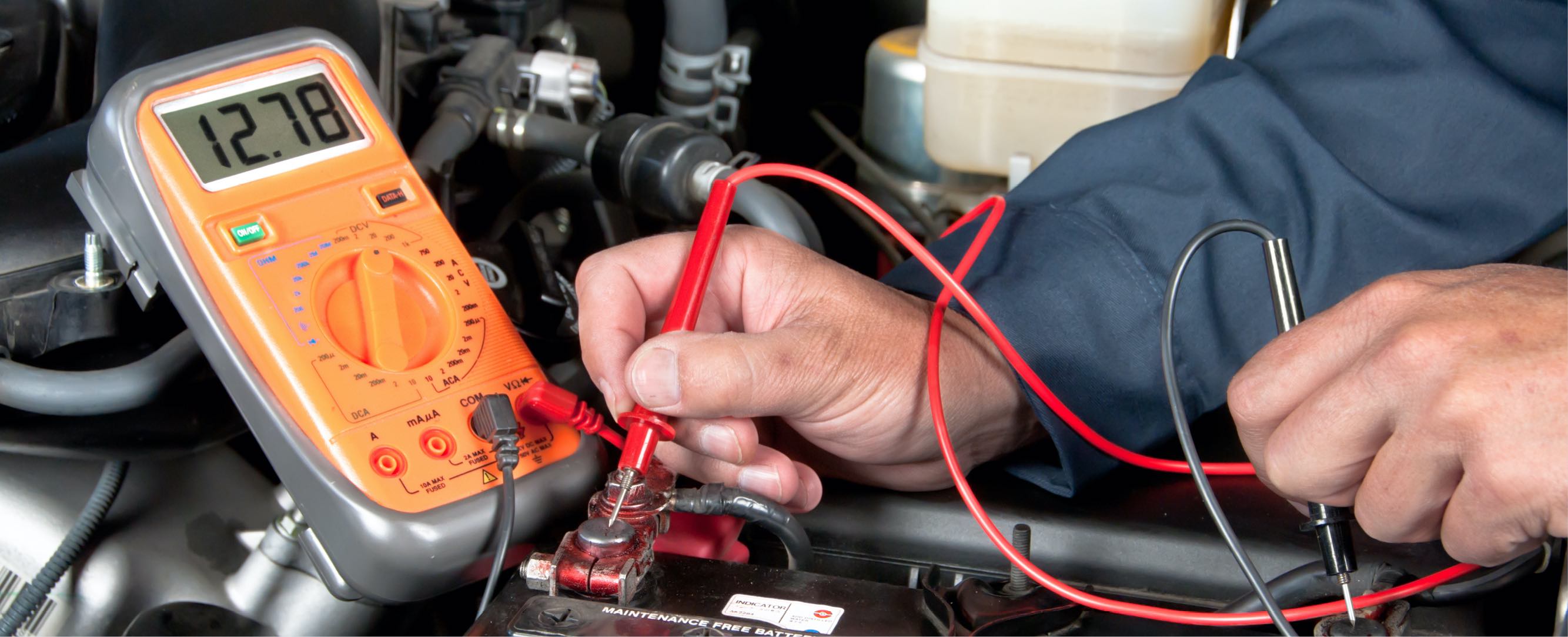
- Measure resting voltage
- Turn off the car and all accessories.
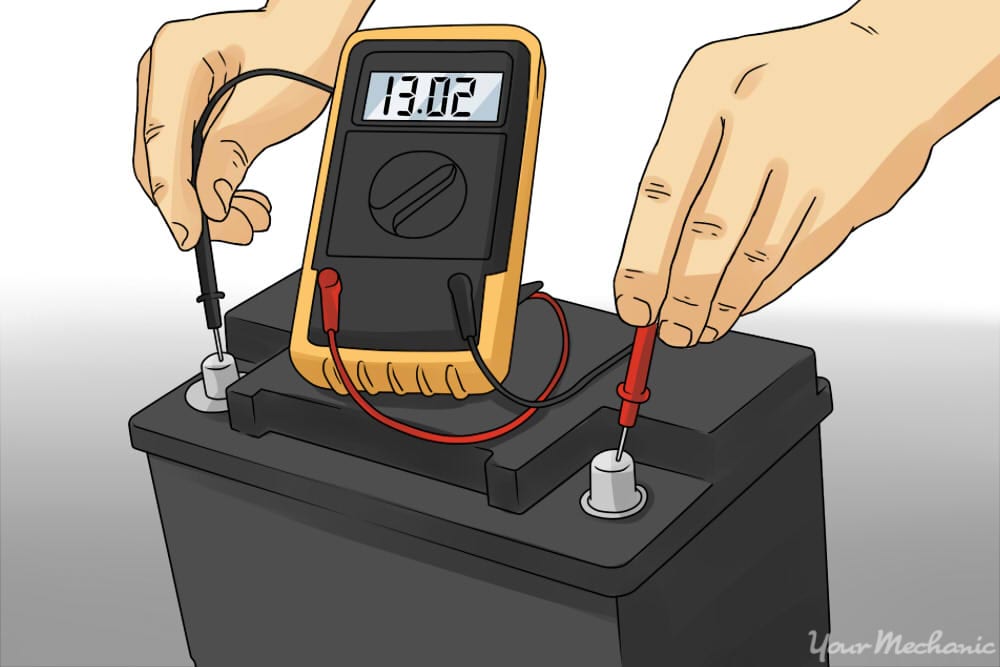
- Set your multimeter to 20V DC.
- Connect red to positive and black to negative.
- Read the voltage: 12.6V or higher is full. 12.4V is about 75% charged. Below 12.2V is weak.
- Load testing
- Use a battery load tester or a professional service.
- Apply a load equal to half the battery's cold cranking amps (CCA) for 15 seconds.
- If voltage falls under 9.6V during the test, the battery likely needs replacement.
- Conductance testing
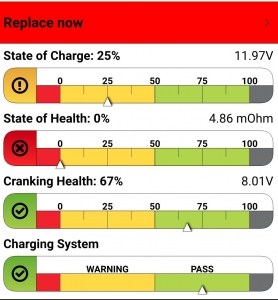
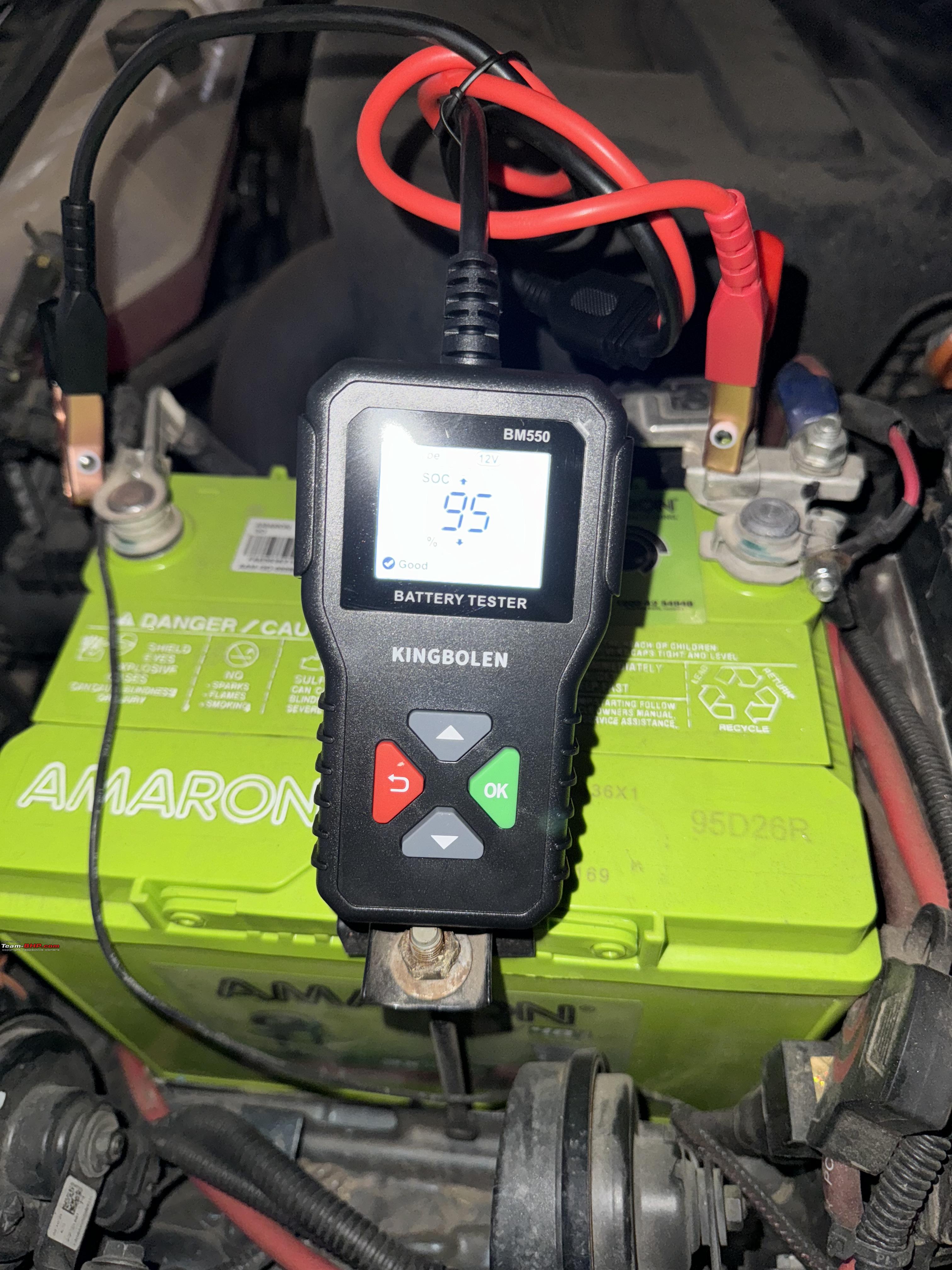
- A conductance tester reads internal resistance and state of health.
- This test is fast and safe and often used by auto shops.
- Follow the tool’s prompts for clear pass/fail results.
- Test with the engine running
- Start the car and measure voltage at the battery.
- A healthy charging system reads 13.7V to 14.7V.
- Lower or higher readings suggest alternator or regulator issues.
- Test after charging
- If the battery is low, charge it fully with a proper charger.
- Recheck resting voltage and perform a load or conductance test.
- If the battery cannot hold charge, replacement is needed.
How to check car battery health is mostly about measuring voltage and load. These checks reveal if the battery can hold charge and deliver current when needed.

Interpreting test results and numbers
Numbers tell the story. Keep this simple cheat sheet nearby.
- Resting voltage 12.6V or above — full battery.
- Resting voltage 12.4V — about 75% charged.
- Resting voltage 12.2V or lower — weak battery.
- Load test voltage below 9.6V — fail.
- Charging system voltage 13.7V–14.7V — normal.
Cold cranking amps (CCA) matter for starting in cold weather. If a battery’s CCA drops significantly from its rated value, the battery is aging. When you read the values, consider ambient temperature and recent charging history. A low resting voltage after a full charge is a strong sign of internal failure.

Maintenance tips to improve battery life
Small habits extend battery life. Use these simple tips based on hands-on experience.
- Drive regularly to keep the battery charged.
- Short trips do not fully recharge; consider occasional long drives.
- Turn off lights and accessories when the engine is off.
- Keep terminals clean and clamps tight.
- Use a smart charger during long storage or winter months.
- Replace old batteries proactively—age is the main failure cause.
How to check car battery health also involves routine maintenance. Periodic testing catches problems early and keeps the battery reliable.
 battery”
style=”max-width: 100%; height: auto; border: 2px solid black; border-radius: 10px; display: block; margin: 0 auto;”
loading=”lazy”
/>
When to replace your battery
Knowing when to replace saves hassle. Age, failure to hold charge, and repeated low-voltage readings are red flags.
- Most lead-acid batteries last 3–5 years.
- If a battery fails two tests after a full charge, replace it.
- If the battery case is damaged or leaking, replace it immediately.
- If the car struggles to start or electronics act up, test the battery first.
How to check car battery health helps you decide if repair or replacement is best. When in doubt, get a professional conductance test for confirmation.
Safety tips for battery checks
Batteries hold acid and can create sparks. Respect safety rules.
- Wear gloves and eye protection.
- Work in a well-ventilated area away from open flames.
- Disconnect ground cable first when removing a battery.
- Avoid touching both terminals with a tool.
- Clean spills immediately with baking soda and water.
How to check car battery health includes safe handling. Never skip protection.
Frequently Asked Questions of How to check car battery health
What is the easiest way to check if my battery is bad?
Use a multimeter to measure resting voltage. A reading under 12.2V after sitting indicates a weak battery.
Can I test my battery without special tools?
You can do a visual check and measure voltage with a cheap multimeter. Full load testing requires a load or conductance tester.
How often should I check my car battery health?
Check every six months or before extreme weather seasons. Older batteries should be checked more often.
Will a slow crank always mean a bad battery?
Not always. Slow cranking can be the battery, starter, or poor connections. Test voltage and connections first.
Can charging a battery fix a failing battery?
Charging can restore a depleted battery temporarily. If the battery won’t hold charge or fails tests after charging, replacement is needed.
Is it safe to jump-start a car with a weak battery?
Jump-starting is safe if done correctly, but it’s a temporary fix. Test the battery and charging system soon after.
Conclusion
Regular checks, simple tools, and basic maintenance let you master how to check car battery health and avoid surprises. Start with a visual check and voltage test, then move to load or conductance testing if needed. Replace batteries that fail tests or are past their expected life.
Take action today: test your battery, clean the terminals, and make a plan for replacement if needed. Share your experience in the comments or subscribe to stay updated on practical car care tips.