The best car chargers for home range from compact USB adapters to fast, dedicated EV wall stations.
A dead phone before a long drive is frustrating, while an electric vehicle can need hours to refill from a basic outlet. The best car chargers for home solve both problems with the right mix of speed, ports, safety, and easy setup. I reviewed these options by looking at charging power, plug types, cable reach, device fit, travel use, and daily value. Some are made for phones and tablets. Others are built for EV owners who need a dependable home charging point.
67W 3-Port USB-C Car Charger

This 67-watt USB-C car charger is a strong choice for drivers who carry several devices. It has three charging ports, so I can power a phone, tablet, and another small device at the same time. Its USB-C output suits newer Samsung Galaxy phones and other modern Android devices. The compact shape also leaves room around the vehicle power socket.
The main appeal is simple: it gives a family more than one charging point without taking up much space. The total output is useful for quick top-ups during errands or road trips, though charging speed depends on the cable and device. I would pair it with a quality USB-C cable for the best result. It is not an EV charger, but it is one of the best car chargers for home if you want a small adapter that can move between the driveway and the road.
Pros:
- Three ports support several devices
- Up to 67 watts of combined charging power
- USB-C design suits newer phones
- Compact body fits most 12-volt sockets
- Useful for families and passengers
- Good fit for Samsung and Android users
Cons:
- Charging cables are not included
- Power divides when several ports are used
- It does not charge electric vehicles
My Recommendation
I recommend this model to Android users, families, and anyone who wants several charging ports in one small unit. It is especially useful when two passengers need power at once. For buyers seeking the best car chargers for home for phones, this model offers a practical mix of output and size. It gives good value when bought with sturdy USB-C cables.
| Best for | Why |
|---|---|
| Families | Three ports help charge several devices. |
| Samsung users | USB-C output supports newer Galaxy phones. |
| Small cars | Its compact design uses little socket space. |
LISEN 84W Retractable Car Charger

The LISEN retractable car charger stands out because it combines high output with built-in cables. Its 84-watt rating gives it more headroom than many basic car adapters. The duo cable setup can reduce the mess that often builds around a center console. I like this style for drivers who want to plug in quickly without searching for a loose cable.
Retractable cables make the charger easy to store, but they need careful handling. I would pull each lead straight and avoid yanking it from an angle. The charger works best for phones, tablets, and other USB-powered devices that support fast charging. For busy households, it is among the best car chargers for home because it can stay in the vehicle while still keeping the cabin tidy.
Pros:
- High 84-watt power rating
- Built-in retractable cables reduce clutter
- Duo cable design supports different devices
- Fast charging support for compatible phones
- Convenient for daily commuting
- Neat storage in the center console
Cons:
- Built-in cables cannot be replaced easily
- Retractable parts need gentle use
- Actual speed varies by phone and cable mode
My Recommendation
This LISEN charger suits commuters who dislike loose wires and want a high-output car adapter. It is a smart pick for a shared car because the built-in leads are always ready. Among the best car chargers for home, it offers one of the cleanest setups for phone and tablet users. I would choose it over a plain adapter when convenience matters most.
| Best for | Why |
|---|---|
| Neat interiors | Retractable cables help control wire clutter. |
| Commuters | Built-in leads make daily charging quick. |
| Tablets and phones | The 84-watt rating provides useful power headroom. |
ChargePoint HomeFlex Level 2 EV Charger

The ChargePoint HomeFlex is a true home EV charging station, not a small phone adapter. This hardwired Level 2 unit uses a J1772 connector and supports up to 50 amps when the home circuit and vehicle allow it. It is made for owners who want faster overnight charging than a standard wall outlet can provide. The connected design can also create a clean, fixed charging point in a garage.
Installation is the key issue here. A qualified electrician should confirm the breaker, wiring, load, and mounting location before use. The final charging speed depends on the vehicle, circuit, and settings, so a 50-amp rating does not mean every EV will charge at that rate. For compatible J1772 vehicles, it is one of the best car chargers for home when dependable overnight charging is the main goal.
Pros:
- Level 2 charging is faster than a standard outlet
- Hardwired setup looks clean and permanent
- J1772 connector fits many EVs and plug-in hybrids
- High current capacity supports fast home charging
- Strong choice for regular overnight use
- Designed for a dedicated garage installation
Cons:
- Professional electrical installation is needed
- Hardwired design is not portable
- Not compatible with every EV without an adapter
My Recommendation
I recommend HomeFlex to EV owners who want a permanent, high-power home station and have access to a suitable electrical circuit. It is best for drivers who charge every night and want to recover more range while the car sits in the garage. In my view, it is one of the best car chargers for home for J1772 vehicles. Budget for installation because the electrical work affects safety and final cost.
| Best for | Why |
|---|---|
| Daily EV drivers | Level 2 power supports regular overnight charging. |
| Garages | Hardwiring creates a tidy fixed station. |
| J1772 vehicles | The connector serves many EVs and PHEVs. |
TRON 36W Wall and Car Charger

The TRON TR17 is useful for people who want one charging kit for the home and the car. It combines a wall charger with a car charging adapter in a foldable travel design. The two USB-C ports make it a good fit for newer phones, tablets, earbuds, and similar devices. Its 36-watt output is modest, but it matches the needs of many daily devices.
I see this as a travel station rather than a high-power workstation. It can stay in a luggage bag, then move from a hotel room to a vehicle without adding many parts. The foldable plug also helps protect the prongs during storage. If you want the best car chargers for home that can also travel, this flexible design is worth considering.
Pros:
- Works from a wall outlet and a car socket
- Two USB-C ports support modern devices
- Foldable design packs easily
- Useful for travel and backup charging
- 36 watts suits phones and small tablets
- One kit can serve home and vehicle use
Cons:
- Lower output than larger multi-port models
- Cables are not included
- It is not intended for EV charging
My Recommendation
I recommend the TRON TR17 to travelers, students, and anyone who wants fewer chargers in a bag. It is also a good backup for a home office or guest room. For the best car chargers for home in the compact travel category, its dual-use design is the main advantage. Choose another model if you need to power several high-demand devices at once.
| Best for | Why |
|---|---|
| Travelers | One foldable unit works at home and in a car. |
| USB-C users | Two USB-C ports fit current devices. |
| Small bags | The foldable plug saves space. |
NDLBS Dual USB Wall and Car Charger
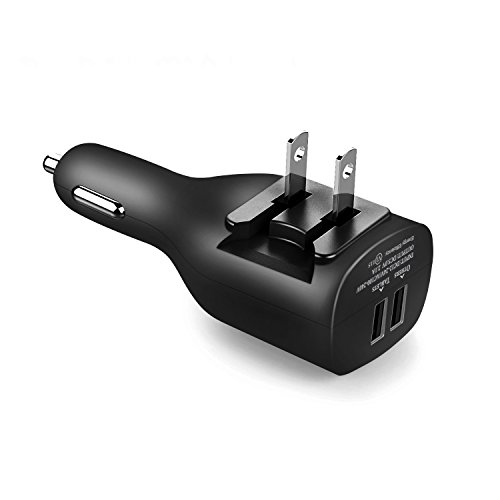
The NDLBS charger is a simple travel set with both a wall adapter and a car adapter. Each unit has dual USB ports, which helps when two people need power. The design supports a wide range of older and newer phones, tablets, and small USB devices. Its foldable wall plug makes it easier to store in a glove box or carry-on bag.
This is a practical choice for basic charging rather than maximum speed. It works well when I need a spare charger for a guest room, rental car, or family trip. Since it uses USB ports, I need to supply the correct cable for each device. It belongs on a list of the best car chargers for home for buyers who value low cost and simple backup power.
Pros:
- Includes both wall and car adapters
- Two USB ports on each adapter
- Foldable wall plug saves storage space
- Useful for phones, tablets, and earbuds
- Good as a spare travel charger
- Supports several device brands
Cons:
- USB output may be slower than modern USB-C PD
- No charging cables are included
- Not ideal for high-power laptops
My Recommendation
I recommend NDLBS for households that need a basic charger in more than one place. It is a sensible pick for a glove box, guest room, or travel bag. Among the best car chargers for home, it gives good flexibility at a simple price. Buyers who want the fastest phone charging should choose a USB-C PD model instead.
| Best for | Why |
|---|---|
| Backup use | It provides both wall and car charging options. |
| Families | Dual USB ports support two devices. |
| Travel | The foldable plug stores with little fuss. |
EVDANCE Portable Level 1 and 2 EV Charger

The EVDANCE portable EV charger gives drivers both Level 1 and Level 2 options. Its J1772 plug works with many electric vehicles and plug-in hybrids, while the 25-foot cable can reach a driveway outlet with less strain. It supports 120-volt and 240-volt use through the listed plug setup. The portable format also makes it useful for travel or backup charging.
Level 1 charging is slower, but it can work from a normal household outlet when the car sits for many hours. Level 2 charging can provide more power when a suitable 240-volt circuit and plug are available. I would verify the outlet, breaker, vehicle limit, and installation plan before switching voltage. For EV owners who need flexible best car chargers for home, this unit offers more freedom than a fixed station.
Pros:
- Supports Level 1 and Level 2 charging
- Long 25-foot cable reaches more parking spots
- J1772 connector fits many EVs and PHEVs
- Portable design works at home or on trips
- Can use a standard household outlet at Level 1
- Useful as an emergency backup charger
Cons:
- Charging speed depends on the outlet and circuit
- 240-volt use may need electrical work
- J1772 does not directly fit every EV
My Recommendation
I recommend EVDANCE to EV owners who want one charger for home, travel, and backup use. The long cable helps when the outlet is not close to the charge port. It is one of the best car chargers for home for drivers who value portability over a permanent wall mount. Always use a properly rated outlet and follow the vehicle maker’s charging instructions.
| Best for | Why |
|---|---|
| Portable EV charging | The long cable and mobile design travel well. |
| Mixed outlets | It supports Level 1 and Level 2 use. |
| J1772 EVs | The connector fits many electric vehicles. |
45W USB-C Car and Wall Charger
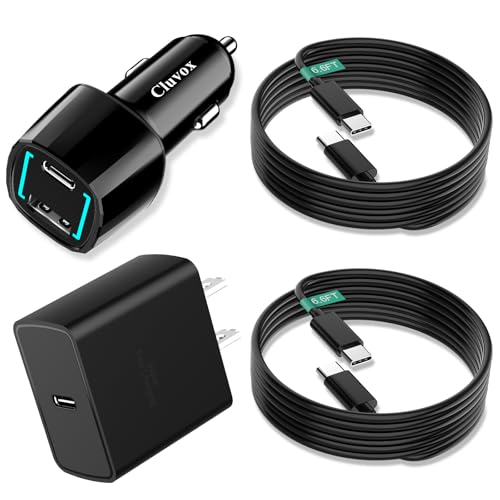
This 45-watt set combines a USB-C car charger with a wall charging block. It targets users who switch between charging at home and charging on the road. The output is a good match for many Samsung phones, iPhones with compatible cables, tablets, and other small devices. A two-piece set also means I can keep one part at home and one in the vehicle.
The simple format makes it easy to recommend as a replacement for a lost or aging charger. It is more modern than a basic USB-A adapter, but the real speed still depends on the phone and cable. I would check whether a laptop or tablet needs more than 45 watts before using it for that task. For everyday phones, it ranks among the best car chargers for home because it covers two common charging locations.
Pros:
- Includes car and wall charging pieces
- 45 watts suits many phones and tablets
- USB-C output fits newer devices
- Useful for home and commuting
- Easy replacement for older chargers
- Compact design saves bag space
Cons:
- Charging cable may need to be purchased separately
- Not enough power for some laptops
- Only one main USB-C output may limit sharing
My Recommendation
I recommend this charger set for phone users who want one solution for the wall and the car. It is especially handy for commuters who do not want to move a wall block between rooms. In the category of best car chargers for home, it offers a balanced mix of speed and convenience. Choose a higher-wattage charger if you regularly charge power-hungry tablets or computers.
| Best for | Why |
|---|---|
| Commuters | Separate wall and car pieces stay in place. |
| Phone users | 45 watts supports many current phones. |
| Small bags | The compact set is easy to carry. |
40W Dual USB-C Car Charger and Wall Adapter

This 40-watt charger is designed for people who use USB-C devices in both the car and the home. Its dual USB-C layout is helpful for two phones or a phone and earbuds. The total power is suitable for daily charging, and its small size should fit neatly near a vehicle console. It is a straightforward option for drivers who already own USB-C cables.
Two ports offer convenience, but the available power may be shared between them. That is normal for compact multi-port chargers and is worth remembering when two devices need fast power at once. I would use it for phones, earbuds, navigation devices, and smaller tablets. It is one of the best car chargers for home for buyers who want dual USB-C support without a large adapter.
Pros:
- Two USB-C ports support current devices
- 40 watts provides useful daily power
- Compact size suits crowded consoles
- Good for two phones or small accessories
- Works well with existing USB-C cables
- Simple design is easy to use
Cons:
- Power divides between both ports
- Cables are not included
- May not fully power larger laptops
My Recommendation
I recommend this model to couples, families, and drivers with several USB-C accessories. It is a clean upgrade from old single-port adapters. For people comparing the best car chargers for home, its dual USB-C setup is more useful than a basic USB-A design. It offers solid everyday value when the main task is charging phones and small devices.
| Best for | Why |
|---|---|
| Two-device charging | Dual USB-C ports make sharing easy. |
| Modern phones | USB-C matches many current devices. |
| Compact consoles | The small body saves socket space. |
EVIQO 40A Level 2 EV Charger

The EVIQO Level 2 charger is made for EV owners who have a 240-volt NEMA 14-50 outlet. Its 40-amp design can deliver faster home charging than a common 120-volt outlet, provided the vehicle and electrical circuit support it. The J1772 connector serves many EVs and plug-in hybrids. This style works well in a garage or covered parking area where the charger can remain ready.
Before buying, I would confirm that the home circuit can safely support the intended continuous load. A 40-amp EV charger needs the right breaker, wiring, receptacle, and installation method. Charging speed also changes by vehicle, battery size, temperature, and state of charge. For suitable homes, it is among the best car chargers for home for dependable 240-volt charging without a hardwired station.
Pros:
- Level 2 power can shorten charging time
- NEMA 14-50 plug suits many garage outlets
- J1772 connector supports many EVs
- Portable compared with hardwired stations
- 40-amp output offers useful charging capacity
- Good fit for regular home charging
Cons:
- Needs a suitable 240-volt circuit
- Installation may require an electrician
- It is not a direct fit for every EV
My Recommendation
I recommend EVIQO for EV drivers who already have, or can install, a proper NEMA 14-50 outlet. It is a strong middle ground between slow Level 1 charging and a permanent hardwired system. Among the best car chargers for home, it suits owners who want useful speed with some portability. Confirm the car’s maximum AC charging rate before paying for extra capacity.
| Best for | Why |
|---|---|
| 240-volt garages | The NEMA 14-50 plug fits a common EV outlet type. |
| J1772 vehicles | The connector works with many EVs and PHEVs. |
| Faster overnight charging | Level 2 power improves on a standard outlet. |
LISEN 69W USB-C Car Charger Two-Pack
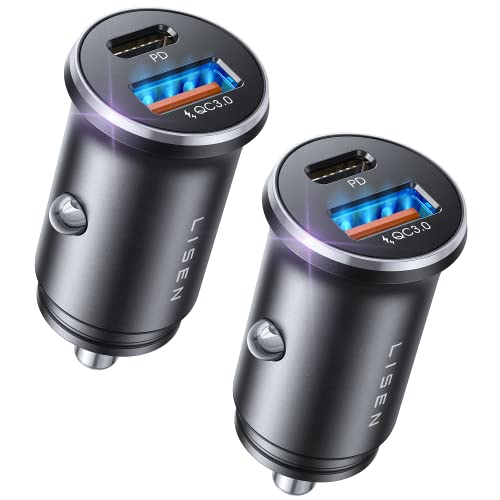
The LISEN two-pack gives buyers two 69-watt USB-C car adapters. That is helpful for households with more than one vehicle or for anyone who wants a spare in a travel bag. The adapters fit standard 12-volt sockets and can support compatible phones, tablets, and other USB-C devices. Having two matching units also removes the need to move one charger from car to car.
These adapters are best for users who already own charging cables. The advertised wattage describes available output, while the actual result depends on the device, cable, and port setup. I would keep one in the main vehicle and one in a second car or emergency kit. For value-minded shoppers, this two-pack is a practical entry among the best car chargers for home and road use.
Pros:
- Two adapters provide useful backup value
- Up to 69 watts of rated output
- USB-C design fits newer devices
- Good for two vehicles
- Compact bodies fit most car sockets
- Useful for phones and tablets
Cons:
- Charging cables are sold separately
- Actual output varies by device
- It does not include a wall adapter
My Recommendation
I recommend this LISEN two-pack to families, couples, and owners of multiple cars. It is also useful as a spare for work, travel, or emergencies. In a comparison of the best car chargers for home, the two-unit value makes this option stand out. Choose a multi-port model instead if several people must charge from one socket at the same time.
| Best for | Why |
|---|---|
| Two-car homes | Each vehicle can keep its own adapter. |
| Backup kits | The second unit provides useful spare power. |
| USB-C devices | The output suits many current phones and tablets. |
How to Choose the Best Car Chargers for Home
First, decide what “car charger” means for your home. A USB car adapter charges phones and small devices from a vehicle’s 12-volt socket. An EV charger, also called an EVSE, sends power from a household circuit to an electric vehicle. These products solve very different problems, so I never compare them by wattage alone.
Check the Device and Connector
For phones, USB-C is now the most useful port because many current devices use it. USB-A still helps with older cables, but it may not provide the same fast-charge features. For EVs, check the connector before buying. J1772 is common on many North American EVs and plug-in hybrids, while other vehicles may use a different inlet or need an approved adapter.
Understand Power Ratings
A higher watt number does not always mean a faster charge. The device must accept that power, and the cable must support it. Multi-port chargers may also divide their total output when several devices connect. For EV charging, the vehicle’s onboard charger, circuit size, voltage, and battery state all affect the result.
Choose Level 1 or Level 2 EV Charging
Level 1 usually uses a standard 120-volt outlet. It is slow, but it can work well when the car sits overnight and daily miles are low. Level 2 uses a 240-volt circuit and can add range much faster. A qualified electrician should inspect the circuit before installing or using a high-current EV charger.
Think About Cable Reach
A short phone cable may work in a compact car but fail in a large SUV. For EVs, cable length matters even more because the outlet and charge port may sit far apart. A 25-foot cable can add flexibility, but it also weighs more and needs careful storage. I prefer enough reach to avoid tension without leaving a large coil on the floor.
Look for Safety Features
Good chargers should include basic protection against overcurrent, overheating, and short circuits. For EV products, look for clear ratings, a suitable plug, and recognized safety testing or listing where available. Never use a damaged cable, loose receptacle, or unsuitable extension cord for high-current charging. Heat, discoloration, and a burning smell are warning signs that need immediate attention.
Consider Installation and Weather
Hardwired EV stations need professional installation. Plug-in models still need a proper receptacle and circuit. Outdoor use also requires a product rated for the location, plus a safe way to protect the connection from water. A charger should match the parking space, not force the car owner to stretch a cable across a walkway.
FAQs Of best car chargers for home
Can a car charger charge a phone at home?
Yes, but a standard car charger needs a 12-volt vehicle socket. To use it indoors, choose a model that includes a wall adapter or use a compatible power supply. A USB wall charger is often simpler for home-only phone charging.
What are the best car chargers for home for an electric vehicle?
For a J1772 EV, the ChargePoint HomeFlex suits permanent high-power use, while EVDANCE suits portable Level 1 and Level 2 charging. EVIQO is a strong option for homes with a suitable 240-volt NEMA 14-50 outlet. Always match the charger to the vehicle and home circuit.
Is Level 2 charging better than Level 1?
Level 2 is faster, but it may need a 240-volt circuit and professional electrical work. Level 1 can be enough for low daily mileage when the vehicle sits for many hours. The better choice depends on driving needs, budget, and available power.
Does a higher watt USB charger always charge faster?
No. The phone, cable, and charger must support the same charging standard. A high-watt charger cannot force a device to accept more power than it allows. Multi-port use may also reduce the power available to each device.
Are car chargers safe to leave plugged in?
Most quality adapters are designed for normal use, but I unplug damaged or unusually hot chargers. For EV stations, follow the installation and operating instructions. Keep plugs dry, avoid loose outlets, and replace cables that show wear.
Final Verdict: Which Should You Buy?
For phones, the LISEN 84W retractable model is my top pick for clean, fast daily use. For EVs, ChargePoint HomeFlex is best for a permanent J1772 setup, while EVDANCE wins for portable flexibility.
The best car chargers for home depend on your device, outlet, and routine. Choose the right connector and power level first, then buy the model that fits your space and budget.