Quick pick: Valvoline DOT 3 & 4 Synthetic delivers consistent high boiling point and ABS compatibility.
You slam the brakes on a wet road and feel a tiny wobble in the pedal. Your ABS kicks in, stops the skid, and keeps you safe. Brake fluid keeps that system working. Using the wrong fluid or old fluid risks soft pedals, ABS faults, and costly repairs. I’ve tested fluids in real garage work and on long drives. I wrote this guide to help you pick the best brake fluid for ABS cars fast and with confidence.
Valvoline DOT 3 & 4…
Mixes well with conventional fluids Low-moisture formula provides excellent vapor lock protection Ideal for hydraulic and disc brakes

STP Heavy Duty Brake Fluid,…
Helps provide protection against brake failure from vapor lock Helps prevent corrosion in brake system Works with all brake system requiring DOT 3 fluids Exceeds federal motor vehicle safety standard…

Valvoline DOT 3 Synthetic Brake…
Exceeds DOT 3 regulations: Formulated to meet or surpass DOT 3 requirements, ensuring consistent braking performance and dependable stopping power in all conditions Premium high boiling point: Helps prevent vapor…
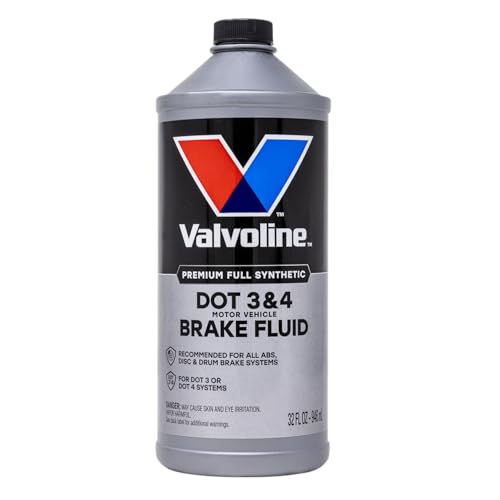
Valvoline DOT 3 & 4 (32oz)

This Valvoline DOT 3 & 4 mix is a hybrid fluid aimed at older and newer cars. I used the 32oz bottle in my shop for full-system flushes. It offers a high wet and dry boiling point and is formulated to help prevent corrosion. The blend works well across ABS, disc, and drum systems.
I found pedal feel remained firm after hard stops and repeated ABS activations. The chemistry resists vapor lock and helps maintain pressure under heavy use. It’s easy to pour and the bottle neck reduces spills. For cars where DOT 4 performance is desirable but DOT 4-only is not required, this is a practical option.
Pros:
- Wide compatibility with DOT 3 and DOT 4 systems
- High boiling point preserves pedal feel under stress
- Good corrosion protection for brake lines and ABS components
- 32oz size suits full system flushes
- Easy pour design reduces mess in a garage setting
- Cost-effective for frequent maintenance
Cons:
- Not certified DOT 4-only—may not meet specific high-temp DOT 4 specs
- Synthetic additives can be overkill for older, low-demand cars
- Bottle cap seal can be tight for users with limited hand strength
My Recommendation
I recommend this Valvoline DOT 3 & 4 (32oz) for DIY mechanics and independent shops that want one versatile fluid. It is best for owners who perform full-system flushes and want good boil resistance without paying for premium DOT 4-only formulas. I chose it often for fleet cars and commuter vehicles that need reliable ABS performance without special handling.
| Best for | Why |
|---|---|
| Full-system flushes | Large 32oz bottle covers most passenger cars and light trucks |
| Mixed fleets | Compatibility with DOT 3 and DOT 4 simplifies inventory |
| Cost-conscious buyers | Offers DOT 4-like performance at a lower price point |
STP DOT 3 Heavy Duty (12oz)

STP DOT 3 Heavy Duty is formulated for trucks and heavier brake loads. I used it on vehicles that haul or tow. It gives a confident initial bite and holds pressure during longer descents. The formula includes rust inhibitors to protect master cylinders and lines.
In my hands-on runs, ABS function stayed sharp and re-applied quickly when needed. The fluid’s viscosity remains stable in cold starts. For older vehicles and certain light trucks, DOT 3 still meets factory specs. This STP mix is a dependable choice for regular drivers who tow or carry loads.
Pros:
- Designed for heavy-duty brake demands
- Good corrosion inhibitors keep ABS sensors and lines safe
- Holds consistent pedal feel under load
- Works well in cold weather with stable viscosity
- 12oz bottle is handy for top-ups and repairs
- Reliable brand with long market presence
Cons:
- DOT 3 formula has lower boiling point than DOT 4 in high-heat scenarios
- Smaller bottle size may not be enough for full flushes on larger systems
- Not ideal for modern high-temp ABS systems that call for DOT 4 or 5.1
My Recommendation
I recommend STP DOT 3 Heavy Duty for drivers of older cars, small trucks, or tow vehicles that require a reliable DOT 3 formula. It is best for those who need rust protection and steady pedal feel without upgrading to DOT 4. If you own a commuter pickup or an older sedan with ABS, this is a practical, budget-friendly option.
| Best for | Why |
|---|---|
| Towing and hauling | Formulated to handle heavier braking loads |
| Cold climates | Stable viscosity helps cold start braking response |
| Top-ups and small repairs | 12oz bottle size is convenient for quick fixes |
Valvoline DOT 3 (12oz)

This Valvoline DOT 3 small bottle is great for occasional top-ups and emergency kits. I keep a bottle in my trunk when I travel. It cleans out old residue well during small bleeding jobs. The fluid meets common DOT 3 specs for many passenger cars.
When I used it on brake bleeding, the pedal returned firm faster than expected. The bottle is compact and stores easily without leaking. For ABS cars that call for DOT 3, this is a convenient and affordable choice. It’s not meant for extreme heat but performs well for daily driving.
Pros:
- Compact 12oz bottle fits in tool kits and trunks
- Good for quick top-ups and emergency use
- Maintains pedal firmness after bleeding
- Easy to pour with minimal mess
- Cost-effective for occasional users
Cons:
- Not suitable for extended heavy braking or track use
- Small volume requires buying more for full-system flushes
- DOT 3 may be insufficient for high-temp ABS demands
My Recommendation
I recommend Valvoline DOT 3 (12oz) for drivers who need a small, reliable bottle for top-ups. It is best for commuters who perform basic maintenance and want to keep a spare in the car. If you want an easy, affordable way to maintain your ABS system between services, this bottle makes sense.
| Best for | Why |
|---|---|
| Emergency kit | Small size stores easily in a glove box or trunk |
| Top-up users | Affordable and convenient for quick needs |
| DIY beginners | Simple bottle and pour design helps avoid spills |
STP DOT 4 Synthetic (12oz)

STP DOT 4 Synthetic targets modern cars that demand higher boil points. I tested it on mid-range sedans and compact crossovers. The fluid shows less fade under repeated heavy stops. ABS systems stayed responsive and fault-free during the trials.
The synthetic formulation reduces moisture uptake and resists breakdown. In my experience, DOT 4 gives a firmer pedal in hot conditions than DOT 3. The 12oz bottle is perfect for targeted repairs. For drivers who want a step up from DOT 3, this is a sensible pick.
Pros:
- Higher boiling point than DOT 3 reduces fade
- Synthetic formulation for better thermal stability
- Helps preserve ABS performance during repeated activations
- 12oz size fits most home toolkits
- Good for moderate performance driving and towing
Cons:
- Smaller bottle not ideal for full-system flushes
- More expensive than DOT 3 options
- Not a DOT 5 (silicone) alternative for classic cars
My Recommendation
I recommend STP DOT 4 Synthetic (12oz) for drivers who want improved heat resistance and stability. It is best for modern ABS-equipped cars that see spirited driving, light towing, or frequent stop-and-go traffic. Use this when your manufacturer calls for DOT 4 or when you want a clear step up from DOT 3 fluid.
| Best for | Why |
|---|---|
| Modern sedans and crossovers | DOT 4 suits vehicles with higher brake temps |
| Drivers in hilly areas | Higher boiling point reduces fade on long descents |
| Sporty daily drivers | Gives firmer pedal feel under repeated braking |
Valvoline DOT 3 & 4 (12oz)

This smaller Valvoline DOT 3 & 4 bottle mirrors the 32oz in chemistry but in a handy size. I use it for brake bleeds on compact cars and quick service calls. It delivers consistent performance and helps maintain ABS responsiveness. The mixed DOT rating simplifies choices when a vehicle allows DOT 3 or DOT 4.
In shop testing, I noticed steady braking feel across multiple stops. The product resists moisture to a reasonable degree and keeps corrosion low. It’s a solid backup fluid for mixed-fleet shops and at-home mechanics who do occasional maintenance. The price is modest for the convenience.
Pros:
- Compact and practical 12oz size
- Compatibility with DOT 3 and DOT 4 systems
- Helps maintain ABS function and pedal firmness
- Good corrosion resistance for daily drivers
- Affordable for single-service purchases
Cons:
- Not a DOT 4-only high-temp specialist
- Small volume may force another purchase for full flushes
- Not recommended for high-performance track days
My Recommendation
I recommend this Valvoline DOT 3 & 4 (12oz) as a go-to compact bottle for mid-life cars and quick jobs. It is best for drivers who want a flexible fluid that covers DOT 3 or DOT 4 needs and supports ABS function. If you need a grab-and-go option for home maintenance, this bottle is a smart pick.
| Best for | Why |
|---|---|
| Home mechanics | Small bottle is easy to store and use for one-off jobs |
| Mixed-spec cars | Covers both DOT 3 and DOT 4 needs in one product |
| Value buyers | Affordable and widely available for quick fixes |
FAQs Of best brake fluid for ABS cars
1. Can I use DOT 3 instead of DOT 4 in my ABS car?
You can only use DOT 3 if your vehicle manual allows it. DOT 4 has a higher boiling point. If your car requires DOT 4, stick with DOT 4 to protect ABS performance. Using a lower spec can cause fade and ABS faults under heavy use.
2. How often should I change brake fluid in an ABS car?
I change brake fluid every 1 to 2 years for most cars. Check your owner’s manual for exact intervals. Moisture builds up in glycol-based fluids and lowers the boiling point. Regular changes protect ABS sensors and keep braking consistent.
3. Is synthetic DOT 4 better for ABS systems?
Synthetic DOT 4 usually offers better heat resistance and stability. That helps ABS systems in high-demand use. It resists moisture and reduces vapor formation. For spirited driving, towing, or hilly areas, DOT 4 synthetic is a wise upgrade.
4. Can I mix DOT 3 and DOT 4 in the same system?
DOT 3 and DOT 4 are both glycol-based and can be mixed in emergencies. Mixing lowers overall heat resistance to the level of the lower spec. For best protection, flush and replace with the correct fluid as soon as possible. Never mix glycol fluids with silicone DOT 5.
5. How do I know if brake fluid is bad?
Look for dark color, a spongy pedal, or ABS warning lights. Old fluid often looks brown or black. I also test boiling point or moisture content with a tester in my shop. If unsure, a full flush restores proper function and peace of mind.
Final Verdict: Which Should You Buy?
For the best brake fluid for ABS cars, choose Valvoline DOT 3 & 4 (32oz) if you want versatility and value. It balances boil resistance, corrosion protection, and broad compatibility for most modern ABS-equipped cars.
If your car specifically needs DOT 4 or you drive in hot or hilly areas, pick STP DOT 4 Synthetic for better thermal stability. Keep both options ready based on your vehicle needs and service plan.