Most car AC stops cooling at idle but cools while driving because of airflow and pressure issues.
I have spent years fixing car air conditioning systems and helping drivers diagnose why the AC works only while driving. This article breaks down causes, simple tests, DIY fixes, and when to see a pro. Read on to learn clear, practical steps so you can stop sweating at traffic lights and make your AC reliable again.

How car AC works — quick primer
A car AC cools air by moving refrigerant in a closed loop. The compressor pumps refrigerant through the system. The condenser releases heat to outside air. The evaporator absorbs heat from cabin air. Fans and airflow let the system work at low speeds.
The compressor runs when the engine and clutch engage. The condenser needs airflow to shed heat. Low airflow or low pressure often causes weak cooling at idle. These basics explain why the AC works only while driving.

Why the AC works only while driving
One common reason the AC works only while driving is poor airflow through the condenser. At speed, air pushes through the grille and cools the condenser. At idle, the engine fan must do that job. If the fan fails, you lose cooling at stop.
Low refrigerant is another frequent cause. Low charge can let pressures drop at idle. At higher engine RPM, the compressor raises pressure and gives some cooling. This makes the AC work only while driving.
A failing compressor clutch or a slipping belt can also cause the issue. The clutch may not engage well at low RPM. At higher RPM the friction increases and the clutch transfers power more reliably.
Electrical faults and pressure switches create intermittent cooling too. A bad condenser, clogged fins, or a blocked radiator area reduces air flow. Faulty temperature sensors or a bad control module can stop the AC at idle.
From my shop work, the top causes I see are:
- Cooling fan failure or relay issues
- Low refrigerant or small leak
- Condenser blockage or damage
- Compressor clutch or belt problems
- Faulty high/low pressure switches
All of these make the AC work only while driving by improving airflow or compressor performance only when the car is moving.

Common causes and how to diagnose
Here are clear checks you can do before going to a shop.
- Check the radiator grille for debris
Look through the grille. If leaves or dirt block the condenser, clean it gently with water. - Listen for the cooling fan at idle
With the car on and AC on max, the fan should run. If it does not, the fan, fuse, or relay may be bad. - Observe refrigerant behavior
If the AC blows cold at highway speeds but warm at idle, suspect low refrigerant. Visible oil or green dye near fittings hints at leaks. - Watch compressor clutch
With the engine on and AC running, look at the compressor. The clutch should engage and spin. If it clicks or barely moves, note that. - Feel the condenser area
Carefully touch (when cool) or use a non-contact thermometer. The condenser should be warm to the touch when working. Large hot spots mean poor heat rejection.
From my experience, a quick fan swap or clearing debris often fixes the problem. Low refrigerant usually needs a leak find and recharge. Compressor issues require a pro.

Simple DIY fixes you can try
Try these safe steps before booking a costly repair.
- Clean the condenser and grille
Use low-pressure water. Remove leaves, bugs, and road grime that block airflow. - Check fuses and relays
Replace any blown fuses. Swap the AC fan relay with a similar relay to test operation. - Test the cooling fan
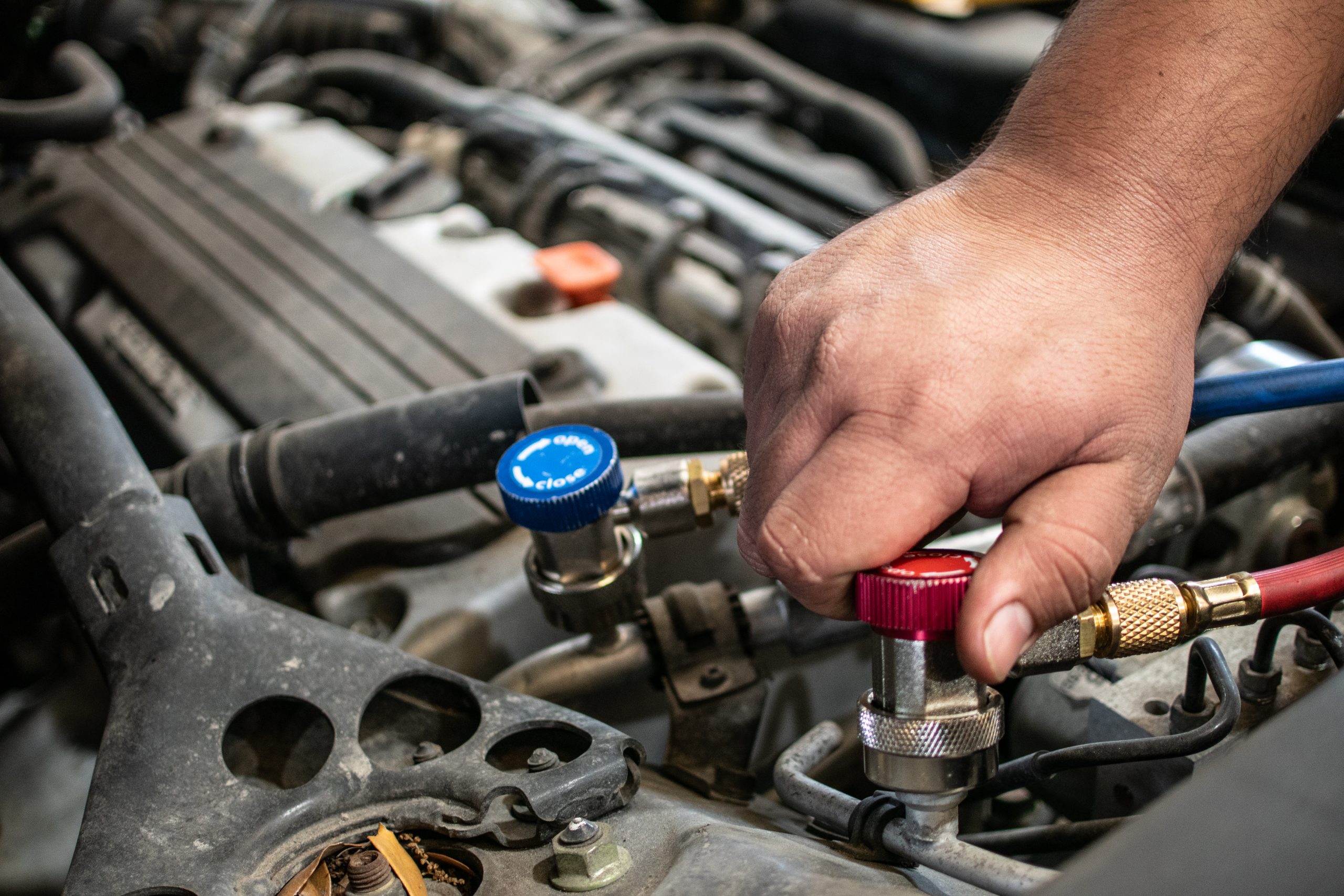
Start the car and turn on the AC. If the fan never runs, test the fan motor by applying 12V directly if you are comfortable. - Add refrigerant only if you suspect low charge
Use a proper gauge kit and follow instructions. A recharge can help but only after checking for leaks. - Tighten or inspect belts
A loose serpentine belt can slip at idle. Tighten or replace a worn belt.
I once fixed a car with the same symptom by cleaning debris and replacing one small relay. The repair cost was cheap and the car cooled fine at idle afterward.
When to see a mechanic and what to expect
If DIY checks do not fix the problem, visit a certified AC technician. Expect these services.
- Leak detection and repair
Technicians use dyes, UV lights, or electronic leak detectors. Fixing a leak is required before recharging. - Full system evacuation and recharge
Proper vacuuming and correct refrigerant weight restore system balance and pressure. - Fan motor or relay replacement
Pros test wiring and replace faulty parts quickly. - Compressor or clutch replacement
If the compressor is worn, the shop will recommend repair or replacement with a warranty.
Be ready to share symptoms, when the issue started, and what fixes you tried. That saves diagnosis time and cost.

Maintenance tips to prevent AC cooling only while driving
Preventive care keeps your AC steady at idle and while driving.
- Run the AC regularly
Use the AC a few minutes each week to circulate oil and protect seals. - Keep the grille and condenser clean
Regularly clear debris to maintain airflow. - Service the system every 1–2 years
Have a pro check refrigerant levels, pressure, and components. - Replace cabin and engine air filters
Clean filters keep airflow balanced and reduce strain on the AC. - Watch for early signs
Note odd noises, reduced cooling, or oil spots. Early repair costs less.
These steps help avoid the frustration of an AC that works only while driving.
Frequently Asked Questions of AC works only while driving
Why does my AC cool only when I speed up?
At higher speed, more air flows through the condenser. This helps reject heat and raises system pressure, so the AC cools better while driving.
Can low refrigerant cause cooling only at highway speeds?
Yes. Low refrigerant can cause pressures to fall at idle. The compressor runs faster at highway speed and temporarily produces enough pressure for cooling.
Will adding refrigerant fix the issue permanently?
Adding refrigerant can restore cooling but only temporarily if a leak exists. Locate and repair leaks before recharging for a lasting fix.
Could the cooling fan be the main problem?
Often yes. If the cooling fan or its relay fails, the condenser gets little air at idle. Replacing the fan or relay usually solves the problem.
Is the AC compressor likely bad if it works while driving?
Not always. A worn compressor clutch or weak engagement may fail at low RPM and work at high RPM. Full compressor failure typically shows more signs and poor cooling in all conditions.
Conclusion
A car AC that works only while driving usually points to airflow, pressure, or control issues. Start with simple checks like clearing the condenser, testing the fan, and checking refrigerant. If those steps do not help, see a qualified technician for leak detection and a proper recharge. Take action now to avoid costly repairs later and enjoy cool rides at every stoplight. Leave a comment with your symptoms or subscribe for more easy car care tips.